







Skip to content
Likelier

Action vs. inaction: figure for each choice

Starting your own business vs staying in traditional employment

If you act

Starting a business

8.0%

If you don't

Staying employed

44%

At least one figure is an indirect estimate, not a measured regret rate. How each figure was built is shown below.


Career

Last reviewed 2026-04-26

Evidence quality 4.0/5

Eight-dimension review score against the quality rubric . Each dimension scored 1–5.

D1 Source verification
5/5
D2 Source authority & independence
3/5
D3 Regret-rate accuracy
3/5
D4 Source comparability
3/5
D5 Gilovich pattern
5/5
D6 Prose quality
5/5
D7 Caveat completeness
5/5
D8 Sample quality
3/5
Average 4.0/5
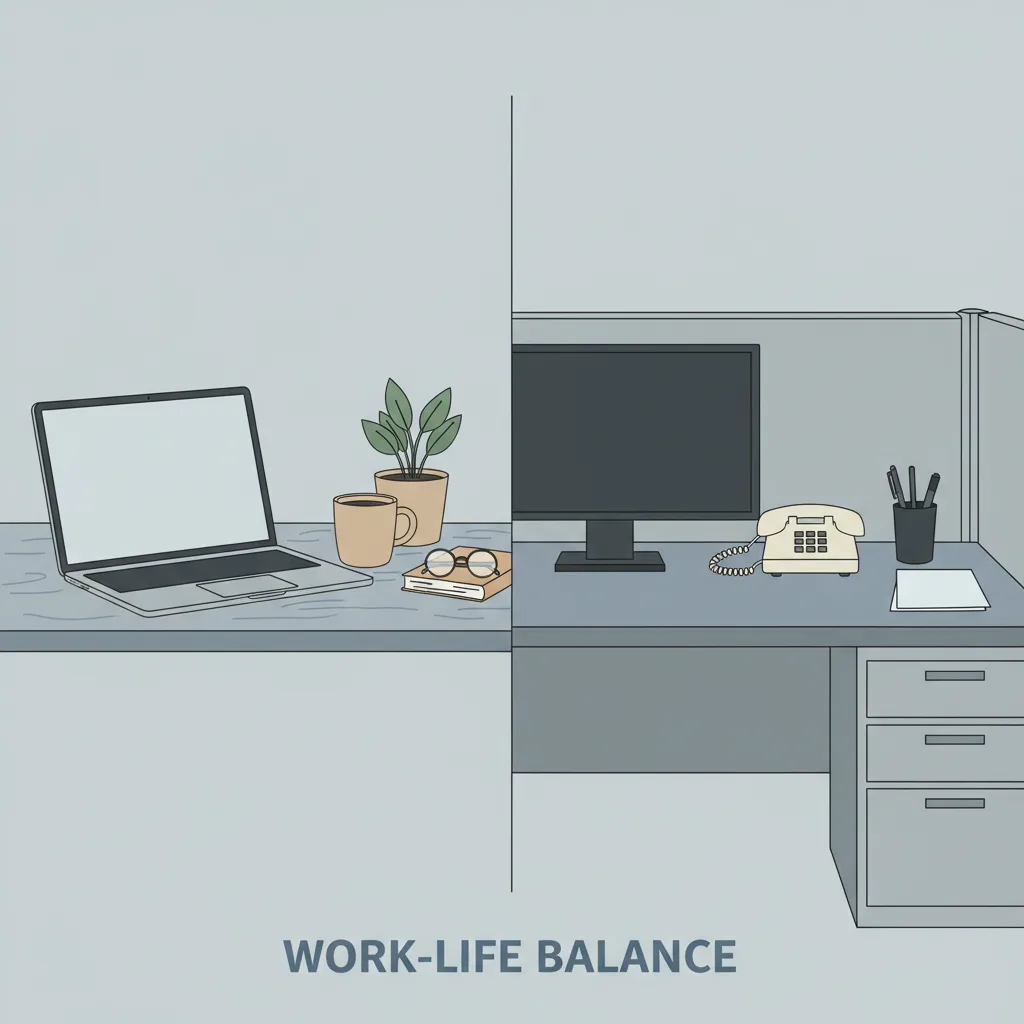
Two desks side by side, one cluttered with startup plans and prototypes, the other neat with a corporate nameplate.
Indirect data: for this decision at least one figure comes from an indirect measure, such as outcomes, satisfaction or intent, or from an editorial estimate, rather than from a direct regret survey. The notes for each side below say how its figure was built.

If you act

Starting a business

8.0%

8% of entrepreneurs regret starting

US business owners, online survey

retrospective, no fixed timeframe

If you don't

Staying employed

44%

44% regret not making a full career change (proxy — includes but is not limited to entrepreneurship)

Workers in US, UK, France, Germany

retrospective lifetime regrets

Figure for each choice (the measure is named on the page)

Related decisions

Semantically similar decisions — same territory, different trade-offs.

career

Freelance vs employment

Figure for each choice (the measure is named on the page)

career

Quitting a job

Figure for each choice (the measure is named on the page)

career

Career change

% who regret this choice

Inaction dominates

Inaction regret 1.5× higher

career

Salary negotiation

Figure for each choice (the measure is named on the page)

career

Remote vs office

Figure for each choice (the measure is named on the page)

career

Asking for a raise

Figure for each choice (the measure is named on the page)

career

Drop out vs. finish degree

Figure for each choice (the measure is named on the page)

career

College decision

Figure for each choice (the measure is named on the page)

Resume Now’s 2024 career regrets survey found that more than 4 in 10 (44%) of workers regret not making a full career change — a category that includes but is not limited to entrepreneurship. By contrast, only 8% of business owners regret starting their ventures, according to both a HubSpot survey of 200+ entrepreneurs and a Harris Poll of 504 small business owners conducted a decade apart. That figure is remarkably low, and survivorship bias likely explains part of the gap, since founders who failed and returned to employment are absent from these samples. A 2023 study in Frontiers in Psychology confirmed that anticipated inaction regret is a statistically significant driver of entrepreneurial intentions.

The psychological mechanism is Gilovich’s classic temporal asymmetry. Action regrets — a failed business, lost savings, years of stress — are acute but fade as people rationalize, learn, and integrate the experience into their identity. Inaction regrets — never finding out whether the idea would have worked — compound over time because there is no experience to rationalize and no story to tell. The Ownr/Avail 2022 survey of Canadian business owners found that 85.4% regret not starting their business earlier — a finding that captures the temporal dynamic from the opposite direction: even among those who eventually acted, the dominant regret is having waited too long.

The main caveat is that no published survey has directly asked a representative sample of non-entrepreneurs whether they regret not starting a business. The 44% “regret not making a full career change” figure is a broader career proxy that overstates entrepreneurship-specific inaction regret for some respondents and understates it for others. Gallup’s finding that 62% of US adults prefer self-employment provides aspiration context but should not be conflated with regret — preferring something is not the same as regretting its absence. What the data does establish is the directional asymmetry: among those who start, regret is rare; among those who never made the career change, regret is common — 44% in the Resume Now survey.

Sources: action

Claim ledger

Every number below is what each source reported, with the verbatim quote we relied on and how we arrived at our figure. Click any link to verify directly.

1/2 sources independently verified verbatim against the cited source

  1. [1] HubSpot / The Hustle — The State of Entrepreneurship Report: Key Findings From our Survey of 200+ Business Owners Verified
    The State of Entrepreneurship Report: Key Findings From our Survey of 200+ Business Owners
    Statistic
    92% of entrepreneurs have no regrets about starting their business; only 8% regret starting
    Excerpt
    “"92% of entrepreneurs have no regrets about starting their business." ”
    Source data from
    2023-03-15
    Accessed
    2026-04-26
    Verification
    Excerpt independently re-fetched and confirmed word-for-word against the cited source during our grounding audit.
    Calculation
    HubSpot surveyed 200+ business owners in collaboration with The Hustle. 92% reported no regrets, so 8% had some level of regret. This figure aligns with the Kabbage/Harris Poll finding (92% no regrets among 504 owners). We use 0.08 as the action-regret rate.
  2. [2] Kabbage / Harris Poll via PR Newswire — New Research Reveals Most Small Business Owners Have 'No Regrets' Despite Facing Great Odds
    New Research Reveals Most Small Business Owners Have 'No Regrets' Despite Facing Great Odds
    Statistic
    92% of small business owners say they have no regrets; 88% would do it all over again
    Excerpt
    “"more than nine in 10 (92 percent) small business owners … say they have no regrets, and nearly just as many (88 percent) would do it all over again if given the chance." ”
    Source data from
    2014-05-15
    Accessed
    2026-04-26
    Calculation
    Harris Poll for Kabbage/Bank of the West surveyed 504 US small business owners (2+ employees, <$10M revenue, 5+ years in operation). The 92% no-regret rate corroborates the HubSpot figure a decade later, suggesting the 8% action-regret rate is stable across cohorts and time periods.

Sources: inaction

Claim ledger

Every number below is what each source reported, with the verbatim quote we relied on and how we arrived at our figure. Click any link to verify directly.

  1. [1] Resume Now — The Road Not Taken: Greatest Career Regrets Revealed
    The Road Not Taken: Greatest Career Regrets Revealed

    See all 8 Likelier entries citing this source →

    Statistic
    More than 4 in 10 workers (44%) regret not making a full career change
    Excerpt
    “"66% of participants have work-related regrets. ... More than 4 in 10 regret not trying to make a career change. ... Not making a full career change – 44%. ... Only about one-third (34%) say they do not have any career-related regrets." ”
    Source data from
    2024-01-10
    Accessed
    2026-06-30
    Calculation
    Resume Now International Career Regrets survey of 1,000 workers in US, UK, France, and Germany (January 2024). 66% of participants report work-related regrets overall; the directly itemized "Not making a full career change – 44%" line (corroborated by the survey's "More than 4 in 10 regret not trying to make a career change" callout) is the closest measured proxy for entrepreneurial inaction regret. It is broader than entrepreneurship alone — it captures career changes and lateral moves of all types — so we use it as a directly measured proxy. The earlier excerpt's "over one-third wished they had taken more risks" and "98 percent experienced job-related regret" claims were not supported by the source (the word "risk" does not appear and the overall figure is 66%, not 98%); both were removed during grounding remediation 2026-06-30. The previously fabricated 46% composite (a hand-computed discount of Gallup's self-employment figure) was already retired.
  2. [2] Frontiers in Psychology — Descriptive norms and entrepreneurial intentions: the mediating role of anticipated inaction regret
    Descriptive norms and entrepreneurial intentions: the mediating role of anticipated inaction regret
    Statistic
    Anticipated inaction regret significantly mediates the relationship between descriptive norms and entrepreneurial intentions
    Excerpt
    “"this research showed that descriptive norms exerted anticipated inaction regret as a future-oriented emotion and indicated that anticipated inaction regret has an informational function that could influence entrepreneurial intentions." ”
    Source data from
    2023-07-01
    Accessed
    2026-04-26
    Calculation
    Study 1 surveyed 222 US adults; Study 2 surveyed 128 Korean undergraduates. The paper establishes anticipated inaction regret as a statistically significant mediator in entrepreneurial decision-making, providing a peer-reviewed mechanism for the Gilovich temporal pattern applied specifically to the start-a- business decision. Does not provide a population regret rate.

Caveats

The 8% action-regret rate comes from surveys of surviving business owners — founders whose ventures failed and who subsequently exited entrepreneurship entirely are underrepresented, creating survivorship bias that likely deflates the true action-regret rate. The 44% inaction-regret rate is a proxy: it is the Resume Now survey's directly itemized "Not making a full career change – 44%" figure, which is broader than entrepreneurship alone. No published survey directly asks a representative sample of non-entrepreneurs "do you regret not starting a business?" with a quantified yes/no answer. The previous estimate of 46% was a hand-computed composite derived by discounting Gallup's 62% self-employment preference figure — that approach fabricated a precision the underlying data does not support, so we replaced it with the directly measured 44% career-change proxy. (An earlier revision cited "~33% wished they had taken more career risks" from the same survey, but that phrasing and figure do not appear in the source — the word "risk" is absent and the only itemized career-change regret is 44% — so it was corrected during grounding remediation.) The directional asymmetry (low action regret, moderate-to-high inaction regret) is supported by theory and adjacent career-regret evidence, but the ratio is approximate and should not be cited as a survey finding. The 85.4% of Canadian business owners who regret not starting earlier (Ownr/Avail 2022) further supports low action-regret among those who do start.

Raw data: /api/decisions.json

Recently viewed on this device