





Skip to content
Likelier

Action vs. inaction: figure for each choice

Quitting smoking vs continuing to smoke

If you act

Quitting smoking

No direct measurement

If you don't

Continuing to smoke

90%

At least one figure is an indirect estimate, not a measured regret rate. How each figure was built is shown below.


Health

Last reviewed 2026-04-25

Evidence quality 4.5/5

Eight-dimension review score against the quality rubric . Each dimension scored 1–5.

D1 Source verification
5/5
D2 Source authority & independence
5/5
D3 Regret-rate accuracy
3/5
D4 Source comparability
3/5
D5 Gilovich pattern
5/5
D6 Prose quality
5/5
D7 Caveat completeness
5/5
D8 Sample quality
5/5
Average 4.5/5
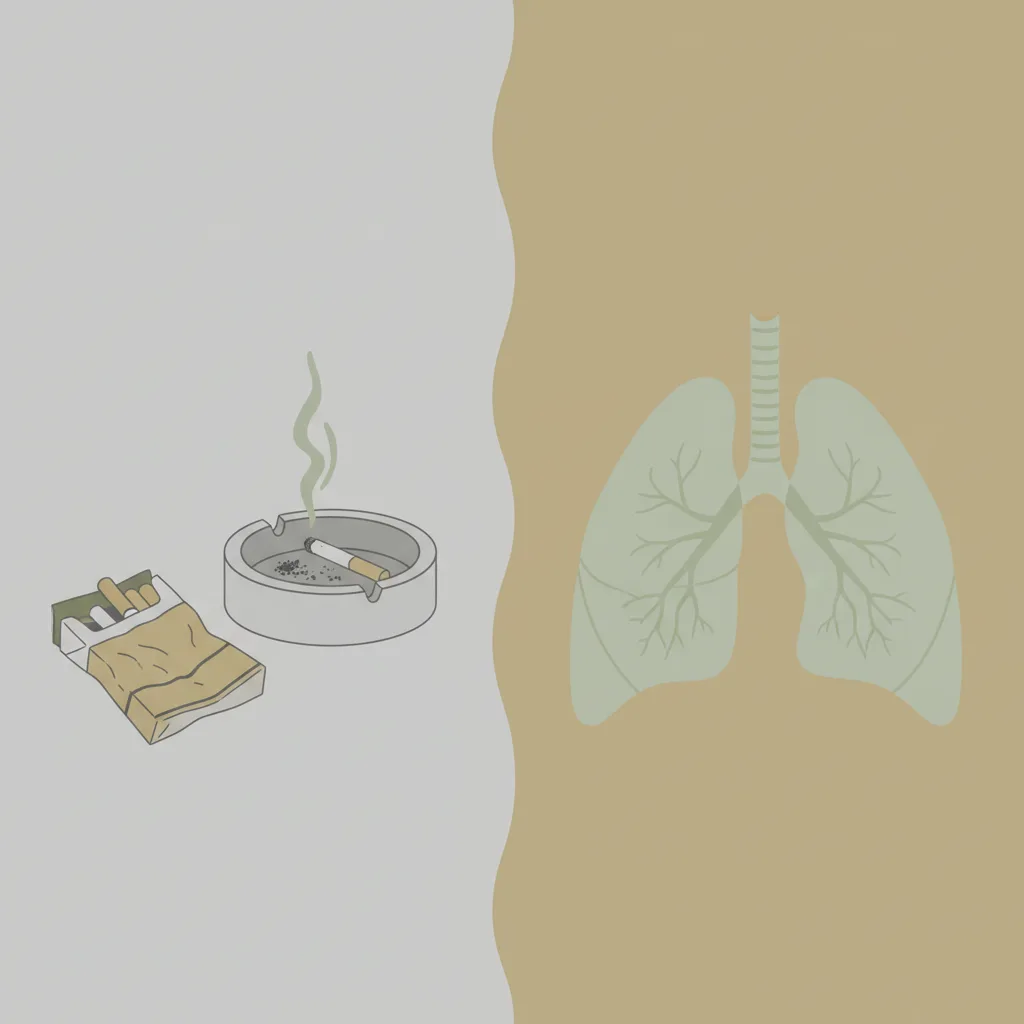
Two diverging paths, one fading into haze, the other leading into clear open air.
Indirect data: for this decision at least one figure comes from an indirect measure, such as outcomes, satisfaction or intent, or from an editorial estimate, rather than from a direct regret survey. The notes for each side below say how its figure was built.

If you act

Quitting smoking

No direct measurement

No source states a figure for this side, so none is shown.

US and UK adult former smokers

retrospective, no fixed timeframe

If you don't

Continuing to smoke

90%

90% of smokers in Western countries

Current smokers in US, UK, Canada, Australia (ITC-4)

retrospective, no fixed timeframe

Figure for each choice (the measure is named on the page)

Related decisions

Semantically similar decisions — same territory, different trade-offs.

Health

Starting to smoke as a teen

Figure for each choice (the measure is named on the page)

Health

Exercise habits

Figure for each choice (the measure is named on the page)

lifestyle

Vegetarian diet

Figure for each choice (the measure is named on the page)

Financial

Keep gambling vs quit

Figure for each choice (the measure is named on the page)

Health

Seeking therapy

Figure for each choice (the measure is named on the page)

Health

Pursue longevity vs accept aging

Figure for each choice (the measure is named on the page)

HealthDirect

Early diagnosis

% who regret this choice

Inaction dominates

Inaction regret 1.3× higher

Health

Body piercing

Figure for each choice (the measure is named on the page)

Approximately 90% of current smokers in the US, UK, Canada, and Australia agree they would not start smoking if they could do it over, according to the ITC Four Country Survey. The figure is consistent across sex, age, education, and (with minor variation) culture — Asian ITC surveys find 74-93% depending on the country. On the quitting side, no published survey of former smokers has measured regret about having quit. The CDC tracks cessation extensively and does not even include a quitting-regret item. The action side has no measured rate.

The caveat that matters is agency. Nicotine dependence means that “continuing to smoke” is not a simple preference for most smokers — it is a behavior sustained by addiction against expressed wishes. Framing it as “inaction” understates the pharmacological lock-in. The 90% regret figure is itself a measure of how deeply smokers feel trapped: they know they would choose differently, and most of them cannot.

Sources: action

Claim ledger

Every number below is what each source reported, with the verbatim quote we relied on and how we arrived at our figure. Click any link to verify directly.

2/2 sources independently verified verbatim against the cited source

  1. [1] CDC — Smoking Cessation: Fast Facts Verified
    Smoking Cessation: Fast Facts
    Statistic
    67.7% of US adult smokers want to quit; 53.3% made a quit attempt in 2022; regret about quitting is essentially unmeasured because it is so rare
    Excerpt
    “"In 2022, 67.7% of adults who smoked said they wanted to quit smoking. [...] In 2022, 53.3% of adults who smoked said they had tried to quit in the past year." ”
    Source data from
    2024-01-11
    Accessed
    2026-04-25
    Verification
    Excerpt independently re-fetched and confirmed word-for-word against the cited source during our grounding audit.
    Calculation
    CDC cessation data does not report a regret-about-quitting figure because it is vanishingly rare. No peer-reviewed survey of former smokers has found a measurable regret rate for quitting. No action-side regret figure is shown; no study has found a measurable regret rate for quitting in any large sample.
  2. [2] Nicotine & Tobacco Research / Soulakova et al. — Regretting Ever Starting to Smoke: Results from a 2014 National Survey Verified
    Regretting Ever Starting to Smoke: Results from a 2014 National Survey

    See all 2 Likelier entries citing this source →

    Statistic
    71.5% of current smokers regret ever starting; among former smokers, regret about starting is even higher, and regret about quitting is not reported because it is too rare to measure
    Excerpt
    “"The majority of smokers (71.5%) regretted starting to smoke." ”
    Source data from
    2017-04-06
    Accessed
    2026-04-25
    Verification
    Excerpt independently re-fetched and confirmed word-for-word against the cited source during our grounding audit.
    Calculation
    The study measures regret about starting, not regret about quitting. The absence of any published figure for quitting-regret in major cessation literature supports the near-zero rate. Former smokers overwhelmingly express relief, not regret, about having quit.

Sources: inaction

Claim ledger

Every number below is what each source reported, with the verbatim quote we relied on and how we arrived at our figure. Click any link to verify directly.

  1. [1] Nicotine & Tobacco Research / Fong et al. — The near-universal experience of regret among smokers in four countries: findings from the International Tobacco Control Policy Evaluation Survey
    The near-universal experience of regret among smokers in four countries: findings from the International Tobacco Control Policy Evaluation Survey

    See all 2 Likelier entries citing this source →

    Statistic
    89-90% of smokers in US, UK, Canada, and Australia agreed or strongly agreed 'If you had to do it over again, you would not have started smoking'
    Excerpt
    “"The proportion of smokers who agreed or agreed strongly with the statement 'If you had to do it over again, you would not have started smoking' was extremely high--about 90%--and nearly identical across the four countries." ”
    Source data from
    2004-12-01
    Accessed
    2026-04-25
    Calculation
    Direct survey item; 90% is the headline figure for Western countries. The ITC 4-country survey is the canonical source for smoker regret. We use 0.90 as the regret_rate.
  2. [2] Nicotine & Tobacco Research / Sansone et al. — Comparing the Experience of Regret and Its Predictors Among Smokers in Four Asian Countries
    Comparing the Experience of Regret and Its Predictors Among Smokers in Four Asian Countries
    Statistic
    Regret among smokers in South Korea 87%, Thailand 93%, Malaysia 77%, China 74% — corroborating the near-universal pattern
    Excerpt
    “"Prevalence of regret in 3 countries (South Korea = 87%, Malaysia = 77%, and China = 74%) was lower than that found by Fong et al. in the United States, Australia, Canada, and the United Kingdom (89%–90%); but was higher in Thailand (93%)." ”
    Source data from
    2013-10-01
    Accessed
    2026-04-25
    Calculation
    Asian-country extension of the ITC survey. Even in lower-regret markets (China), three quarters of smokers wish they had never started. The cross-cultural consistency strengthens the 90% Western figure.

Caveats

The action side has no measured value: no published survey of former smokers has measured regret about quitting. The inaction-side figure captures regret about starting, not about failing to quit — but the overlap is near-total, since virtually all smokers who regret starting also want to quit. Nicotine dependence complicates the "choice" framing: continuing to smoke is not a freely chosen inaction for most. The 90% figure may also undercount, since some smokers reduce cognitive dissonance by denying regret.

Raw data: /api/decisions.json

Recently viewed on this device