



Aller au contenu
Likelier

Regret d’agir vs. de ne pas agir

Souscrire une assurance invalidité-revenu vs. s'en passer

Si vous agissez

Souscrire une assurance invalidité

30%

Si vous n’agissez pas

Se passer d'assurance invalidité

80%

Pourcentage de personnes qui regrettent ensuite chaque choix. Les barres et le registre complet s’affichent ci-dessous.


Financier

Dernière révision 2026-05-13

Qualité des preuves 4.38/5

Score d’évaluation en huit dimensions selon la grille de qualité . Chaque dimension notée de 1 à 5.

D1 Vérification des sources
5/5
D2 Autorité et indépendance des sources
5/5
D3 Précision du taux de regret
3/5
D4 Comparabilité des sources
2/5
D5 Motif de Gilovich
5/5
D6 Qualité de la prose
5/5
D7 Complétude des réserves
5/5
D8 Qualité de l’échantillon
5/5
Moyenne 4.38/5
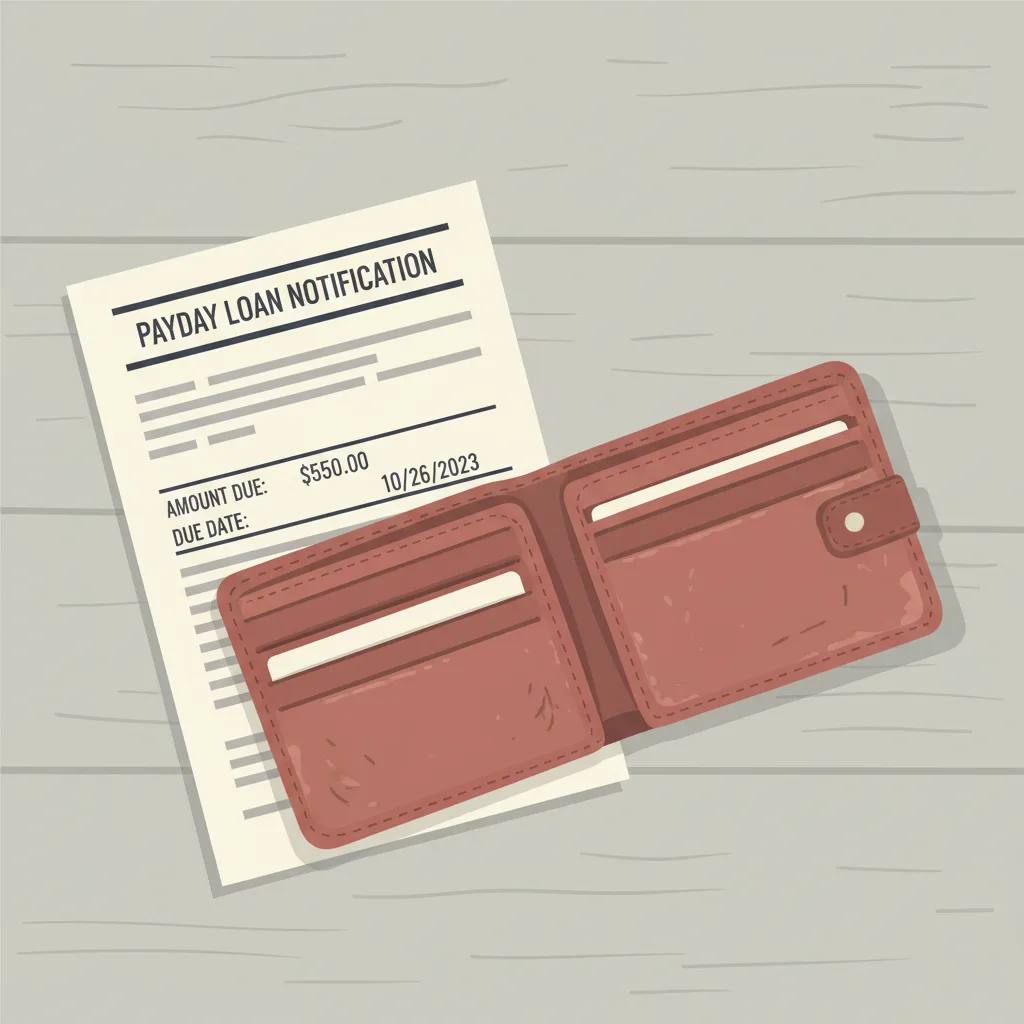
A pay stub and an empty wallet side by side on a plain surface.

Regret d'action

Souscrire une assurance invalidité

30%

~30 % des travailleurs ayant abandonné une assurance invalidité disent qu'ils n'« utilisaient pas assez la prestation pour que cela en vaille la peine »

Adultes américains avec assurance santé ou de protection du revenu, enquête représentative au niveau national

rétrospective, transversale

Regret d'inaction

Se passer d'assurance invalidité

80%

~80 % des travailleurs non assurés ayant connu un congé pour invalidité déclarent ne pas s'être pleinement rétablis sur le plan financier

Travailleurs à temps plein américains ayant subi un congé d'invalidité et n'ayant pas d'assurance invalidité à l'époque

rétrospective ; sondés dans les 10 ans suivant le congé d'invalidité

% regrettent ce choix

inaction dominates — L'inaction domine — la plupart regrettent de ne pas avoir agi.

Décisions associées

Décisions sémantiquement similaires — même terrain, compromis différents.

Financier

Contester un refus d'assurance

% regrettent ce choix

L'inaction domine

Regret d'inaction 3.1× plus élevé

Financier

Assurance vie à terme vs. vie entière

% regrettent ce choix

L'inaction domine

Regret d'inaction 6.4× plus élevé

Financier

Assurance dépendance vs. autoassurance

% regrettent ce choix

L'inaction domine

Regret d'inaction 2.5× plus élevé

Financier

Avocat pour une demande de blessures auto

% regrettent ce choix

L'action domine

Regret d'action 2.2× plus élevé

Financier

Négociation du loyer

% regrettent ce choix

L'inaction domine

Regret d'inaction 1.9× plus élevé

FinancierDirecte

Achat immobilier

% regrettent ce choix

L'inaction domine

Regret d'inaction 5.6× plus élevé

Financier

Décision de prêt sur salaire

% regrettent ce choix

L'inaction domine

Regret d'inaction 2.2× plus élevé

Financier

Investissement

% regrettent ce choix

L'inaction domine

Regret d'inaction 3.2× plus élevé

Risques derrière cette décision

Les probabilités qui sous-tendent ce choix.

Workers who become disabled and lack income-replacement coverage face an abrupt income cliff. The Social Security Administration estimates that one in four of today’s 20-year-olds will experience a qualifying disability before reaching retirement age, yet LIMRA’s 2024 Insurance Barometer Study found fewer than one in five US adults carry any disability income insurance — a gap of roughly 51 million working adults. Guardian Life’s workplace benefits research found that among households that actually experienced a disability leave without coverage, 80% reported they had not fully recovered financially years later, compared with 38% financial harm among workers who held disability insurance during the same event. The asymmetry is large and consistent across data sources.

Regret among buyers is real but structurally different. Insurance economics research documents a “waste aversion” dynamic: Krishnan and Iyer (2022) show experimentally that the thought of having “wasted” premiums when no loss occurs causally reduces the coverage people buy. LIMRA data on lapsed policyholders quantifies the same sentiment — 30% of workers who dropped disability coverage cited “not using the benefit enough to be worth it” as their stated reason. These figures describe an expectation of wasted spending rather than harm; the policyholder who never became disabled is, by definition, the one who avoided the outcome the policy was designed for. Buyer regret is primarily about the cost of an unused option, not about a worse life outcome.

The two regret types are not symmetric. Inaction regret, when it materializes, arrives alongside job loss, depleted savings, and delayed retirement — harms that are concrete and long-lasting. Research published in the American Journal of Public Health found that medically related work loss contributed to over 44% of US personal bankruptcies in one analysis, and households with a disabled adult require substantially more income to maintain equivalent living standards. Action regret, by contrast, is largely anticipatory: most buyers never claim, pay premiums throughout their working years, and may retrospectively question the cost. The evidence does not suggest that buyers who purchased and never claimed experienced lasting harm from having done so. Inaction dominates the regret calculus when conditioned on the event the coverage is designed to address.

Sources : action

Registre des sources

Chaque chiffre ci-dessous correspond à ce que la source a rapporté, avec la citation textuelle sur laquelle nous nous sommes appuyés et la méthode de calcul. Cliquez sur un lien pour vérifier directement.

1/2 sources vérifiées de manière indépendante, mot pour mot, par rapport à la source citée

  1. [1] Economics Letters 2022;216:110594 / S. Sai Krishnan & Subramanian S. Iyer — Can waste aversion affect demand for insurance? Evidence from experiment and survey
    Can waste aversion affect demand for insurance? Evidence from experiment and survey
    Statistique
    Waste averters demand lower insurance coverage than non-waste averters — the discouraging thought of having 'wasted' premiums if no loss occurs reduces the amount of coverage people buy
    Extrait
    “"Evidence shows that people are discouraged from buying fair insurance by the thought that if they do not suffer a loss, they will have wasted their money. We extend this theory to test if waste aversion could lead to a reduction in the amount of coverage sought. We deploy a multimethod design wherein we first run incentive-compatible experiments to establish a cause-and-effect relationship. We follow it up with a survey rolled out to actual buyers of insurance to generate external validity for our results. Our findings show that waste averters demand lesser insurance coverage than non-waste averters." ”
    Données source de
    2022-07-01
    Consulté le
    2026-06-30
    Calcul
    Krishnan & Iyer (Economics Letters 2022;216:110594) establish, via incentive-compatible experiments plus a survey of actual insurance buyers, that "waste aversion" — anticipated regret over premiums paid without a claim — causally lowers the amount of coverage demanded. This source documents the MECHANISM behind buyer regret on the action side; it does not report a quantified regret rate (the action regret_rate is anchored on the LIMRA lapse figure below, not on this paper).
  2. [2] LIMRA — Disability Insurance Awareness Month: Is Your Income Protected? Vérifié
    Disability Insurance Awareness Month: Is Your Income Protected?
    Statistique
    30% of employees who dropped disability insurance cited 'not using the benefit enough to be worth it' as their reason
    Extrait
    “"Employees who previously had coverage but dropped their disability insurance cited increasing costs (31%), not using the benefit enough to be worth it (30%), and wanting to reduce overall benefit spending (27%) as their primary reasons." ”
    Données source de
    2025-05-01
    Consulté le
    2026-05-13
    Vérification
    Extrait récupéré et confirmé de manière indépendante, mot pour mot, par rapport à la source citée lors de notre audit de vérification.
    Calcul
    LIMRA's 2025 workplace benefits research. The 30% "not using the benefit enough to be worth it" response among lapsed policyholders is the industry's closest published metric to post-purchase regret for disability insurance buyers, and is used here as the action-side regret_rate anchor (0.30). It aligns with the waste-aversion mechanism documented by Krishnan & Iyer (2022). Note that this population self-selected into lapsing — unconditional buyer regret among all current policyholders is likely lower, so 0.30 is best read as an upper-bound proxy among the subgroup most prone to it.

Sources : inaction

Registre des sources

Chaque chiffre ci-dessous correspond à ce que la source a rapporté, avec la citation textuelle sur laquelle nous nous sommes appuyés et la méthode de calcul. Cliquez sur un lien pour vérifier directement.

2/3 sources vérifiées de manière indépendante, mot pour mot, par rapport à la source citée

  1. [1] Guardian Life Insurance Company of America — Role of Disability Insurance in Financial Wellness Vérifié
    Role of Disability Insurance in Financial Wellness
    Statistique
    8 in 10 workers who experienced a disability leave without disability insurance say they have not yet fully recovered financially
    Extrait
    “"Among those lacking disability coverage, 8 in 10 say they have not yet fully recovered financially following a disability event. Individuals with disability insurance experienced significantly less negative financial consequences (38% negatively impacted) compared to those without coverage (62% negatively impacted)." ”
    Données source de
    2024-01-01
    Consulté le
    2026-05-13
    Vérification
    Extrait récupéré et confirmé de manière indépendante, mot pour mot, par rapport à la source citée lors de notre audit de vérification.
    Calcul
    Guardian's workplace benefits study surveyed US full-time workers, of whom 3 in 10 households reported at least one disability leave in the past 10 years. Among those who lacked disability insurance during that leave, 80% (8 in 10) reported incomplete financial recovery. We use 0.80 as the inaction regret rate — not a literal "regret" question, but incomplete financial recovery is the operational consequence that drives retrospective regret about skipping coverage. The insured cohort's 38% negative-impact rate versus the uninsured's 62% negative-impact rate corroborates the large gap. Total sample reported at approximately 1,492 workers across disability-leave households; the uninsured sub-sample is smaller.
  2. [2] LIMRA — Disability Insurance Awareness Month: Protecting Your Paycheck and Your Future
    Disability Insurance Awareness Month: Protecting Your Paycheck and Your Future
    Statistique
    46% of US adults say they need disability insurance; only 18% report having it; 48% of uninsured say they would tap personal savings if unable to work
    Extrait
    “"Less than 1 in 5 consumers (18%) say they have disability insurance. Consumers without disability insurance coverage say their families would resort to tapping into personal savings (48%) or retirement funds (26%) to meet their day-to-day expenses if they became unable to work." ”
    Données source de
    2024-05-01
    Consulté le
    2026-05-13
    Calcul
    LIMRA's 2024 Insurance Barometer Study data. The coverage-gap statistic (46% say they need it; 18% have it) establishes the scale of involuntary non-ownership. The coping- mechanism data (48% would drain savings, 26% retirement funds) illustrates the downstream financial distress that makes inaction the regret-dominant path. Used here as corroborating context, not a direct regret rate.
  3. [3] Council for Disability Income Awareness (CDIA) — Disability Statistics Vérifié
    Disability Statistics
    Statistique
    Just under 1 in 4 of today's 20-year-olds can expect to be out of work for at least a year due to a disabling condition before reaching normal retirement age (per SSA probability tables); at least 51 million US working adults lack disability insurance beyond basic Social Security coverage (per an ACLI analysis of 2022 Census data); medically related work loss was cited as a contributor in 44.3% of personal bankruptcies (per Himmelstein et al., American Journal of Public Health, 2019)
    Extrait
    “"Just under one in four of today's 20-year-olds can expect to be out of work for at least a year because of a disabling condition before they reach the normal retirement age." "At least 51 million working adults in the United States are without disability insurance other than the basic coverage available through Social Security." "44.3% specifically citing medically-related work loss as a contributor" [to personal bankruptcy]. ”
    Données source de
    2026-03-30
    Consulté le
    2026-07-03
    Vérification
    Extrait récupéré et confirmé de manière indépendante, mot pour mot, par rapport à la source citée lors de notre audit de vérification.
    Calcul
    CDIA's statistics page aggregates three figures used in the body prose that were previously stated without any citation. The 1-in-4 disability-probability figure is attributed by CDIA to SSA's Disability and Death Probability Tables for Insured Workers Who Attain Age 20 in 2025; the 51-million uninsured-workers figure is attributed to an ACLI analysis of 2022 Census data and the 2020 Strategic Business Insights MacroMonitor Household Survey; the 44.3%-of-bankruptcies figure is attributed to Himmelstein, Lawless, Thorne, Foohey & Woolhandler, "Medical Bankruptcy: Still Common Despite the Affordable Care Act," American Journal of Public Health 109, no. 3 (2019): 431-433 -- the body now cites that AJPH study directly for the bankruptcy figure rather than crediting CDIA (a secondary compiler) with having "found" it. Added to ground three previously-uncited body claims; does not change the inaction regret_rate (0.80).

Réserves

Les deux signaux de regret ne sont pas des instruments d'enquête directement comparables — le regret du côté action est approché par la raison invoquée par les anciens assurés pour abandonner leur couverture (« ne pas utiliser assez la prestation pour que cela en vaille la peine », un sentiment d'aversion au gaspillage), tandis que le regret du côté inaction est mesuré par le non-rétablissement financier après l'événement (un substitut de conséquence, et non une question directe sur le regret). Aucune étude publiée n'a directement posé aux travailleurs assurés et non assurés la même question sur le regret après un événement d'invalidité, si bien que le regret_delta est une approximation construite à partir de sources de données distinctes. Le groupe inaction est conditionné au fait d'avoir effectivement connu un congé pour invalidité — les travailleurs qui ne sont jamais devenus invalides et ont renoncé à la couverture peuvent ne ressentir aucun regret, ce qui signifie que le taux de regret d'inaction au niveau de la population, pour l'ensemble des travailleurs, est nettement inférieur au chiffre de 80 % (qui ne s'applique qu'à ceux qui ont eu besoin de la couverture). L'assurance invalidité n'est pas non plus disponible ou abordable pour tous les travailleurs : les travailleurs indépendants, les travailleurs de plateformes et ceux ayant des affections préexistantes font face à des contraintes d'accès qui compliquent le cadrage action/inaction. Le coût des primes varie considérablement selon la profession, l'âge et la durée de la prestation. L'assurance invalidité de courte durée et de longue durée sont des produits distincts avec des délais de carence et des durées de prestation différents ; les sources ci-dessus ne les distinguent pas systématiquement.

Données brutes : /api/decisions.json

Récemment consultés sur cet appareil