Evidence quality 4.75/5
Eight-dimension review score against the quality rubric . Each dimension scored 1–5.
- D1 Source grounding
- 5/5
- D2 Source authority
- 5/5
- D3 Arithmetic
- 5/5
- D4 Uncertainty
- 4/5
- D5 Scope
- 5/5
- D6 Prose
- 5/5
- D7 Perception honesty
- 4/5
- D8 Caveat completeness
- 5/5
● your factors — click this risk ▾ to reveal
- Your factors
≈ As likely as
Perceived
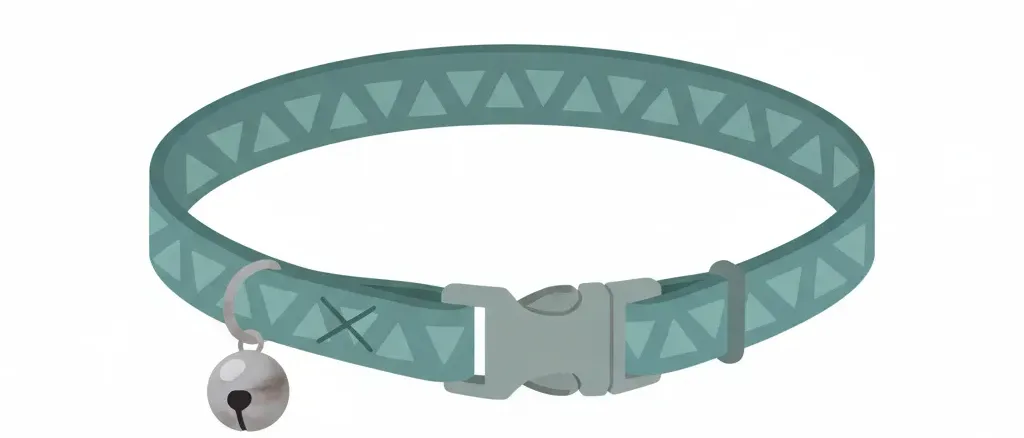
Collar anxiety is one of the quieter but persistent fears in cat ownership. Online forums overflow with stories of cats found hanging from fences, limbs caught under elasticated bands, or deep axillary wounds discovered weeks after a collar shifted. Veterinary organizations universally recommend breakaway collars, reinforcing the impression that non-breakaway collars are ticking time bombs. Many cat owners skip collars entirely rather than accept the risk, even forgoing the identification benefit that would help a lost cat get home.
Rough estimate: ~5-15% chance over a cat's lifetime
Source: editorial intuition, not polled
Actual
~4% of collar-wearing cats experience a collar-related injury over their lifetime; ~0.6% die
collar-wearing pet cats in Central Europe (Arhant et al., 2022, n > 5,000)
Show derivation
Arhant et al. (2022) surveyed over 5,000 cat owners in Central Europe and found that 4% of collar-wearing cats experienced a collar-related injury at some point in their lives, and 0.6% died from a collar incident. This is cumulative lifetime risk, not annual. The annual risk is much lower: Brinkley (2007), as restated in the Paulino & Williams (2023) review, reported 26 chronic axillary (collar-entrapment) wounds out of ~15,000 cat cases over 4 years (~0.17% of presentations), suggesting an annual per-cat incidence on the order of 0.04%. Calver et al. (2013) surveyed 107 Australian veterinarians, who saw on average one collar injury per 2.3 years of practice; at one practice, 0.33% of 4,460 cat cases over three years were collar injuries. We use the 4% lifetime injury figure from the largest available survey as the primary estimate. The 0.6% death rate is included as context but the headline figure captures all serious outcomes. Only ~20-30% of pet cats in Western countries regularly wear collars, so the population-level risk (across all cats, collared or not) is roughly 4% x 0.25 = ~1%. No study cited here quantifies how much of that risk breakaway collars remove.
Caveats: The 4% lifetime injury figure from Arhant et al. (2022) combines all collar type…
The 4% lifetime injury figure from Arhant et al. (2022) combines all collar types. Veterinary organizations recommend breakaway collars, but no study cited here quantifies how much injury risk they remove. Conversely, the data may undercount collar deaths because cats that die outdoors from collar strangulation may never be found or reported. The Arhant survey was Central European and may not perfectly generalize to US cat-keeping practices. Only 20-30% of pet cats wear collars, so population-level risk is diluted further.
Related risks
Other risks on similar themes — for exploring related fears.

Indoor cat escape harm
What are the odds of a strictly indoor cat suffering serious injury or death after escaping outdoors?


Sting anaphylaxis
What are the odds that a bee or wasp sting will trigger anaphylactic shock requiring an epinephrine injection?

Cat litter toxoplasmosis
What are the odds of acquiring a toxoplasma infection from cleaning a cat's litter box?




Hamster dies before teenager
What are the odds a hamster given to a 9-year-old dies before they turn 13?
Pick challenger
The largest survey on the topic — Arhant et al. (2022), covering over 5,000 cat owners in Central Europe — found that 4% of collar-wearing cats experienced a collar-related injury over their lifetime and 0.6% died from one. Those numbers sound alarming until placed next to the same study’s finding that 70.5% of cats hit by cars died. Collar risk is real but occupies a different order of magnitude from the outdoor hazards that collars (via ID tags) are designed to mitigate.
The veterinary evidence is thinner. A survey of 107 Australian veterinarians (Calver et al., 2013) found that they saw on average one collar injury per 2.3 years of practice, and at one practice 0.33% of 4,460 cat cases over three years were collar injuries. That study gives no reliable split by collar type, so this page offers no multiplier for breakaway, elasticated or fixed-buckle designs.
The practical upshot is that the 4% headline figure is an average across all collar types, many of which veterinary organizations warn against. The residual fear — strong enough that many owners forgo collars entirely — may itself carry a cost: an unidentified lost cat is far less likely to be returned, and ASPCA-funded research found that only 75% of lost cats make it home.
Related tidbits
About ~4% of collar-wearing cats suffer a collar-related injury over a lifetime, and 0.6% die from one. Owner intuition tends to land at ~5-15%. Breakaway collars were tied to zero injuries in one study.
Claim ledger
Every number below is what each source reported, with the verbatim quote we relied on and how we arrived at our figure. Click any link to verify directly.
2/4 sources independently verified verbatim against the cited source
-
[1] Journal of Veterinary Behavior (Arhant, Lesch, Heizmann et al.) — Risks associated with free-roaming and collar use in cats
Risks associated with free-roaming and collar use in cats- Statistic
4% of collar-wearing cats experienced a collar-related injury; 0.6% died from a collar incident; collar death risk was considerably lower than traffic accidents (70.5% fatality rate for cats hit by cars)- Excerpt
“"we found the risk of cats dying from a collar-related incident to be considerably lower than other risks cats encounter while free-roaming" ”
- Source data from
- 2022-09-01
- Accessed
- 2026-04-23 · archived copy
- Calculation
- Arhant et al. surveyed over 5,000 cat owners in Central Europe (Austria, Germany, Switzerland). The 4% injury rate and 0.6% death rate are cumulative lifetime figures for collar-wearing cats. This is the largest survey to date on collar safety outcomes. The study also found that collar-related risks were dwarfed by other outdoor hazards (traffic, predation), providing important context for risk calibration. The archived copy of the article holds only the abstract, so the injury and death shares quoted here come from the full text of the survey.
-
[2] Animal Welfare (Calver, Adams, Clark & Pollock) — Assessing the safety of collars used to attach predation deterrent devices and ID tags to pet cats
Assessing the safety of collars used to attach predation deterrent devices and ID tags to pet cats- Statistic
107 veterinarians averaged one collar injury observed per 2.3 years of practice; at one practice, 0.33% of 4,460 cat cases over three years were collar injuries- Excerpt
“"Interviews with one hundred and seven veterinarians indicated an average rate of one collar injury observed per 2.3 years of veterinary practice. At one practice, over three years, only 0.33% of 4,460 cat cases were collar injuries, while 180 cat cases at four clinics during August and November 2011 included none." ”
- Source data from
- 2013-02-01
- Accessed
- 2026-04-23 · archived copy
- Calculation
- Calver et al. interviewed 107 veterinarians, who averaged one collar injury per 2.3 years of practice. At one practice, 0.33% of 4,460 cat cases over three years were collar injuries, the same order of magnitude as Brinkley's 0.17% of all cases for chronic axillary wounds.
-
[3] Journal of Feline Medicine and Surgery (Paulino & Williams) — Chronic axillary wounds in cats: what do we know and how should we manage them? Verified
Chronic axillary wounds in cats: what do we know and how should we manage them?- Statistic
Feline chronic non-healing axillary (collar-entrapment) wounds are uncommon: 26 cases out of 15,000 cats seen over a 4-year period (~0.17%) in one case series (Brinkley 2007)- Excerpt
“"Feline chronic non-healing axillary wounds are uncommon in small animal practice, with 26 cases out of 15,000 cats seen over a 4-year period being reported in one case series." ”
- Source data from
- 2023-04-01
- Accessed
- 2026-06-30 · archived copy
- Verification
- Excerpt independently re-fetched and confirmed word-for-word against the cited source during our grounding audit.
- Calculation
- This 2023 peer-reviewed review (Paulino & Williams, J Feline Med Surg) restates the prevalence figure originally reported by Brinkley (2007, J Small Anim Pract 48:111-115, cited as ref 3): 26 chronic axillary wounds out of ~15,000 cat cases over a 4-year period, i.e. ~0.17% of presentations, or roughly 0.04% per cat per year. Axillary wounds are forelimb-entrapment injuries from neck collars. This figure captures only cases serious enough to present to a vet and does not include minor incidents resolved at home.
-
[4] Animals (Basel) / PMC (Weiss, Slater & Lord) — Frequency of Lost Dogs and Cats in the United States and the Methods Used to Locate Them Verified
Frequency of Lost Dogs and Cats in the United States and the Methods Used to Locate ThemSee all 2 Likelier entries citing this source →
- Statistic
In an ASPCA-conducted national random-digit-dial survey of 1,015 pet-owning households (506 cat owners), 75% (95% CI: 64-85%) of lost cats were recovered, versus 93% of lost dogs; most recovered cats returned home on their own- Excerpt
“"75% (95% CI: 64-85%) of cats were recovered." ”
- Source data from
- 2012-06-01
- Accessed
- 2026-07-03 · archived copy
- Verification
- Excerpt independently re-fetched and confirmed word-for-word against the cited source during our grounding audit.
- Calculation
- Weiss, Slater & Lord surveyed 1,015 US households by random-digit-dial telephone (Sept-Nov 2010) about pets lost in the prior five years; 506 respondents were cat owners. The 75% cat-recovery rate is markedly lower than the 93% dog-recovery rate, and most recovered cats returned home on their own rather than via active search. Used here to support the entry's closing point that forgoing a collar (and its ID tag) trades a small injury risk for a real cost if the cat is ever lost.
- Independence
- Independent of the veterinary-incident sources (Arhant, Calver, Paulino & Williams) used for the collar-injury statistics; this source addresses only the identification/return-rate argument in the closing paragraph.