Evidence quality 4.25/5
Eight-dimension review score against the quality rubric . Each dimension scored 1–5.
- D1 Source grounding
- 5/5
- D2 Source authority
- 4/5
- D3 Arithmetic
- 4/5
- D4 Uncertainty
- 4/5
- D5 Scope
- 4/5
- D6 Prose
- 4/5
- D7 Perception honesty
- 4/5
- D8 Caveat completeness
- 5/5
● your factors — click this risk ▾ to reveal
- Your factors
≈ As likely as

Perceived
Tax audits loom large in the American imagination. The word "audit" conjures images of agents rifling through shoeboxes of receipts, and taxpayer surveys consistently show that audit fear is a primary motivator for compliance. Most people overestimate their personal audit risk by at least an order of magnitude, guessing somewhere between 5% and 10% per year, when the actual rate for the median filer is closer to 0.1%.
Rough estimate: ~5-10% per year is a common guess
Source: editorial intuition, not polled
Actual
~0.3% of individual returns examined (FY 2024)
US individual income tax return filers
Show derivation
The IRS 2024 Data Book reports that the IRS closed 505,514 total tax return audits in FY 2024, of which 444,014 involved individual income tax returns. With approximately 161.1 million individual returns filed, the single-year examination rate is about 0.28%. Compounding over a 59-year adult filing life: 1 - (1 - 0.0028)^59 = 0.152, or about 15%. This is likely an overestimate of any single taxpayer's cumulative risk because audit selection is not random: the IRS concentrates resources on EITC claimants, high-income filers, and returns with specific red flags. A median-income W-2 filer's true annual audit rate is closer to 0.1%, implying a lifetime probability around 6%. The 15% figure represents the population-average rate if audits were distributed uniformly across all filers, which they are not.
Caveats: The population-average audit rate conceals a U-shaped distribution by income. Fi…
The population-average audit rate conceals a U-shaped distribution by income. Filers claiming the Earned Income Tax Credit (under ~$25,000 AGI) face audit rates of 0.3-0.4%, driven almost entirely by correspondence audits verifying credit eligibility. Filers in the $50,000-$500,000 range face rates as low as 0.1%. Filers above $10 million face rates of 4% or higher, though even those rates have fallen steeply since 2010. About 78% of all individual audits in FY 2024 were correspondence audits (conducted by mail), not the in-person field examinations most people picture. The lifetime figure here assumes a constant audit rate, which is unrealistic: rates have varied by a factor of four over the past 15 years alone. A filer who spends their entire career as a median-income W-2 employee has a meaningfully lower lifetime audit probability than the headline figure.
Related risks
Other risks on similar themes — for exploring related fears.







Extremist govt catastrophe
What are the odds of a political extremist government catastrophically ruining your country?
Pick challenger
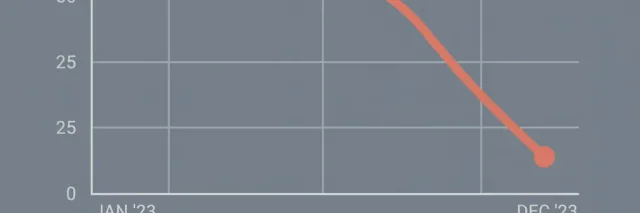
The IRS examined roughly 444,000 individual income tax returns in fiscal year 2024, out of about 161 million filed, an examination rate of approximately 0.28%. That is less than one-third of one percent, and it has been falling for more than a decade. GAO found that the average audit rate for individual returns fell from about 0.9% for tax year 2010 to 0.25% for tax year 2019, and IRS officials attributed the decline to staffing decreases. Compounding the current 0.28% annual rate over a 59-year filing life gives a naive lifetime probability of about 15%, though the true figure for any individual filer depends heavily on income level and return complexity.
The distribution of audits is strikingly non-uniform. The GAO documented a U-shaped pattern by income: filers under $25,000 face elevated audit rates (0.3-0.4%) because correspondence audits targeting Earned Income Tax Credit claims are cheap to run at scale. Filers in the broad middle ($50,000-$500,000) face rates as low as 0.1%. Above $10 million, rates now run around 4%, down from 21.2% in 2010, a decline of roughly 80% and considerably steeper than the population-wide drop. About 78% of all individual audits in FY 2024 were correspondence audits, conducted entirely by mail, not the in-person field examinations that drive most of the anxiety.
The practical implication is that the population-average rate is a poor proxy for any particular filer’s risk. A salaried employee with straightforward W-2 income and no itemized deductions has a lifetime audit probability well below 10%. A high-income filer with partnership income, foreign accounts, or large charitable deductions faces a meaningfully higher rate. The headline number is real but tells a story about IRS resource allocation as much as it does about any individual’s odds.
Related tidbits
The IRS examined about 0.3% of individual returns in FY 2024, not the 5-10% per year many people assume. Stacked across a filing lifetime that still amounts to roughly 15% odds of being audited at least once.
Claim ledger
Every number below is what each source reported, with the verbatim quote we relied on and how we arrived at our figure. Click any link to verify directly.
2/2 sources independently verified verbatim against the cited source
-
[1] Internal Revenue Service — IRS releases fiscal year 2024 Data Book describing agency's activities Verified
IRS releases fiscal year 2024 Data Book describing agency's activities- Statistic
505,514 total tax return audits closed in FY 2024, resulting in $29 billion in recommended additional tax- Excerpt
“"In FY 2024, the IRS closed 505,514 tax return audits, resulting in $29 billion in recommended additional tax … The IRS processed more than 266 million returns and other forms from individuals, businesses and tax-exempt organizations;" ”
- Source data from
- 2025-05-22
- Accessed
- 2026-04-12 · archived copy
- Verification
- Excerpt independently re-fetched and confirmed word-for-word against the cited source during our grounding audit.
- Calculation
- The IRS Data Book is the official annual statistical summary of IRS operations. Of the 505,514 total audits closed, 444,014 were individual income tax returns (the remainder were employment, estate, gift, and excise tax returns). Dividing 444,014 by 161.1 million individual returns gives an examination rate of approximately 0.28%. The press-release excerpt states only the all-return total of 505,514; the individual-return count (444,014) and the count of individual returns filed (161.1 million) are the entry's inputs from the Data Book tables and are not quoted in the excerpt.
- Independence
- The IRS Data Book is compiled from the IRS's own administrative records of examinations completed. It is the primary upstream data source for GAO and Congressional Research Service analyses.
-
[2] US Government Accountability Office — Tax Compliance: Trends of IRS Audit Rates and Results for Individual Taxpayers by Income Verified
Tax Compliance: Trends of IRS Audit Rates and Results for Individual Taxpayers by Income- Statistic
IRS audit rates for individual taxpayers declined across all income levels from 2010 to 2019; audit rates for higher-income taxpayers decreased more steeply — the $10 million+ bracket fell from 21.2% (TY2010) to 3.9% (TY2019), an ~81% drop- Excerpt
“"From tax years 2010 to 2019, audit rates of individual income tax returns decreased for all income levels. On average, the audit rate for these returns decreased from 0.9 percent to 0.25 percent. … Audit rates decreased the most for taxpayers with incomes of $200,000 and above." ”
- Source data from
- 2022-03-17
- Accessed
- 2026-04-12 · archived copy
- Verification
- Excerpt independently re-fetched and confirmed word-for-word against the cited source during our grounding audit.
- Calculation
- The GAO report provides historical context for the declining audit trend. Averaged across all income levels, GAO puts the individual audit rate at about 0.9% for tax year 2010 and 0.25% for tax year 2019. The ~0.28% examination rate for FY 2024 computed above is of similar size, though the two measures are not strictly comparable (tax-year audit rates versus fiscal-year examinations over returns filed). The GAO report also documents that audit rates are not uniform: for tax year 2019, returns under $25,000 (0.4%) and returns of $500,000 and above (0.5% to 3.9%) were audited at higher rates than returns from $50,000 to $100,000 (0.1%), creating a U-shaped distribution by income. The decline is steepest at the very top: returns reporting $10 million or more in income were audited at 21.2% in tax year 2010, falling to 3.9% by tax year 2019 — an ~81% drop, considerably steeper than the population-wide decline over the same period.
- Independence
- GAO is an independent congressional agency that audits and evaluates federal programs. Its analysis draws on IRS data but applies independent methodology to examine trends and outcomes.