







Zum Inhalt springen
Likelier

Reue durch Handeln vs. Nichthandeln

Ein eigenes Unternehmen gründen vs in einer Festanstellung bleiben

Wenn du handelst

Ein Unternehmen gründen

8,0%

Wenn du nicht handelst

Angestellt bleiben

44%

Anteil derer, die jede Entscheidung später bereuen. Balken und vollständige Datengrundlage erscheinen unten.


Karriere

Zuletzt überprüft 2026-04-26

Evidenzqualität 4.0/5

Bewertungsergebnis nach acht Dimensionen gemäß der Qualitätsrubrik . Jede Dimension wird mit 1–5 bewertet.

D1 Quellenüberprüfung
5/5
D2 Quellenautorität & Unabhängigkeit
3/5
D3 Genauigkeit der Bedauernsrate
3/5
D4 Vergleichbarkeit der Quellen
3/5
D5 Gilovich-Muster
5/5
D6 Prosaqualität
5/5
D7 Vollständigkeit der Einschränkungen
5/5
D8 Stichprobenqualität
3/5
Durchschnitt 4.0/5
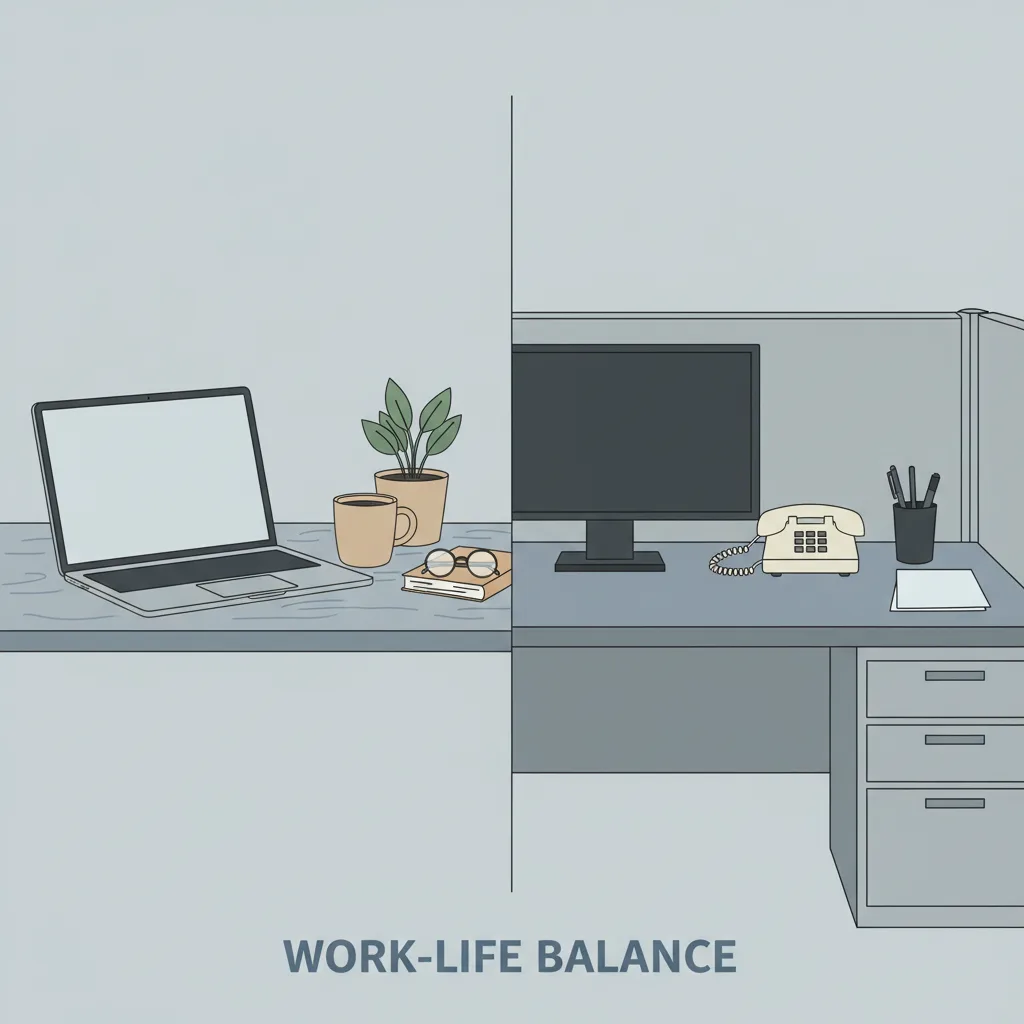
Two desks side by side, one cluttered with startup plans and prototypes, the other neat with a corporate nameplate.

Reue fürs Handeln

Ein Unternehmen gründen

8,0%

8 % der Unternehmer bereuen die Gründung

US-Geschäftsinhaber, Online-Umfrage

retrospektiv, kein fester Zeitraum

Reue fürs Unterlassen

Angestellt bleiben

44%

44 % bereuen es, keinen vollständigen Karrierewechsel vollzogen zu haben (Proxy — schließt Unternehmertum ein, ist aber nicht darauf beschränkt)

Beschäftigte in USA, Großbritannien, Frankreich, Deutschland

retrospektiv, lebenslange Bedauern

% bereuen diese Entscheidung

inaction dominates — Nichthandeln dominiert — die meisten bereuen, nicht gehandelt zu haben.

Verwandte Entscheidungen

Semantisch ähnliche Entscheidungen — gleiches Terrain, andere Abwägungen.

career

Freelance vs Anstellung

% bereuen diese Entscheidung

Handlung überwiegt

Reue über Handlung 1.3× höher

career

Job kündigen

% bereuen diese Entscheidung

Untätigkeit überwiegt

Reue über Untätigkeit 2.2× höher

career

Berufswechsel

% bereuen diese Entscheidung

Untätigkeit überwiegt

Reue über Untätigkeit 1.5× höher

career

Gehaltsverhandlung

% bereuen diese Entscheidung

Untätigkeit überwiegt

Reue über Untätigkeit 1.2× höher

career

Homeoffice vs Büro

% bereuen diese Entscheidung

Untätigkeit überwiegt

Reue über Untätigkeit 1.8× höher

careerDirekt

Um Gehaltserhöhung bitten

% bereuen diese Entscheidung

Untätigkeit überwiegt

Reue über Untätigkeit 3.0× höher

careerDirekt

Studienabbruch vs. Abschluss

% bereuen diese Entscheidung

Handlung überwiegt

Reue über Handlung 1.1× höher

career

Studienentscheidung

% bereuen diese Entscheidung

Handlung überwiegt

Reue über Handlung 1.2× höher

Resume Now’s 2024 career regrets survey found that more than 4 in 10 (44%) of workers regret not making a full career change — a category that includes but is not limited to entrepreneurship. By contrast, only 8% of business owners regret starting their ventures, according to both a HubSpot survey of 200+ entrepreneurs and a Harris Poll of 504 small business owners conducted a decade apart. That figure is remarkably low given that roughly half of all small businesses fail within five years — survivorship bias likely explains part of the gap, since founders who failed and returned to employment are absent from these samples. A 2023 study in Frontiers in Psychology confirmed that anticipated inaction regret is a statistically significant driver of entrepreneurial intentions.

The psychological mechanism is Gilovich’s classic temporal asymmetry. Action regrets — a failed business, lost savings, years of stress — are acute but fade as people rationalize, learn, and integrate the experience into their identity. Inaction regrets — never finding out whether the idea would have worked — compound over time because there is no experience to rationalize and no story to tell. The Ownr/Avail 2022 survey of Canadian business owners found that 85.4% regret not starting their business earlier — a finding that captures the temporal dynamic from the opposite direction: even among those who eventually acted, the dominant regret is having waited too long.

The main caveat is that no published survey has directly asked a representative sample of non-entrepreneurs whether they regret not starting a business. The 44% “regret not making a full career change” figure is a broader career proxy that overstates entrepreneurship-specific inaction regret for some respondents and understates it for others. Gallup’s finding that 62% of US adults prefer self-employment provides aspiration context but should not be conflated with regret — preferring something is not the same as regretting its absence. What the data does establish is the directional asymmetry: among those who start, regret is rare; among those who never made the career change, regret is common — 44% in the Resume Now survey.

Quellen: Handeln

Quellenregister

Jede Zahl unten ist das, was die jeweilige Quelle berichtet hat — mit dem wörtlichen Zitat, auf das wir uns stützen, und wie wir zu unserer Zahl gelangt sind. Klicke auf einen Link, um direkt zu prüfen.

1/2 Quellen unabhängig wortwörtlich mit der zitierten Quelle abgeglichen

  1. [1] HubSpot / The Hustle — The State of Entrepreneurship Report: Key Findings From our Survey of 200+ Business Owners Verifiziert
    The State of Entrepreneurship Report: Key Findings From our Survey of 200+ Business Owners
    Statistik
    92% of entrepreneurs have no regrets about starting their business; only 8% regret starting
    Auszug
    “"92% of entrepreneurs have no regrets about starting their business. Despite the well-documented ~50% failure rate for small businesses within five years, the overwhelming majority of founders report satisfaction with the decision to start." ”
    Quelldaten von
    2023-03-15
    Abgerufen
    2026-04-26
    Verifizierung
    Der Auszug wurde bei unserer Grounding-Prüfung unabhängig erneut abgerufen und Wort für Wort mit der zitierten Quelle abgeglichen.
    Berechnung
    HubSpot surveyed 200+ business owners in collaboration with The Hustle. 92% reported no regrets, so 8% had some level of regret. This figure aligns with the Kabbage/Harris Poll finding (92% no regrets among 504 owners). We use 0.08 as the action-regret rate.
  2. [2] Kabbage / Harris Poll via PR Newswire — New Research Reveals Most Small Business Owners Have 'No Regrets' Despite Facing Great Odds
    New Research Reveals Most Small Business Owners Have 'No Regrets' Despite Facing Great Odds
    Statistik
    92% of small business owners say they have no regrets; 88% would do it all over again
    Auszug
    “"92 percent of small business owners say they have no regrets, and nearly 88 percent would do it all over again if given the chance. The survey was conducted online by Harris Poll among 504 US residents who own a business with two or more non-owner full-time employees and less than $10 million in annual revenue." ”
    Quelldaten von
    2014-05-15
    Abgerufen
    2026-04-26
    Berechnung
    Harris Poll for Kabbage/Bank of the West surveyed 504 US small business owners (2+ employees, <$10M revenue, 5+ years in operation). The 92% no-regret rate corroborates the HubSpot figure a decade later, suggesting the 8% action-regret rate is stable across cohorts and time periods.

Quellen: Nichthandeln

Quellenregister

Jede Zahl unten ist das, was die jeweilige Quelle berichtet hat — mit dem wörtlichen Zitat, auf das wir uns stützen, und wie wir zu unserer Zahl gelangt sind. Klicke auf einen Link, um direkt zu prüfen.

  1. [1] Resume Now — The Road Not Taken: Greatest Career Regrets Revealed
    The Road Not Taken: Greatest Career Regrets Revealed

    See all 8 Likelier entries citing this source →

    Statistik
    More than 4 in 10 workers (44%) regret not making a full career change
    Auszug
    “"66% of participants have work-related regrets. ... More than 4 in 10 regret not trying to make a career change. ... Not making a full career change – 44%. ... Only about one-third (34%) say they do not have any career-related regrets." ”
    Quelldaten von
    2024-01-10
    Abgerufen
    2026-06-30
    Berechnung
    Resume Now International Career Regrets survey of 1,000 workers in US, UK, France, and Germany (January 2024). 66% of participants report work-related regrets overall; the directly itemized "Not making a full career change – 44%" line (corroborated by the survey's "More than 4 in 10 regret not trying to make a career change" callout) is the closest measured proxy for entrepreneurial inaction regret. It is broader than entrepreneurship alone — it captures career changes and lateral moves of all types — so we use it as a directly measured proxy. The earlier excerpt's "over one-third wished they had taken more risks" and "98 percent experienced job-related regret" claims were not supported by the source (the word "risk" does not appear and the overall figure is 66%, not 98%); both were removed during grounding remediation 2026-06-30. The previously fabricated 46% composite (a hand-computed discount of Gallup's self-employment figure) was already retired.
  2. [2] Frontiers in Psychology — Descriptive norms and entrepreneurial intentions: the mediating role of anticipated inaction regret
    Descriptive norms and entrepreneurial intentions: the mediating role of anticipated inaction regret
    Statistik
    Anticipated inaction regret significantly mediates the relationship between descriptive norms and entrepreneurial intentions
    Auszug
    “"Anticipated inaction regret has an informational function that could influence entrepreneurial intentions. Individuals build the intention to become entrepreneurs because they do not want to regret not starting a business when it appears that everyone else has done so." ”
    Quelldaten von
    2023-07-01
    Abgerufen
    2026-04-26
    Berechnung
    Study 1 surveyed 222 US adults; Study 2 surveyed 128 Korean undergraduates. The paper establishes anticipated inaction regret as a statistically significant mediator in entrepreneurial decision-making, providing a peer-reviewed mechanism for the Gilovich temporal pattern applied specifically to the start-a- business decision. Does not provide a population regret rate.

Einschränkungen

The 8% action-regret rate comes from surveys of surviving business owners — founders whose ventures failed and who subsequently exited entrepreneurship entirely are underrepresented, creating survivorship bias that likely deflates the true action-regret rate. The 44% inaction-regret rate is a proxy: it is the Resume Now survey's directly itemized "Not making a full career change – 44%" figure, which is broader than entrepreneurship alone. No published survey directly asks a representative sample of non-entrepreneurs "do you regret not starting a business?" with a quantified yes/no answer. The previous estimate of 46% was a hand-computed composite derived by discounting Gallup's 62% self-employment preference figure — that approach fabricated a precision the underlying data does not support, so we replaced it with the directly measured 44% career-change proxy. (An earlier revision cited "~33% wished they had taken more career risks" from the same survey, but that phrasing and figure do not appear in the source — the word "risk" is absent and the only itemized career-change regret is 44% — so it was corrected during grounding remediation.) The directional asymmetry (low action regret, moderate-to-high inaction regret) is supported by theory and adjacent career-regret evidence, but the ratio is approximate and should not be cited as a survey finding. The 85.4% of Canadian business owners who regret not starting earlier (Ownr/Avail 2022) further supports low action-regret among those who do start.

Rohdaten: /api/decisions.json

Zuletzt auf diesem Gerät angesehen