





Zum Inhalt springen
Likelier

Reue durch Handeln vs. Nichthandeln

Haus kaufen vs. langfristig mieten

Wenn du handelst

Haus kaufen

8,0%

Wenn du nicht handelst

Langfristig mieten

45%

Anteil derer, die jede Entscheidung später bereuen. Balken und vollständige Datengrundlage erscheinen unten.


Finanzen

Zuletzt überprüft 2026-06-14

Evidenzqualität 4.38/5

Bewertungsergebnis nach acht Dimensionen gemäß der Qualitätsrubrik . Jede Dimension wird mit 1–5 bewertet.

D1 Quellenüberprüfung
3/5
D2 Quellenautorität & Unabhängigkeit
4/5
D3 Genauigkeit der Bedauernsrate
5/5
D4 Vergleichbarkeit der Quellen
4/5
D5 Gilovich-Muster
5/5
D6 Prosaqualität
5/5
D7 Vollständigkeit der Einschränkungen
5/5
D8 Stichprobenqualität
4/5
Durchschnitt 4.38/5
Direkte Evidenz
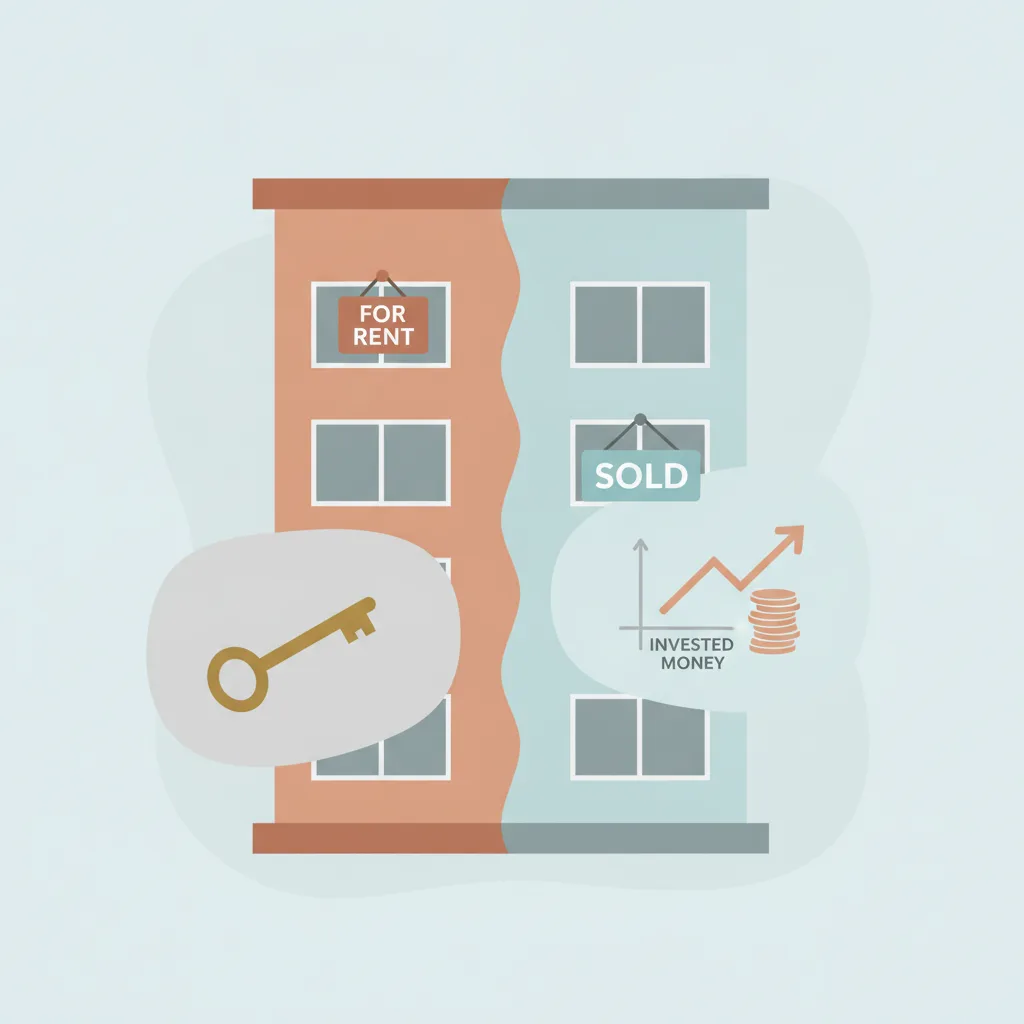
Two adjacent buildings on a quiet street, one with a sold sign, the other with a for-rent sign.

Reue fürs Handeln

Haus kaufen

8,0%

8 % der Eigenheimbesitzer wünschten, sie hätten gemietet

US-Eigenheimbesitzer, national repräsentative Online-Umfrage

retrospektiv, kein fester Zeitraum

Reue fürs Unterlassen

Langfristig mieten

45%

45 % der Mieter wünschten, sie hätten gekauft

US-Mieter in 20 großen Metropolregionen

retrospektiv, kein fester Zeitraum

% bereuen diese Entscheidung

inaction dominates — Nichthandeln dominiert — die meisten bereuen, nicht gehandelt zu haben.

Verwandte Entscheidungen

Semantisch ähnliche Entscheidungen — gleiches Terrain, andere Abwägungen.

FinanzenDirekt

Passend vs. überdimensioniert

% bereuen diese Entscheidung

Handlung überwiegt

Reue über Handlung 1.6× höher

Finanzen

Mietverhandlung

% bereuen diese Entscheidung

Untätigkeit überwiegt

Reue über Untätigkeit 1.9× höher

Finanzen

Hausrenovierung

% bereuen diese Entscheidung

Handlung überwiegt

Reue über Handlung 2.3× höher

Finanzen

Festzins vs. variabel verzinste Hypothek

% bereuen diese Entscheidung

Handlung überwiegt

Reue über Handlung 3.6× höher

Finanzen

Investieren

% bereuen diese Entscheidung

Untätigkeit überwiegt

Reue über Untätigkeit 3.2× höher

Finanzen

Früh investieren

% bereuen diese Entscheidung

Untätigkeit überwiegt

Reue über Untätigkeit 3.2× höher

Finanzen

Vermieten oder verkaufen und anlegen

% bereuen diese Entscheidung

Untätigkeit überwiegt

Reue über Untätigkeit 1.6× höher

Finanzen

Anzahlung schenken vs. Ersparnisse schützen

% bereuen diese Entscheidung

Untätigkeit überwiegt

Reue über Untätigkeit 2.3× höher

45% of renters wish they had bought instead of renting, according to a Zillow/Ipsos survey of 10,000 adults across 20 major US metros — more than five times the 8% of homeowners who wish they had rented instead. The asymmetry is one of the largest in regret research, a 5.6:1 ratio favoring action over inaction. Bankrate’s separate 2024 survey found that while 47% of homeowners have some regret about their purchase (too small, too expensive, wrong neighborhood), only 8% regret buying rather than renting, confirming that buyer regret is typically about the specific property, not the decision to buy.

The renter-regret figure deserves careful reading. It likely conflates two distinct groups: those who chose to rent and now regret it, and those who wanted to buy but could not afford to. The latter is not a decision regret — it is a circumstance regret, closer to involuntary childlessness than to voluntary choice. Zillow’s breakdown supports this: renters’ top complaints are inability to build equity (52%) and inability to customize (52%), both of which are structural features of renting rather than consequences of a deliberate lifestyle choice.

The Gilovich pattern here — inaction dominates — aligns with the broader temporal theory: not buying a house becomes more painful over time as prices rise and equity accumulates for owners. But this is partly survivorship bias in the data. The survey was conducted during a period of sustained US home-price appreciation. In Japan’s lost decades or US markets post-2008, the ratio would look very different. Housing regret is heavily path-dependent.

Quellen: Handeln

Quellenregister

Jede Zahl unten ist das, was die jeweilige Quelle berichtet hat — mit dem wörtlichen Zitat, auf das wir uns stützen, und wie wir zu unserer Zahl gelangt sind. Klicke auf einen Link, um direkt zu prüfen.

  1. [1] Zillow Research / Ipsos — Unexpected Repairs and Maintenance Top the List of Regrets for Homeowners
    Unexpected Repairs and Maintenance Top the List of Regrets for Homeowners
    Statistik
    8% of homeowners regret buying instead of renting — five times less than renters who regret not buying
    Auszug
    “"Just 8% of homeowners say they regret buying instead of renting, compared to 45% of renters who regret renting rather than buying. Homeowner regrets tend to focus on specifics — maintenance costs, size — rather than the decision to buy itself." ”
    Quelldaten von
    2022-01-19
    Abgerufen
    2026-04-25
    Berechnung
    Zillow/Ipsos semiannual survey of 10,000 homeowners and renters across 20 major metros. The 8% figure represents homeowners who specifically wish they had rented instead. A separate Bankrate 2024 survey found 19% would not buy their current home again, but that includes "would buy a different home" — not renting.
  2. [2] Bankrate — Nearly Half of Homeowners Have at Least One Regret About Their Home
    Nearly Half of Homeowners Have at Least One Regret About Their Home
    Statistik
    47% of homeowners have a regret about their purchase, but 69% would buy their current home again
    Auszug
    “"Nearly half (47 percent) of current U.S. homeowners have a regret about their purchase. However, most American homeowners (69 percent) would buy their current home if they had to do it over again." ”
    Quelldaten von
    2024-05-01
    Abgerufen
    2026-04-25
    Berechnung
    Bankrate's regret figure covers any aspect of the purchase (too small, too expensive), not a regret about buying vs renting. The 69% "would buy again" rate corroborates the low fundamental regret captured by the Zillow 8%.

Quellen: Nichthandeln

Quellenregister

Jede Zahl unten ist das, was die jeweilige Quelle berichtet hat — mit dem wörtlichen Zitat, auf das wir uns stützen, und wie wir zu unserer Zahl gelangt sind. Klicke auf einen Link, um direkt zu prüfen.

  1. [1] Zillow Research / Ipsos — 45% of Renters Wish They Owned
    45% of Renters Wish They Owned
    Statistik
    45% of renters regret renting rather than buying, more than five times the share of homeowners who regret buying
    Auszug
    “"45% of renters regret renting rather than buying — more than five times the share of homeowners (8%) who regret buying instead of renting. Tenants' top regrets are not being able to build equity and not being able to customize or improve their rentals (52% each)." ”
    Quelldaten von
    2022-01-19
    Abgerufen
    2026-04-25
    Berechnung
    Same Zillow/Ipsos semiannual survey (n=10,000). The 45% is renters who specifically say they wish they owned. Across major metros, 87% of renters have at least one regret about their housing.

Einschränkungen

The Zillow survey samples 20 major metros, which skew toward markets where homeownership has been financially rewarding. In stagnant or declining markets, buyer regret may be higher. The renter-regret figure conflates "wish I could afford to buy" with "regret choosing to rent" — involuntary renters inflated by affordability constraints dominate the sample. Homeowner regret may also be suppressed by cognitive dissonance: admitting a six-figure purchase was a mistake is psychologically costly. The 5.6:1 ratio is real but overstates the decision-quality gap because it ignores structural barriers. A distinct 2024-2026 sub-decision the headline rates do not capture is buying or holding in a wildfire/flood zone where insurers are retreating: roughly 1 in 5 homes in California's most extreme fire-risk areas lost coverage since 2019 (Deep Sky Research, compiling state-DOI records; 150,000+ uninsured highest-risk households), the California FAIR Plan of last resort grew to 451,000+ policies, and First Street projects ~$1.47 trillion in climate-driven US real-estate devaluation over 30 years. No retrospective regret survey exists for the buy-in-a-climate-risk-zone choice, so this is a directional caveat, not a rate — the uninsurability/devaluation evidence sits on the action side, while the only located relocation-satisfaction proxy (a cross-hazard N=83 post-Sandy buyout survey) is too thin to anchor an inaction regret rate.

Rohdaten: /api/decisions.json

Zuletzt auf diesem Gerät angesehen