


Zum Inhalt springen
Likelier

Reue durch Handeln vs. Nichthandeln

Passend kaufen oder größer kaufen als nötig

Wenn du handelst

Passend zum aktuellen Bedarf kaufen

8,0%

Wenn du nicht handelst

Größer kaufen als nötig

5,0%

Anteil derer, die jede Entscheidung später bereuen. Balken und vollständige Datengrundlage erscheinen unten.


Finanzen

Zuletzt überprüft 2026-05-04

Evidenzqualität 4.13/5

Bewertungsergebnis nach acht Dimensionen gemäß der Qualitätsrubrik . Jede Dimension wird mit 1–5 bewertet.

D1 Quellenüberprüfung
5/5
D2 Quellenautorität & Unabhängigkeit
4/5
D3 Genauigkeit der Bedauernsrate
4/5
D4 Vergleichbarkeit der Quellen
5/5
D5 Gilovich-Muster
2/5
D6 Prosaqualität
5/5
D7 Vollständigkeit der Einschränkungen
4/5
D8 Stichprobenqualität
4/5
Durchschnitt 4.13/5
Direkte Evidenz
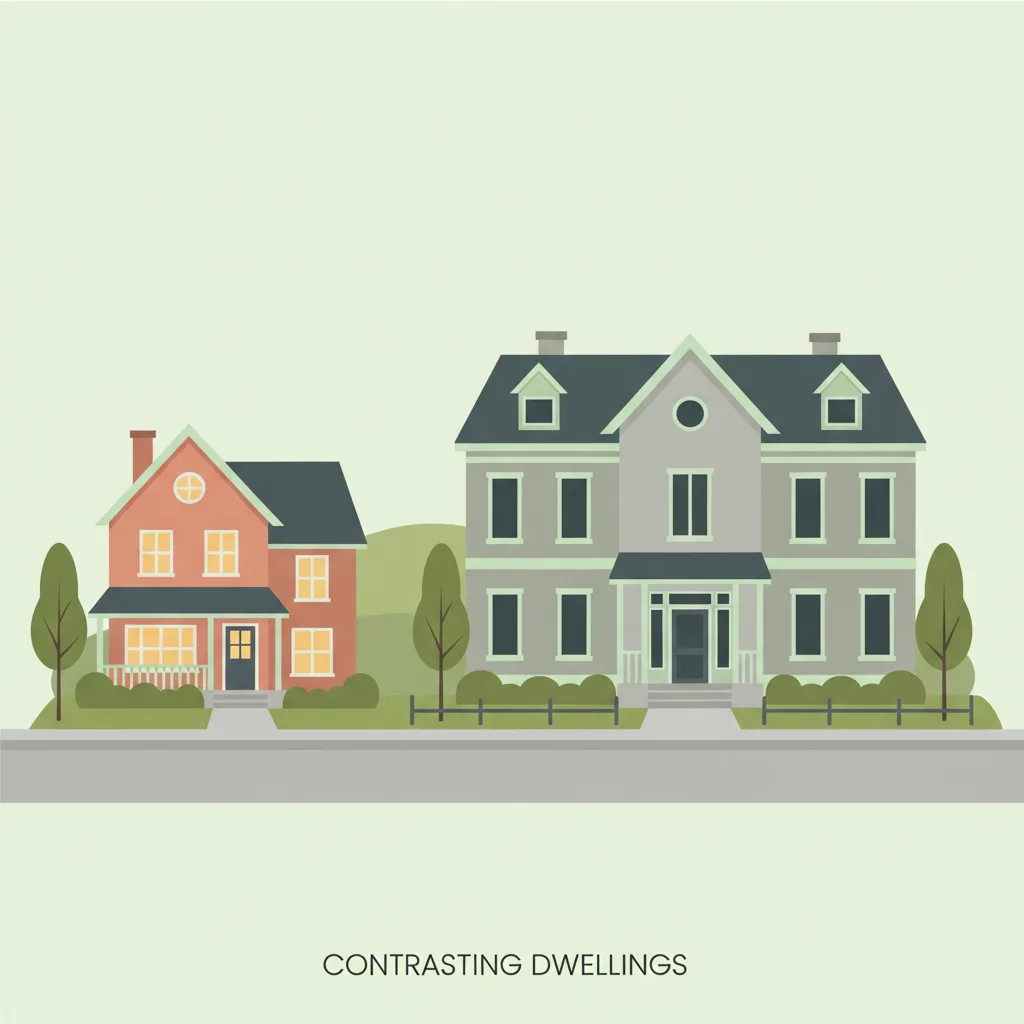
Two houses side by side — one compact and tidy, the other larger with several dark, unused windows.

Reue fürs Handeln

Passend zum aktuellen Bedarf kaufen

8,0%

~8 % der Eigenheimbesitzer wünschten, sie hätten größer gekauft

US-Eigenheimbesitzer, national repräsentativ

retrospektiv, kein fester Zeitraum

Reue fürs Unterlassen

Größer kaufen als nötig

5,0%

~5 % der Eigenheimbesitzer bedauern, zu viel Fläche gekauft zu haben

US-Eigenheimbesitzer, national repräsentativ

retrospektiv, kein fester Zeitraum

% bereuen diese Entscheidung

action dominates — Handeln dominiert — die meisten bereuen ihr Handeln.

Verwandte Entscheidungen

Semantisch ähnliche Entscheidungen — gleiches Terrain, andere Abwägungen.

FinanzenDirekt

Hauskauf

% bereuen diese Entscheidung

Untätigkeit überwiegt

Reue über Untätigkeit 5.6× höher

Finanzen

Hausrenovierung

% bereuen diese Entscheidung

Handlung überwiegt

Reue über Handlung 2.3× höher

Finanzen

Festzins vs. variabel verzinste Hypothek

% bereuen diese Entscheidung

Handlung überwiegt

Reue über Handlung 3.6× höher

Finanzen

Verzicht auf Gebäudeinspektion

% bereuen diese Entscheidung

Handlung überwiegt

Reue über Handlung 3.1× höher

Finanzen

Mietverhandlung

% bereuen diese Entscheidung

Untätigkeit überwiegt

Reue über Untätigkeit 1.9× höher

Finanzen

Neu vs Gebraucht

% bereuen diese Entscheidung

Ausgewogen

Weitgehend ausgewogen

lifestyle

E-Auto vs Verbrenner

% bereuen diese Entscheidung

Handlung überwiegt

Reue über Handlung 2.9× höher

lifestyle

Bio vs konventionell

% bereuen diese Entscheidung

Untätigkeit überwiegt

Reue über Untätigkeit 3.1× höher

About 8% of US homeowners wish they had bought a bigger home, versus roughly 5% who regret buying too much space, according to Bankrate’s 2024 survey of homeowners with purchase regrets. The gap is narrow — 3 percentage points — and the finding cuts against the popular “don’t buy too much house” advice. Among homeowners who have any regret at all (47% of the total), “too small” ranks second at 18%, while “too big” comes in at 10%, behind maintenance costs, location, overpaying, and mortgage rates. The pattern extends beyond housing: vehicle buyers who chose a compact car and later needed a larger one face modest upgrade costs, while those who bought an oversized SUV absorb years of higher fuel, insurance, and depreciation on capacity they never use.

The small gap masks an asymmetry in how the two regrets feel. Right-sizers who outgrow their space experience a concrete, daily friction: the cramped home office, the bedroom that doubled as a nursery. Oversizers, by contrast, often absorb their regret into adjacent financial complaints. Bankrate’s survey found 40% of regretful owners citing maintenance and hidden costs as their top grievance, and 13% citing an unaffordable mortgage — both categories that disproportionately affect those who bought more home than they needed. Genesove and Mayer’s study of Boston condominiums showed that owners anchored to their purchase price set asking prices 25–35% above market when facing a loss, creating a psychological lock-in that makes downsizing from an oversized home especially painful. Hedonic adaptation compounds the problem: the pleasure of extra square footage fades within months, but the mortgage payment never adapts.

Neither side of this decision carries catastrophic regret rates. Both land under 10%, well below the 45% of renters who wish they had bought at all. The honest read is that most homeowners, whether they sized up or sized down, would do the same thing again. For buyers weighing the tradeoff today, the financial math favors right-sizing: transaction costs for a future upgrade ($1,000–$5,000 for a local move) are modest compared to years of carrying costs on unused space. But the data does not support a strong directional claim. Individual variables — market trajectory, family plans, remote-work permanence — swamp the aggregate signal.

Quellen: Handeln

Quellenregister

Jede Zahl unten ist das, was die jeweilige Quelle berichtet hat — mit dem wörtlichen Zitat, auf das wir uns stützen, und wie wir zu unserer Zahl gelangt sind. Klicke auf einen Link, um direkt zu prüfen.

  1. [1] Bankrate — Bankrate 2024 Homeowner Regrets Survey
    Bankrate 2024 Homeowner Regrets Survey
    Statistik
    18% of homeowners with regrets say they bought too small a house; 47% of all homeowners have at least one regret
    Auszug
    “"Nearly half (47 percent) of current U.S. homeowners have a regret about their purchase. Among those with regrets, 18% say they bought too small of a house." ”
    Quelldaten von
    2024-05-01
    Abgerufen
    2026-04-28
    Berechnung
    Bankrate's April 2024 nationally representative survey. 47% of homeowners report at least one regret. Of those, 18% cite "too small" as their regret. Population-level rate: 0.47 × 0.18 = 0.085, rounded to 0.08. This represents homeowners who, looking back, wish they had purchased a larger home — not necessarily people who deliberately right-sized, but the closest available proxy.
  2. [2] Clever Real Estate — American Home Buyer Report: 2024 Edition
    American Home Buyer Report: 2024 Edition
    Statistik
    24% of recent homebuyers with regrets say their home doesn't meet all their needs
    Auszug
    “"82% of recent buyers have at least one regret about their purchase. Among those with regrets, 24% say their home doesn't meet all their needs." ”
    Quelldaten von
    2024-05-13
    Abgerufen
    2026-04-28
    Berechnung
    Clever Real Estate survey of 920 Americans who bought in 2023-2024. The 24% "doesn't meet all needs" is broader than pure size regret — it includes layout, features, and location — but corroborates the Bankrate finding that undersizing is a common regret category.

Quellen: Nichthandeln

Quellenregister

Jede Zahl unten ist das, was die jeweilige Quelle berichtet hat — mit dem wörtlichen Zitat, auf das wir uns stützen, und wie wir zu unserer Zahl gelangt sind. Klicke auf einen Link, um direkt zu prüfen.

  1. [1] Bankrate — Bankrate 2024 Homeowner Regrets Survey
    Bankrate 2024 Homeowner Regrets Survey
    Statistik
    10% of homeowners with regrets say they bought too big a house; 47% of all homeowners have at least one regret
    Auszug
    “"Among homeowners with regrets, 10% say their regret is that their home is too big. The most common regret overall is maintenance and hidden costs (40%), followed by buying too small (18%)." ”
    Quelldaten von
    2024-05-01
    Abgerufen
    2026-04-28
    Berechnung
    Same Bankrate 2024 survey. 47% have regrets, 10% of those cite "too big." Population-level rate: 0.47 × 0.10 = 0.047, rounded to 0.05. Note that oversizing regret may be underreported because its costs (maintenance, utilities, mortgage strain) are captured by adjacent categories: 40% cite "maintenance/hidden costs" and 13% cite "mortgage too high." Those who bought too big may attribute regret to cost rather than size.
  2. [2] The Quarterly Journal of Economics — Loss Aversion and Seller Behavior: Evidence from the Housing Market
    Loss Aversion and Seller Behavior: Evidence from the Housing Market
    Statistik
    Owners facing nominal losses set asking prices 25-35% above expected sale price and exhibit much lower sale hazard
    Auszug
    “"Condominium owners subject to nominal losses set higher asking prices of 25-35 percent of the difference between the property's expected selling price and their original purchase price, attain higher selling prices of 3-18 percent of that difference, and exhibit a much lower sale hazard than other sellers." ”
    Quelldaten von
    2001-11-01
    Abgerufen
    2026-04-28
    Berechnung
    Genesove and Mayer (2001), data from downtown Boston condos in the 1990s. This study doesn't directly measure oversizing regret but documents the mechanism that traps oversizers: loss aversion anchors owners to their purchase price, making them reluctant to sell even when the home no longer fits. Owner-occupants show effects twice as large as investors. Cited as evidence that overprovisioning creates psychological lock-in beyond the financial cost.

Einschränkungen

No survey asks the precise question posed here — "did you deliberately right-size and regret it, or deliberately overprovision and regret it?" The Bankrate rates are derived from homeowners retrospectively judging whether their home is too small or too big, which conflates deliberate strategy with budget constraints and life changes. The 3-percentage-point gap is small enough that individual circumstances dominate the aggregate signal. Housing data is strongest; vehicle and general-purchase evidence is directional but thinner. In rapidly appreciating markets, oversizers are partially rescued by equity growth; in flat or declining markets, the cost penalty of extra square footage is amplified. The 40% who cite maintenance costs may include many oversizers who frame their regret as financial rather than spatial, which would narrow or reverse the gap if re-coded.

Rohdaten: /api/decisions.json

Zuletzt auf diesem Gerät angesehen