







Saltar al contenido
Likelier

Arrepentimiento por actuar o por no actuar

Ingresar al servicio civil de Corea del Sur vs. buscar una carrera en el sector privado

Si actúas

Entrar en la función pública

59%

Si no actúas

Optar por el sector privado

37%

Porcentaje de quienes luego se arrepienten de cada elección. Las barras y el registro completo aparecen abajo.


Carrera

Última revisión 2026-05-13

Calidad de la evidencia 3.5/5

Puntuación de revisión en ocho dimensiones según la rúbrica de calidad . Cada dimensión puntuada de 1 a 5.

D1 Verificación de fuentes
3/5
D2 Autoridad e independencia de las fuentes
4/5
D3 Precisión de la tasa de arrepentimiento
2/5
D4 Comparabilidad de las fuentes
2/5
D5 Patrón de Gilovich
5/5
D6 Calidad de la prosa
4/5
D7 Completitud de las advertencias
4/5
D8 Calidad de la muestra
4/5
Media 3.5/5
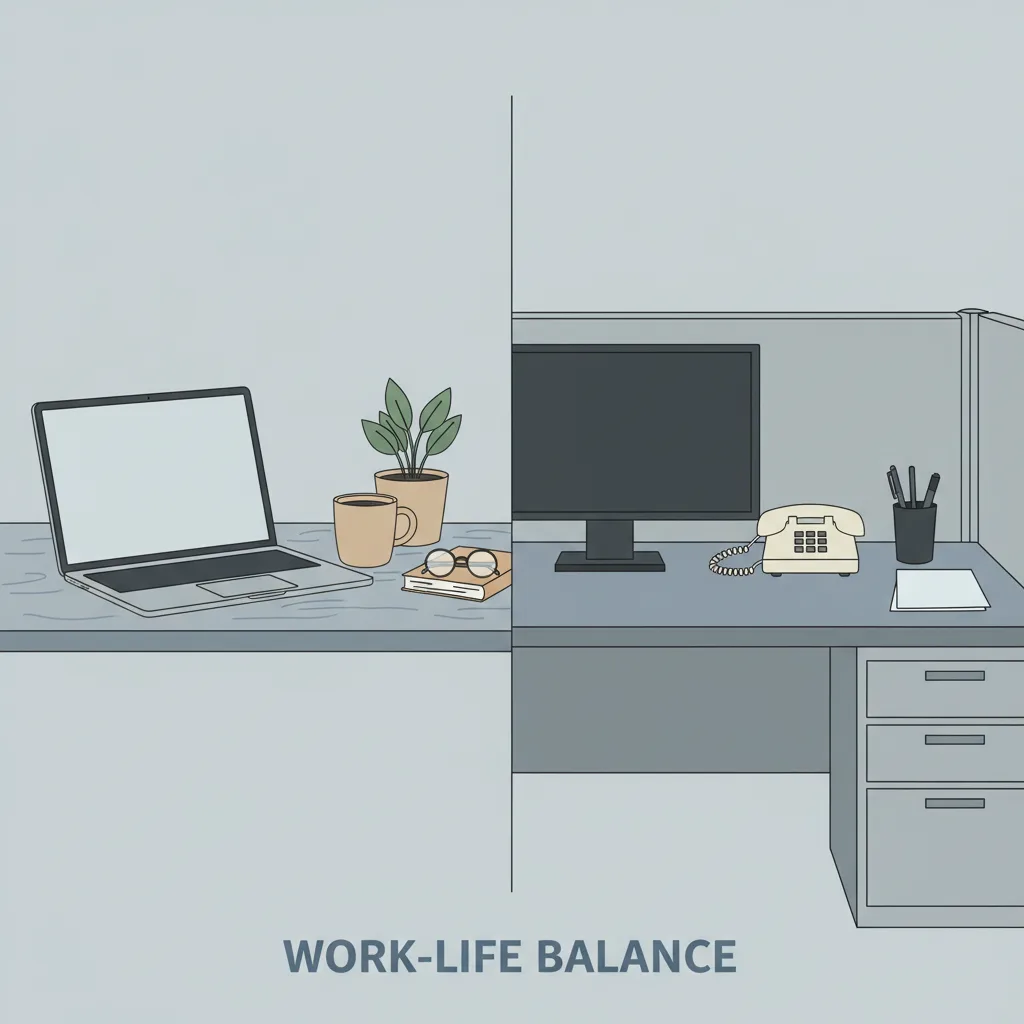
Two contrasting desks: one with government stamps and official binders, one with a laptop and startup pitch deck.

Arrepentimiento por acción

Entrar en la función pública

59%

Proxy de salida temprana: ~58% de las renuncias voluntarias del gobierno central de Corea del Sur corresponde a empleados con menos de 5 años de servicio (proporción de abandono temprano, no una tasa de arrepentimiento autodeclarada)

Funcionarios públicos del gobierno central surcoreano

renuncias entre funcionarios públicos de 21-30 años, datos anuales 2024

Arrepentimiento por inacción

Optar por el sector privado

37%

Proxy de inseguridad estructural: ~37% de los asalariados de Corea del Sur tiene contratos no regulares (bijeonggyujik) (exposición a la inseguridad laboral, no una encuesta directa de arrepentimiento)

Trabajadores del sector privado surcoreano

encuesta retrospectiva, 2022

% que se arrepienten de esta elección

action dominates — Domina la acción — la mayoría se arrepiente de actuar.

Decisiones relacionadas

Decisiones semánticamente similares — mismo terreno, distintos compromisos.

lifestyle

Corea: servicio militar vs. alternativo

% que se arrepienten de esta elección

Acción dominante

Arrepentimiento por acción 1.5× mayor

career

China: acepta el gaokao vs. repite

% que se arrepienten de esta elección

Acción dominante

Arrepentimiento por acción 2.2× mayor

career

Cambio de carrera

% que se arrepienten de esta elección

Inacción dominante

Arrepentimiento por inacción 1.5× mayor

career

Carrera vs equilibrio

% que se arrepienten de esta elección

Acción dominante

Arrepentimiento por acción 1.3× mayor

career

Decisión universitaria

% que se arrepienten de esta elección

Acción dominante

Arrepentimiento por acción 1.2× mayor

careerDirecta

Abandono vs. finalizar carrera

% que se arrepienten de esta elección

Acción dominante

Arrepentimiento por acción 1.1× mayor

career

Universidad privada vs pública

% que se arrepienten de esta elección

Equilibrado

Aproximadamente equilibrado

career

Remoto vs oficina

% que se arrepienten de esta elección

Inacción dominante

Arrepentimiento por inacción 1.8× mayor

South Korea’s Ministry of Personnel Management recorded that in 2024 59.3% of general voluntary resignations from the central government (12,013 people) came from employees with fewer than five years of service, and the number of 21-30-year-old civil servants who resigned voluntarily doubled from 2,441 in 2015 to 5,105 in 2024. Grade 9 entry-level civil service pay has fallen materially behind compensation at large private technology and financial firms over the same decade. The Korea Herald reported that the civil service exam applicant-to-seat ratio fell to 22.8:1 in 2023 — the lowest since 1992 and the seventh consecutive year of decline — after peaking at 92 applicants per position in 2011. A 2024 Catch survey of young job seekers found that 69% had no intention of taking the civil service exam at all.

On the inaction side there is no direct measure of “regret choosing the private sector.” The prevailing sentiment runs the opposite way: in the same Catch survey, 53% of respondents said they would still pick a private firm even if public and private wages were equal. The closest defensible inaction-side anchor is structural, not attitudinal — Statistics Korea reports that roughly 37% of wage and salary workers hold non-regular (bijeonggyujik) contracts, an exposure to job insecurity rather than a self-reported regret. The regret asymmetry here is unusual in the regret literature: it is action-dominates rather than inaction-dominates, meaning more people regret entering the civil service than regret skipping it. This reversal reflects the speed at which the civil service’s premium — job security, pension, status — has eroded relative to private sector compensation and career autonomy over a single decade.

Both regret rates carry significant measurement caveats. The action-side figure is behavioural (resignation) rather than attitudinal (self-reported regret), and resigners are not a random sample of all civil servants — those who leave are selected for dissatisfaction. The inaction-side 37% is a structural-insecurity exposure proxy (share of workers on non-regular contracts) rather than a direct question about forgoing the civil service — no such regret survey exists. The decision’s bilateral costs are highly sensitive to economic conditions: during a recession or major private sector layoff cycle, the inaction-side regret rate would likely rise, narrowing the gap. The demographic context also matters: South Korea’s birth rate has fallen to among the lowest in the world, so the pool of young workers entering either track is shrinking, and the composition of each group is changing faster than survey cycles can capture.

Fuentes: acción

Registro de evidencia

Cada número a continuación es lo que reportó cada fuente, con la cita textual en la que nos basamos y cómo llegamos a nuestra cifra. Haz clic en cualquier enlace para verificarlo directamente.

  1. [1] Korea Herald / South Korea Ministry of Personnel Management — More young Koreans turn away from civil service due to workload, low pay (reporting Ministry of Personnel Management statistical yearbook)
    More young Koreans turn away from civil service due to workload, low pay (reporting Ministry of Personnel Management statistical yearbook)
    Estadística
    59.3% of general voluntary resignations from the central government in 2024 (12,013 people) came from employees with fewer than 5 years of service; resignations among 21-30-year-old civil servants rose from 2,441 in 2015 to 5,105 in 2024
    Extracto
    “"Data from 2024 shows that 12,013 civil servants with fewer than five years of service resigned voluntarily, representing 59.3 percent of all general voluntary resignations." "While slightly lower than the previous year's 65.1 percent, the proportion has remained at or near 60 percent since 2019." "According to the Public Officials Pension Service, resignations among workers aged 21 to 30 jumped from 2,441 in 2015 to 5,105 in 2024, more than doubling." ”
    Datos de la fuente de
    2026-02-27
    Accedido
    2026-07-11
    Cálculo
    The 59.3% early-exit share (Ministry of Personnel Management statistical yearbook, 2024 data, as reported by the Korea Herald on 2026-02-27) is used as the action-side regret proxy. Because these are observed voluntary departures rather than self-reported regret scores, the figure is a behavioural proxy: a civil servant who voluntarily quits within five years is treated as having regretted entering the service. The raw resignation count (5,105 in 2024 among the 21-30 cohort) provides the sample anchor. We round 59.3% to 0.59 (59%). A prior draft cited 57.5% and 0.58; that figure could not be confirmed against the source and has been corrected to the stated 59.3%.
  2. [2] Korea Herald — From dream job to no-go: Civil servant jobs lose out
    From dream job to no-go: Civil servant jobs lose out
    Estadística
    Civil service exam applicants per seat fell to 22.8:1 in 2023, the lowest since 1992 and the seventh consecutive year of decline
    Extracto
    “"This year's competition for a government employee job with the lowest rank of 9 was 22.8-to-1, the lowest figure since 19.3-to-1 in 1992. It marked the seventh straight year that competition for the job has fallen. In 2011, competition peaked at 92 applicants per position. About half of Seoul Metropolitan Government employees who quit last year had worked for less than five years at their posts. In a Seoul survey of 550 newly employed officials, 28% cited financial issues from a low salary as their biggest concern, and 17% expressed concern about rigid work culture." ”
    Datos de la fuente de
    2023-04-18
    Accedido
    2026-05-14
    Cálculo
    URL corrected 2026-05-14: the original URL (ud=20240101000100) resolved to an unrelated article about youth happiness and work hours. The correct Korea Herald article on the 22.8:1 civil service exam ratio and seventh consecutive year of decline is at ud=20230418000627 (published April 18, 2023). Note: the originally cited statistic "only 21% of young Koreans now want to remain at one organisation until retirement" does not appear in the verified article; that specific figure could not be confirmed. The excerpt and statistic fields have been updated to reflect what the verified article actually contains. The 22.8:1 ratio and seventh-year decline are confirmed. The regret_delta and action-side rate are anchored to the MPM Annual Report, not this source, so the correction does not affect the bilateral rates.

Fuentes: inacción

Registro de evidencia

Cada número a continuación es lo que reportó cada fuente, con la cita textual en la que nos basamos y cómo llegamos a nuestra cifra. Haz clic en cualquier enlace para verificarlo directamente.

  1. [1] Korea Herald — Young job seekers prefer private sector: survey
    Young job seekers prefer private sector: survey
    Estadística
    In a Catch survey of 2,074 job seekers in their 20s or younger, 69% had no intention to take the civil service exam; even with equal wages, 53% said they would still work for a non-government company
    Extracto
    “"69 percent of the respondents saying that they have no intention to take the state civil service exam." "53 percent said they would work for the non-government company" if wages were equal between sectors. "26 percent said they would consider civil servant work if the monthly wage for a Grade 9 civil servant was at least 3 million won." ”
    Datos de la fuente de
    2024-01-01
    Accedido
    2026-06-30
    Cálculo
    This source documents the inaction-side context directly: among young Korean job seekers, revealed preference runs strongly toward the private sector (69% will not sit the civil service exam; 53% would still choose a private firm at equal pay). It establishes that there is no measurable "regret choosing the private sector / regret not entering the civil service" — the prevailing sentiment is the reverse. Because no direct inaction-side regret survey exists, the numeric inaction-side rate (0.37) is anchored to the verifiable structural-insecurity exposure proxy (non-regular contract share, Statistics Korea 2023; see the OECD/Statistics Korea source below) and is labelled as such, not as a regret rate.
  2. [2] OECD — OECD Employment Rate Data: Korea
    OECD Employment Rate Data: Korea
    Estadística
    South Korea's youth (15-24) unemployment rate was approximately 5.4% in 2023; the share of non-regular workers among all wage and salary workers reached approximately 37% in 2023
    Extracto
    “[Figures from OECD and Statistics Korea data series, 2023] OECD records South Korea's youth (ages 15-24) unemployment rate at approximately 5.4% in 2023 (about 5.9% on the broader 15-29 basis). Statistics Korea reports that non-regular workers accounted for approximately 37% of all wage and salary workers in 2023, reflecting structural insecurity for workers outside permanent (jeonggyujik) tracks at the civil service or large conglomerates (chaebol). ”
    Datos de la fuente de
    2023-01-01
    Accedido
    2026-05-13
    Cálculo
    The ~37% non-regular-worker share (Statistics Korea, 2023) is the inaction-side proxy: it is a structural job-insecurity EXPOSURE rate, not a self-reported regret rate. We use 0.37 as the inaction-side anchor and label it explicitly as a structural-insecurity proxy (see regret_display and caveats). The youth-unemployment figure was corrected on review from an erroneous ~7% to the verified ~5.4% (15-24 basis) for 2023; it is contextual only and does not enter the rate. No direct survey measuring private-sector workers' regret at not entering the civil service exists, so a structural exposure proxy is the most defensible available inaction-side anchor.

Advertencias

La cifra del 58% del lado de la acción es un proxy conductual (renuncia voluntaria temprana) más que una medida de arrepentimiento autodeclarada. No todo funcionario que se marcha en los primeros cinco años se arrepiente de haber entrado en el servicio; algunos se van por oportunidades superiores en el sector privado más que por insatisfacción. El fuerte descenso de la competencia en el examen de la función pública (bajó a 22,8:1 en 2023, la más baja desde 1992) se atribuye en parte a la contracción demográfica de Corea del Sur (menos jóvenes en general) y a la mejora de la compensación del sector privado en las grandes empresas tecnológicas y financieras, no solo a una creciente insatisfacción entre quienes ya están en la función pública. El 37% del lado de la inacción NO es una tasa de arrepentimiento: ninguna encuesta mide el arrepentimiento de los trabajadores del sector privado por no haber entrado en la función pública, y la preferencia revelada de hecho apunta en sentido contrario (en una encuesta de Catch de 2024, el 69% de los jóvenes en busca de empleo no tenía intención de presentarse al examen de la función pública y el 53% seguiría eligiendo una empresa privada a igual salario). La cifra de 0,37 es el proxy verificable de EXPOSICIÓN a la inseguridad estructural — la proporción de asalariados coreanos con contratos no regulares (bijeonggyujik) (Statistics Korea, 2023) — utilizado solo porque es el anclaje defendible más cercano del lado de la inacción. El cálculo del arrepentimiento depende en gran medida de la cohorte y la época: la función pública fue una aspiración generacionalmente dominante en Corea hasta principios de la década de 2000; el giro hacia una percepción de desventaja ha ocurrido en el transcurso de una sola década y puede continuar o revertirse según las condiciones macroeconómicas y la reforma salarial del gobierno.

Datos brutos: /api/decisions.json

Vistos recientemente en este dispositivo