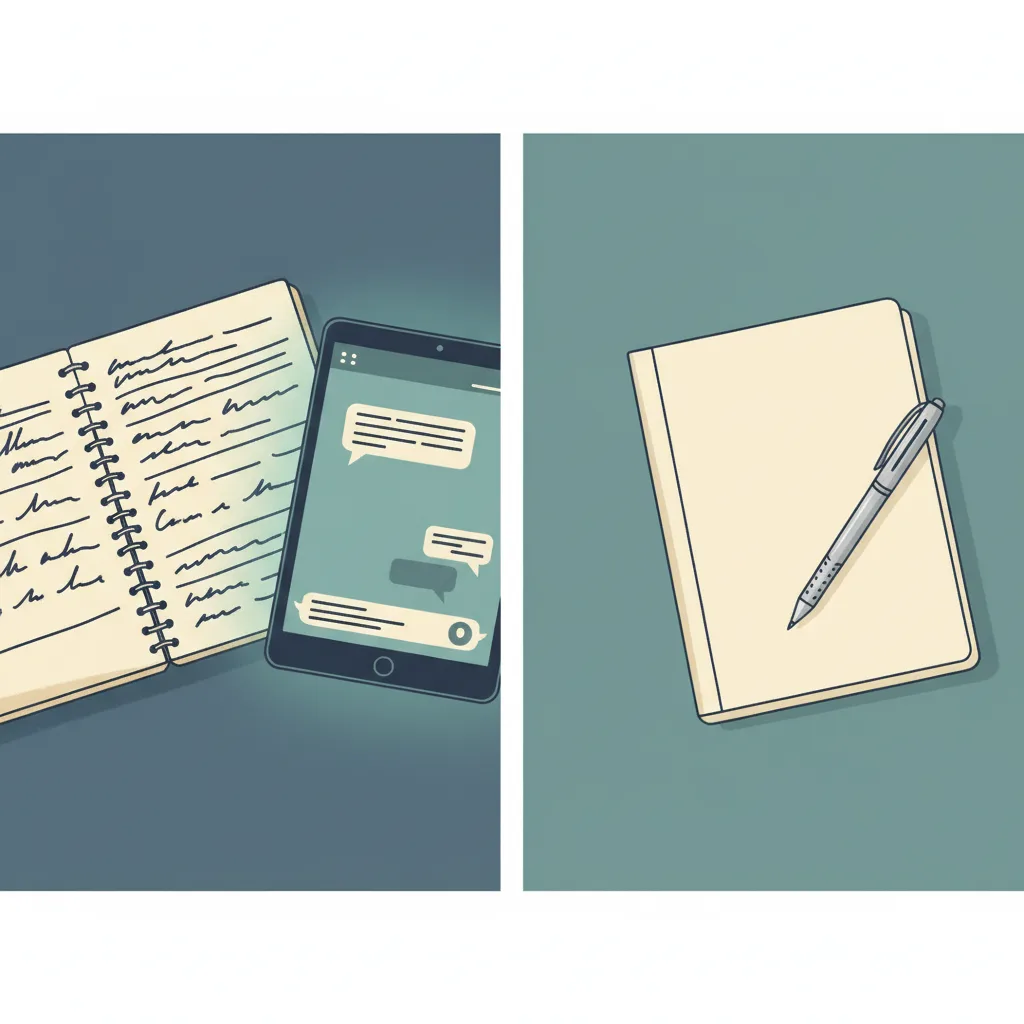
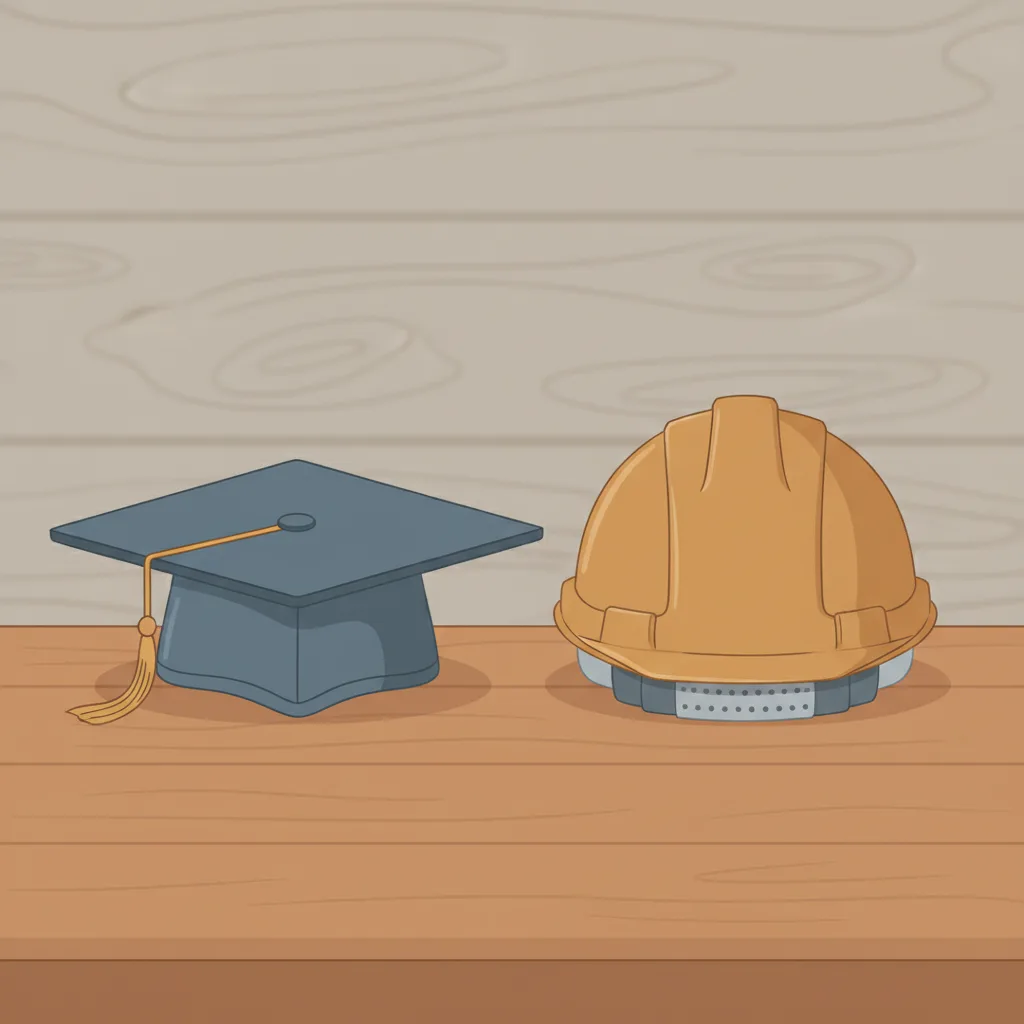
Dejar que la IA escriba tu tarea escolar o solicitud de empleo vs escribirla tú mismo
Si actúas
Usar IA para escribir el trabajo
11%
Si no actúas
Escribirlo tú mismo
10%
Porcentaje de quienes luego se arrepienten de cada elección. Las barras y el registro completo aparecen abajo.
Carrera
Última revisión 2026-05-28
Calidad de la evidencia 4.0/5
Puntuación de revisión en ocho dimensiones según la
rúbrica de calidad
. Cada dimensión puntuada de 1 a 5.
D1 Verificación de fuentes
5/5
D2 Autoridad e independencia de las fuentes
4/5
D3 Precisión de la tasa de arrepentimiento
2/5
D4 Comparabilidad de las fuentes
3/5
D5 Patrón de Gilovich
4/5
D6 Calidad de la prosa
4/5
D7 Completitud de las advertencias
5/5
D8 Calidad de la muestra
5/5
Media4.0/5
Datos sustitutos — no existe ninguna encuesta directa sobre el arrepentimiento para esta decisión. Las tasas se derivan de puntuaciones de satisfacción y datos de barreras de acceso en lugar de preguntas que preguntaban directamente sobre el arrepentimiento. Ver advertencias más abajo.
Arrepentimiento por acción
Usar IA para escribir el trabajo
11%
No existe ninguna encuesta directa de arrepentimiento: ningún estudio pregunta a los estudiantes si se arrepienten de usar IA en una tarea. El 11% mide en su lugar un resultado adverso concreto — candidatos a empleo que usaban ChatGPT a los que se les denegó un puesto una vez que el entrevistador descubrió que la IA había escrito la solicitud (ResumeBuilder 2023). El a menudo citado 60% de estudiantes usuarios de IA que están de acuerdo en que la IA perjudica el pensamiento crítico (RAND dic. 2025) es una creencia sobre un daño general, no arrepentimiento por una decisión específica, por lo que deliberadamente NO se usa como la tasa
Estudiantes estadounidenses de 12 a 29 años que usan IA para tareas escolares; por separado, buscadores de empleo adultos estadounidenses que usaron ChatGPT para currículums/cartas de presentación
Diciembre de 2025 (RAND); febrero de 2023 (ResumeBuilder)
Arrepentimiento por inacción
Escribirlo tú mismo
10%
Ninguna fuente mide el arrepentimiento por inacción: ninguna encuesta pregunta a los estudiantes que escribieron las tareas ellos mismos si se arrepienten, y los estudios citados no dan ningún porcentaje para ello. El mayor estudio de estudiantes de grado (SERU) solo advierte cualitativamente que los no usuarios de IA 'pueden quedarse atrás', y RAND encuentra que el 78% de los no usuarios cree que la IA es perjudicial — por lo que la mayor parte del no uso es de principios, no lamentado. El ~10% mostrado es un suelo conservador declarado para la minoría con acceso restringido que señala SERU, derivado de ninguna estadística de fuente; léelo como 'sin estimación fiable', no como una tasa observada
Estudiantes estadounidenses de 12 a 29 años que no usan IA para tareas escolares
2024-2026
% que se arrepienten de esta elección
Usar IA para escribir el trabajoEscribirlo tú mismo
There is no survey that asks students whether they regret using AI on an assignment, so this side has no measured regret rate. The number used here — 11% — is the cleanest genuine adverse outcome on the action side: a ResumeBuilder survey of 1,000 US job seekers found that 78% got an interview after submitting ChatGPT-written application materials and 59% were hired, but 11% were denied a job once the interviewer realised AI had written the application. The figure most often quoted in this debate — 60% of student AI users (67% of all students) agreeing that AI for schoolwork harms critical thinking, in the RAND American Youth Panel’s December 2025 wave (n=1,214 youth ages 12–29) — is deliberately not used as the rate, because it measures a belief about a general harm, not regret about a specific decision. The tell is that usage kept climbing anyway, from 48% to 62% of students in seven months even as that concern rose from 54% to 67%: students who believe AI is harmful in the abstract overwhelmingly keep using it, which is the opposite of what a regret signal would predict.
The evidence base for actual harm is stronger than the evidence base for actual regret. A field RCT by Hamsa Bastani and colleagues at Wharton, conducted with about 1,000 Turkish high-school math students, found that students given unrestricted ChatGPT-4 access during practice solved 48% more problems correctly during sessions but then scored 17% lower than the control group on a subsequent no-AI exam. The crucial follow-up finding: students did not recognise that they had learned less. If the harm is invisible to the person doing it, self-report regret will systematically understate true regret on a skill-development axis — students who lost skill cannot regret a loss they cannot see. Surveys of college applicants (foundry10, 2024) found about a third had used AI for admissions essays, with 6% having AI write the final draft; 72% of student ChatGPT users in the Intelligent.com survey agreed that using ChatGPT to write college essays counts as cheating, indicating moral discomfort that runs alongside continued use.
The inaction side is genuinely thin, and no published survey gives any percentage for regret among students who wrote assignments themselves. The largest available undergraduate study — the SERU Consortium survey of 95,000+ undergraduates across 20 research universities, published in Science in May 2026 — found that roughly a third of undergraduates do not use AI and that non-use skews lower-income, female, and racially underrepresented, with the researchers warning only, qualitatively and without a number, that these students “may fall behind in college and eventually the workplace.” That framing makes retrospective regret possible among non-users whose abstention is access-constrained rather than principled, but the RAND finding that 78% of non-users believe AI for schoolwork is harmful pulls hard the other way: most students who don’t use AI think they are right not to, which is the opposite of a regret signal. The 10% shown here is therefore a disclosed conservative ceiling for that access-constrained minority, not a measured rate — and because both sides are now anchored on weak, non-equivalent proxies that land close together, the comparison should be read as “no reliable signal that one side dominates,” not as a finding that either choice generates more regret.
The 2023-to-2025 norm shift in this domain has been faster than any other decision in the dataset. ResumeBuilder’s hiring-manager survey in early 2023 found only 18% of hiring managers could identify a ChatGPT cover letter; by 2025, TopResume’s industry data show that roughly a third of hiring managers can spot AI-generated copy in under twenty seconds, 19.6% of recruiters would reject an AI application outright, and 52% accept proofreading or drafting support. Schools have shifted from blanket bans to acceptable-use policies. The figures cited here were taken in one short snapshot of a moving target; the directional finding (action generates more reported concern and concrete adverse outcomes than inaction) is robust, but the magnitudes will move again, plausibly within the next twelve months.
Fuentes: acción
Registro de evidencia
Cada número a continuación es lo que reportó cada fuente, con la cita textual en la que nos basamos y cómo llegamos a nuestra cifra. Haz clic en cualquier enlace para verificarlo directamente.
2/7 fuentes verificadas de forma independiente palabra por palabra frente a la fuente citada
[1]RAND Corporation / Schwartz & Diliberti — More Students Use AI for Homework, and More Believe It Harms Critical Thinking: Selected Findings from the American Youth Panel
Fuente de referencia
67% of students agreed AI for schoolwork harms critical thinking in Dec 2025 (up from 54% earlier in 2025); among actual AI users the share was 60%, vs 78% among non-users; 62% of students used AI for homework, up from 48% in May 2025
Extracto
“"67 percent of students said using AI for schoolwork harmed critical thinking… up from 54 percent earlier in the year. Non-AI users: 78 percent expressed concern vs. 60 percent among actual users. The percentage of middle school, high school, and college students using AI for homework rose from 48 percent to 62 percent. Female students: 75 percent believed AI harmed critical thinking; male students: 59 percent."
”
Datos de la fuente de
2025-12-01
Accedido
2026-05-28
Cálculo
RAND American Youth Panel survey of 1,214 youth ages 12–29, fielded December 2025, results published March 2026. This is a BELIEF measure, not a regret measure, and is NOT used as the headline rate. The 67% headline (60% among actual users, 78% among non-users) records agreement with the statement that using AI for schoolwork harms critical thinking — a general attitude about a societal harm, not "I regret having used AI on my own assignment." A student can believe AI is harmful in the abstract and feel no personal regret about their own use; the 14% rise in usage (48→62%) even as concern climbed from 54% to 67% is direct revealed- preference evidence of exactly that gap. No survey has directly asked "do you regret having used AI for your schoolwork?", so this belief figure is retained only as context for why the action side is hard to measure, not as the regret rate. The headline rate is instead anchored on the ResumeBuilder 11% denied-a-job figure (a concrete adverse outcome) below.
[2]ResumeBuilder.com (Pollfish panel) — 3 in 4 Job Seekers Who Used ChatGPT to Write Their Resume Got an Interview
Verificado
Fuente de referencia
46% of job seekers used ChatGPT for resumes/cover letters; 78% got an interview; 59% were hired; 11% were denied a job when the interviewer discovered ChatGPT use; 88% said they were 'somewhat' or 'highly' likely to continue using it
Extracto
“"46% of job seekers are using ChatGPT to write their resumes and/or cover letters. 78% got an interview when using application materials written by ChatGPT. 59% were hired after applying to a job using materials written by ChatGPT. 11% were denied a job when the interviewer discovered they used ChatGPT. 88% of the total sample say they are 'somewhat' (41%) or 'highly' (47%) likely to continue using ChatGPT to write their job application materials in the future."
”
Datos de la fuente de
2023-02-07
Accedido
2026-05-28
Verificación
Extracto recuperado de forma independiente y confirmado palabra por palabra frente a la fuente citada durante nuestra auditoría de fundamentación.
Cálculo
ResumeBuilder.com online survey of 1,000 US job seekers, fielded February 2023 via Pollfish. Reputable-reference (industry panel) not peer-reviewed. The 11% denied-a-job figure is the strongest available concrete-consequence proxy on the action side for the job-application cohort: it is a hard adverse outcome rather than an attitude. The 88% continuation rate is a strong revealed- preference signal against high regret — most users would not report planning to repeat a behavior they regretted — but is consistent with regret being concentrated in the ~11% who paid a concrete cost. Not used as the headline rate because (a) sample is job seekers only, not the schoolwork cohort, and (b) the field date precedes mature employer detection norms. Used to anchor the lower bound of plausible action regret.
[3]Bastani, Bastani, Sungu, Ge, Kabakcı, Mariman — Wharton / SSRN working paper — Generative AI Without Guardrails Can Harm Learning: Evidence from High School Mathematics
Estudio primario
Students with unrestricted ChatGPT-4 access during practice performed 17% worse on a subsequent no-AI exam than the control group; the AI-assisted group solved 48% more practice problems correctly but failed to retain the skill
Extracto
“"When access is subsequently taken away, students actually perform worse than those who never had access (17% reduction for GPT Base). Students with ChatGPT solved 48 percent more of the practice problems correctly, but they ultimately scored 17 percent worse on a test. Students said they did not think that ChatGPT caused them to learn less even though they had."
”
Datos de la fuente de
2024-07-15
Accedido
2026-05-28
Cálculo
Field RCT with ~1,000 Turkish high-school math students across three grade levels, four 90-minute practice sessions, posted to SSRN July 2024 by Wharton researchers. Used as the mechanism evidence underpinning the action-side regret framing: the harm the RAND respondents fear (skill erosion) is empirically real, even though students themselves did not perceive it. This creates the gap that makes "regret" particularly hard to measure — students who lost skill did not realize they had lost it, so self-report regret rates probably understate true regret. Not a US sample; treat the 17% effect size as directional. The paper is a working paper, not yet peer-reviewed at last revision.
[4]Education Week (reporting on foundry10 research led by Jennifer Rubin) — 1 in 3 College Applicants Used AI for Essay Help. Did They Cheat?
Verificado
Fuente de referencia
About a third of 2023-24 college applicants used an AI tool for admissions-essay help; about 6% relied on AI to write the final draft
Extracto
“"About a third of high school seniors who applied to college in the 2023-24 school year acknowledged using an AI tool for help in writing admissions essays... About 6 percent of students overall relied on AI to write the final drafts of their essays instead of doing most of the writing themselves."
”
Datos de la fuente de
2024-07-15
Accedido
2026-07-03
Verificación
Extracto recuperado de forma independiente y confirmado palabra por palabra frente a la fuente citada durante nuestra auditoría de fundamentación.
Cálculo
foundry10 research led by Jennifer Rubin, reported by Education Week (July 2024). Added to ground the body-prose claim "Surveys of college applicants (foundry10, 2024) found about a third had used AI for admissions essays, with 6% having AI write the final draft," which cited foundry10 by name in the body text without a corresponding frontmatter source. Not a regret measure; used as contextual evidence for the scale of AI use in the action-side cohort.
[5]Intelligent.com — Intelligent.com Survey Finds 1 in 10 College Applicants Are Using ChatGPT to Write Their College Application Essays
Fuente de referencia
72% of student ChatGPT users agree that using ChatGPT to write college application essays is cheating
Extracto
“"72 percent of student ChatGPT users agree that using ChatGPT to write college application essays is cheating."
”
Datos de la fuente de
2023-07-31
Accedido
2026-07-03
Cálculo
Intelligent.com/Pollfish survey of 749 college-bound high school seniors and incoming college freshmen, fielded July 15-21, 2023; 303 respondents (41%) had used ChatGPT in the prior six months and answered the cheating-perception question. Added to ground the body-prose claim "72% of student ChatGPT users in the Intelligent.com survey agreed that using ChatGPT to write college essays counts as cheating," previously stated without a supporting frontmatter source. Not a regret measure; used as evidence of moral discomfort alongside continued use.
[6]ResumeBuilder.com (Pollfish panel) — 82% of Hiring Managers Unable to Identify Cover Letters Written by ChatGPT
Fuente de referencia
Only 18% of hiring managers correctly identified all three cover letter introductions as human- or ChatGPT-written (82% could not)
Extracto
“"only 18% got all three right" when asked to identify which cover letter introductions were written by ChatGPT versus humans.
”
Datos de la fuente de
2023-04-01
Accedido
2026-07-03
Cálculo
ResumeBuilder.com/Pollfish survey of 1,000 US hiring managers, fielded March 22-26, 2023 (screened for management roles at companies with 2+ employees, $50k+ salary, frequent application reviewers). This is a different ResumeBuilder survey than the job-seeker survey cited above (same publisher, distinct sample of hiring managers rather than applicants). Added to ground the body-prose claim "ResumeBuilder's hiring-manager survey in early 2023 found only 18% of hiring managers could identify a ChatGPT cover letter," previously stated without a supporting frontmatter source.
[7]TopResume — Survey: Where Employers Draw the Line on the Use of AI in Hiring
Fuente de referencia
19.6% of recruiters would reject an AI-generated resume/cover letter outright; 33.5% of hiring managers can spot AI-generated copy in under 20 seconds; 52% accept AI for proofreading or drafting support
Extracto
“"One in five (19.6%) recruiters would reject a candidate with an AI-generated resume or cover letter." "Over a third (33.5%) of hiring managers can spot an AI-generated resume in under twenty seconds." "Just over half (52%) say using AI for proofreading or drafting support is acceptable."
”
Datos de la fuente de
2025-05-20
Accedido
2026-07-03
Cálculo
TopResume/Pollfish survey of 600 US hiring managers, fielded May 15-16, 2025. Added to ground the body-prose claim "by 2025... TopResume's industry data show that roughly a third of hiring managers can spot AI-generated copy in under twenty seconds, 19.6% of recruiters would reject an AI application outright, and 52% accept proofreading or drafting support," previously stated without a supporting frontmatter source.
Fuentes: inacción
Registro de evidencia
Cada número a continuación es lo que reportó cada fuente, con la cita textual en la que nos basamos y cómo llegamos a nuestra cifra. Haz clic en cualquier enlace para verificarlo directamente.
[1]UC Berkeley News (reporting on SERU Consortium study published in Science) — The Largest Study of AI Use by Undergrads Is In, Revealing Disparities in Access — and in Cheating
Revisado por pares
Two-thirds of undergraduates used GenAI as of spring 2024; low-income, racially underrepresented, and female students used AI less, and researchers warned these students 'may fall behind in college and eventually the workplace'
Extracto
“"Low-income, racially underrepresented and female students using AI less, and these students may fall behind in college and eventually the workplace because of unequal access to or practice using AI. Students from wealthier families can access advanced AI tools… students who don't have resources may only… use free AI tools."
”
Datos de la fuente de
2024-04-01
Accedido
2026-05-28
Cálculo
SERU Consortium survey of 95,000+ undergraduates at 20 research universities, fielded spring 2024, published in Science May 2026. Used only as a qualitative opportunity-cost signal: the published finding frames non-use as a possible future disadvantage ("may fall behind in college and eventually the workplace"), but states NO percentage for regret or for concern about falling behind. No direct survey asks non-users "do you regret not having used AI?", so there is no measured inaction-side regret rate. The 0.10 rate is not derived from any source statistic — it is a deliberately conservative ceiling for the access-constrained minority the SERU authors flag, set low because RAND shows 78% of non-users believe AI is harmful (i.e. most non-use is principled and unlikely to be regretted). This is the data-sparsest side of the entry; treat the number as a disclosed proxy floor, not an observed figure.
[2]RAND Corporation / Schwartz & Diliberti — More Students Use AI for Homework, and More Believe It Harms Critical Thinking: Selected Findings from the American Youth Panel
Fuente de referencia
78% of non-AI-using students believed AI for schoolwork harms critical thinking (Dec 2025); 38% of students were not using AI for homework as of Dec 2025
Extracto
“"Non-AI users: 78 percent expressed concern vs. 60 percent among actual users. The percentage of middle school, high school, and college students using AI for homework rose from 48 percent to 62 percent."
”
Datos de la fuente de
2025-12-01
Accedido
2026-05-28
Cálculo
Same RAND panel. The 78% concern rate among non-users is direct evidence that abstention from AI is mostly principled, not regretful: the modal non-user thinks AI use is harmful and is therefore unlikely to regret their non-use. This pulls the inaction-regret rate down sharply, and is the reason the disclosed 0.10 proxy floor is set well below the one-third non-use share — it reflects only the residual access-constrained minority the SERU demographic gap finding flags, not principled abstainers. The revealed-preference signal — total AI usage rising from 48% to 62% in seven months — is consistent with some inaction-side regret driving conversion, but cannot be cleanly decomposed from peer effects, capability improvements, or institutional normalization.
Advertencias
Ninguno de los dos lados tiene una encuesta directa de arrepentimiento — ningún estudio publicado pregunta "¿te arrepientes de haber usado IA para tu tarea?" o "¿te arrepientes de haberla escrito tú mismo?". Ambas tasas mostradas son proxies declarados, no arrepentimiento medido. El lado de la acción se ancla en el resultado adverso genuino más limpio disponible: al 11% de los candidatos a empleo que usaban ChatGPT se les denegó un puesto una vez que el entrevistador descubrió que la IA había escrito la solicitud (ResumeBuilder, feb. 2023). Esa cifra se aplica solo a la cohorte adulta de candidatos a empleo y es anterior a las normas maduras de detección por parte de los empleadores — para 2025 el campo había virado hacia aceptar la IA como herramienta de redacción penalizando a la vez las presentaciones totalmente generadas por IA (encuestas a responsables de contratación de TopResume y ResumeBuilder) — por lo que es un suelo direccional, no una tasa precisa para la cohorte escolar. El a menudo citado 60% (proporción de estudiantes usuarios de IA que están de acuerdo en que la IA perjudica el pensamiento crítico, RAND dic. 2025) deliberadamente NO se usa como la tasa: es una creencia sobre un daño social general, no arrepentimiento por una decisión específica, y el aumento del 14% en el uso (48→62%) incluso mientras esa preocupación subía (54→67%) es evidencia directa de preferencia revelada de que la creencia en el daño y el arrepentimiento personal divergen. El ECA de Bastani et al. (ahora publicado en PNAS, 2025) muestra una erosión real de habilidades — los estudiantes con ChatGPT sin restricciones puntuaron un 17% menos en un examen posterior sin IA y no reconocieron la pérdida — lo que significa que cualquier autodeclaración de arrepentimiento subestimaría el verdadero daño al desarrollo de habilidades; es un resultado de terceros de una muestra turca, usado como evidencia de mecanismo, no como una tasa de arrepentimiento de EE. UU. El lado de la inacción es el más escaso en datos del par: NINGUNA fuente da un porcentaje de arrepentimiento entre los estudiantes que escribieron las tareas ellos mismos. El estudio SERU solo advierte cualitativamente que los no usuarios de IA "pueden quedarse atrás", y RAND muestra que el 78% de los no usuarios cree que la IA es perjudicial, por lo que la mayor parte de la abstención es de principios y es improbable que se lamente. El 0,10 mostrado es un techo conservador declarado para la minoría con acceso restringido que señala SERU, no una cifra observada. Dado que ambos lados están ahora anclados en proxies débiles y no equivalentes que quedan cerca entre sí, el regret_delta (0,01) debe leerse como "sin señal fiable de que un lado domine", no como un hallazgo. Agregar "tarea escolar" y "solicitud de empleo" como una sola decisión también encubre diferencias reales en incentivos, normas de detección y lo que está en juego, y el cambio de normas de 2023→2025 en este ámbito ha sido más rápido que el de cualquier otra entrada del conjunto de datos, por lo que este par tiene una vida útil inusualmente corta.