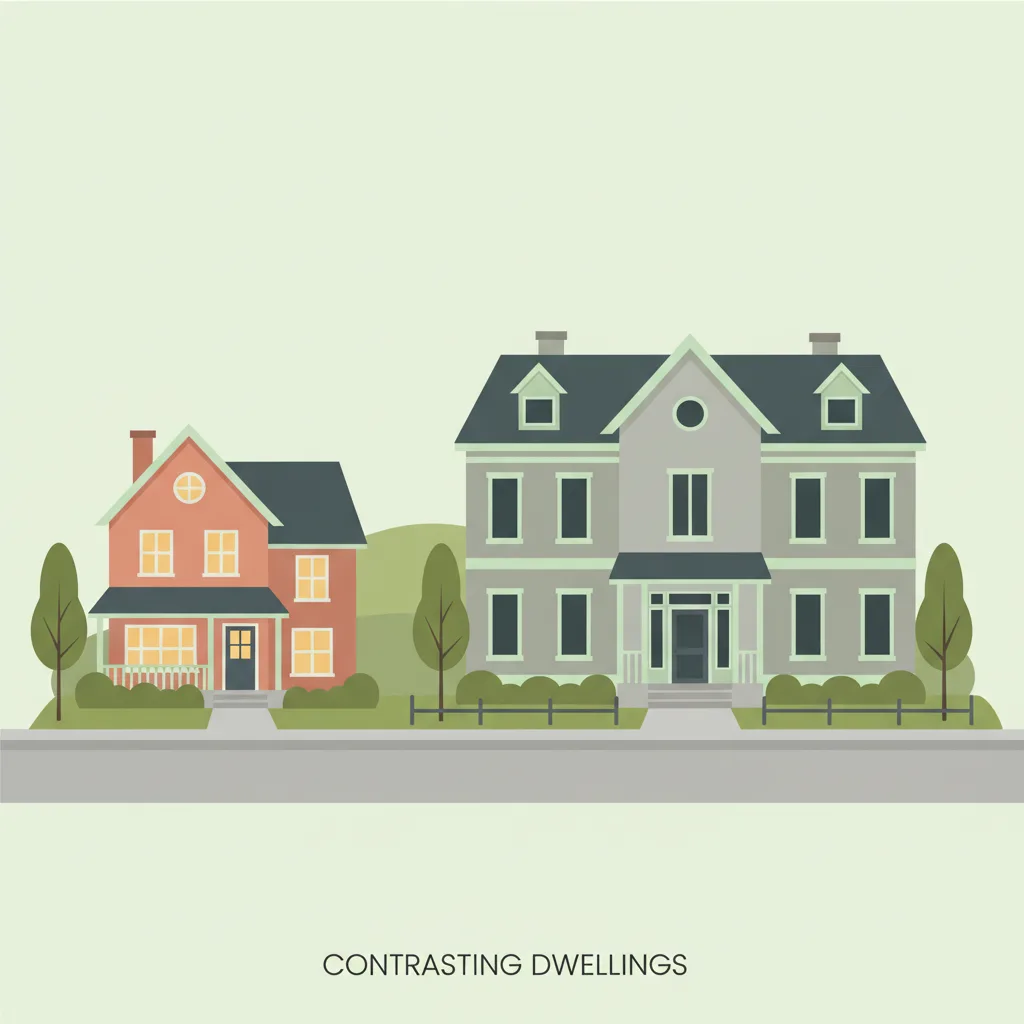
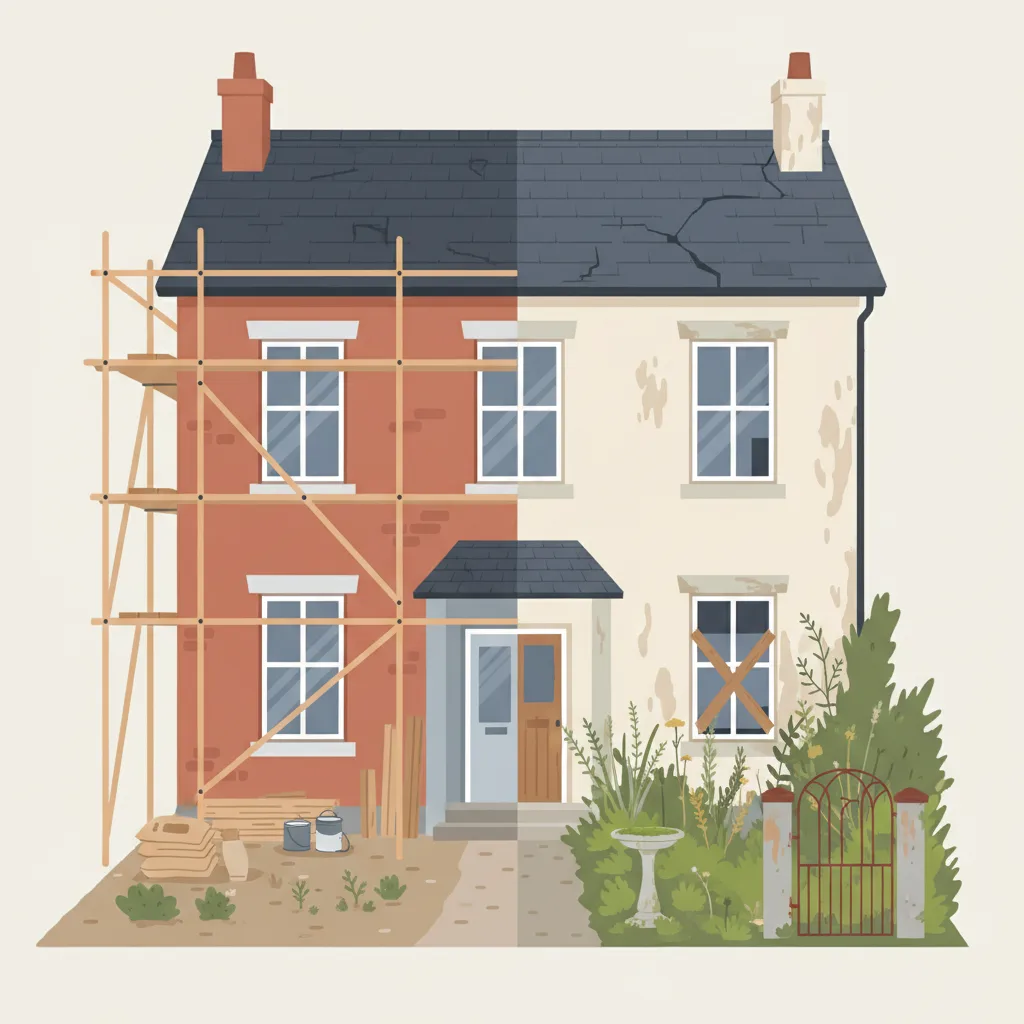
Escolher uma hipoteca de taxa fixa versus uma hipoteca de taxa variável
Se você agir
Financiamento com taxa variável
43%
Se você não agir
Financiamento com taxa fixa
Sem medição direta
Pelo menos um número é uma estimativa indireta, não uma taxa de arrependimento medida. Abaixo explicamos como cada número foi obtido.
Financeiro
Última revisão 2026-05-13
Qualidade das evidências 3.88/5
Pontuação de revisão em oito dimensões segundo a
grelha de qualidade
. Cada dimensão pontuada de 1 a 5.
D1 Verificação das fontes
4/5
D2 Autoridade e independência das fontes
3/5
D3 Precisão da taxa de arrependimento
3/5
D4 Comparabilidade das fontes
2/5
D5 Padrão de Gilovich
5/5
D6 Qualidade da prosa
5/5
D7 Completude das ressalvas
5/5
D8 Qualidade da amostra
4/5
Média3.88/5
Dados indiretos: para esta decisão, pelo menos um número vem de uma medida indireta, como desfechos, satisfação ou intenção, ou de uma estimativa editorial, e não de uma pesquisa direta sobre arrependimento. As notas de cada lado, abaixo, explicam como cada número foi obtido.
Se você agir
Financiamento com taxa variável
43%
43% dos tomadores de crédito com hipoteca de taxa ajustável (ARM) se arrependem de ter escolhido uma hipoteca de taxa ajustável
Proprietários de imóveis nos EUA com hipoteca de taxa variável, painel online
pesquisados em dezembro de 2022, após o início das altas de juros do Federal Reserve
Se você não agir
Financiamento com taxa fixa
Sem medição direta
Nenhuma fonte indica um número para este lado, por isso não mostramos nenhum.
Proprietários de imóveis nos EUA, amostra online representativa em nível nacional
pesquisados em abril de 2025
Número de cada escolha (a medida está indicada na página)
Financiamento com taxa variávelFinanciamento com taxa fixa
43%Sem medição direta
Decisões relacionadas
Decisões semanticamente semelhantes — mesmo terreno, compromissos diferentes.
Número de cada escolha (a medida está indicada na página)
Pegar o empréstimo de curtíssimo prazoPassar sem o empréstimo
37%81%
Forty-three percent of US homeowners with an adjustable-rate mortgage reported regretting their choice in a December 2022 survey of 1,203 ARM holders conducted by PureSpectrum for U.S. News & World Report, the larger and earlier-fielded of the two ARM-regret surveys cited here. The primary driver, cited by 44% of regretters, was that their interest rate had adjusted to a higher level than they anticipated. A follow-up survey by Point in January 2024, drawing on 332 ARM holders, placed the regret rate at 70%, consistent with the pattern of escalating regret as further Federal Reserve rate increases pushed variable payments well above their initial levels. By contrast, no survey measures regret among fixed-rate holders as such: Bankrate’s 2025 general homeowner survey (n=1,363) did not separate borrowers by mortgage type, so the fixed-rate side has no direct measurement.
The evidence base is asymmetric. Both ARM surveys asked a direct regret question to ARM holders specifically; the fixed-rate side has no direct measurement. No published study has asked matched samples of ARM and fixed-rate borrowers the same regret question in the same instrument. What the surveys do show is that the ARM regret rate climbed from 43% to 70% between the two survey waves as the rate environment deteriorated. In the US context, the fixed-rate mortgage is taken here to be the dominant default (an assumption; no source listed gives the share), so choosing an ARM represents an active deviation from that default, a bet that rates would stay low.
The survey timing matters for interpretation. Both ARM surveys were fielded during or shortly after a historically rapid rate-tightening cycle (2022-2023), creating a period of maximum regret exposure. ARM regret in a falling-rate environment would likely be far lower, since resets would land at or below the initial rate rather than well above it. The 43% figure (the more conservative primary estimate) is a rate-cycle-specific snapshot, not a structural truth about the product. What is structural is the uncertainty asymmetry: fixed-rate borrowers know their payment in advance; ARM borrowers do not. That uncertainty is the proximate cause of regret in both surveys, not the product category per se.
Fontes: acção
Registro de evidências
Cada número abaixo é o que cada fonte relatou, com a citação literal em que nos baseamos e como chegamos ao nosso valor. Clique em qualquer link para verificar diretamente.
[1]U.S. News & World Report / PureSpectrum — ARM Borrowers Gamble Short-Term Savings on Long-Term Risk
Estudo primário
43% of ARM borrowers regret choosing an adjustable-rate mortgage; the most common reason was that their interest rate adjusted to a higher rate than expected (44% of regretters)
Trecho
“"Forty-three percent of survey respondents regret choosing an ARM. Among them, the most common reason was that their interest rate adjusted to a higher rate than expected (44%)."
”
Dados da fonte de
2022-12-20
Acessado
2026-05-13
Cálculo
U.S. News & World Report commissioned PureSpectrum to conduct a nationwide online survey of 1,203 homeowners who currently hold an adjustable-rate mortgage, fielded December 14-20, 2022. Only ARM holders participated. The 43% regret rate is a direct self-report and is used here as the action-side regret rate without adjustment. The survey was conducted at the peak of the 2022 Federal Reserve tightening cycle, when the federal funds rate had risen from near-zero to 4.25-4.50% in under 12 months, so the 43% figure reflects rate-hike conditions and may understate regret relative to the longer-run reset exposure faced by 3/1 and 5/1 ARM holders who originated in 2019-2021.
[2]Point / SurveyMonkey — 70% of Homeowners with an Adjustable-Rate Mortgage Regret It
Estudo primário
70% of homeowners who have taken out an adjustable-rate mortgage in the past 10 years regret it (January 2024, n=332)
Trecho
“"70% of homeowners with an adjustable-rate mortgage regret it"
”
Dados da fonte de
2024-01-20
Acessado
2026-05-13
Cálculo
Point (a home equity investment platform) commissioned a SurveyMonkey online panel survey of 332 homeowners who obtained an ARM within the prior 10 years, fielded January 20, 2024. The 70% regret rate is the primary reported finding. The sample is smaller (332) and the platform is an industry participant with a commercial interest in home equity products, so this figure is treated as a corroborating upper-bound estimate rather than the primary rate. The primary rate used in regret_rate is 0.43 (U.S. News/PureSpectrum, n=1,203), which has a larger sample, an independent research firm, and was fielded closer to the moment of rate shock. The Point figure (70%, n=332, 13 months later) is consistent with escalating regret as further rate resets occurred through 2023.
Fontes: inacção
Registro de evidências
Cada número abaixo é o que cada fonte relatou, com a citação literal em que nos baseamos e como chegamos ao nosso valor. Clique em qualquer link para verificar diretamente.
[1]Bankrate / YouGov — Nearly Half of Homeowners Have at Least One Regret About the Purchase of Their Current Home (Bankrate 2025 Homeowner Regrets Survey)
Estudo primário
Among homeowners with at least one regret, 10% regret not getting the best mortgage rate and 16% regret that their mortgage payment is too high; nearly half (45%) of homeowners overall have at least one regret about their home purchase
Trecho
“"Nearly half of current homeowners (45%) say they have at least one regret about the purchase of their current home [...] Among homeowners with some type of regret about the purchase of their current home, buying too small of a house (21%) was the second most common regret after costlier-than-expected maintenance and hidden costs. Other regrets include the mortgage payment being too high (16%), overpaying or paying too much for the house (15%), buying a house in a bad location (14%), buying too big of a house (11%), not getting the best mortgage rate (10%), and not thinking it’s a good investment (6%)."
”
Dados da fonte de
2025-05-14
Acessado
2026-05-13
Cálculo
Bankrate's 2025 Home Affordability Report surveyed 2,487 adults (1,363 current homeowners) via YouGov online panel (April 2-4, 2025), with demographic quotas for representativeness. The survey did not separately ask fixed-rate vs. ARM holders about their mortgage-type choice; it asked all homeowners about homeownership regrets broadly. No inaction-side regret figure is shown: the survey reports none, and a figure built from it would rest on assumptions. Nearly half (45%) of homeowners report at least one regret; the two mortgage-rate items (payment too high, 16%; not getting the best rate, 10%) are listed as separate items and respondents may have named more than one, so they cannot be added into a share of regretters. No source listed here gives the share of homeowners in the sample who hold fixed-rate loans. No survey directly asks fixed-rate holders whether they regret not choosing an ARM.
[2]National Mortgage News — Adjustable-rate mortgage borrowers express regret over loans
Artigo de notícia
Approximately 70% of ARM holders say they now regret their choice, driven by interest-rate rises since 2022 to more than two-decade highs (Point survey, January)
Trecho
“"Approximately 70% of ARM holders, including homeowners in both the introductory and variable-rate phase, said they now regret their choice. … The rise of interest rates since 2022 to more than two-decade highs drove the sentiment, as ARM borrowers find a substantially different financial environment today versus the last 10 years,"
”
Dados da fonte de
2024-01-20
Acessado
2026-05-13
Cálculo
National Mortgage News coverage of the Point (SurveyMonkey) ARM-regret survey fielded in January 2024. Reports the same headline finding as the Point source above (~70% of ARM holders regret their choice), attributing the sentiment to the 2022 onward rate rises. Used here as a second, independent outlet corroborating the elevated ARM-regret level that underpins the action-vs-inaction asymmetry. No independent new data beyond the Point survey it reports.
Ressalvas
The action-side and inaction-side figures are not drawn from a single comparative survey. No published study has asked matched samples of ARM and fixed-rate borrowers the same regret question in the same survey wave. The ARM regret rate (43%) comes from a survey limited exclusively to ARM holders (U.S. News/PureSpectrum, December 2022, n=1,203); the fixed-rate side has no direct measurement, only a general homeowner survey (Bankrate/YouGov, April 2025, n=1,363 homeowners) that did not segment by mortgage type. Both surveys were conducted during an elevated-rate environment (2022-2025), which amplifies ARM regret. The ARM regret rate is high across two independent ARM surveys with different fielding dates and samples (43% in December 2022; 70% in January 2024), but no comparable fixed-rate measurement exists. In the US context, the fixed-rate mortgage is assumed here to be the dominant default (no listed source gives the share), so choosing an ARM represents an active deviation (a bet that rates would stay low), making ARM the action side and fixed-rate the inaction side.