


Ir para o conteúdo
Likelier

Arrependimento de agir vs. não agir

Comprar o que serve agora vs. comprar maior do que você precisa

Se você agir

Comprar o que atende às necessidades atuais

8,0%

Se você não agir

Comprar maior do que você precisa

5,0%

Porcentagem de quem mais tarde se arrepende de cada escolha. As barras e o registro completo aparecem abaixo.


Financeiro

Última revisão 2026-05-04

Qualidade das evidências 4.13/5

Pontuação de revisão em oito dimensões segundo a grelha de qualidade . Cada dimensão pontuada de 1 a 5.

D1 Verificação das fontes
5/5
D2 Autoridade e independência das fontes
4/5
D3 Precisão da taxa de arrependimento
4/5
D4 Comparabilidade das fontes
5/5
D5 Padrão de Gilovich
2/5
D6 Qualidade da prosa
5/5
D7 Completude das ressalvas
4/5
D8 Qualidade da amostra
4/5
Média 4.13/5
Evidência direta
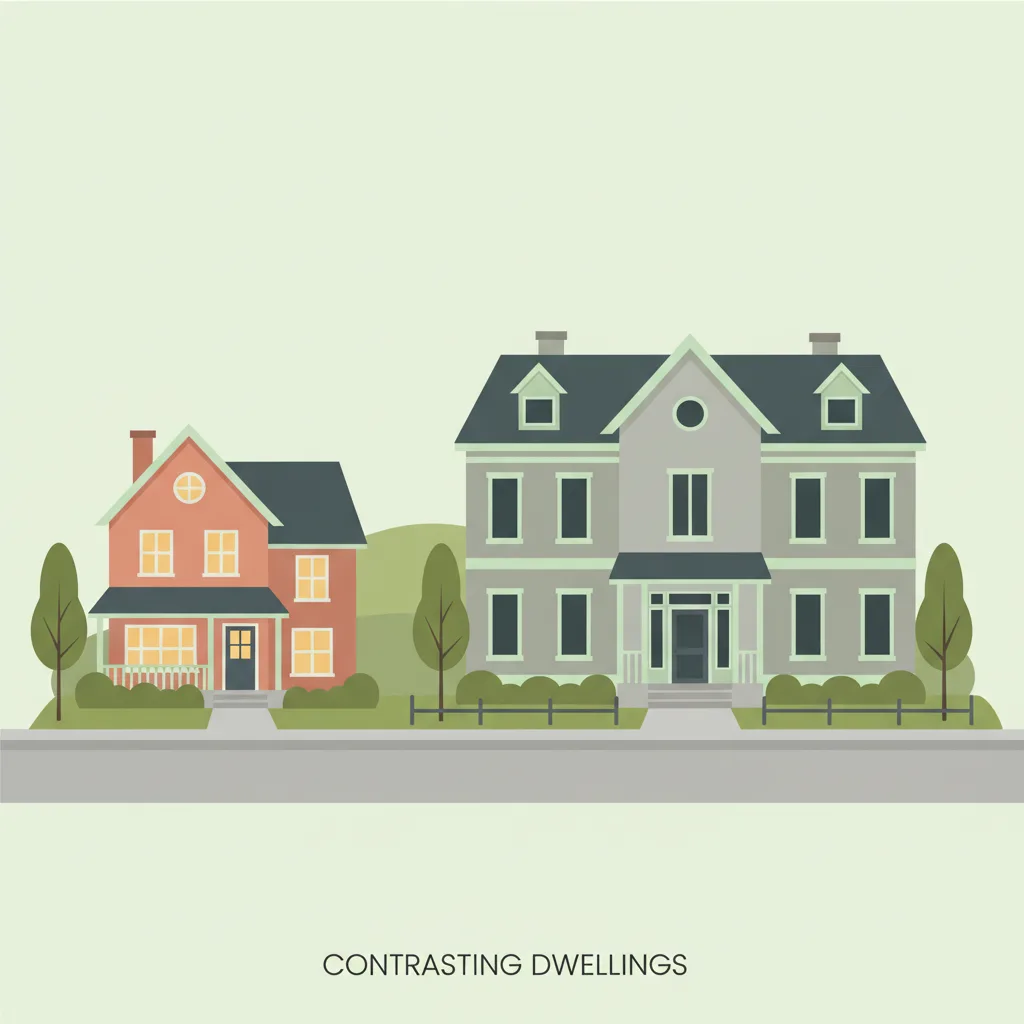
Two houses side by side — one compact and tidy, the other larger with several dark, unused windows.

Arrependimento por ação

Comprar o que atende às necessidades atuais

8,0%

~8% dos proprietários de imóveis gostariam de ter comprado maior

Proprietários de imóveis nos EUA, nacionalmente representativo

retrospectivo, sem prazo fixo

Arrependimento por omissão

Comprar maior do que você precisa

5,0%

~5% dos proprietários de imóveis se arrependem de ter comprado espaço demais

Proprietários de imóveis nos EUA, nacionalmente representativo

retrospectivo, sem prazo fixo

% se arrependem desta escolha

A acção domina.

Decisões relacionadas

Decisões semanticamente semelhantes — mesmo terreno, compromissos diferentes.

FinanceiroDireta

Comprar casa

% se arrependem desta escolha

A inação predomina

Arrependimento de inação 5.6× maior

Financeiro

Renovação da casa

Número de cada escolha (a medida está indicada na página)

Financeiro

Hipoteca fixa vs. ARM

Número de cada escolha (a medida está indicada na página)

Financeiro

Renunciar à vistoria do imóvel

Número de cada escolha (a medida está indicada na página)

lifestyle

Elétrico vs gasolina

Número de cada escolha (a medida está indicada na página)

lifestyle

Orgânico vs convencional

Número de cada escolha (a medida está indicada na página)

Financeiro

Presente de entrada vs. proteger poupança

Número de cada escolha (a medida está indicada na página)

Financeiro

Investimento

Número de cada escolha (a medida está indicada na página)

About 8% of US homeowners wish they had bought a bigger home, versus roughly 5% who regret buying too much space, according to Bankrate’s 2024 survey of homeowners with purchase regrets. The gap is narrow — 3 percentage points — and the finding cuts against the popular “don’t buy too much house” advice. Among homeowners who have any regret at all (47% of the total), “too small” ranks second at 18%, while “too big” comes in at 10%, behind maintenance costs, location, overpaying, and mortgage rates. The pattern extends beyond housing: vehicle buyers who chose a compact car and later needed a larger one face modest upgrade costs, while those who bought an oversized SUV absorb years of higher fuel, insurance, and depreciation on capacity they never use.

The small gap masks an asymmetry in how the two regrets feel. Right-sizers who outgrow their space experience a concrete, daily friction: the cramped home office, the bedroom that doubled as a nursery. Oversizers, by contrast, often absorb their regret into adjacent financial complaints. Bankrate’s survey found 40% of regretful owners citing maintenance and hidden costs as their top grievance, and 13% citing an unaffordable mortgage — both categories that disproportionately affect those who bought more home than they needed. Genesove and Mayer’s study of Boston condominiums showed that owners anchored to their purchase price set asking prices 25–35% above market when facing a loss, creating a psychological lock-in that makes downsizing from an oversized home especially painful. Hedonic adaptation compounds the problem: the pleasure of extra square footage fades within months, but the mortgage payment never adapts.

Neither side of this decision carries catastrophic regret rates. Both land under 10%, well below the 45% of renters who wish they had bought at all. The honest read is that most homeowners, whether they sized up or sized down, would do the same thing again. For buyers weighing the tradeoff today, the financial math favors right-sizing: transaction costs for a future upgrade ($1,000–$5,000 for a local move) are modest compared to years of carrying costs on unused space. But the data does not support a strong directional claim. Individual variables — market trajectory, family plans, remote-work permanence — swamp the aggregate signal.

Fontes: acção

Registro de evidências

Cada número abaixo é o que cada fonte relatou, com a citação literal em que nos baseamos e como chegamos ao nosso valor. Clique em qualquer link para verificar diretamente.

  1. [1] Bankrate — Bankrate 2024 Homeowner Regrets Survey
    Bankrate 2024 Homeowner Regrets Survey
    Estatística
    18% of homeowners with regrets say they bought too small a house; 47% of all homeowners have at least one regret
    Trecho
    “"Nearly half of current homeowners (47%) have at least one regret about purchasing their current home [...] This is followed by buying a house that is too small (18%) or too big (10%)" ”
    Dados da fonte de
    2024-05-01
    Acessado
    2026-04-28
    Cálculo
    Bankrate's April 2024 nationally representative survey. 47% of homeowners report at least one regret. Of those, 18% cite "too small" as their regret. Population-level rate: 0.47 × 0.18 = 0.085, rounded to 0.08. This represents homeowners who, looking back, wish they had purchased a larger home — not necessarily people who deliberately right-sized, but the closest available proxy.
  2. [2] Clever Real Estate — American Home Buyer Report: 2024 Edition
    American Home Buyer Report: 2024 Edition
    Estatística
    24% of recent homebuyers regret buying a home that does not meet all of their needs; 82% have at least one regret
    Trecho
    “"About 82% of Americans who purchased a home in 2023 or 2024 have at least one regret. [...] Other regrets include: Buying a home that doesn’t meet all of their needs (24%)" ”
    Dados da fonte de
    2024-05-13
    Acessado
    2026-04-28
    Cálculo
    Clever Real Estate survey of 920 Americans who recently bought a home or plan to buy within a year. The 24% "doesn't meet all needs" is broader than pure size regret — it includes layout, features, and location — but corroborates the Bankrate finding that undersizing is a common regret category.

Fontes: inacção

Registro de evidências

Cada número abaixo é o que cada fonte relatou, com a citação literal em que nos baseamos e como chegamos ao nosso valor. Clique em qualquer link para verificar diretamente.

  1. [1] Bankrate — Bankrate 2024 Homeowner Regrets Survey
    Bankrate 2024 Homeowner Regrets Survey
    Estatística
    10% of homeowners with regrets say they bought too big a house; 47% of all homeowners have at least one regret
    Trecho
    “"Of homeowners who have at least one regret about purchasing their current home, the most common one is maintenance and other hidden costs being more expensive than expected (40%). This is followed by buying a house that is too small (18%) or too big (10%)" ”
    Dados da fonte de
    2024-05-01
    Acessado
    2026-04-28
    Cálculo
    Same Bankrate 2024 survey. 47% have regrets, 10% of those cite "too big." Population-level rate: 0.47 × 0.10 = 0.047, rounded to 0.05. Note that oversizing regret may be underreported because its costs (maintenance, utilities, mortgage strain) are captured by adjacent categories: 40% cite "maintenance/hidden costs" and 13% cite "mortgage too high." Those who bought too big may attribute regret to cost rather than size.
  2. [2] The Quarterly Journal of Economics — Loss Aversion and Seller Behavior: Evidence from the Housing Market
    Loss Aversion and Seller Behavior: Evidence from the Housing Market
    Estatística
    Owners facing nominal losses set asking prices 25-35% above expected sale price and exhibit much lower sale hazard
    Trecho
    “"Condominium owners subject to nominal losses set higher asking prices of 25-35 percent of the difference between the property's expected selling price and their original purchase price, attain higher selling prices of 3-18 percent of that difference, and exhibit a much lower sale hazard than other sellers." ”
    Dados da fonte de
    2001-11-01
    Acessado
    2026-04-28
    Cálculo
    Genesove and Mayer (2001), data from downtown Boston condos from 1990 to 1997. This study doesn't directly measure oversizing regret but documents the mechanism that traps oversizers: loss aversion anchors owners to their purchase price, making them reluctant to sell even when the home no longer fits. Owner-occupants show effects twice as large as investors. Cited as evidence that overprovisioning creates psychological lock-in beyond the financial cost.

Ressalvas

No survey asks the precise question posed here — "did you deliberately right-size and regret it, or deliberately overprovision and regret it?" The Bankrate rates are derived from homeowners retrospectively judging whether their home is too small or too big, which conflates deliberate strategy with budget constraints and life changes. The 3-percentage-point gap is small enough that individual circumstances dominate the aggregate signal. Housing data is strongest; vehicle and general-purchase evidence is directional but thinner. In rapidly appreciating markets, oversizers are partially rescued by equity growth; in flat or declining markets, the cost penalty of extra square footage is amplified. The 40% who cite maintenance costs may include many oversizers who frame their regret as financial rather than spatial, which would narrow or reverse the gap if re-coded.

Dados brutos: /api/decisions.json

Vistos recentemente neste dispositivo