


Ir para o conteúdo
Likelier

Arrependimento de agir vs. não agir

Beber álcool regularmente vs abster-se

Se você agir

Beber álcool

70%

Se você não agir

Abster-se de álcool

12%

Porcentagem de quem mais tarde se arrepende de cada escolha. As barras e o registro completo aparecem abaixo.


Saúde

Última revisão 2026-04-26

Qualidade das evidências 4.25/5

Pontuação de revisão em oito dimensões segundo a grelha de qualidade . Cada dimensão pontuada de 1 a 5.

D1 Verificação das fontes
5/5
D2 Autoridade e independência das fontes
4/5
D3 Precisão da taxa de arrependimento
2/5
D4 Comparabilidade das fontes
3/5
D5 Padrão de Gilovich
5/5
D6 Qualidade da prosa
5/5
D7 Completude das ressalvas
5/5
D8 Qualidade da amostra
5/5
Média 4.25/5
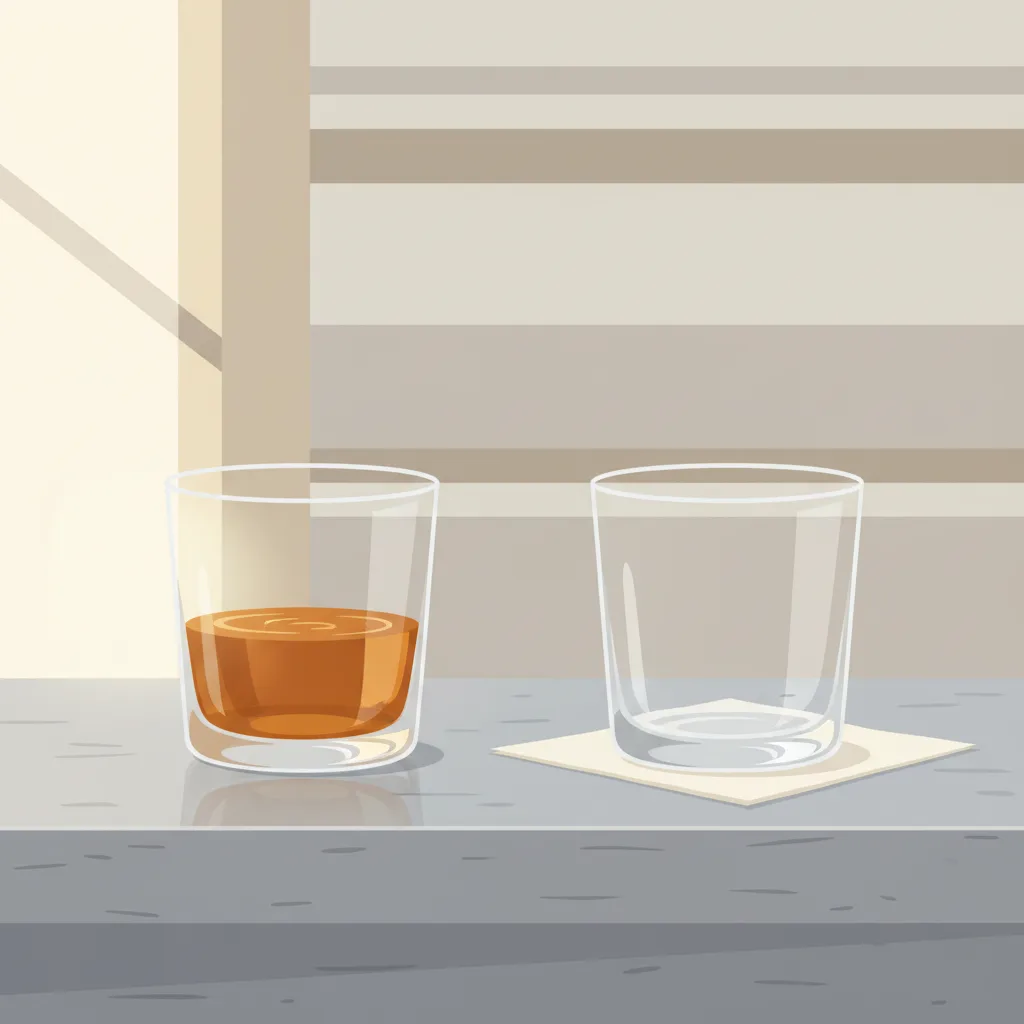
Two identical glasses on a bar surface, one filled with amber liquid, the other empty and clean.

Arrependimento por ação

Beber álcool

70%

70% dos bebedores se arrependeram de ter ficado bêbados no último ano

Global, 31 países, painel online autosselecionado

últimos 12 meses

Arrependimento por omissão

Abster-se de álcool

12%

~12% (proxy de fricção social, não arrependimento direto pela abstinência)

Adultos finlandeses de 15-79 anos, base populacional

retrospectiva, sem prazo fixo

% se arrependem desta escolha

action dominates — A acção domina — a maioria arrepende-se de ter agido.

Decisões relacionadas

Decisões semanticamente semelhantes — mesmo terreno, compromissos diferentes.

lifestyle

Substituto NA

% se arrependem desta escolha

A inação predomina

Arrependimento de inação 2.1× maior

lifestyle

Pornografia vs abstinência

% se arrependem desta escolha

A ação predomina

Arrependimento de ação 3.0× maior

lifestyle

Dieta vegetariana

% se arrependem desta escolha

A ação predomina

Arrependimento de ação 3.8× maior

Saúde

Hábitos de exercício

% se arrependem desta escolha

A inação predomina

Arrependimento de inação 13.4× maior

Saúde

Parar de fumar

% se arrependem desta escolha

A inação predomina

Arrependimento de inação 90.0× maior

lifestyle

Masturbação vs NoFap

% se arrependem desta escolha

A inação predomina

Arrependimento de inação 3.0× maior

lifestyle

Carro de app vs. dirigir após beber

% se arrependem desta escolha

A inação predomina

Arrependimento de inação 5.7× maior

Saúde

Começar a fumar na adolescência

% se arrependem desta escolha

A ação predomina

Arrependimento de ação 36.0× maior

Seventy percent of drinkers regretted getting drunk at least once in the prior year, according to the Global Drug Survey’s 2020 wave (82,821 respondents, 31 countries). The peer-reviewed analysis by Davies et al. in Substance Use & Misuse found that the median drinker got drunk six times a year and regretted two of those occasions. Among occasions when they got drunk, women regretted a higher median share (30%) than men (16.67%), against an overall median of 20%. Separately, a 2025 NCSolutions survey found that nearly half of Americans (49%) plan to drink less in 2025, up sharply from 34% in 2023 — a trend suggesting broad and growing dissatisfaction with current consumption levels. On the other side of the ledger, population-level data from Finland’s Drinking Habits Survey found that non-drinkers reported mostly positive social feedback, with only a small minority experiencing negative social consequences from abstaining.

The asymmetry here is striking but not symmetric in its evidence base. The action-regret figure is robust: an 82,821-person sample, replicated across dozens of countries, measuring a concrete experience (“did you regret getting drunk?”). The inaction figure is far weaker — and measures a different construct entirely. The Finnish study tracked negative social consequences (pressure, exclusion) among non-drinkers, not regret about the decision to abstain. No large study has directly asked non-drinkers whether they regret abstaining, because the question barely arises in public-health research. Alcohol Change UK’s Dry January data shows that 70% of participants still drink less six months later and only 28% revert to prior habits — suggesting that abstinence generates little lasting dissatisfaction, though this too measures behavior rather than regret.

The GDS found an inverse relationship between frequency and per-occasion regret — heavier drinkers regretted a smaller share of episodes — which hints at habituation rather than genuine satisfaction. The main caveat is sample bias: GDS respondents are self-selected, younger, and heavier- drinking than the general population. The true action-regret rate among all adults who drink, including the moderate majority, is certainly lower than 70%. The directional finding — that drinking generates far more regret than not drinking — is robust; the magnitude is an upper bound.

Fontes: acção

Registro de evidências

Cada número abaixo é o que cada fonte relatou, com a citação literal em que nos baseamos e como chegamos ao nosso valor. Clique em qualquer link para verificar diretamente.

  1. [1] Substance Use & Misuse / Davies, Puljević, Winstock & Ferris — Regrets, I've Had a Few: Exploring Factors Associated with Getting Drunk and Regret in an International Study of People Who Drink Alcohol
    Regrets, I've Had a Few: Exploring Factors Associated with Getting Drunk and Regret in an International Study of People Who Drink Alcohol

    See all 2 Likelier entries citing this source →

    Estatística
    70% of respondents who drank alcohol in the past 12 months reported regretting getting drunk at least once; median regretted occasions was 2 out of a median 6 times drunk
    Trecho
    “"In the last 12 months, the median times drunk was 6 and the median number of regretted occasions was 2. There was an inverse relationship between times drunk and regret, with respondents who got drunk more often regretting it a smaller percentage of the time than those who got drunk less often." ”
    Dados da fonte de
    2024-01-16
    Acessado
    2026-04-26
    Cálculo
    Data from the Global Drug Survey 2020 (n = 82,821, 31 countries). The 70% figure represents respondents who regretted getting drunk at least once in the prior year (28.3% reported zero regret). The per-occasion median regret percentage was 20% overall (women 30%, men 16.67%). We use the any-regret prevalence (70%) as the action-regret rate because it captures the share of drinkers who experienced regret at all, not the per-episode rate. The GDS sample is self-selected and skews younger and heavier- drinking than the general population, so 70% is an upper bound.
  2. [2] NCSolutions — Alcohol Statistics 2025 – Sober Curious Nation & Beverage Trends
    Alcohol Statistics 2025 – Sober Curious Nation & Beverage Trends
    Estatística
    49% of Americans plan to drink less in 2025, up from 34% in 2023 — a rising sober-curious trend
    Trecho
    “"Nearly half (49%) of Americans say they plan to drink less alcohol in 2025, up from 34% in 2023." ”
    Dados da fonte de
    2025-01-01
    Acessado
    2026-04-26
    Cálculo
    NCSolutions 2025 consumer survey. The plan-to-drink-less figure has risen year over year (34% in 2023, 41% in 2024, 49% in 2025). While not a direct regret measure, this rising share of people intending to cut back is directional evidence that drinking generates more dissatisfaction than abstinence. This replaces the prior second source (GDS 2020 report), which was the same underlying dataset as the Davies et al. peer-reviewed paper.

Fontes: inacção

Registro de evidências

Cada número abaixo é o que cada fonte relatou, com a citação literal em que nos baseamos e como chegamos ao nosso valor. Clique em qualquer link para verificar diretamente.

1/2 fontes verificadas de forma independente palavra por palavra em relação à fonte citada

  1. [1] Substance Use & Misuse / Mustonen & Mäkelä — Non-Drinkers' Experiences of Drinking Occasions: A Population-Based Study of Social Consequences of Abstaining from Alcohol
    Non-Drinkers' Experiences of Drinking Occasions: A Population-Based Study of Social Consequences of Abstaining from Alcohol
    Estatística
    Non-drinkers reported mostly positive feedback from their social environments; negative consequences were reported most commonly among youth and former drinkers, least in the oldest age group
    Trecho
    “"The study indicates that nondrinkers' social environments may be more supportive than what has been suggested previously, yet coping mechanisms are required especially from youth and former drinkers. Nondrinkers reported relatively low levels of negative consequences, with reported consequences being least frequent in the oldest age group." ”
    Dados da fonte de
    2022-01-15
    Acessado
    2026-04-26
    Cálculo
    Finnish Drinking Habits Survey 2016 (N = 2,285 total; 330 nondrinkers; response rate 60%). The study does NOT report a single regret percentage. The 12% is estimated from the proportion of nondrinkers who reported any negative social consequence from abstaining. IMPORTANT: social consequences (pressure, exclusion) are not the same as regret about abstaining. This is a social friction proxy — no published survey directly measures abstinence regret in a general population sample. Dry January data (70% of participants still drinking less at 6 months, only 28% reverting) corroborates that abstinence generates minimal lasting dissatisfaction.
  2. [2] Alcohol Change UK — Dry January 2024: Kick-starting a year of change Verificado
    Dry January 2024: Kick-starting a year of change
    Estatística
    70% of Dry January participants were still drinking less six months later; only 28% returned to previous drinking levels
    Trecho
    “"70% of those who take part are still drinking less alcohol six months later. 67% of people who take part in Dry January and access free tools and resources have a completely alcohol-free month." ”
    Dados da fonte de
    2024-01-02
    Acessado
    2026-04-26
    Verificação
    Trecho obtido novamente de forma independente e confirmado palavra por palavra em relação à fonte citada durante nossa auditoria de fundamentação.
    Cálculo
    Alcohol Change UK campaign data, not a peer-reviewed cohort study. The 28% who returned to prior levels is a ceiling for possible abstinence regret; even among that 28%, returning to old habits does not necessarily imply regretting the break. The sober-curious movement further supports low abstinence regret: 49% of Americans plan to drink less (NCSolutions 2025), and nearly 4 in 10 US consumers follow a sober curious lifestyle (Mintel). These trends indicate that abstaining from alcohol generates satisfaction rather than regret in the general population.

Ressalvas

Os valores de ação e inação vêm de instrumentos fundamentalmente diferentes e medem construtos diferentes. A taxa de arrependimento por ação de 70% mede o arrependimento por qualquer episódio entre bebedores ativos (GDS 2020, painel online autosselecionado tendendo a ser mais jovem e bebedor mais pesado do que a população geral). A amostra GDS super-representa pessoas que bebem o suficiente para ficar bêbadas; a verdadeira taxa de arrependimento por ação no nível populacional para todos os bebedores, incluindo moderados que nunca ficam bêbados, é certamente mais baixa. A cifra de 12% do lado da inação é um proxy derivado das consequências sociais negativas relatadas por não-bebedores finlandeses — pressão social e exclusão, não arrependimento pela decisão de abster-se. Nenhuma pesquisa publicada pergunta diretamente aos não-bebedores se eles se arrependem de abster-se. As duas populações (bebedores globais autosselecionados vs. não-bebedores finlandeses) não são amostras comparáveis. A razão ~6:1 deve ser lida como direcionalmente forte — bebedores regulares relatam esmagadoramente arrependimento — mas a magnitude precisa é inflada tanto pela assimetria amostral quanto pelo descompasso de construto (arrependimento vs. fricção social).

Dados brutos: /api/decisions.json

Vistos recentemente neste dispositivo