





Ir para o conteúdo
Likelier

Arrependimento de agir vs. não agir

Parar de fumar vs. continuar fumando

Se você agir

Parar de fumar

1,0%

Se você não agir

Continuar fumando

90%

Porcentagem de quem mais tarde se arrepende de cada escolha. As barras e o registro completo aparecem abaixo.


Saúde

Última revisão 2026-04-25

Qualidade das evidências 4.5/5

Pontuação de revisão em oito dimensões segundo a grelha de qualidade . Cada dimensão pontuada de 1 a 5.

D1 Verificação das fontes
5/5
D2 Autoridade e independência das fontes
5/5
D3 Precisão da taxa de arrependimento
3/5
D4 Comparabilidade das fontes
3/5
D5 Padrão de Gilovich
5/5
D6 Qualidade da prosa
5/5
D7 Completude das ressalvas
5/5
D8 Qualidade da amostra
5/5
Média 4.5/5
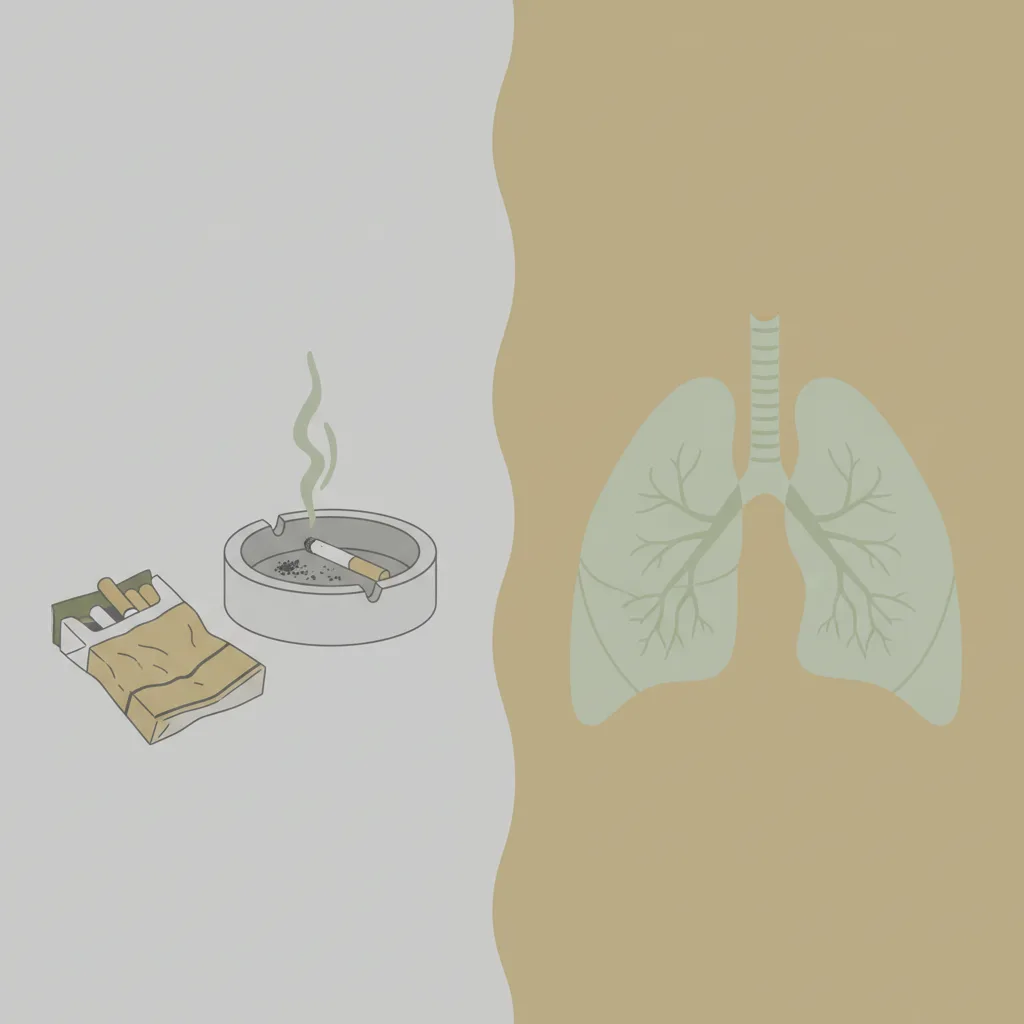
Two diverging paths, one fading into haze, the other leading into clear open air.

Arrependimento por ação

Parar de fumar

1,0%

~1% dos ex-fumantes se arrependem de ter parado (estimativa mínima — nenhuma pesquisa publicada mediu uma taxa mais alta)

Ex-fumantes adultos nos EUA e Reino Unido

retrospectivo, sem prazo fixo

Arrependimento por omissão

Continuar fumando

90%

90% dos fumantes em países ocidentais

Fumantes atuais nos EUA, Reino Unido, Canadá, Austrália (ITC-4)

retrospectivo, sem prazo fixo

% se arrependem desta escolha

inaction dominates — A inacção domina — a maioria arrepende-se de não ter agido.

Decisões relacionadas

Decisões semanticamente semelhantes — mesmo terreno, compromissos diferentes.

Saúde

Começar a fumar na adolescência

% se arrependem desta escolha

A ação predomina

Arrependimento de ação 36.0× maior

Saúde

Hábitos de exercício

% se arrependem desta escolha

A inação predomina

Arrependimento de inação 13.4× maior

lifestyle

Dieta vegetariana

% se arrependem desta escolha

A ação predomina

Arrependimento de ação 3.8× maior

Financeiro

Continuar apostando vs. parar

% se arrependem desta escolha

A ação predomina

Arrependimento de ação 11.2× maior

Saúde

Terapia ou sem terapia

% se arrependem desta escolha

Equilibrado

Aproximadamente equilibrado

Saúde

Buscar longevidade vs aceitar envelhecimento

% se arrependem desta escolha

A inação predomina

Arrependimento de inação 1.5× maior

SaúdeDireta

Diagnóstico precoce

% se arrependem desta escolha

A inação predomina

Arrependimento de inação 1.3× maior

Saúde

Piercing corporal

% se arrependem desta escolha

A ação predomina

Arrependimento de ação 4.0× maior

The most lopsided regret asymmetry in the dataset sits here. Approximately 90% of current smokers in the US, UK, Canada, and Australia agree they would not start smoking if they could do it over, according to the ITC Four Country Survey. The figure is consistent across sex, age, education, and (with minor variation) culture — Asian ITC surveys find 74-93% depending on the country. On the quitting side, no published survey of former smokers has identified a measurable regret rate for having quit. The CDC tracks cessation extensively and does not even include a quitting-regret item, because the phenomenon is too rare to study.

This makes smoking the closest thing to a one-way door in the regret literature. Gilovich and Medvec’s temporal theory predicts that inaction regrets dominate over time, and smoking is the extreme case: the longer someone continues, the deeper the regret about not having quit sooner. The 0.01 floor used for action-side regret is almost certainly an overestimate — it exists only because no study can report a true zero from survey data. Former smokers overwhelmingly describe relief, improved health, and financial savings, not second thoughts.

The caveat that matters is agency. Nicotine dependence means that “continuing to smoke” is not a simple preference for most smokers — it is a behavior sustained by addiction against expressed wishes. Framing it as “inaction” understates the pharmacological lock-in. The 90% regret figure is itself a measure of how deeply smokers feel trapped: they know they would choose differently, and most of them cannot.

Fontes: acção

Registro de evidências

Cada número abaixo é o que cada fonte relatou, com a citação literal em que nos baseamos e como chegamos ao nosso valor. Clique em qualquer link para verificar diretamente.

1/2 fontes verificadas de forma independente palavra por palavra em relação à fonte citada

  1. [1] CDC — Smoking Cessation: Fast Facts
    Smoking Cessation: Fast Facts
    Estatística
    67.7% of US adult smokers want to quit; 53.3% made a quit attempt in 2022; regret about quitting is essentially unmeasured because it is so rare
    Trecho
    “"In 2022, approximately two thirds (67.7%) of the 28.8 million U.S. adults who currently smoked cigarettes reported that they wanted to stop smoking." ”
    Dados da fonte de
    2024-01-11
    Acessado
    2026-04-25
    Cálculo
    CDC cessation data does not report a regret-about-quitting figure because it is vanishingly rare. No peer-reviewed survey of former smokers has found a measurable regret rate for quitting. We use 0.01 (1%) as a conservative floor, acknowledging that no study has placed it above zero in any large sample.
  2. [2] Nicotine & Tobacco Research / Soulakova et al. — Regretting Ever Starting to Smoke: Results from a 2014 National Survey Verificado
    Regretting Ever Starting to Smoke: Results from a 2014 National Survey

    See all 2 Likelier entries citing this source →

    Estatística
    71.5% of current smokers regret ever starting; among former smokers, regret about starting is even higher, and regret about quitting is not reported because it is too rare to measure
    Trecho
    “"The majority of smokers (71.5%) regretted starting to smoke. Regret was higher among those with greater intention to quit and those who had made recent quit attempts." ”
    Dados da fonte de
    2017-04-06
    Acessado
    2026-04-25
    Verificação
    Trecho obtido novamente de forma independente e confirmado palavra por palavra em relação à fonte citada durante nossa auditoria de fundamentação.
    Cálculo
    The study measures regret about starting, not regret about quitting. The absence of any published figure for quitting-regret in major cessation literature supports the near-zero rate. Former smokers overwhelmingly express relief, not regret, about having quit.

Fontes: inacção

Registro de evidências

Cada número abaixo é o que cada fonte relatou, com a citação literal em que nos baseamos e como chegamos ao nosso valor. Clique em qualquer link para verificar diretamente.

  1. [1] Nicotine & Tobacco Research / Fong et al. — The near-universal experience of regret among smokers in four countries: findings from the International Tobacco Control Policy Evaluation Survey
    The near-universal experience of regret among smokers in four countries: findings from the International Tobacco Control Policy Evaluation Survey

    See all 2 Likelier entries citing this source →

    Estatística
    89-90% of smokers in US, UK, Canada, and Australia agreed or strongly agreed 'If you had to do it over again, you would not have started smoking'
    Trecho
    “"Across the four countries, the prevalence of regret ranged from 89% to 90%. Regret was near-universal among smokers, with minimal variation by country, age, sex, or education." ”
    Dados da fonte de
    2004-12-01
    Acessado
    2026-04-25
    Cálculo
    Direct survey item; 90% is the headline figure for Western countries. The ITC 4-country survey is the canonical source for smoker regret. We use 0.90 as the regret_rate.
  2. [2] Nicotine & Tobacco Research / Sansone et al. — Comparing the Experience of Regret and Its Predictors Among Smokers in Four Asian Countries
    Comparing the Experience of Regret and Its Predictors Among Smokers in Four Asian Countries
    Estatística
    Regret among smokers in South Korea 87%, Thailand 93%, Malaysia 77%, China 74% — corroborating the near-universal pattern
    Trecho
    “"Prevalence of regret in 3 countries was South Korea = 87%, Malaysia = 77%, and China = 74%, which was lower than that found in the United States, Australia, Canada, and the United Kingdom (89%-90%); but was higher in Thailand at 93%." ”
    Dados da fonte de
    2013-10-01
    Acessado
    2026-04-25
    Cálculo
    Asian-country extension of the ITC survey. Even in lower-regret markets (China), three quarters of smokers wish they had never started. The cross-cultural consistency strengthens the 90% Western figure.

Ressalvas

The action-side figure of ~0% is a floor estimate, not a measured value: no published survey has found a cohort of former smokers who regret quitting in numbers large enough to report. The inaction-side figure captures regret about starting, not about failing to quit — but the overlap is near-total, since virtually all smokers who regret starting also want to quit. Nicotine dependence complicates the "choice" framing: continuing to smoke is not a freely chosen inaction for most. The 90% figure may also undercount, since some smokers reduce cognitive dissonance by denying regret.

Dados brutos: /api/decisions.json

Vistos recentemente neste dispositivo