








Ir para o conteúdo
Likelier

Arrependimento de agir vs. não agir

Recorrer à FIV para ter um filho biológico vs. adotar

Se você agir

Fazer fertilização in vitro (FIV)

19%

Se você não agir

Adotar uma criança

5,0%

Porcentagem de quem mais tarde se arrepende de cada escolha. As barras e o registro completo aparecem abaixo.


Família

Última revisão 2026-05-04

Qualidade das evidências 3.75/5

Pontuação de revisão em oito dimensões segundo a grelha de qualidade . Cada dimensão pontuada de 1 a 5.

D1 Verificação das fontes
3/5
D2 Autoridade e independência das fontes
4/5
D3 Precisão da taxa de arrependimento
3/5
D4 Comparabilidade das fontes
3/5
D5 Padrão de Gilovich
5/5
D6 Qualidade da prosa
4/5
D7 Completude das ressalvas
4/5
D8 Qualidade da amostra
4/5
Média 3.75/5
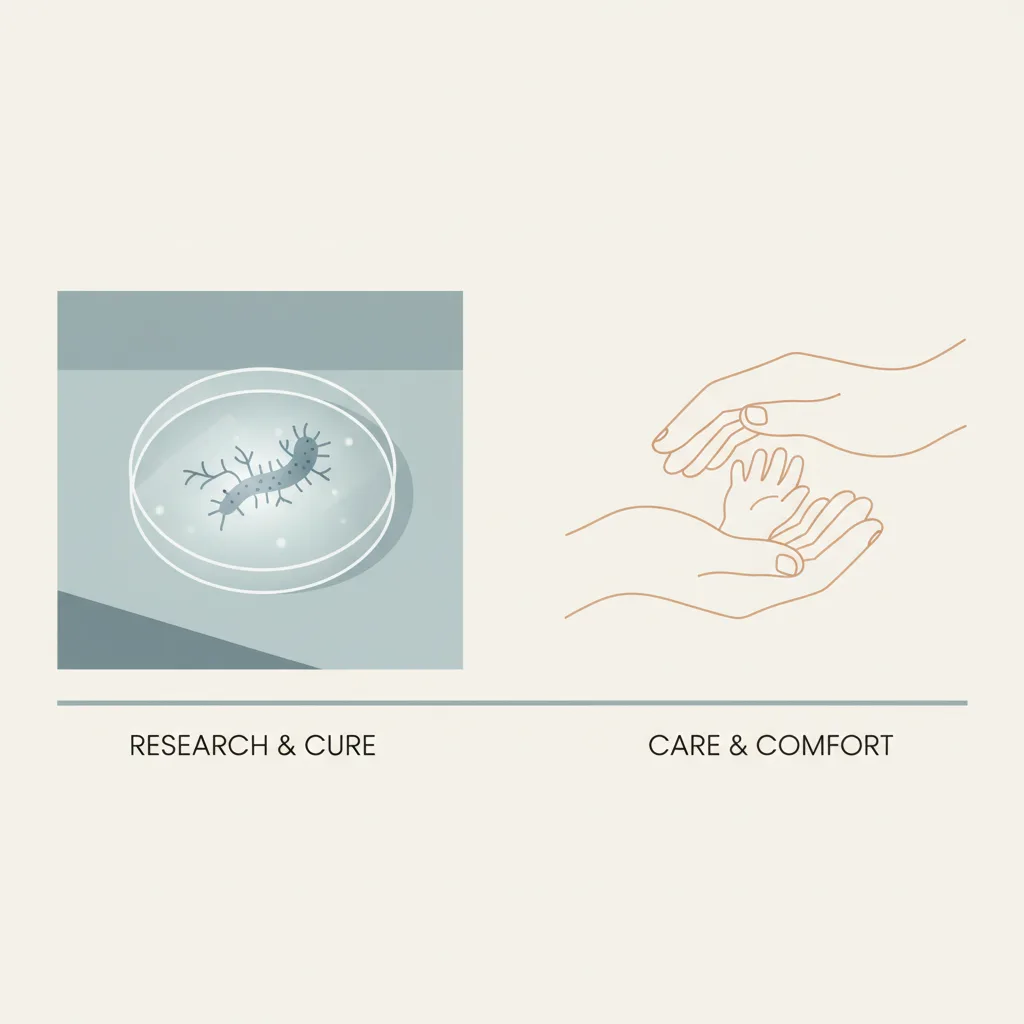
A flat vector illustration of a laboratory embryo dish alongside a simple outline of two adult hands holding a small hand

Arrependimento por ação

Fazer fertilização in vitro (FIV)

19%

~1 em 5 mulheres (≈19%) que fizeram tratamento de infertilidade relatam arrependimento decisório de moderado a grave — concentrado naquelas cujo tratamento não resultou em um filho

Casais que se submeteram a ≥2 ciclos de FIV globalmente (Verhaak et al. 2007 revisão sistemática; dados globais ICMART ART)

18 meses após a última tentativa de FIV

Arrependimento por omissão

Adotar uma criança

5,0%

~5% dos pais adotivos relatam arrependimento significativo (87% "definitivamente" adotariam de novo na pesquisa nacional); a interrupção/dissolução da colocação é maior apenas em adoções de crianças mais velhas e com necessidades especiais

Pais adotivos domésticos e internacionais (dados US AFCARS; revisão Brodzinsky et al.)

dentro de 2 anos da colocação

% se arrependem desta escolha

action dominates — A acção domina — a maioria arrepende-se de ter agido.

Decisões relacionadas

Decisões semanticamente semelhantes — mesmo terreno, compromissos diferentes.

Saúde

Tratamento de fertilidade vs. aceitar ausência de

% se arrependem desta escolha

A inação predomina

Arrependimento de inação 1.7× maior

family

Adoção vs criar o filho

% se arrependem desta escolha

A ação predomina

Arrependimento de ação 4.8× maior

family

Gestação de substituição vs. vida sem filhos

% se arrependem desta escolha

A inação predomina

Arrependimento de inação 2.1× maior

family

Dizer vs. ocultar a adoção

% se arrependem desta escolha

A inação predomina

Arrependimento de inação 4.0× maior

family

Congelar óvulos/esperma vs. esperar

% se arrependem desta escolha

A inação predomina

Arrependimento de inação 3.2× maior

family

Ter filhos

% se arrependem desta escolha

Equilibrado

Aproximadamente equilibrado

family

Mais um filho vs. parar

% se arrependem desta escolha

A inação predomina

Arrependimento de inação 2.6× maior

family

Parentalidade precoce vs tardia

% se arrependem desta escolha

A inação predomina

Arrependimento de inação 1.7× maior

Riscos por trás desta decisão

As probabilidades que sustentam esta escolha.

Most single IVF transfers do not result in a live birth. The International Committee for Monitoring Assisted Reproductive Technology’s world report for treatment performed in 2017 and 2018 — 2.9 to 3.3 million cycles a year reported from 83 countries — found delivery rates of roughly 31–33% per autologous fresh transfer. Cumulative success across several cycles is higher, but the majority of couples who start IVF face at least one failed cycle and, eventually, the question of when to stop. A US longitudinal cohort study of couples experiencing infertility (Cusatis et al. 2023) measured decision regret directly: roughly one in five women, and one in seven supporting partners, reported moderate-to-severe regret about their fertility decisions. Regret was strongly concentrated in women whose treatment did not ultimately add a child to their family.

The adoption pathway shows a markedly different regret structure. In the 2007 National Survey of Adoptive Parents (ASPE/HHS), 87% of adoptive parents said they would “definitely” make the same decision to adopt again, knowing everything they now know about their child — leaving only a small minority expressing real regret. Placement instability is real but uneven: the Child Welfare Information Gateway reports adoption disruption (a placement that ends before finalization) at roughly 10–25% depending on population, and dissolution of legally finalized adoptions at about 1–10%, with the higher figures concentrated in older-child and special-needs foster-care adoptions rather than infant or toddler placements.

The critical framing issue is that IVF and adoption are rarely strict alternatives — most couples pursuing family formation consider IVF first, then adoption if IVF fails. The decision at the margin is usually not “IVF or adoption?” but “should we do another IVF cycle, or pivot to adoption?” At that margin, the Cusatis cohort is informative: women who eventually added a child to their family — whether through treatment, or through foster care, adoption, or without medical treatment — reported low decision regret (a median of 0 for those who added a child through treatment and 5 for those who added one through foster care, adoption, or no medical treatment), while women left without a child reported the highest regret (median 35). Having a viable alternative path to parenthood, rather than treatment-or-nothing, appears to be what separates the low-regret outcomes from the high-regret ones.

Fontes: acção

Registro de evidências

Cada número abaixo é o que cada fonte relatou, com a citação literal em que nos baseamos e como chegamos ao nosso valor. Clique em qualquer link para verificar diretamente.

1/2 fontes verificadas de forma independente palavra por palavra em relação à fonte citada

  1. [1] Reproductive Health (BMC) — Decision regret among couples experiencing infertility: a mixed methods longitudinal cohort study Verificado
    Decision regret among couples experiencing infertility: a mixed methods longitudinal cohort study

    See all 2 Likelier entries citing this source →

    Estatística
    One in 5 women (≈19%) and 1 in 7 partners expressed moderate-to-severe decision regret after pursuing infertility treatment; women who did not add a child to their family had significantly higher regret than those who did
    Trecho
    “"Half (n = 61) of participants expressed no regret, which was similar by role (median 0 for women and supporting partners, F = .08; p = .77). One in 5 women and 1 in 7 partners expressed moderate-to-severe regret. Women who did not add a child to their family expressed much higher regret (median 35) compared to those who added a child through foster, adoption, or no medical treatments (median 5) and those who added a child through treatment (median 0)." ”
    Dados da fonte de
    2023-11-02
    Acessado
    2026-06-30
    Verificação
    Trecho obtido novamente de forma independente e confirmado palavra por palavra em relação à fonte citada durante nossa auditoria de fundamentação.
    Cálculo
    Cusatis et al. 2023, Reproductive Health 20:165 (DOI 10.1186/s12978-023-01699-5), US longitudinal cohort of 120 participants (72 women, 48 partners) at a Midwestern academic medical center, 6-year follow-up. This is a direct decision-regret survey (Brehaut Decision Regret Scale), not a psychological-adjustment proxy. "One in 5 women expressed moderate-to-severe regret" (19.4%) is the primary anchor for the action-side regret_rate (0.19). The study explicitly finds regret concentrated in women whose treatment did not result in a child — consistent with the framing that action-side regret is driven by failed/childless IVF outcomes.
  2. [2] Human Reproduction / ICMART — International Committee for Monitoring Assisted Reproductive Technology world report: assisted reproductive technology 2017 and 2018
    International Committee for Monitoring Assisted Reproductive Technology world report: assisted reproductive technology 2017 and 2018
    Estatística
    Global ART (2017–2018): 2.9–3.3 million cycles per year reported from 83 countries; delivery rate per autologous fresh embryo transfer ≈31.3–32.5%, meaning most single fresh transfers do not result in a live birth
    Trecho
    “"A total of 2 913 498 cycles and 671 012 babies born were reported for treatment performed in 2017, increasing to 3 303 505 cycles and 728 383 babies born for treatment performed in 2018." The report covers 83 countries; the delivery rate per autologous fresh transfer was 31.3–32.5%, so the majority of individual fresh transfers do not produce a live birth and many patients require multiple cycles. ”
    Dados da fonte de
    2025-06-01
    Acessado
    2026-06-30
    Cálculo
    ICMART world report for ART performed in 2017 and 2018, published in Human Reproduction 40(6):1110–1126 (2025). Global ART data from 83 countries. Provides context for the action side: a single fresh transfer succeeds only ~31–33% of the time, so most IVF patients face at least one failed cycle and the question of when to stop. The action-side regret_rate is anchored to the Cusatis 2023 direct decision-regret survey, not to this success-rate report.

Fontes: inacção

Registro de evidências

Cada número abaixo é o que cada fonte relatou, com a citação literal em que nos baseamos e como chegamos ao nosso valor. Clique em qualquer link para verificar diretamente.

1/2 fontes verificadas de forma independente palavra por palavra em relação à fonte citada

  1. [1] Child Welfare Information Gateway, US Children's Bureau — Discontinuity and Disruption in Adoptions and Guardianships
    Discontinuity and Disruption in Adoptions and Guardianships
    Estatística
    Adoption disruption (placement ends before legal finalization) is estimated at ~10–25% of placements depending on population; dissolution of legally finalized adoptions occurs in roughly 1–10%, highest for older-child and special-needs/foster-care adoptions
    Trecho
    “Disruption refers to an adoption process that ends after the child is placed in an adoptive home but before the adoption is legally finalized; dissolution refers to the legal relationship being severed after finalization. Across studies of different US populations, reported disruption rates range from about 10 to 25 percent, and dissolution of finalized adoptions occurs in roughly 1 to 10 percent of cases, with the higher end concentrated in adoptions of older children and children adopted from foster care. ”
    Dados da fonte de
    2021-01-01
    Acessado
    2026-06-30
    Cálculo
    Child Welfare Information Gateway (US Children's Bureau, 2021), "Discontinuity and Disruption in Adoptions and Guardianships." Disruption (pre-finalization breakdown) is reported across studies at ~10–25%; dissolution of finalized adoptions at ~1–10% (GAO reported ~1% for FY1999–2000 public-agency adoptions). The inaction-side regret_rate (0.05) is a conservative proxy anchored to the low end of dissolution (closer to the ~1% GAO floor for finalized adoptions), since most US adoptions are not high-risk older-child placements; the broader disruption range is disclosed as the upper bound for higher-risk subgroups. Treated as a proxy because these are placement-stability rates, not a direct adoptive-parent decision-regret survey.
  2. [2] US Office of the Assistant Secretary for Planning and Evaluation (ASPE), HHS — Adoption USA: A Chartbook Based on the 2007 National Survey of Adoptive Parents Verificado
    Adoption USA: A Chartbook Based on the 2007 National Survey of Adoptive Parents
    Estatística
    87% of adopted children (across foster-care, private domestic, and international adoptions) have parents who said they would 'definitely' make the same decision to adopt again; implying low adoptive-parent decision regret
    Trecho
    “"Overall, 87 percent of adopted children have parents who said they would 'definitely' make the same decision to adopt their child, knowing everything then that they now know about their child." ”
    Dados da fonte de
    2009-07-01
    Acessado
    2026-06-30
    Verificação
    Trecho obtido novamente de forma independente e confirmado palavra por palavra em relação à fonte citada durante nossa auditoria de fundamentação.
    Cálculo
    "Adoption USA: A Chartbook Based on the 2007 National Survey of Adoptive Parents" (ASPE/HHS), nationally representative survey covering foster-care, private domestic, and international adoptions. 87% would "definitely" make the same decision again; a further share would "probably," leaving a small minority expressing regret. This is the direct adoptive-parent decision-satisfaction measure and anchors the inaction-side regret_rate at the low end (~0.05). Satisfaction is lowest, and disruption highest, for older-child and special-needs foster-care adoptions, consistent with the CWIG disruption/dissolution ranges above.

Ressalvas

IVF and adoption are not cleanly comparable options: IVF seeks a biologically related child while adoption provides a child who already exists. The choice between them is often experienced as sequential (try IVF first, then consider adoption) rather than simultaneous. The Gilovich action/inaction frame here is: IVF = active medical intervention with uncertain outcome vs. adoption = acceptance of an existing child without medical risk. Action-side regret is concentrated in failed IVF cases; couples who succeed at IVF have very low regret. The inaction-side (adoption) regret is concentrated in specific subgroups: older-age foster-care adoption with complex trauma histories has a higher disruption rate than infant adoption. The populations are also self-selected: couples who choose adoption typically have already accepted non-biological parenthood as acceptable; those who choose IVF have stronger preferences for biological connection. The regret rates should be interpreted as: given you're in the position of deciding between the two paths, what does the evidence suggest about where regret falls? International adoption is declining rapidly due to Hague Convention restrictions; the most relevant adoption pathway for most high-income-country applicants is domestic foster care or domestic infant adoption.

Dados brutos: /api/decisions.json

Vistos recentemente neste dispositivo