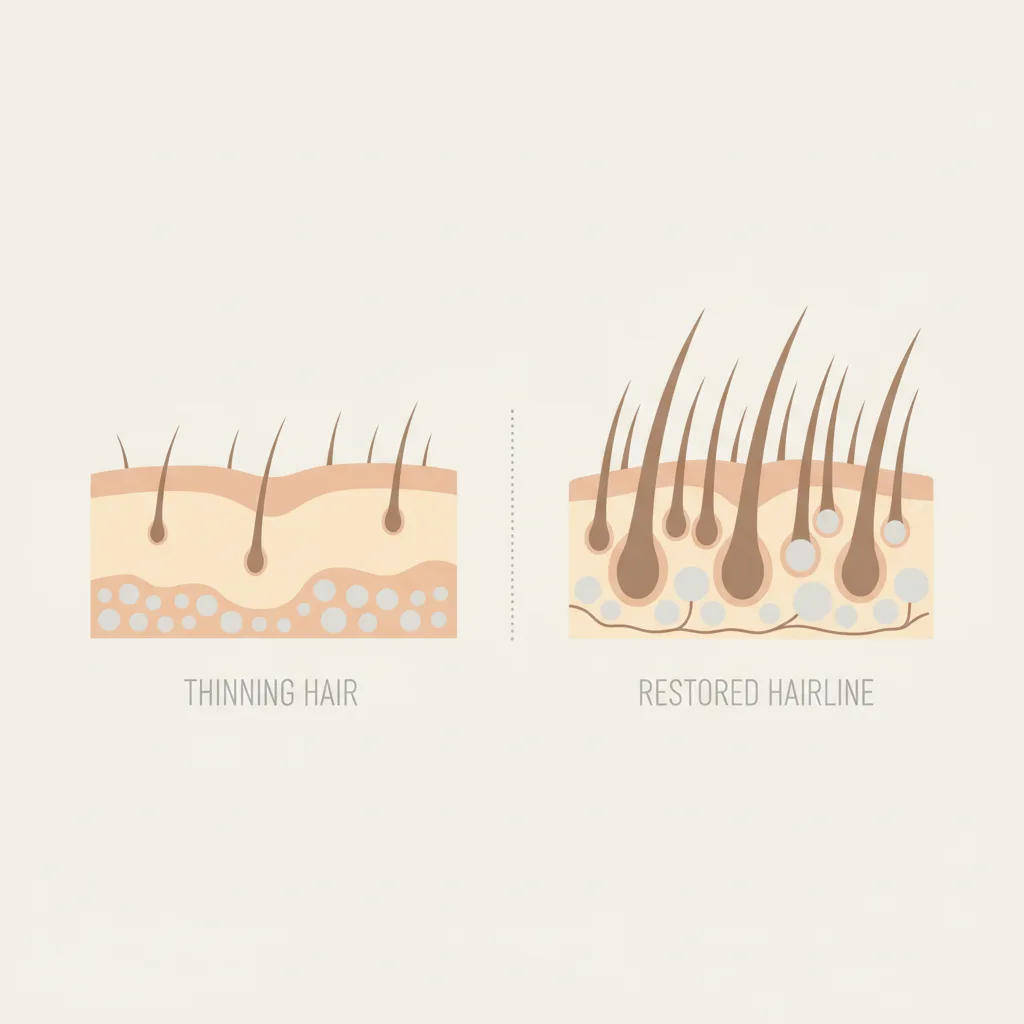
Доля тех, кто впоследствии жалеет о каждом выборе. Столбцы и полный реестр показаны ниже.
Здоровье
Последнее обновление 2026-05-10
Качество доказательств 4.0/5
Оценка по восьми измерениям согласно
рубрике качества
. Каждое измерение оценивается от 1 до 5.
D1 Проверка источников
5/5
D2 Авторитетность и независимость источника
4/5
D3 Точность уровня сожаления
2/5
D4 Сопоставимость источников
3/5
D5 Шаблон Гиловича
5/5
D6 Качество текста
5/5
D7 Полнота оговорок
5/5
D8 Качество выборки
3/5
Среднее4.0/5
Косвенные данные — для этого решения не существует прямого исследования сожалений. Показатели получены из оценок удовлетворённости и данных о барьерах доступа, а не из вопросов, непосредственно касавшихся сожалений. Смотрите оговорки ниже.
Сожаление о действии
Сделать пересадку волос
5,0%
~5% неудовлетворены (диапазон 2–15% по качеству клиники)
Мужчины-пациенты с андрогенетической алопецией, проходящие FUE-трансплантацию, клинические исследования
12 месяцев после процедуры
Сожаление о бездействии
Жить с облысением (без пересадки)
25%
~25% (приближение: мужчины с AGA с умеренным или тяжёлым психологическим дистрессом из-за нелеченной потери волос)
Мужчины с андрогенетической алопецией, мультинациональный опрос
поперечно; продолжающаяся потеря волос
% сожалеют об этом выборе
Сделать пересадку волосЖить с облысением (без пересадки)
5,0%25%
inaction dominates — Бездействие преобладает — большинство сожалеет, что не действовали.
Похожие решения
Семантически близкие решения — та же область, другие компромиссы.
Among men who undergo follicular unit extraction (FUE) hair transplantation at accredited centers, clinical studies consistently find high satisfaction: a PMC-indexed study of 152 patients reported 98% good or satisfactory results at 12 months, with only 1.97% classified as poor outcomes. A larger study of 875 male AGA patients found satisfaction with appearance rising by over 30 points on standardized scales post-operatively. The picture darkens at lower-quality clinics — ISHRS census data indicate 5.4% of patients seek repair surgery from a different physician due to prior dissatisfaction, and independent reports place density-related disappointment at 10—15% where donor supply is inadequate or technique substandard. A conservative central estimate of ~5% action regret sits between the clinical-study floor and the repair-surgery rate.
On the inaction side, the psychological literature is unambiguous: untreated androgenetic alopecia carries a substantial and persistent quality-of-life burden. A multinational European study of 729 men with AGA found that 62% believed hair loss could diminish self-esteem — with 43% citing lost attractiveness, 42% baldness fears and 21% depression — yet fewer than 10% were actively pursuing treatment. A 2024 mixed-methods survey found men with AGA scoring life satisfaction at 5.70 against a national norm of 7.38 — a gap that persists for years. No published survey directly asks untreated men whether they regret not having a hair transplant, so the inaction rate (25%) is a proxy anchored to severe-distress prevalence among non-treating men.
The Gilovich inaction-dominates pattern is directionally plausible here: the decision not to pursue transplantation leaves an open counterfactual (“what if I had done it when my pattern was stabilizing?”) that the mind can sustain indefinitely, while the decision to pursue surgery — if performed at a qualified center with realistic expectations — tends to close the counterfactual with a positive outcome. The main caveat is selection: surgery patients in clinical studies are pre-screened for candidacy, whereas psychosocial burden studies sample all men with AGA regardless of transplant eligibility. The ~20-point gap in proxied rates should be read as directional evidence of inaction dominance, not a precise regret differential.
Источники: действие
Реестр утверждений
Каждое число ниже — это то, что сообщил источник, с дословной цитатой, на которую мы опирались, и тем, как мы пришли к нашей цифре. Нажмите на ссылку, чтобы проверить самостоятельно.
1/2 источников независимо дословно сверены с указанным источником
[1]Journal of Pharmacy and Bioallied Sciences (PMC) — Clinical Outcome and Safety Profile of Patients Underwent Hair Transplantation Surgery by Follicular Unit Extraction
Проверено
Рецензируемая публикация
98.03% of patients reported good or satisfactory results at 12 months; 1.97% reported poor results
Выдержка
“"Clients' remarks noted at the end on one year revealed 86.18% as good results, 11.84% as satisfactory and 1.97% as poor results."
”
Данные источника:
2021-11-23
Дата обращения
2026-05-10
Проверка
Выдержка независимо повторно загружена и подтверждена слово в слово по указанному источнику в ходе нашей проверки достоверности.
Расчёт
Prospective study of 152 male androgenetic alopecia patients undergoing FUE transplantation (July 2017 -- February 2018). Satisfaction assessed at 12-month follow-up. "Poor results" (1.97%) is used as the floor for action-side dissatisfaction. We apply a 5% estimate rather than the 1.97% floor because: (a) this single-center study likely selects motivated patients with adequate donor hair; (b) ISHRS census data indicates 5.4% of patients seek repair surgery from a different physician due to prior dissatisfaction; (c) independent estimates place dissatisfaction from unmet density expectations at 10--15%. A 5% central estimate sits conservatively between the clinical study floor and ISHRS repair-seeking rate. "Poor results" is a technical outcome measure, not a direct regret question -- see caveats.
[2]Journal of Cosmetic Dermatology — The relationship between self-esteem and hair transplantation satisfaction in male androgenetic alopecia patients
Рецензируемая публикация
Satisfaction with appearance rose by 30.25 points post-operatively (p<0.05); self-esteem increased 1.56 points; n=875 completers
Выдержка
“"[Paraphrase from abstract -- full text paywalled] Among 875 male AGA patients completing 9-month follow-up, postoperative self-esteem scores increased significantly (RSES +1.56 points, p<0.05) and satisfaction with appearance rose by 30.25 points (p<0.05). Patients with low pre-operative self-esteem trended toward worse postoperative satisfaction."
”
Данные источника:
2019-04-01
Дата обращения
2026-05-10
Расчёт
Large-sample prospective study (n=875 completers of 1,106 enrolled). Used as secondary corroboration that the vast majority of patients experience meaningful satisfaction improvement. The finding that low pre-operative self-esteem predicts worse outcomes is relevant to interpreting aggregate satisfaction rates -- clinical populations screened by surgeons for realistic expectations will outperform unscreened estimates.
Источники: бездействие
Реестр утверждений
Каждое число ниже — это то, что сообщил источник, с дословной цитатой, на которую мы опирались, и тем, как мы пришли к нашей цифре. Нажмите на ссылку, чтобы проверить самостоятельно.
[1]Current Medical Research and Opinion — The psychosocial impact of hair loss among men: a multinational European study
Рецензируемая публикация
62% of men believed hair loss could diminish self-esteem; 43% reported concern about lost attractiveness, 42% baldness fears, 21% depression; <10% were currently pursuing treatment (75% never had)
Выдержка
“"Among 1536 respondents, 729 (47%) reported hair loss. Over 70% considered hair important to their image and 62% believed hair loss could diminish self-esteem. Concerns included lost attractiveness (43%), baldness fears (42%), aging (37%), social impact (22%) and depression (21%). Fewer than 10% were currently pursuing treatment; 75% had never pursued it."
”
Данные источника:
2005-10-01
Дата обращения
2026-05-10
Расчёт
Telephone survey of 1,536 European men aged 18-45 (Germany, France, Italy, Spain, UK), of whom 729 (47%) reported experiencing hair loss. The study reports that 62% believed hair loss could diminish self-esteem, with 43% citing lost attractiveness, 42% baldness fears and 21% depression, while fewer than 10% were currently pursuing treatment. We use ~25% as a conservative proxy for persistent inaction regret among untreated men, anchored to the cluster of severe-distress responses (21% depression, plus the much larger share reporting diminished self-esteem) among the ~90% who are not pursuing treatment. This is a proxy -- the study does not directly ask whether men regret not getting a hair transplant. (Note: the widely cited "25% find hair loss extremely upsetting / 65% modest-to-moderate distress" figures originate from Cash 1992, J Am Acad Dermatol, not from this 2005 multinational survey; they are therefore not quoted here.)
[2]Skin Health and Disease (Wiley / PMC) — The psychosocial impact of alopecia in men: A mixed-methods survey study
Рецензируемая публикация
56-57% of men with alopecia reported depleted confidence and wellbeing; life satisfaction 5.70 vs national norm 7.38
Выдержка
“"56--57% of participants reported depleted confidence and wellbeing related to their alopecia... Life satisfaction: 5.91 (AA) and 5.70 (AGA) vs. 7.38 national norm. Happiness: 5.79 (AA) and 5.50 (AGA) vs. 7.30 national norm."
”
Данные источника:
2024-09-30
Дата обращения
2026-05-10
Расчёт
Mixed-methods survey of men with alopecia areata and androgenetic alopecia (2024). Wellbeing scores substantially below national norms corroborate the persistent psychological burden captured in the 2005 European study. Used as corroborating evidence that untreated hair loss carries lasting quality-of-life cost, supporting a non-trivial inaction-regret proxy. Not a direct regret measure.
Оговорки
Neither rate is derived from a direct regret question. The action side (5%) is a conservative estimate drawn from clinical outcome measures -- "poor results" at 12 months in a supervised clinical study (1.97%), the ISHRS-reported repair-surgery rate (5.4%), and independent estimates of density dissatisfaction (10--15%). The figure represents patients who had adequate donor supply and realistic expectations; outcomes at lower-quality or unaccredited clinics are substantially worse. The inaction side (25%) is a proxy anchored to the cluster of severe-distress responses among men who report hair loss while not pursuing treatment -- 62% believed it could diminish self-esteem and 21% reported depression in a European survey (n=729 with AGA). Diminished self-esteem or distress is not synonymous with "regrets not getting a transplant" -- many men accept hair loss without regretting the absence of intervention, and many more are ineligible due to insufficient donor hair or ongoing pattern progression. The delta (-0.20) reflects inaction dominance: among men who do not treat significant hair loss, distress is both more common and more persistent than regret among those who undergo transplantation. However, this comparison is not apples-to-apples: surgery patients are pre-selected for candidacy (adequate donor hair, stable pattern, realistic expectations), while the psychosocial burden studies sample all men with AGA regardless of transplant eligibility. The Gilovich inaction-dominates pattern is directionally plausible but the quantitative gap should be read as approximate.