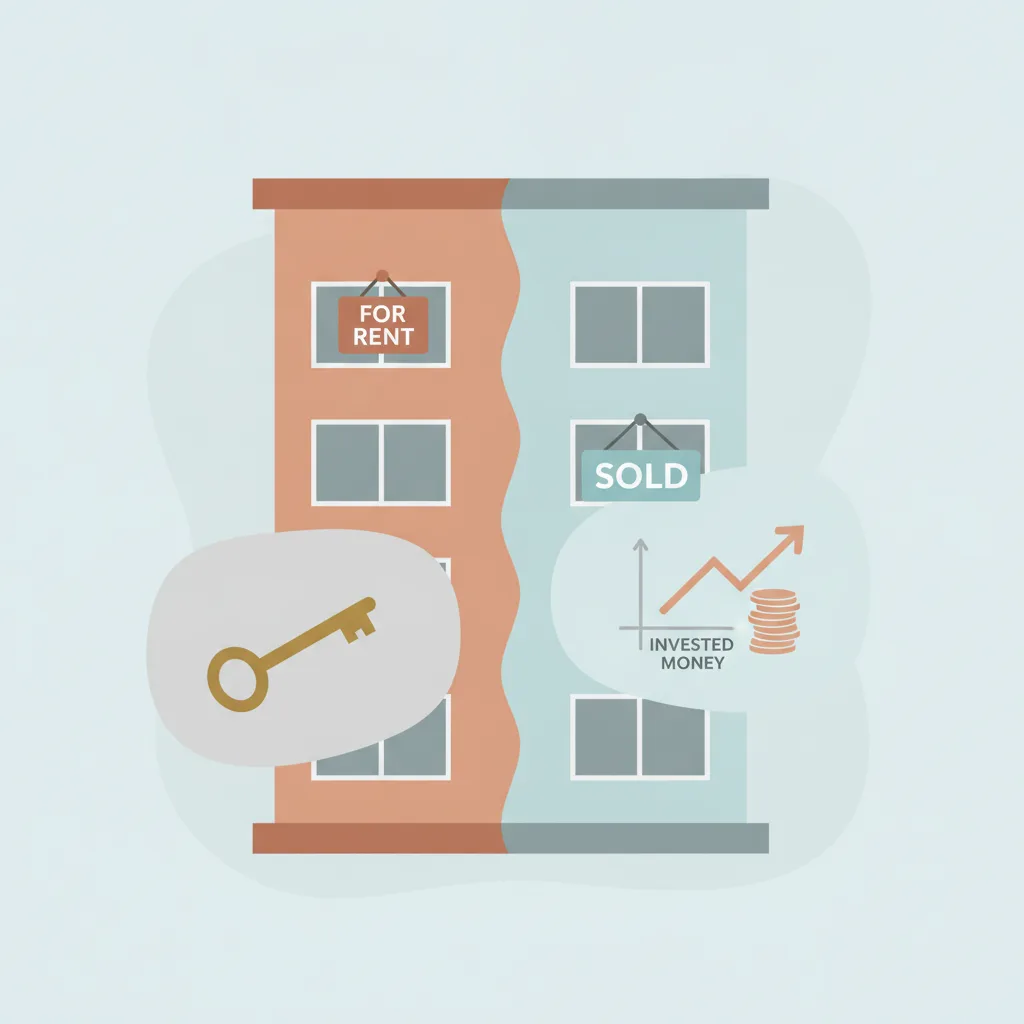
Здавати в оренду нерухомість, якою ви володієте, чи продати її та вкласти гроші
Якщо ви дієте
Продаж та інвестування
25%
Якщо ви не дієте
Зберегти і здавати
40%
Відсоток тих, хто згодом шкодує про кожен вибір. Стовпчики та повний реєстр показані нижче.
Фінанси
Остання перевірка 2026-07-09
Якість доказів 4.13/5
Восьмивимірна оцінка перевірки за
рубрикою якості
. Кожен вимір оцінений 1–5.
D1 Перевірка джерел
4/5
D2 Авторитет та незалежність джерела
4/5
D3 Точність частоти жалю
3/5
D4 Порівнянність джерел
4/5
D5 Шаблон Гіловича
4/5
D6 Якість прози
5/5
D7 Повнота застережень
4/5
D8 Якість вибірки
5/5
Середнє4.13/5
Замінні дані — для цього рішення не існує прямого дослідження жалю. Показники отримані з оцінок задоволеності та даних про бар'єри доступу, а не з питань, що безпосередньо стосувалися жалю. Дивіться застереження нижче.
Жаль за дію
Продаж та інвестування
25%
25% продавців шкодують про продаж — сумують за домом, який віддали
Дорослі американці, які продали дім у 2021–2022 роках (опитування Clever Real Estate 2022)
ретроспективно, протягом ~1–2 років після продажу
Жаль за бездіяльність
Зберегти і здавати
40%
40% власників орендної нерухомості шкодують, що взагалі почали
Американські інвестори в житлову нерухомість / орендодавці (опитування Clever Real Estate 2024)
ретроспективно, чинні власники
% шкодує про цей вибір
Продаж та інвестуванняЗберегти і здавати
25%40%
inaction dominates — Бездіяльність переважає — більшість шкодує, що не діяла.
Пов’язані рішення
Семантично близькі рішення — та сама сфера, інші компроміси.
No survey pits “rent it out” directly against “sell it and invest the money,” so this pairs the two closest measured regrets. About 40% of residential rental owners wish they’d never started investing in real estate (Clever Real Estate’s 2024 survey of 764 investors), against about 25% of recent sellers who regret selling because they miss the home they gave up (Clever’s 2022 survey of 1,000 sellers). On those proxies, keeping-and-renting is the more-regretted path — the opposite of the intuition that selling is the move you might kick yourself for later.
The reason keep-and-rent regret runs high is that landlording is not the passive income it is sold as. In the same 2024 survey, 56% of owners had already had to evict a tenant, 61% were still chasing missed rent every month, and 87% reported some regret about their investment decisions. The NBER study of landlords’ own lease ledgers puts a price on the hassle: filing a single eviction costs the equivalent of two to three months’ rent, and nonpayment is common enough that many landlords tolerate months of it before acting. Against that, the seller’s regret is quieter and more emotional — missing a home — rather than a recurring operational drain.
Read the gap cautiously. This is a proxy pairing, flagged as such: the two numbers come from different people surveyed in different years, the seller figure includes forced moves that mix circumstance with choice, and the investor sample leans toward heavily-invested owners who may regret more than a one-flat landlord would. It also says nothing about the money — whether renting out or selling-and-investing wins financially depends on rental yield, local price growth, and what the sale proceeds earn elsewhere, none of which a regret rate measures. The Gilovich pattern (holding-and-managing regret accumulates while the sold home fades into a wistful memory) fits the direction here, but the evidence is indicative, not a head-to-head test.
Джерела: дія
Реєстр тверджень
Кожне число нижче — це те, що повідомило джерело, з дослівною цитатою, на яку ми спиралися, та тим, як ми дійшли до нашої цифри. Натисніть на посилання, щоб перевірити самостійно.
[1]Clever Real Estate — American Home Seller Report: 2022 Edition
Авторитетне довідкове видання
One-fourth of home sellers (25%) regretted selling because they miss their old home
Витяг
“"One-fourth of respondents (25%) regretted selling because they miss their old home" — from a survey of 1,000 people who sold a home in 2021 or 2022 (fielded Sept. 29 – Oct. 2, 2022).
”
Дані джерела:
2022-10-12
Дата звернення
2026-07-09
Розрахунок
Used as a proxy for regret about the decision to sell itself. The 25% "miss their old home" figure is the cleanest available decision-construct regret for sellers — distinct from the much larger "process" regret numbers (priced too low, sold too fast, commission too high) that other seller surveys report, which measure regret about how the sale went, not regret about having sold. Because it is a proxy (not a head-to-head "sell vs rent-out" survey), this entry is flagged proxy_only.
Джерела: бездіяльність
Реєстр тверджень
Кожне число нижче — це те, що повідомило джерело, з дослівною цитатою, на яку ми спиралися, та тим, як ми дійшли до нашої цифри. Натисніть на посилання, щоб перевірити самостійно.
[1]Clever Real Estate — Residential Real Estate Investing in 2024: More Rent Money, More Rental Problems↗ 1 other entry
Авторитетне довідкове видання
40% of residential real estate investors wish they'd never started investing in real estate; 87% have regrets about their investment decisions; 56% have had to evict a tenant
Витяг
“"40% say they wish they'd never started investing in real estate [...] 87% [...] have regrets about their investment decisions [...] More than half of respondents (56%) have had to evict a tenant at some point." — survey of 764 US residential real estate investors, fielded May 18–June 9, 2024.
”
Дані джерела:
2024-07-01
Дата звернення
2026-07-09
Розрахунок
The 40% "wish they'd never started" figure is used as the regret proxy for the keep-and-rent side. The broader 87% "have regrets" figure is not used as the headline because it spans market and financial regrets, not the decision to become a landlord specifically. Sample skews toward active, heavily-invested owners (90% had lost money on an investment).
[2]National Bureau of Economic Research (NBER Working Paper 33155) — Nonpayment and Eviction in the Rental Housing Market↗ 1 other entry
Первинне дослідження
Filing an eviction costs landlords the equivalent of 2–3 months of rent; nonpayment is common and frequently tolerated before eviction
Витяг
“"Filing an eviction costs landlords the equivalent of 2-3 months of rent [...] Nonpayment is common, is frequently tolerated by landlords, and is often followed by recovery."
”
Дані джерела:
2024-11-01
Дата звернення
2026-07-09
Розрахунок
Cited to explain why keep-and-rent regret runs high: landlording carries real, recurring costs (an eviction alone runs 2–3 months' rent), which the "passive income" framing understates. Corroboration for the regret driver, not a regret rate itself.
Застереження
Це зіставлення побудоване виключно на замісних показниках: жодне опитування не запитує тих самих людей, чи шкодують вони про рішення здавати нерухомість замість того, щоб продати її та вкласти гроші, тому кожна сторона використовує найближчий доступний відповідник. Сторону продажу наближають 25% нещодавніх продавців, які «сумують за колишнім домом» (Clever 2022); сторону збереження і здавання — 40% власників, які «шкодують, що взагалі почали інвестувати в нерухомість» (Clever 2024). Обидві цифри взяті з різних вибірок (продавці проти інвесторів) за різні роки (2022 проти 2024), тож порівняння орієнтовне, а не контрольоване. Частка «сумую за домом» включає людей, змушених переїхати через зміну роботи чи фінанси, що змішує обставини з вибором; вибірка інвесторів зміщена в бік активних, глибоко залучених власників (90% втрачали гроші на якійсь інвестиції), що, ймовірно, завищує жаль людини, яка здає одну успадковану або звільнену квартиру. Що принципово, показники жалю нічого не кажуть про гроші: чи дає кращий фінансовий результат здавання в оренду або продаж та інвестування, залежить від дохідності оренди, місцевого зростання цін і віддачі від вкладених коштів із продажу — усе це залежить від шляху і часу та тут не враховане. Рамка американська; закони про захист орендарів і транзакційні витрати помітно різняться між країнами.