








Bỏ qua đến nội dung
Likelier

Hối tiếc khi hành động vs. không hành động

Thực hiện thụ tinh trong ống nghiệm (IVF) để có con ruột vs. nhận con nuôi

Nếu bạn hành động

Làm thụ tinh ống nghiệm

19%

Nếu bạn không hành động

Nhận con nuôi

5,0%

Tỷ lệ phần trăm người sau này hối tiếc về mỗi lựa chọn. Biểu đồ thanh và bản ghi đầy đủ hiển thị bên dưới.


Gia đình

Xem xét lần cuối 2026-05-04

Chất lượng bằng chứng 3.75/5

Điểm đánh giá tám chiều theo tiêu chí chất lượng . Mỗi chiều được chấm từ 1–5.

D1 Xác minh nguồn
3/5
D2 Uy tín và tính độc lập của nguồn
4/5
D3 Độ chính xác của tỷ lệ hối tiếc
3/5
D4 Khả năng so sánh nguồn
3/5
D5 Mẫu hình Gilovich
5/5
D6 Chất lượng văn bản
4/5
D7 Tính đầy đủ của lưu ý
4/5
D8 Chất lượng mẫu
4/5
Trung bình 3.75/5
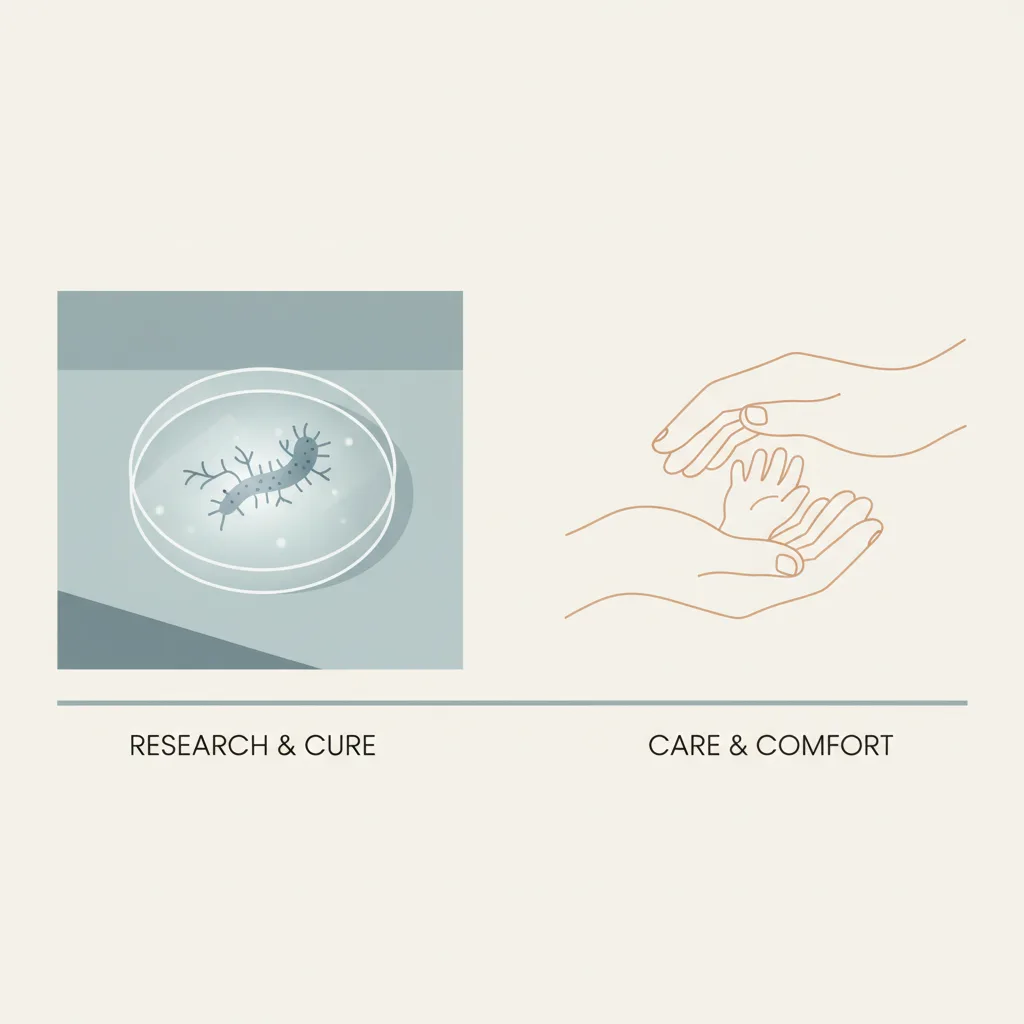
A flat vector illustration of a laboratory embryo dish alongside a simple outline of two adult hands holding a small hand

Hối hận vì hành động

Làm thụ tinh ống nghiệm

19%

~1 trong 5 phụ nữ (≈19%) theo đuổi điều trị vô sinh báo cáo hối tiếc quyết định ở mức trung-bình-đến-nghiêm-trọng — tập trung ở những người mà việc điều trị không dẫn đến một đứa con

Cặp đôi đã trải qua ≥2 chu kỳ IVF toàn cầu (Verhaak và cộng sự 2007 đánh giá hệ thống; dữ liệu ICMART ART toàn cầu)

18 tháng sau lần thử IVF cuối cùng

Hối hận vì không hành động

Nhận con nuôi

5,0%

~5% cha mẹ nuôi báo cáo hối tiếc đáng kể (87% sẽ 'chắc chắn' nhận con nuôi lại lần nữa trong khảo sát toàn quốc); tỷ lệ gián-đoạn/hủy-bỏ việc sắp xếp con nuôi chỉ cao hơn đối với các trường hợp nhận nuôi trẻ lớn tuổi, trẻ có nhu cầu đặc biệt

Cha mẹ nhận con nuôi trong nước và quốc tế (dữ liệu AFCARS Mỹ; đánh giá Brodzinsky và cộng sự)

trong vòng 2 năm sau khi sắp xếp

% hối tiếc về lựa chọn này

action dominates — Hành động chiếm ưu thế — hầu hết hối tiếc vì đã hành động.

Quyết định liên quan

Các quyết định tương tự về mặt ngữ nghĩa — cùng lĩnh vực, đánh đổi khác nhau.

Sức khỏe

Điều trị vô sinh vs. chấp nhận không có con

% hối tiếc về lựa chọn này

Không hành động chiếm ưu thế

Hối tiếc vì không hành động cao hơn 1.7×

family

Nhận nuôi vs tự nuôi dưỡng

% hối tiếc về lựa chọn này

Hành động chiếm ưu thế

Hối tiếc vì hành động cao hơn 4.8×

family

Mang thai hộ vs. không có con

% hối tiếc về lựa chọn này

Không hành động chiếm ưu thế

Hối tiếc vì không hành động cao hơn 2.1×

family

Nói vs. giấu chuyện nhận nuôi

% hối tiếc về lựa chọn này

Không hành động chiếm ưu thế

Hối tiếc vì không hành động cao hơn 4.0×

family

Đông lạnh trứng/tinh trùng vs. chờ đợi

% hối tiếc về lựa chọn này

Không hành động chiếm ưu thế

Hối tiếc vì không hành động cao hơn 3.2×

family

Có con

% hối tiếc về lựa chọn này

Cân bằng

Gần như cân bằng

family

Thêm một đứa con vs. dừng lại

% hối tiếc về lựa chọn này

Không hành động chiếm ưu thế

Hối tiếc vì không hành động cao hơn 2.6×

family

Làm cha mẹ sớm vs muộn

% hối tiếc về lựa chọn này

Không hành động chiếm ưu thế

Hối tiếc vì không hành động cao hơn 1.7×

Những rủi ro đằng sau quyết định này

Các xác suất làm nền tảng cho lựa chọn này.

Most single IVF transfers do not result in a live birth. The International Committee for Monitoring Assisted Reproductive Technology’s world report for treatment performed in 2017 and 2018 — 2.9 to 3.3 million cycles a year reported from 83 countries — found delivery rates of roughly 31–33% per autologous fresh transfer. Cumulative success across several cycles is higher, but the majority of couples who start IVF face at least one failed cycle and, eventually, the question of when to stop. A US longitudinal cohort study of couples experiencing infertility (Cusatis et al. 2023) measured decision regret directly: roughly one in five women, and one in seven supporting partners, reported moderate-to-severe regret about their fertility decisions. Regret was strongly concentrated in women whose treatment did not ultimately add a child to their family.

The adoption pathway shows a markedly different regret structure. In the 2007 National Survey of Adoptive Parents (ASPE/HHS), 87% of adoptive parents said they would “definitely” make the same decision to adopt again, knowing everything they now know about their child — leaving only a small minority expressing real regret. Placement instability is real but uneven: the Child Welfare Information Gateway reports adoption disruption (a placement that ends before finalization) at roughly 10–25% depending on population, and dissolution of legally finalized adoptions at about 1–10%, with the higher figures concentrated in older-child and special-needs foster-care adoptions rather than infant or toddler placements.

The critical framing issue is that IVF and adoption are rarely strict alternatives — most couples pursuing family formation consider IVF first, then adoption if IVF fails. The decision at the margin is usually not “IVF or adoption?” but “should we do another IVF cycle, or pivot to adoption?” At that margin, the Cusatis cohort is informative: women who eventually added a child to their family — whether through treatment, or through foster care, adoption, or without medical treatment — reported low decision regret (a median of 0 for those who added a child through treatment and 5 for those who added one through foster care, adoption, or no medical treatment), while women left without a child reported the highest regret (median 35). Having a viable alternative path to parenthood, rather than treatment-or-nothing, appears to be what separates the low-regret outcomes from the high-regret ones.

Nguồn: hành động

Sổ cái xác nhận

Mỗi con số dưới đây là những gì mỗi nguồn đã báo cáo, cùng với trích dẫn nguyên văn mà chúng tôi dựa vào và cách chúng tôi đưa ra con số của mình. Nhấp vào bất kỳ liên kết nào để xác minh trực tiếp.

1/2 nguồn được xác minh độc lập đúng từng chữ so với nguồn được trích dẫn

  1. [1] Reproductive Health (BMC) — Decision regret among couples experiencing infertility: a mixed methods longitudinal cohort study Đã xác minh
    Decision regret among couples experiencing infertility: a mixed methods longitudinal cohort study

    See all 2 Likelier entries citing this source →

    Thống kê
    One in 5 women (≈19%) and 1 in 7 partners expressed moderate-to-severe decision regret after pursuing infertility treatment; women who did not add a child to their family had significantly higher regret than those who did
    Trích đoạn
    “"Half (n = 61) of participants expressed no regret, which was similar by role (median 0 for women and supporting partners, F = .08; p = .77). One in 5 women and 1 in 7 partners expressed moderate-to-severe regret. Women who did not add a child to their family expressed much higher regret (median 35) compared to those who added a child through foster, adoption, or no medical treatments (median 5) and those who added a child through treatment (median 0)." ”
    Dữ liệu nguồn từ
    2023-11-02
    Truy cập
    2026-06-30
    Xác minh
    Trích đoạn đã được tải lại độc lập và xác nhận đúng từng chữ so với nguồn được trích dẫn trong quá trình kiểm định căn cứ của chúng tôi.
    Tính toán
    Cusatis et al. 2023, Reproductive Health 20:165 (DOI 10.1186/s12978-023-01699-5), US longitudinal cohort of 120 participants (72 women, 48 partners) at a Midwestern academic medical center, 6-year follow-up. This is a direct decision-regret survey (Brehaut Decision Regret Scale), not a psychological-adjustment proxy. "One in 5 women expressed moderate-to-severe regret" (19.4%) is the primary anchor for the action-side regret_rate (0.19). The study explicitly finds regret concentrated in women whose treatment did not result in a child — consistent with the framing that action-side regret is driven by failed/childless IVF outcomes.
  2. [2] Human Reproduction / ICMART — International Committee for Monitoring Assisted Reproductive Technology world report: assisted reproductive technology 2017 and 2018
    International Committee for Monitoring Assisted Reproductive Technology world report: assisted reproductive technology 2017 and 2018
    Thống kê
    Global ART (2017–2018): 2.9–3.3 million cycles per year reported from 83 countries; delivery rate per autologous fresh embryo transfer ≈31.3–32.5%, meaning most single fresh transfers do not result in a live birth
    Trích đoạn
    “"A total of 2 913 498 cycles and 671 012 babies born were reported for treatment performed in 2017, increasing to 3 303 505 cycles and 728 383 babies born for treatment performed in 2018." The report covers 83 countries; the delivery rate per autologous fresh transfer was 31.3–32.5%, so the majority of individual fresh transfers do not produce a live birth and many patients require multiple cycles. ”
    Dữ liệu nguồn từ
    2025-06-01
    Truy cập
    2026-06-30
    Tính toán
    ICMART world report for ART performed in 2017 and 2018, published in Human Reproduction 40(6):1110–1126 (2025). Global ART data from 83 countries. Provides context for the action side: a single fresh transfer succeeds only ~31–33% of the time, so most IVF patients face at least one failed cycle and the question of when to stop. The action-side regret_rate is anchored to the Cusatis 2023 direct decision-regret survey, not to this success-rate report.

Nguồn: không hành động

Sổ cái xác nhận

Mỗi con số dưới đây là những gì mỗi nguồn đã báo cáo, cùng với trích dẫn nguyên văn mà chúng tôi dựa vào và cách chúng tôi đưa ra con số của mình. Nhấp vào bất kỳ liên kết nào để xác minh trực tiếp.

1/2 nguồn được xác minh độc lập đúng từng chữ so với nguồn được trích dẫn

  1. [1] Child Welfare Information Gateway, US Children's Bureau — Discontinuity and Disruption in Adoptions and Guardianships
    Discontinuity and Disruption in Adoptions and Guardianships
    Thống kê
    Adoption disruption (placement ends before legal finalization) is estimated at ~10–25% of placements depending on population; dissolution of legally finalized adoptions occurs in roughly 1–10%, highest for older-child and special-needs/foster-care adoptions
    Trích đoạn
    “Disruption refers to an adoption process that ends after the child is placed in an adoptive home but before the adoption is legally finalized; dissolution refers to the legal relationship being severed after finalization. Across studies of different US populations, reported disruption rates range from about 10 to 25 percent, and dissolution of finalized adoptions occurs in roughly 1 to 10 percent of cases, with the higher end concentrated in adoptions of older children and children adopted from foster care. ”
    Dữ liệu nguồn từ
    2021-01-01
    Truy cập
    2026-06-30
    Tính toán
    Child Welfare Information Gateway (US Children's Bureau, 2021), "Discontinuity and Disruption in Adoptions and Guardianships." Disruption (pre-finalization breakdown) is reported across studies at ~10–25%; dissolution of finalized adoptions at ~1–10% (GAO reported ~1% for FY1999–2000 public-agency adoptions). The inaction-side regret_rate (0.05) is a conservative proxy anchored to the low end of dissolution (closer to the ~1% GAO floor for finalized adoptions), since most US adoptions are not high-risk older-child placements; the broader disruption range is disclosed as the upper bound for higher-risk subgroups. Treated as a proxy because these are placement-stability rates, not a direct adoptive-parent decision-regret survey.
  2. [2] US Office of the Assistant Secretary for Planning and Evaluation (ASPE), HHS — Adoption USA: A Chartbook Based on the 2007 National Survey of Adoptive Parents Đã xác minh
    Adoption USA: A Chartbook Based on the 2007 National Survey of Adoptive Parents
    Thống kê
    87% of adopted children (across foster-care, private domestic, and international adoptions) have parents who said they would 'definitely' make the same decision to adopt again; implying low adoptive-parent decision regret
    Trích đoạn
    “"Overall, 87 percent of adopted children have parents who said they would 'definitely' make the same decision to adopt their child, knowing everything then that they now know about their child." ”
    Dữ liệu nguồn từ
    2009-07-01
    Truy cập
    2026-06-30
    Xác minh
    Trích đoạn đã được tải lại độc lập và xác nhận đúng từng chữ so với nguồn được trích dẫn trong quá trình kiểm định căn cứ của chúng tôi.
    Tính toán
    "Adoption USA: A Chartbook Based on the 2007 National Survey of Adoptive Parents" (ASPE/HHS), nationally representative survey covering foster-care, private domestic, and international adoptions. 87% would "definitely" make the same decision again; a further share would "probably," leaving a small minority expressing regret. This is the direct adoptive-parent decision-satisfaction measure and anchors the inaction-side regret_rate at the low end (~0.05). Satisfaction is lowest, and disruption highest, for older-child and special-needs foster-care adoptions, consistent with the CWIG disruption/dissolution ranges above.

Lưu ý

IVF and adoption are not cleanly comparable options: IVF seeks a biologically related child while adoption provides a child who already exists. The choice between them is often experienced as sequential (try IVF first, then consider adoption) rather than simultaneous. The Gilovich action/inaction frame here is: IVF = active medical intervention with uncertain outcome vs. adoption = acceptance of an existing child without medical risk. Action-side regret is concentrated in failed IVF cases; couples who succeed at IVF have very low regret. The inaction-side (adoption) regret is concentrated in specific subgroups: older-age foster-care adoption with complex trauma histories has a higher disruption rate than infant adoption. The populations are also self-selected: couples who choose adoption typically have already accepted non-biological parenthood as acceptable; those who choose IVF have stronger preferences for biological connection. The regret rates should be interpreted as: given you're in the position of deciding between the two paths, what does the evidence suggest about where regret falls? International adoption is declining rapidly due to Hague Convention restrictions; the most relevant adoption pathway for most high-income-country applicants is domestic foster care or domestic infant adoption.

Dữ liệu thô: /api/decisions.json

Đã xem gần đây trên thiết bị này