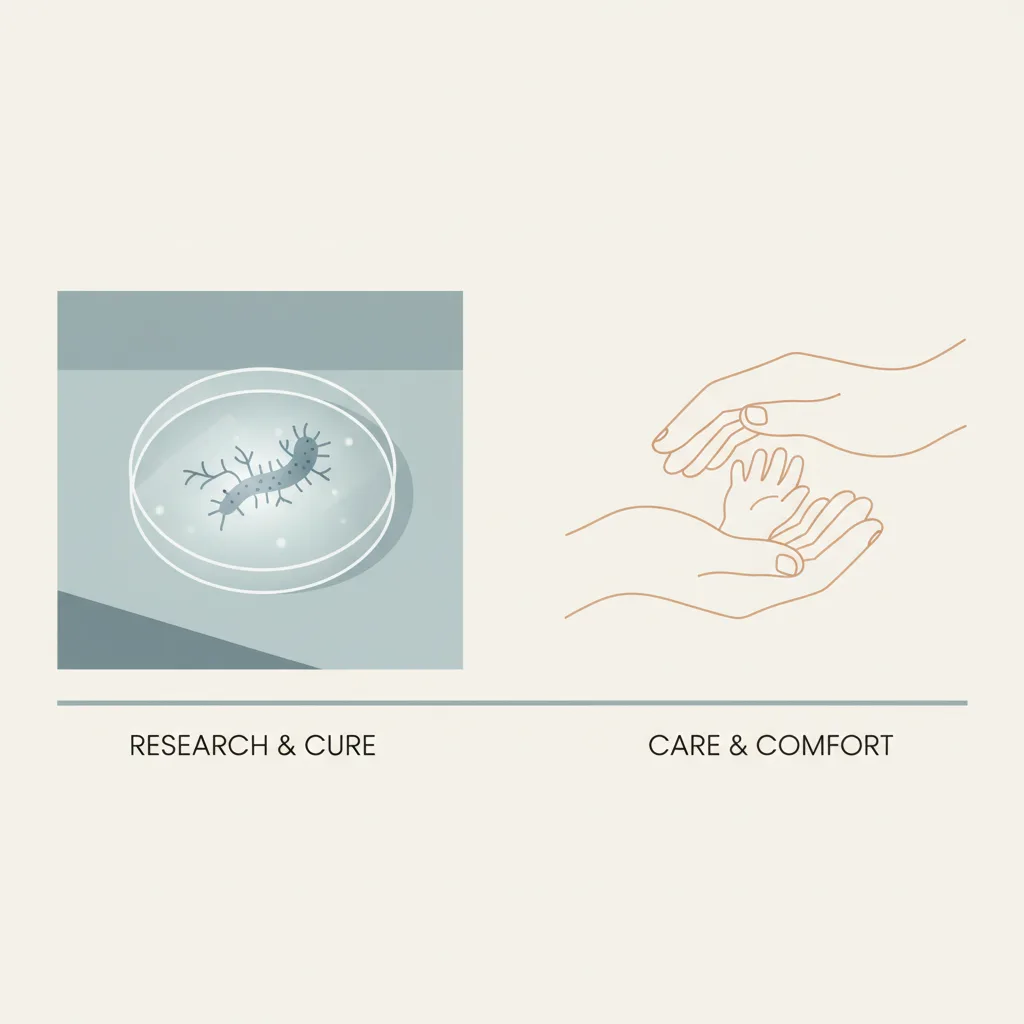
38% of birth mothers who place an infant for adoption report substantial grief at 6 months post-placement — roughly five times the rate of general parental regret among those who raise their children. Cushman, Kalmuss & Namerow (1993) documented this figure in a multistate US sample of 215 young birth mothers across 30 agencies in 13 states; a further 27% reported “some” grief at the same timepoint. Madden et al. (2018) — the most contemporary study, n=223 US birth mothers surveyed across placements made between 1993 and 2018 — found a mean satisfaction with relinquishment score of 3.11 on a five-point scale, sitting just above the midpoint, with satisfaction declining further the more years had elapsed since placement. Two variables predicted higher satisfaction: current contact with the adopted child and full-time employment, neither of which is universally available. A 1982 clinical study by Rynearson, drawn from a small psychiatric sample (n=20), documented that only 30% of relinquishing mothers expressed comfort with the adoption; the broader literature review by Askren and Bloom (1999) identified chronic grief as a recurring theme across studies from 1978 through 1994.
The inaction side — what happens to parents who considered relinquishment and chose instead to raise the child — has almost no dedicated evidence. The best available proxy is general population surveys of parental regret: Piotrowski (2021, PLOS ONE), synthesizing US and German survey data, estimates that roughly 7–8% of parents would choose not to have children if they could decide again. The Turnaway Study provides a narrower analogue — women denied abortion who parented reported only 4% regret at five years — though those women sought abortions rather than adoption placements, limiting comparability. Neither figure captures the specific subgroup of birth parents who weighed placement and then chose to parent; that population has not been surveyed directly.
The asymmetry supports an action-dominates pattern, consistent with Gilovich and Medvec’s framework: the active choice to relinquish generates measurable, persistent grief and dissatisfaction in a substantial minority, while raising a child — even an unintended one — tends toward adaptation and acceptance over time. The long time horizon matters: relinquishment grief is not typically acute and resolved, but often delayed and chronic, with Madden et al. finding dissatisfaction intensifying rather than fading with years. The structural confounders are substantial. Coercion history and adoption openness interact powerfully with outcomes; contemporary voluntary open adoptions with ongoing contact produce substantially better results than the closed adoptions that dominated the 1993 cohort. The 0.38 rate should be read as applicable to the mixed-era, mixed-openness population from which it was drawn; the true rate for contemporary voluntary open-adoption placements is almost certainly lower.
Nguồn: hành động
Sổ cái xác nhận
Mỗi con số dưới đây là những gì mỗi nguồn đã báo cáo, cùng với trích dẫn nguyên văn mà chúng tôi dựa vào và cách chúng tôi đưa ra con số của mình. Nhấp vào bất kỳ liên kết nào để xác minh trực tiếp.
[1]Social Work / Cushman, Kalmuss & Namerow — Placing an Infant for Adoption: The Experiences of Young Birth Mothers
Được bình duyệt
38% of birth mothers felt 'a lot of grief' at 6 months post-placement; 27% felt 'some' grief (n=215, multistate US)
Trích đoạn
“"At 6 months after placement, 38% of the placer sample reported feeling a lot of grief, and 27% reported feeling some grief. Higher levels of grief were found in birth mothers whose babies went to foster placement prior to adoptive placement. The majority of birth mothers found signing the adoption papers to be one of the most difficult parts of the adoption process."
”
Dữ liệu nguồn từ
1993-05-01
Truy cập
2026-05-02
Tính toán
Cushman, Kalmuss & Namerow (1993) interviewed 215 young women who placed infants through 30 maternity residences and agencies in 13 states — the largest contemporary US multistate birth-mother sample at time of publication. At 6 months post-placement, 38% reported "a lot of grief" and 27% "some grief," making the total experiencing significant grief 65%. We use the "a lot of grief" binary (38%) as the action-side rate because it most closely tracks persistent distress rather than transient sadness. The 6-month timeframe may underestimate lifetime rates: Madden et al. (2018) found satisfaction declined further over time, and the broader chronic-grief literature (Askren & Bloom 1999 review) identifies enduring grief in 40–50% of birth mothers across studies. The grief construct is a proxy for regret; grief and satisfaction are empirically distinct but correlated in this population.
[2]Families in Society / Madden, Ryan, Aguiniga, Killian & Romanchik — The Relationship Between Time and Birth Mother Satisfaction With Relinquishment
Được bình duyệt
Mean satisfaction with relinquishment score 3.11 on a 1–5 scale; satisfaction declined with time since placement (n=223 US birth mothers)
Trích đoạn
“"On a scale of 1 to 5, participants reported a mean satisfaction with relinquishment score of 3.11. Time since relinquishment, age of the respondent, education level, and income had a significant inverse relationship with birth mothers' satisfaction to place their child for adoption. The more time that has passed since the birth mothers placed their child, the less overall satisfaction some birth mothers felt."
”
Dữ liệu nguồn từ
2018-06-01
Truy cập
2026-05-02
Tính toán
Madden et al. (2018) surveyed 223 contemporary US birth mothers who placed an infant in the prior 25 years; n=223 is the anchor for the secondary source. The mean satisfaction score of 3.11/5 and its inverse relationship with time corroborate that the 38% acute grief rate from Cushman 1993 persists and may intensify long-term. This study does not publish a binary regret rate but confirms the direction. Two predictors of higher satisfaction — current contact with the adopted child and full-time employment — were present in only a subset of respondents, suggesting 38% is a conservative estimate for the broader birth-mother population.
Nguồn: không hành động
Sổ cái xác nhận
Mỗi con số dưới đây là những gì mỗi nguồn đã báo cáo, cùng với trích dẫn nguyên văn mà chúng tôi dựa vào và cách chúng tôi đưa ra con số của mình. Nhấp vào bất kỳ liên kết nào để xác minh trực tiếp.
[1]PLOS ONE / Piotrowski — How many parents regret having children and how it is linked to their personality and health: Two studies with national samples in Poland
Được bình duyệt
7–8% of parents in US and German population surveys reported regretting having children
Trích đoạn
“"On the basis of the surveys conducted in the US and in Germany, it was assumed that the percentage of parents regretting having a child could be around 7–8%."
”
Dữ liệu nguồn từ
2021-07-22
Truy cập
2026-05-02
Tính toán
Piotrowski (2021) synthesizes prior US and German survey evidence arriving at a 7–8% prevalence of parental regret in general population samples. This is an imperfect proxy for the inaction side: it measures regret among all parents, not among the specific subgroup who weighed relinquishment and chose to parent. No peer- reviewed study has measured regret among birth parents who considered and declined adoption. The Turnaway Study (Foster et al. 2020) is cited as a partial analogue — 4% of women denied abortion who carried to term expressed regret at 5 years — but those women sought abortions, not adoption placements. We use 0.08 (midpoint of the 7–8% range) as the primary inaction rate. The true rate for parents who specifically considered adoption before choosing to parent has not been measured; it may exceed 8% if their circumstances (ambivalence, resource constraints, social pressure) differ systematically from the general population.
[2]ANSIRH / University of California, San Francisco — The Turnaway Study↗ 1 other entry
Nghiên cứu chính
By 5 years after being denied an abortion, 96% of women who carried to term indicated they were glad they had kept their pregnancies (4% regret)
Trích đoạn
“"By five years after being denied an abortion, 96% of women turned away indicated they were glad they had kept their pregnancies. One week after being turned away, 60% of the women expressed happiness over their pregnancies. Right after the baby was born, 88% of women no longer wished they had had an abortion."
”
Dữ liệu nguồn từ
2022-06-15
Truy cập
2026-05-02
Tính toán
The Turnaway Study followed ~1,000 women at 30 US facilities; the turnaway subgroup (~231 denied abortion) forms the relevant comparison. Only ~9% of turnaways pursued adoption; the majority parented. The 4% regret figure at 5 years is the lowest bound for the inaction side, but these women sought abortion — not adoption — so the comparator is imprecise. We cite Turnaway as a corroborating floor showing similarly low inaction regret and use the Piotrowski 7–8% as primary.
Lưu ý
Evidence on the two sides is deeply asymmetric. The action side (relinquishment) has a dedicated literature spanning 40+ years, with consistent documentation of grief, loss, and reduced satisfaction across multiple countries and study designs. The inaction side (raising a child one considered relinquishing) has almost no dedicated literature: no peer-reviewed study has directly measured regret among women who weighed adoption and chose to parent instead. The 0.08 inaction rate is borrowed from general-population parental regret surveys (Piotrowski 2021), most of whom never considered adoption at all. The Turnaway Study provides a partial analogue (women denied abortion who parented), but those women sought abortion, not adoption, and the contexts differ materially.
The action-side rate (0.38) is the directly-reported "a lot of grief" figure from Cushman, Kalmuss & Namerow (1993), a multistate US sample of 215 birth mothers at 6 months post-placement. Grief is a proxy for regret, not regret itself; the two constructs are empirically related but distinct. Madden et al. (2018) found satisfaction declining further over time, suggesting 0.38 is a floor rather than a ceiling for lifetime dissatisfaction. Rynearson (1982) found 70% discomfort in a small psychiatric outpatient sample (n=20); that figure is not used as the rate because of severe selection bias, but it corroborates that persistent grief in this population is well-documented.
Three structural confounders dominate this comparison. First, coercion history: many birth mothers — particularly those who placed before the 1990s — report feeling pressure from family or agencies; coercion is the strongest predictor of poor outcomes, so historical studies overstate regret relative to today's voluntary placements. Second, adoption openness: contemporary open adoptions with ongoing contact produce substantially better outcomes than closed adoptions (Cushman et al. 1997; Madden et al. 2018); the 0.38 figure derives from an era when open adoption was less common. Third, Namerow et al.'s longitudinal study of adolescent mothers found parenters reporting higher regret at 4 years than relinquishers — a finding that would support inaction_dominates — but this was an adolescent pregnancy cohort and has not been replicated in contemporary adult samples. Safe-haven relinquishment (anonymous newborn surrender) is a distinct, rarely-studied pathway not captured in any of these data.