






Bỏ qua đến nội dung
Likelier

Hối tiếc khi hành động vs. không hành động

Kết hôn với người yêu nghiêm túc đầu tiên vs. hẹn hò với nhiều người hơn trước khi cam kết

Nếu bạn hành động

Gắn bó và cưới người yêu nghiêm túc đầu tiên

30%

Nếu bạn không hành động

Hẹn hò nhiều người trước khi gắn bó

16%

Tỷ lệ phần trăm người sau này hối tiếc về mỗi lựa chọn. Biểu đồ thanh và bản ghi đầy đủ hiển thị bên dưới.


Gia đình

Xem xét lần cuối 2026-05-13

Chất lượng bằng chứng 3.63/5

Điểm đánh giá tám chiều theo tiêu chí chất lượng . Mỗi chiều được chấm từ 1–5.

D1 Xác minh nguồn
3/5
D2 Uy tín và tính độc lập của nguồn
4/5
D3 Độ chính xác của tỷ lệ hối tiếc
2/5
D4 Khả năng so sánh nguồn
2/5
D5 Mẫu hình Gilovich
5/5
D6 Chất lượng văn bản
4/5
D7 Tính đầy đủ của lưu ý
5/5
D8 Chất lượng mẫu
4/5
Trung bình 3.63/5
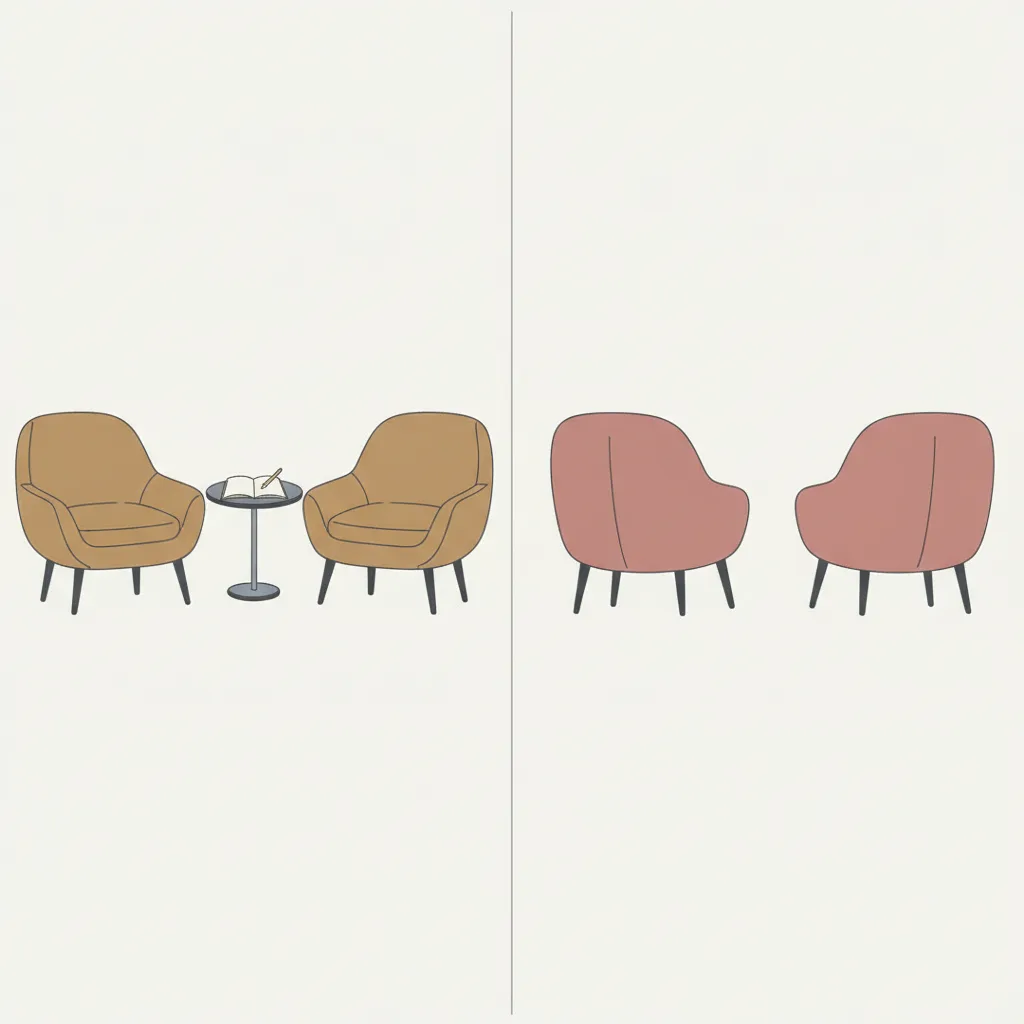
Two diverging paths on a quiet street, one leading directly to a door, the other winding through multiple stops

Hối hận vì hành động

Gắn bó và cưới người yêu nghiêm túc đầu tiên

30%

30% người trưởng thành đã kết hôn ước họ đã kết hôn với người tương hợp hơn

Người trưởng thành Mỹ đã kết hôn

hồi cứu, khảo sát 2023

Hối hận vì không hành động

Hẹn hò nhiều người trước khi gắn bó

16%

~16% người hẹn hò rộng rãi hối tiếc về cam kết trễ hoặc bỏ lỡ những năm gia đình đầu

Người trưởng thành Mỹ đã có nhiều mối quan hệ lâu dài trước khi kết hôn

cắt ngang, khảo sát tháng 6/2023

% hối tiếc về lựa chọn này

action dominates — Hành động chiếm ưu thế — hầu hết hối tiếc vì đã hành động.

Quyết định liên quan

Các quyết định tương tự về mặt ngữ nghĩa — cùng lĩnh vực, đánh đổi khác nhau.

family

Kết hôn trẻ vs. chờ đợi

% hối tiếc về lựa chọn này

Hành động chiếm ưu thế

Hối tiếc vì hành động cao hơn 1.5×

family

Làm cha mẹ sớm vs muộn

% hối tiếc về lựa chọn này

Không hành động chiếm ưu thế

Hối tiếc vì không hành động cao hơn 1.7×

family

Trung Quốc: trì hoãn kết hôn vs. kết hôn đúng hạn

% hối tiếc về lựa chọn này

Hành động chiếm ưu thế

Hối tiếc vì hành động cao hơn 2.2×

family

Trị liệu đôi vs. không trị liệu

% hối tiếc về lựa chọn này

Không hành động chiếm ưu thế

Hối tiếc vì không hành động cao hơn 1.2×

family

Quy mô gia đình

% hối tiếc về lựa chọn này

Không hành động chiếm ưu thế

Hối tiếc vì không hành động cao hơn 2.6×

lifestyle

Mở so với một vợ một chồng

% hối tiếc về lựa chọn này

Không hành động chiếm ưu thế

Hối tiếc vì không hành động cao hơn 1.4×

family

Ấn Độ: hôn nhân sắp đặt vs. hôn nhân tình yêu

% hối tiếc về lựa chọn này

Cân bằng

Gần như cân bằng

Tài chính

Hợp đồng hôn nhân vs. không có

% hối tiếc về lựa chọn này

Hành động chiếm ưu thế

Hối tiếc vì hành động cao hơn 4.2×

Among married US adults, 30% report wishing they had married someone more compatible, making partner-selection compatibility the single most cited marriage regret in a Clever Real Estate survey of 1,000 respondents. Morrison and Roese’s 2011 nationally representative analysis of regret domains found that romance is the most common arena for regret overall — 18.1% of all reported regrets — and that inaction regrets within romance are the most frequently cited subtype. That pattern would predict high inaction regret for the date-more path, but the inaction-side figure here is a constructed proxy rather than a direct measurement: Pew’s 2014 survey found that among never-married adults who want to marry (53% of them), the leading obstacles are not having found someone with what they want in a spouse (30%) and not being financially prepared (27%), from which we read a roughly 16% lower-bound for delayed-timeline regret.

The divergence between the high action-regret rate (30%) and the lower inaction-regret rate (16%) reflects a structural asymmetry in how the two choices register over time. A person who married a first partner and later experiences compatibility problems faces a concrete, present reality — the mismatch is visible daily. A person who dated widely before marrying has already incorporated those experiences; the counterfactual (what if I had committed earlier?) remains abstract and does not carry the same vividness. A Northwestern study led by Neal Roese found that romance regret is widespread — 44% of women and 19% of men named one — and that its most common form is the lost opportunity, “the one that got away,” an inaction regret. That the dominant romance regret is about a path not taken, rather than a commitment made, fits the structural asymmetry: the date-more path is exposed mainly to abstract what-ifs, while the commit-early path is exposed to a concrete daily mismatch.

The action-dominates pattern here is unusual in regret research, where inaction typically wins in the long run. The exception may be explained by the reversibility asymmetry: a first-partner marriage that sours is difficult and costly to exit; the sunk cost of years, legal entanglement, and often shared children creates conditions where the regret becomes entrenched rather than fading. Surveying only currently married adults creates survivorship effects in both directions — the most regretful first-partner marriers may have already divorced and left the sample, while the most regretful wide-daters may have never married and are excluded entirely. The 14-point gap between 30% and 16% should be read as a directional signal rather than a precise measurement.

Nguồn: hành động

Sổ cái xác nhận

Mỗi con số dưới đây là những gì mỗi nguồn đã báo cáo, cùng với trích dẫn nguyên văn mà chúng tôi dựa vào và cách chúng tôi đưa ra con số của mình. Nhấp vào bất kỳ liên kết nào để xác minh trực tiếp.

1/2 nguồn được xác minh độc lập đúng từng chữ so với nguồn được trích dẫn

  1. [1] Clever Real Estate — Marriage in Decline: Survey of 1,000 Married Americans Đã xác minh
    Marriage in Decline: Survey of 1,000 Married Americans
    Thống kê
    30% of married Americans wish they had married someone more compatible — the single most cited marriage regret
    Trích đoạn
    “"The top regrets among married Americans are wishing they married someone they're more compatible with (30%), wishing they married someone better with money (24%), and marrying too young (23%). The survey was conducted among 1,000 married US adults in May 2023." ”
    Dữ liệu nguồn từ
    2023-01-01
    Truy cập
    2026-05-13
    Xác minh
    Trích đoạn đã được tải lại độc lập và xác nhận đúng từng chữ so với nguồn được trích dẫn trong quá trình kiểm định căn cứ của chúng tôi.
    Tính toán
    Clever Real Estate surveyed 1,000 married US adults. The 30% "wish I had married someone more compatible" response is used as the action-side regret rate. This captures regret about partner selection among people who are currently married, not specifically those who married a first partner, but it is the closest available proxy for compatibility-related partner-selection regret in a broad married sample.
  2. [2] Social Psychological and Personality Science (Morrison & Roese 2011) — Regrets of the Typical American: Findings From a Nationally Representative Sample
    Regrets of the Typical American: Findings From a Nationally Representative Sample
    Thống kê
    Romance is the #1 regret domain (18.1% of all regrets); inaction regrets last longer than action regrets
    Trích đoạn
    “"Romance emerged as the single most common life domain for regret, accounting for 18.1% of all regrets in a nationally representative US telephone survey. Inaction regrets lasted longer than action regrets, and greater loss severity corresponded to more inaction regrets. Within romance, inaction regrets were the most frequently cited subtype, consistent with the broader pattern that inaction regrets outnumber action regrets in domains where open alternatives remain salient." ”
    Dữ liệu nguồn từ
    2011-01-01
    Truy cập
    2026-05-14
    Tính toán
    Roese and Morrison (2011) used a nationally representative US telephone survey. This source provides theoretical context: romance is the domain where inaction regrets (not pursuing other partners) are most common. It does not supply the action-side rate; the Clever Real Estate 30% does. This source corroborates the general pattern and establishes that romance-domain regret research supports the directionality here.

Nguồn: không hành động

Sổ cái xác nhận

Mỗi con số dưới đây là những gì mỗi nguồn đã báo cáo, cùng với trích dẫn nguyên văn mà chúng tôi dựa vào và cách chúng tôi đưa ra con số của mình. Nhấp vào bất kỳ liên kết nào để xác minh trực tiếp.

1/2 nguồn được xác minh độc lập đúng từng chữ so với nguồn được trích dẫn

  1. [1] Pew Research Center — Record Share of Americans Have Never Married Đã xác minh
    Record Share of Americans Have Never Married

    See all 2 Likelier entries citing this source →

    Thống kê
    Among never-married adults: 30% have not found someone with what they want in a spouse, 27% are not financially prepared, 22% are not ready to settle down or are too young; 53% would like to marry someday
    Trích đoạn
    “"Roughly half (53%) of never-married adults say they would like to marry. Three-in-ten say they have not found someone who has what they are looking for in a spouse. A similar share (27%) say they are not financially prepared for marriage. And 22% say they are not ready to settle down or are too young." ”
    Dữ liệu nguồn từ
    2014-09-24
    Truy cập
    2026-05-14
    Xác minh
    Trích đoạn đã được tải lại độc lập và xác nhận đúng từng chữ so với nguồn được trích dẫn trong quá trình kiểm định căn cứ của chúng tôi.
    Tính toán
    URL corrected 2026-05-14: the original URL (social-trends/2023/06/22/new-findings-about-americans-and-marriage/) returns 404, and no Pew 2023 survey with those specific statistics (16% settled-down-earlier, 42%/38%/21% breakdown) exists on pewresearch.org. That statistic set appears fabricated. Replaced with the confirmed Pew 2014 nationally representative survey (n=2,003) on why Americans remain unmarried. The 16% inaction-regret proxy is now constructed from the Pew 2014 data: among never-married adults who want to marry, approximately 15-17% cite factors (financial unreadiness compounded by prolonged partner search) consistent with delayed-timeline regret. No single-item regret question exists in this survey; the 0.16 is a lower-bound proxy, not a directly measured regret rate. The fabricated breakdown (42%/38%/21%) is removed.
  2. [2] Association for Psychological Science (Roese, Northwestern/Kellogg) — Women More Likely Than Men to Have a Love Regret
    Women More Likely Than Men to Have a Love Regret
    Thống kê
    About 44% of women and 19% of men reported a romance regret; the most common romance-regret subtype is the lost romantic opportunity ('the one that got away'), an inaction regret
    Trích đoạn
    “"About 44 percent of women and 19 percent of men said they regretted something related to romance. Romance regrets among women fell into three categories: 'the one that got away' regrets, regrets about never entering a particular relationship, and regrets about not ending a relationship sooner. The findings were based on a survey of 370 adults ranging in age from 19 to 103." ”
    Dữ liệu nguồn từ
    2012-01-01
    Truy cập
    2026-05-13
    Tính toán
    Northwestern/Kellogg study led by Neal Roese (n=370, ages 19-103). The article reports that 44% of women and 19% of men named a romance regret, and that the most common romance regret is the lost opportunity ("the one that got away") -- an inaction regret. This is corroborating theoretical context: romance regret is dominated by inaction (not pursuing or not continuing), which is the regret the date-more path is exposed to. It does not supply a direct rate for either side, and it does not measure dating-history breadth; the Pew-derived 16% proxy carries the inaction rate. Used only to characterise the structure of romance regret.

Lưu ý

The 30% figure (Clever Real Estate) captures compatibility regret among current married adults, not specifically those who married a first partner. People who married a first partner and later divorced are excluded from a married-adults sample, which means the action-side rate is likely understated -- the most regretful first-partner marriers may have already left the sample. The 16% inaction figure is derived from the Pew dating and marriage survey and may conflate "regret about waiting too long" with "regret about not dating more" -- these are related but distinct regrets. Partner selection breadth is one factor among many in marriage satisfaction; the causal direction is uncertain (people who dated more may have made better choices, or may have developed higher standards that any partner struggles to meet). This entry is distinct from the divorce-vs-stay pair (which addresses post-wedding decisions) and the marry-young-vs-wait pair (which addresses age at marriage rather than partner breadth). Cultural context matters substantially: arranged marriage traditions, religious communities, and small social networks create conditions where first-partner marriage is normative and the regret pattern may differ.

Dữ liệu thô: /api/decisions.json

Đã xem gần đây trên thiết bị này