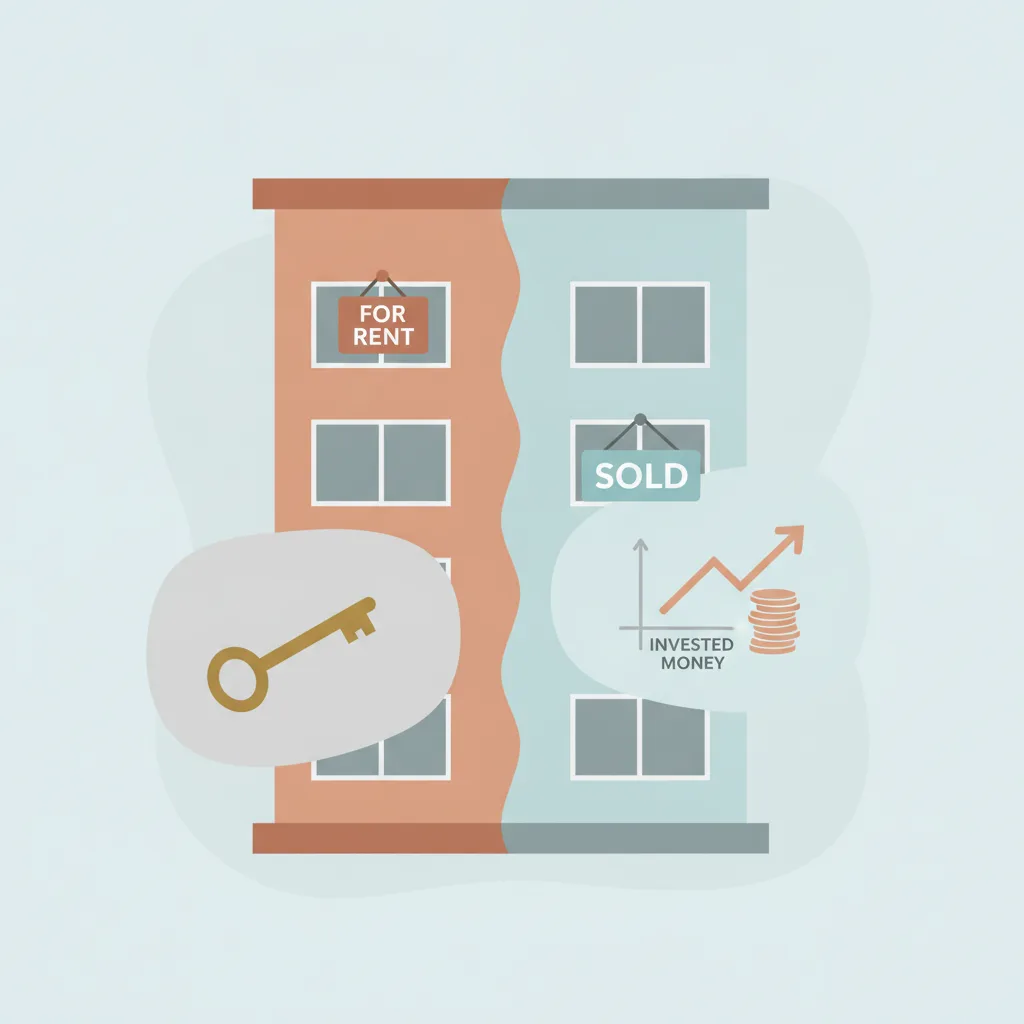
Dữ liệu đại diện — không có cuộc khảo sát trực tiếp nào về sự hối tiếc cho quyết định này. Tỷ lệ được lấy từ điểm hài lòng và dữ liệu rào cản tiếp cận thay vì câu hỏi trực tiếp về sự hối tiếc. Xem cảnh báo bên dưới.
Hối hận vì hành động
Bán và đầu tư
25%
25% người bán nhà hối tiếc vì đã bán — họ nhớ ngôi nhà mà mình đã từ bỏ
Người trưởng thành ở Mỹ đã bán nhà trong 2021–2022 (khảo sát Clever Real Estate 2022)
hồi cứu, trong vòng ~1–2 năm kể từ khi bán
Hối hận vì không hành động
Giữ lại và cho thuê
40%
40% chủ sở hữu bất động sản cho thuê ước gì họ chưa từng bắt đầu
Nhà đầu tư bất động sản nhà ở / chủ nhà cho thuê ở Mỹ (khảo sát Clever Real Estate 2024)
hồi cứu, chủ sở hữu hiện tại
% hối tiếc về lựa chọn này
Bán và đầu tưGiữ lại và cho thuê
25%40%
inaction dominates — Không hành động chiếm ưu thế — hầu hết hối tiếc vì đã không hành động.
Quyết định liên quan
Các quyết định tương tự về mặt ngữ nghĩa — cùng lĩnh vực, đánh đổi khác nhau.
No survey pits “rent it out” directly against “sell it and invest the money,” so this pairs the two closest measured regrets. About 40% of residential rental owners wish they’d never started investing in real estate (Clever Real Estate’s 2024 survey of 764 investors), against about 25% of recent sellers who regret selling because they miss the home they gave up (Clever’s 2022 survey of 1,000 sellers). On those proxies, keeping-and-renting is the more-regretted path — the opposite of the intuition that selling is the move you might kick yourself for later.
The reason keep-and-rent regret runs high is that landlording is not the passive income it is sold as. In the same 2024 survey, 56% of owners had already had to evict a tenant, 61% were still chasing missed rent every month, and 87% reported some regret about their investment decisions. The NBER study of landlords’ own lease ledgers puts a price on the hassle: filing a single eviction costs the equivalent of two to three months’ rent, and nonpayment is common enough that many landlords tolerate months of it before acting. Against that, the seller’s regret is quieter and more emotional — missing a home — rather than a recurring operational drain.
Read the gap cautiously. This is a proxy pairing, flagged as such: the two numbers come from different people surveyed in different years, the seller figure includes forced moves that mix circumstance with choice, and the investor sample leans toward heavily-invested owners who may regret more than a one-flat landlord would. It also says nothing about the money — whether renting out or selling-and-investing wins financially depends on rental yield, local price growth, and what the sale proceeds earn elsewhere, none of which a regret rate measures. The Gilovich pattern (holding-and-managing regret accumulates while the sold home fades into a wistful memory) fits the direction here, but the evidence is indicative, not a head-to-head test.
Nguồn: hành động
Sổ cái xác nhận
Mỗi con số dưới đây là những gì mỗi nguồn đã báo cáo, cùng với trích dẫn nguyên văn mà chúng tôi dựa vào và cách chúng tôi đưa ra con số của mình. Nhấp vào bất kỳ liên kết nào để xác minh trực tiếp.
[1]Clever Real Estate — American Home Seller Report: 2022 Edition
Nguồn tham khảo
One-fourth of home sellers (25%) regretted selling because they miss their old home
Trích đoạn
“"One-fourth of respondents (25%) regretted selling because they miss their old home" — from a survey of 1,000 people who sold a home in 2021 or 2022 (fielded Sept. 29 – Oct. 2, 2022).
”
Dữ liệu nguồn từ
2022-10-12
Truy cập
2026-07-09
Tính toán
Used as a proxy for regret about the decision to sell itself. The 25% "miss their old home" figure is the cleanest available decision-construct regret for sellers — distinct from the much larger "process" regret numbers (priced too low, sold too fast, commission too high) that other seller surveys report, which measure regret about how the sale went, not regret about having sold. Because it is a proxy (not a head-to-head "sell vs rent-out" survey), this entry is flagged proxy_only.
Nguồn: không hành động
Sổ cái xác nhận
Mỗi con số dưới đây là những gì mỗi nguồn đã báo cáo, cùng với trích dẫn nguyên văn mà chúng tôi dựa vào và cách chúng tôi đưa ra con số của mình. Nhấp vào bất kỳ liên kết nào để xác minh trực tiếp.
[1]Clever Real Estate — Residential Real Estate Investing in 2024: More Rent Money, More Rental Problems↗ 1 other entry
Nguồn tham khảo
40% of residential real estate investors wish they'd never started investing in real estate; 87% have regrets about their investment decisions; 56% have had to evict a tenant
Trích đoạn
“"40% say they wish they'd never started investing in real estate [...] 87% [...] have regrets about their investment decisions [...] More than half of respondents (56%) have had to evict a tenant at some point." — survey of 764 US residential real estate investors, fielded May 18–June 9, 2024.
”
Dữ liệu nguồn từ
2024-07-01
Truy cập
2026-07-09
Tính toán
The 40% "wish they'd never started" figure is used as the regret proxy for the keep-and-rent side. The broader 87% "have regrets" figure is not used as the headline because it spans market and financial regrets, not the decision to become a landlord specifically. Sample skews toward active, heavily-invested owners (90% had lost money on an investment).
[2]National Bureau of Economic Research (NBER Working Paper 33155) — Nonpayment and Eviction in the Rental Housing Market↗ 1 other entry
Nghiên cứu chính
Filing an eviction costs landlords the equivalent of 2–3 months of rent; nonpayment is common and frequently tolerated before eviction
Trích đoạn
“"Filing an eviction costs landlords the equivalent of 2-3 months of rent [...] Nonpayment is common, is frequently tolerated by landlords, and is often followed by recovery."
”
Dữ liệu nguồn từ
2024-11-01
Truy cập
2026-07-09
Tính toán
Cited to explain why keep-and-rent regret runs high: landlording carries real, recurring costs (an eviction alone runs 2–3 months' rent), which the "passive income" framing understates. Corroboration for the regret driver, not a regret rate itself.
Lưu ý
Đây là một cặp proxy_only: không có khảo sát nào hỏi cùng những người đó xem họ có hối tiếc việc chọn cho thuê một bất động sản thay vì bán nó và đầu tư số tiền hay không, nên mỗi phía dùng cấu trúc gần nhất có sẵn. Phía hành động (bán) được ước lượng bằng 25% người bán gần đây "nhớ ngôi nhà cũ của họ" (Clever 2022); phía không hành động (giữ lại và cho thuê) được ước lượng bằng 40% chủ sở hữu cho thuê "ước gì họ chưa từng bắt đầu đầu tư vào bất động sản" (Clever 2024). Hai con số đến từ những mẫu khác nhau (người bán so với nhà đầu tư) trong những năm khác nhau (2022 so với 2024), nên phép so sánh mang tính chỉ dẫn, không phải một đối chứng có kiểm soát. Con số "nhớ ngôi nhà của tôi" của người bán bao gồm cả những người buộc phải chuyển đi do thay đổi công việc hoặc tài chính, làm lẫn lộn hoàn cảnh với lựa chọn; mẫu nhà đầu tư nghiêng về những chủ sở hữu tích cực, đầu tư nhiều (90% đã từng thua lỗ ở một khoản đầu tư), có khả năng phóng đại mức hối tiếc đối với người cho thuê một căn hộ được thừa kế hoặc bỏ trống. Quan trọng nhất, tỷ lệ hối tiếc chẳng nói gì về tiền bạc: việc cho thuê hay bán-và-đầu-tư mang lại kết quả tài chính tốt hơn phụ thuộc vào lợi suất cho thuê, mức tăng giá địa phương, và lợi nhuận thị trường trên số tiền bán được — tất cả đều phụ thuộc vào lộ trình và thời điểm, và không được nắm bắt ở đây. Khung tham chiếu dựa trên Mỹ; luật bảo vệ người thuê và chi phí giao dịch khác nhau rõ rệt giữa các quốc gia.