


Bỏ qua đến nội dung
Likelier

Hối tiếc khi hành động vs. không hành động

Mua vừa đủ bây giờ hay mua lớn hơn mức cần thiết

Nếu bạn hành động

Mua vừa đủ nhu cầu hiện tại

8,0%

Nếu bạn không hành động

Mua lớn hơn nhu cầu

5,0%

Tỷ lệ phần trăm người sau này hối tiếc về mỗi lựa chọn. Biểu đồ thanh và bản ghi đầy đủ hiển thị bên dưới.


Tài chính

Xem xét lần cuối 2026-05-04

Chất lượng bằng chứng 4.13/5

Điểm đánh giá tám chiều theo tiêu chí chất lượng . Mỗi chiều được chấm từ 1–5.

D1 Xác minh nguồn
5/5
D2 Uy tín và tính độc lập của nguồn
4/5
D3 Độ chính xác của tỷ lệ hối tiếc
4/5
D4 Khả năng so sánh nguồn
5/5
D5 Mẫu hình Gilovich
2/5
D6 Chất lượng văn bản
5/5
D7 Tính đầy đủ của lưu ý
4/5
D8 Chất lượng mẫu
4/5
Trung bình 4.13/5
Bằng chứng trực tiếp
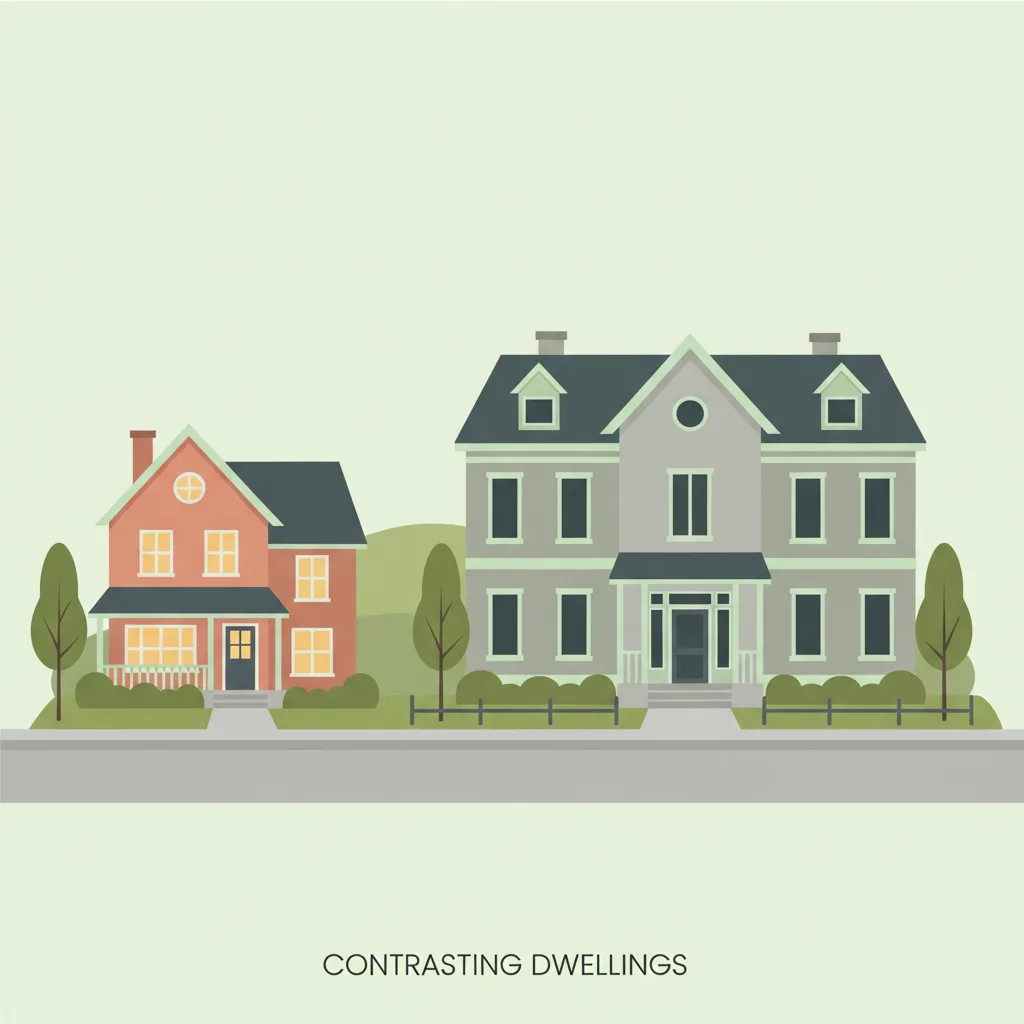
Two houses side by side — one compact and tidy, the other larger with several dark, unused windows.

Hối hận vì hành động

Mua vừa đủ nhu cầu hiện tại

8,0%

~8% chủ nhà ước họ đã mua lớn hơn

Chủ nhà Mỹ, đại diện toàn quốc

hồi cứu, không có khung thời gian cố định

Hối hận vì không hành động

Mua lớn hơn nhu cầu

5,0%

~5% chủ nhà hối tiếc vì mua quá nhiều không gian

Chủ nhà Mỹ, đại diện toàn quốc

hồi cứu, không có khung thời gian cố định

% hối tiếc về lựa chọn này

action dominates — Hành động chiếm ưu thế — hầu hết hối tiếc vì đã hành động.

Quyết định liên quan

Các quyết định tương tự về mặt ngữ nghĩa — cùng lĩnh vực, đánh đổi khác nhau.

Tài chínhTrực tiếp

Mua nhà

% hối tiếc về lựa chọn này

Không hành động chiếm ưu thế

Hối tiếc vì không hành động cao hơn 5.6×

Tài chính

Cải tạo nhà

% hối tiếc về lựa chọn này

Hành động chiếm ưu thế

Hối tiếc vì hành động cao hơn 2.3×

Tài chính

Thế chấp cố định vs. ARM

% hối tiếc về lựa chọn này

Hành động chiếm ưu thế

Hối tiếc vì hành động cao hơn 3.6×

Tài chính

Từ bỏ kiểm tra nhà

% hối tiếc về lựa chọn này

Hành động chiếm ưu thế

Hối tiếc vì hành động cao hơn 3.1×

Tài chính

Thương lượng tiền thuê

% hối tiếc về lựa chọn này

Không hành động chiếm ưu thế

Hối tiếc vì không hành động cao hơn 1.9×

Tài chính

Xe mới vs xe cũ

% hối tiếc về lựa chọn này

Cân bằng

Gần như cân bằng

lifestyle

Xe điện vs xe xăng

% hối tiếc về lựa chọn này

Hành động chiếm ưu thế

Hối tiếc vì hành động cao hơn 2.9×

lifestyle

Hữu cơ so với thông thường

% hối tiếc về lựa chọn này

Không hành động chiếm ưu thế

Hối tiếc vì không hành động cao hơn 3.1×

About 8% of US homeowners wish they had bought a bigger home, versus roughly 5% who regret buying too much space, according to Bankrate’s 2024 survey of homeowners with purchase regrets. The gap is narrow — 3 percentage points — and the finding cuts against the popular “don’t buy too much house” advice. Among homeowners who have any regret at all (47% of the total), “too small” ranks second at 18%, while “too big” comes in at 10%, behind maintenance costs, location, overpaying, and mortgage rates. The pattern extends beyond housing: vehicle buyers who chose a compact car and later needed a larger one face modest upgrade costs, while those who bought an oversized SUV absorb years of higher fuel, insurance, and depreciation on capacity they never use.

The small gap masks an asymmetry in how the two regrets feel. Right-sizers who outgrow their space experience a concrete, daily friction: the cramped home office, the bedroom that doubled as a nursery. Oversizers, by contrast, often absorb their regret into adjacent financial complaints. Bankrate’s survey found 40% of regretful owners citing maintenance and hidden costs as their top grievance, and 13% citing an unaffordable mortgage — both categories that disproportionately affect those who bought more home than they needed. Genesove and Mayer’s study of Boston condominiums showed that owners anchored to their purchase price set asking prices 25–35% above market when facing a loss, creating a psychological lock-in that makes downsizing from an oversized home especially painful. Hedonic adaptation compounds the problem: the pleasure of extra square footage fades within months, but the mortgage payment never adapts.

Neither side of this decision carries catastrophic regret rates. Both land under 10%, well below the 45% of renters who wish they had bought at all. The honest read is that most homeowners, whether they sized up or sized down, would do the same thing again. For buyers weighing the tradeoff today, the financial math favors right-sizing: transaction costs for a future upgrade ($1,000–$5,000 for a local move) are modest compared to years of carrying costs on unused space. But the data does not support a strong directional claim. Individual variables — market trajectory, family plans, remote-work permanence — swamp the aggregate signal.

Nguồn: hành động

Sổ cái xác nhận

Mỗi con số dưới đây là những gì mỗi nguồn đã báo cáo, cùng với trích dẫn nguyên văn mà chúng tôi dựa vào và cách chúng tôi đưa ra con số của mình. Nhấp vào bất kỳ liên kết nào để xác minh trực tiếp.

  1. [1] Bankrate — Bankrate 2024 Homeowner Regrets Survey
    Bankrate 2024 Homeowner Regrets Survey
    Thống kê
    18% of homeowners with regrets say they bought too small a house; 47% of all homeowners have at least one regret
    Trích đoạn
    “"Nearly half (47 percent) of current U.S. homeowners have a regret about their purchase. Among those with regrets, 18% say they bought too small of a house." ”
    Dữ liệu nguồn từ
    2024-05-01
    Truy cập
    2026-04-28
    Tính toán
    Bankrate's April 2024 nationally representative survey. 47% of homeowners report at least one regret. Of those, 18% cite "too small" as their regret. Population-level rate: 0.47 × 0.18 = 0.085, rounded to 0.08. This represents homeowners who, looking back, wish they had purchased a larger home — not necessarily people who deliberately right-sized, but the closest available proxy.
  2. [2] Clever Real Estate — American Home Buyer Report: 2024 Edition
    American Home Buyer Report: 2024 Edition
    Thống kê
    24% of recent homebuyers with regrets say their home doesn't meet all their needs
    Trích đoạn
    “"82% of recent buyers have at least one regret about their purchase. Among those with regrets, 24% say their home doesn't meet all their needs." ”
    Dữ liệu nguồn từ
    2024-05-13
    Truy cập
    2026-04-28
    Tính toán
    Clever Real Estate survey of 920 Americans who bought in 2023-2024. The 24% "doesn't meet all needs" is broader than pure size regret — it includes layout, features, and location — but corroborates the Bankrate finding that undersizing is a common regret category.

Nguồn: không hành động

Sổ cái xác nhận

Mỗi con số dưới đây là những gì mỗi nguồn đã báo cáo, cùng với trích dẫn nguyên văn mà chúng tôi dựa vào và cách chúng tôi đưa ra con số của mình. Nhấp vào bất kỳ liên kết nào để xác minh trực tiếp.

  1. [1] Bankrate — Bankrate 2024 Homeowner Regrets Survey
    Bankrate 2024 Homeowner Regrets Survey
    Thống kê
    10% of homeowners with regrets say they bought too big a house; 47% of all homeowners have at least one regret
    Trích đoạn
    “"Among homeowners with regrets, 10% say their regret is that their home is too big. The most common regret overall is maintenance and hidden costs (40%), followed by buying too small (18%)." ”
    Dữ liệu nguồn từ
    2024-05-01
    Truy cập
    2026-04-28
    Tính toán
    Same Bankrate 2024 survey. 47% have regrets, 10% of those cite "too big." Population-level rate: 0.47 × 0.10 = 0.047, rounded to 0.05. Note that oversizing regret may be underreported because its costs (maintenance, utilities, mortgage strain) are captured by adjacent categories: 40% cite "maintenance/hidden costs" and 13% cite "mortgage too high." Those who bought too big may attribute regret to cost rather than size.
  2. [2] The Quarterly Journal of Economics — Loss Aversion and Seller Behavior: Evidence from the Housing Market
    Loss Aversion and Seller Behavior: Evidence from the Housing Market
    Thống kê
    Owners facing nominal losses set asking prices 25-35% above expected sale price and exhibit much lower sale hazard
    Trích đoạn
    “"Condominium owners subject to nominal losses set higher asking prices of 25-35 percent of the difference between the property's expected selling price and their original purchase price, attain higher selling prices of 3-18 percent of that difference, and exhibit a much lower sale hazard than other sellers." ”
    Dữ liệu nguồn từ
    2001-11-01
    Truy cập
    2026-04-28
    Tính toán
    Genesove and Mayer (2001), data from downtown Boston condos in the 1990s. This study doesn't directly measure oversizing regret but documents the mechanism that traps oversizers: loss aversion anchors owners to their purchase price, making them reluctant to sell even when the home no longer fits. Owner-occupants show effects twice as large as investors. Cited as evidence that overprovisioning creates psychological lock-in beyond the financial cost.

Lưu ý

No survey asks the precise question posed here — "did you deliberately right-size and regret it, or deliberately overprovision and regret it?" The Bankrate rates are derived from homeowners retrospectively judging whether their home is too small or too big, which conflates deliberate strategy with budget constraints and life changes. The 3-percentage-point gap is small enough that individual circumstances dominate the aggregate signal. Housing data is strongest; vehicle and general-purchase evidence is directional but thinner. In rapidly appreciating markets, oversizers are partially rescued by equity growth; in flat or declining markets, the cost penalty of extra square footage is amplified. The 40% who cite maintenance costs may include many oversizers who frame their regret as financial rather than spatial, which would narrow or reverse the gap if re-coded.

Dữ liệu thô: /api/decisions.json

Đã xem gần đây trên thiết bị này