




Zum Inhalt springen
Likelier

Reue durch Handeln vs. Nichthandeln

Die Organspende eines verstorbenen Familienmitglieds genehmigen vs. ablehnen

Wenn du handelst

Organspende zustimmen

4,0%

Wenn du nicht handelst

Organspende verweigern

27%

Anteil derer, die jede Entscheidung später bereuen. Balken und vollständige Datengrundlage erscheinen unten.


Familie

Zuletzt überprüft 2026-05-13

Evidenzqualität 4.25/5

Bewertungsergebnis nach acht Dimensionen gemäß der Qualitätsrubrik . Jede Dimension wird mit 1–5 bewertet.

D1 Quellenüberprüfung
3/5
D2 Quellenautorität & Unabhängigkeit
4/5
D3 Genauigkeit der Bedauernsrate
4/5
D4 Vergleichbarkeit der Quellen
5/5
D5 Gilovich-Muster
5/5
D6 Prosaqualität
5/5
D7 Vollständigkeit der Einschränkungen
5/5
D8 Stichprobenqualität
3/5
Durchschnitt 4.25/5
Direkte Evidenz
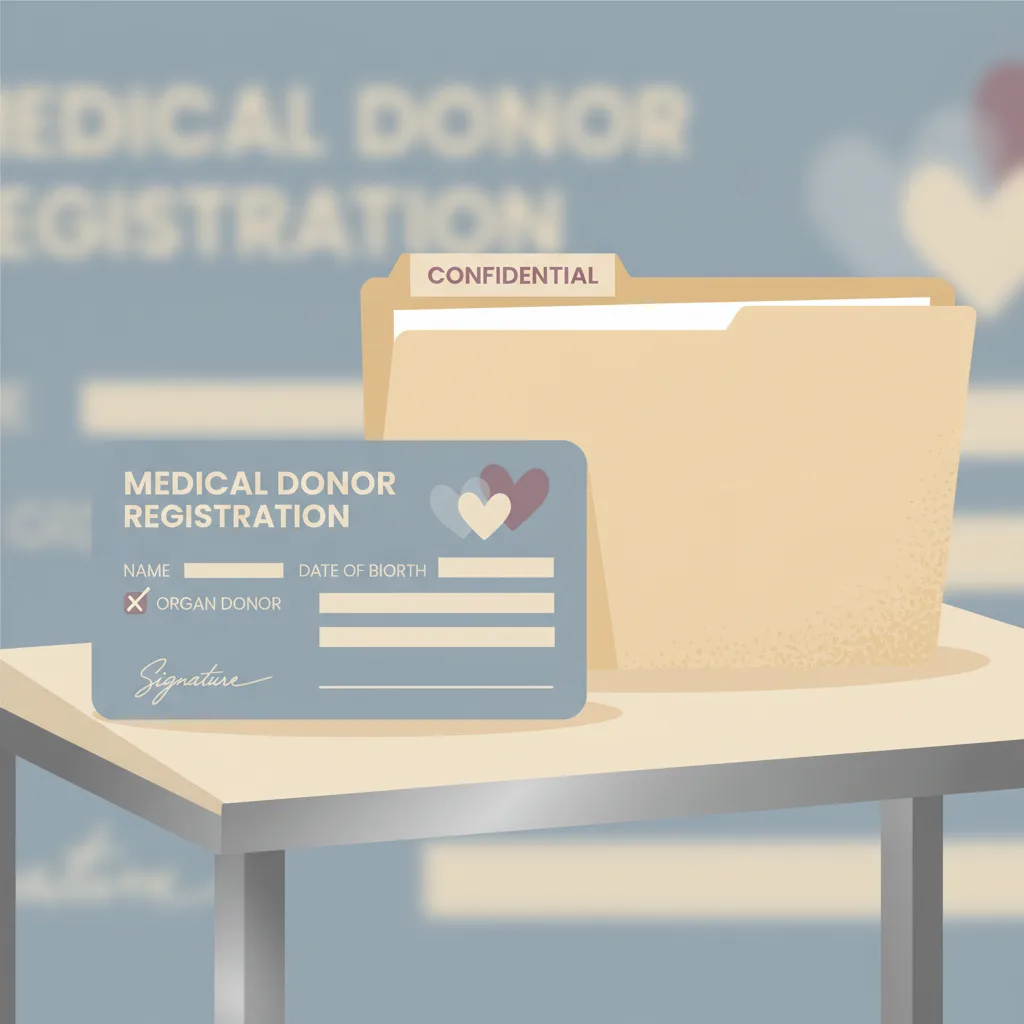
A hospital donor registration card on the left and a closed folder on the right, on a quiet table.

Reue fürs Handeln

Organspende zustimmen

4,0%

4% der zustimmenden nächsten Angehörigen würden nicht erneut zustimmen, wenn sie noch einmal entscheiden könnten

Nächste Angehörige, die einer Organspende zustimmten, Niederlande

Längsschnitt, 1–4 Jahre nach Entscheidung

Reue fürs Unterlassen

Organspende verweigern

27%

27% der Familien, die eine Spende abgelehnt haben, würden nun zustimmen, wenn sie noch einmal entscheiden könnten

Nächste Angehörige, die die Zustimmung zur Organspende verweigerten, Niederlande

Längsschnitt, 1–4 Jahre nach Entscheidung

% bereuen diese Entscheidung

inaction dominates — Nichthandeln dominiert — die meisten bereuen, nicht gehandelt zu haben.

Verwandte Entscheidungen

Semantisch ähnliche Entscheidungen — gleiches Terrain, andere Abwägungen.

family

Pflegeheim vs. Heimpflege

% bereuen diese Entscheidung

Handlung überwiegt

Reue über Handlung 2.3× höher

Gesundheit

Zeitpunkt der Patientenverfügung

% bereuen diese Entscheidung

Untätigkeit überwiegt

Reue über Untätigkeit 10.0× höher

Gesundheit

Sterbehilfe vs. Palliativpflege

% bereuen diese Entscheidung

Untätigkeit überwiegt

Reue über Untätigkeit 5.0× höher

Gesundheit

Einweisung in Reha vs Abwarten

% bereuen diese Entscheidung

Untätigkeit überwiegt

Reue über Untätigkeit 1.8× höher

family

Familiäre Entfremdung

% bereuen diese Entscheidung

Untätigkeit überwiegt

Reue über Untätigkeit 3.4× höher

family

Zuhause vs berufstätig

% bereuen diese Entscheidung

Handlung überwiegt

Reue über Handlung 1.3× höher

family

Adoption vs. selbst erziehen

% bereuen diese Entscheidung

Handlung überwiegt

Reue über Handlung 4.8× höher

family

Vollbetreuung vs unterstützte Entscheidungsfindung

% bereuen diese Entscheidung

Ausgewogen

Weitgehend ausgewogen

Among 147 next-of-kin who consented to organ donation, 4% said they would not consent if they could decide again, according to Rodrigue, Cornell and Howard’s US interview study of 285 next-of-kin (Am J Transplant, 2008). The overwhelming majority — 94% — said they would make the same decision, with 2% unsure. UNOS data record that US deceased organ donors first exceeded 10,000 in 2017 (10,281 donors), so tens of thousands of next-of-kin now face this decision each year, typically under acute clinical time pressure with limited opportunity for deliberation. The constrained decision environment contributes to post-hoc doubt independent of the direction of the choice, but on the consent side that doubt is rare.

Refusal proved far less stable: of the 138 next-of-kin who declined donation, 27% said they would now consent if they could decide over, while only 64% would refuse again and 9% were unsure. A 2021 Singapore national survey (BMJ Open, n=973) helps explain the mechanism: 68.1% of respondents were willing to donate their own organs but only 51.8% would consent for a relative — a roughly 16-point gap showing that people apply a higher bar to a relative’s body than to their own. When that hesitation later meets evidence of donation’s value, the refusal becomes the decision people most often wish they could take back.

Under Gilovich and Medvec’s temporal model, inaction typically generates more durable long-term regret, and the gap here — 27% of refusers reversing versus 4% of consenters — is consistent with that pattern. The caveat is that both rates come from a single US study that measured decision instability (would you decide the same way again) rather than a validated regret scale, and from a one-time interview rather than a multi-year trajectory. The robust signal is the asymmetry: refusing is reversed roughly seven times as often as consenting. The precise percentages should be read as directional, not as population norms.

Quellen: Handeln

Quellenregister

Jede Zahl unten ist das, was die jeweilige Quelle berichtet hat — mit dem wörtlichen Zitat, auf das wir uns stützen, und wie wir zu unserer Zahl gelangt sind. Klicke auf einen Link, um direkt zu prüfen.

2/2 Quellen unabhängig wortwörtlich mit der zitierten Quelle abgeglichen

  1. [1] American Journal of Transplantation — The instability of organ donation decisions by next-of-kin and factors that predict it Verifiziert
    The instability of organ donation decisions by next-of-kin and factors that predict it
    Statistik
    Of 147 next-of-kin who consented to donation, 6 (4%) said they would not consent again, 138 (94%) would make the same decision, and 3 (2%) were unsure
    Auszug
    “"Of the 147 next-of-kin donors, 138 (94%) would make the same decision again, 6 (4%) would not consent to donation and 3 (2%) were unsure." ”
    Quelldaten von
    2008-12-01
    Abgerufen
    2026-06-30
    Verifizierung
    Der Auszug wurde bei unserer Grounding-Prüfung unabhängig erneut abgerufen und Wort für Wort mit der zitierten Quelle abgeglichen.
    Berechnung
    Rodrigue JR, Cornell DL, Howard RJ (2008), Am J Transplant 8(12):2661-7, PMID 18853951. US interview study of 285 next-of-kin (147 donors, 138 nondonors). Decision instability is the directly measured construct: among consenters, 6/147 = 4% would not consent if they could decide again. Used directly as the action-side regret_rate of 0.04. Replaces a prior citation (PMID 21902727, Jansen/van Leiden Dutch consent-rate study) that measured family CONSENT RATES, not consenter regret, and did not support the previously stated 10% figure.
  2. [2] United Network for Organ Sharing (UNOS) — Deceased organ donors in United States exceeded 10,000 for first time in 2017 Verifiziert
    Deceased organ donors in United States exceeded 10,000 for first time in 2017
    Statistik
    In 2017 US deceased organ donors first exceeded 10,000 (10,281 donors), so tens of thousands of next-of-kin face the donation decision each year
    Auszug
    “"During 2017, the number of deceased organ donors in the United States topped 10,000 for the first time, according to preliminary data from United Network for Organ Sharing (UNOS), which serves as the national Organ Procurement and Transplantation Network (OPTN) under federal contract. For the year, organs were recovered from 10,281 donors, representing a 3.1 percent increase over 2016 and an increase of 27 percent since 2007." ”
    Quelldaten von
    2018-01-09
    Abgerufen
    2026-07-01
    Verifizierung
    Der Auszug wurde bei unserer Grounding-Prüfung unabhängig erneut abgerufen und Wort für Wort mit der zitierten Quelle abgeglichen.
    Berechnung
    UNOS news release (Jan 9, 2018) on national deceased-donor volume. Used as population-scale context: the number of realized deceased donors first exceeded 10,000 in 2017 (10,281). Because only a fraction of approached next-of-kin consent, the number of families who actually face the donation decision each year is even larger than the donor count. This source establishes US scale only and does not provide a regret rate; the regret figures come from Rodrigue et al. (2008). Replaces a prior citation (unos.org/data/transplant-trends dashboard) whose verbatim excerpt about "~10,000 families approached ... under significant time pressure" did not appear on that page and could not be verified as UNOS text.

Quellen: Nichthandeln

Quellenregister

Jede Zahl unten ist das, was die jeweilige Quelle berichtet hat — mit dem wörtlichen Zitat, auf das wir uns stützen, und wie wir zu unserer Zahl gelangt sind. Klicke auf einen Link, um direkt zu prüfen.

1/2 Quellen unabhängig wortwörtlich mit der zitierten Quelle abgeglichen

  1. [1] American Journal of Transplantation — The instability of organ donation decisions by next-of-kin and factors that predict it
    The instability of organ donation decisions by next-of-kin and factors that predict it
    Statistik
    Of 138 next-of-kin who refused donation, 37 (27%) said they would now consent, 89 (64%) would make the same decision, and 12 (9%) were unsure
    Auszug
    “"Of the 138 next-of-kin nondonors, 89 (64%) would make the same decision again, 37 (27%) would consent to donation and 12 (9%) were unsure." ”
    Quelldaten von
    2008-12-01
    Abgerufen
    2026-06-30
    Berechnung
    Rodrigue JR, Cornell DL, Howard RJ (2008), Am J Transplant 8(12):2661-7, PMID 18853951. US interview study of 285 next-of-kin (147 donors, 138 nondonors). Decision instability is the directly measured construct: among refusers, 37/138 = 27% would now consent if they could decide again. Used directly as the inaction-side regret_rate of 0.27. Refusers reverse their decision far more often than consenters (27% vs 4%), the inaction-dominates regret asymmetry. Replaces a prior citation (PMID 21902727, Jansen/van Leiden Dutch consent-rate study) that measured family CONSENT RATES, not refuser regret, and did not support the prior 28% figure.
  2. [2] BMJ Open (PubMed Central) — Comparing organ donation decisions for next-of-kin versus the self: results of a national survey Verifiziert
    Comparing organ donation decisions for next-of-kin versus the self: results of a national survey
    Statistik
    68.1% willing to donate their own organs vs. only 51.8% willing to donate a relative's organs
    Auszug
    “"Although 68.1% of participants were willing to donate their own organs, only 51.8% were willing to donate a relative's organs." ”
    Quelldaten von
    2021-11-01
    Abgerufen
    2026-06-30
    Verifizierung
    Der Auszug wurde bei unserer Grounding-Prüfung unabhängig erneut abgerufen und Wort für Wort mit der zitierten Quelle abgeglichen.
    Berechnung
    Liu et al. (2021), BMJ Open, Singapore national survey n=973 adults. Cross-sectional survey comparing hypothetical willingness to donate one's own organs versus a family member's: 68.1% own vs 51.8% relative. This willingness gap illustrates that next-of-kin systematically apply a higher bar to a relative's body than to their own -- a structural driver of refusal -- but the study measures stated intention, not post-decision regret, so it supplies corroborating context only, not a standalone regret rate. Corrected: removed a previously stated "16.1% would refuse a registered donor's wish" clause that does not appear in this paper.

Einschränkungen

Both regret rates derive from a single US interview study (Rodrigue et al. 2008, N=285 next-of-kin) that measured decision instability -- whether the relative would make the same choice if they could decide again -- rather than a validated regret scale, so the figures index decision reversal, a close but not identical construct. Results may differ in opt-out systems (Spain, Wales, France) where donation is the legal default and refusal requires an active choice. The interview followed the donation decision once; these are not multi-year longitudinal regret trajectories, and the asymmetry (refusers reverse far more than consenters) is the robust signal, not the precise percentages. The decision is frequently made under acute time pressure in a hospital setting, with limited opportunity for deliberation -- a procedural context that shapes regret independently of the substantive choice. UNOS data and the Singapore willingness survey supply scale and mechanism context but not the regret rates themselves.

Rohdaten: /api/decisions.json

Zuletzt auf diesem Gerät angesehen