





Zum Inhalt springen
Likelier

Reue durch Handeln vs. Nichthandeln

Einen alternden Elternteil in einer Pflegeeinrichtung unterbringen gegenüber der eigenen häuslichen Pflege

Wenn du handelst

Unterbringung in einer Pflegeeinrichtung

54%

Wenn du nicht handelst

Häusliche Pflege durch die Familie

23%

Anteil derer, die jede Entscheidung später bereuen. Balken und vollständige Datengrundlage erscheinen unten.


Familie

Zuletzt überprüft 2026-05-02

Evidenzqualität 4.13/5

Bewertungsergebnis nach acht Dimensionen gemäß der Qualitätsrubrik . Jede Dimension wird mit 1–5 bewertet.

D1 Quellenüberprüfung
5/5
D2 Quellenautorität & Unabhängigkeit
4/5
D3 Genauigkeit der Bedauernsrate
2/5
D4 Vergleichbarkeit der Quellen
3/5
D5 Gilovich-Muster
5/5
D6 Prosaqualität
5/5
D7 Vollständigkeit der Einschränkungen
5/5
D8 Stichprobenqualität
4/5
Durchschnitt 4.13/5
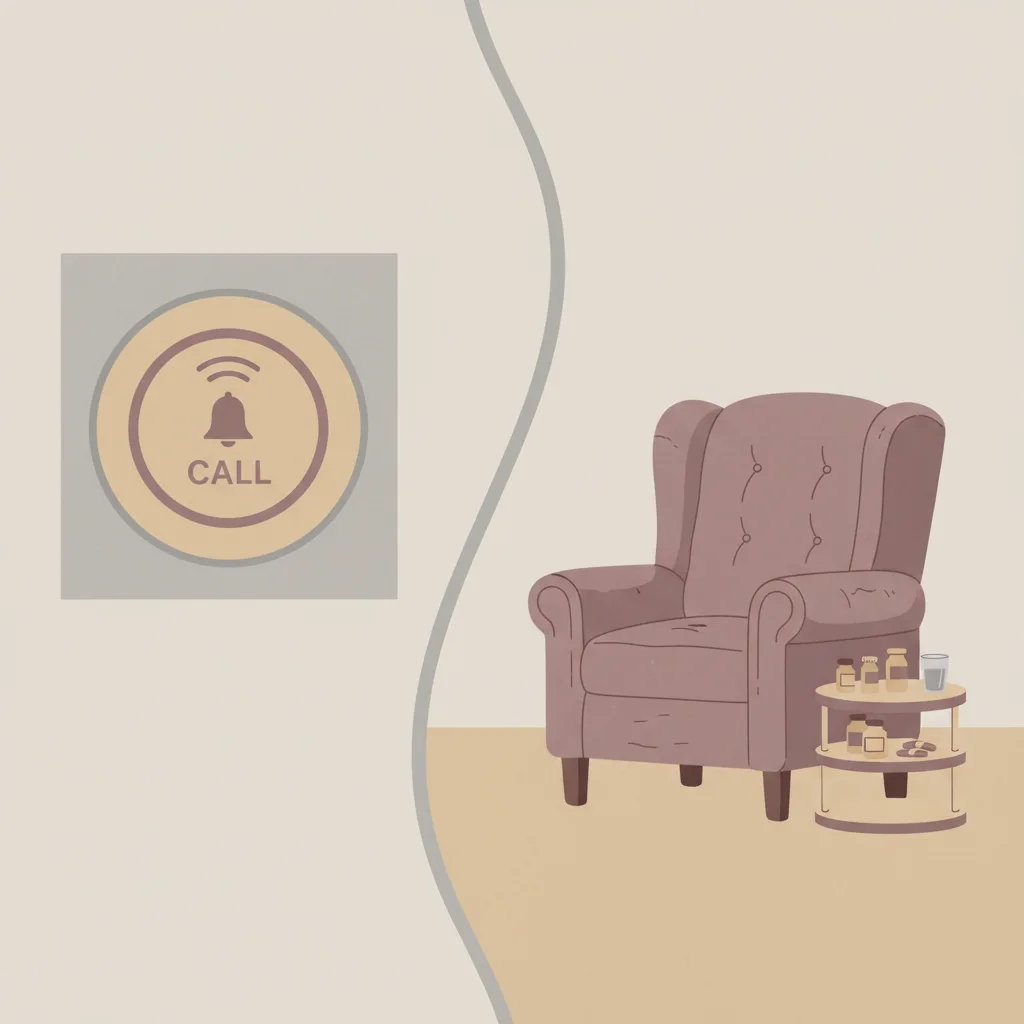
A hospital call button on the left and a home armchair with a medication tray on the right

Reue fürs Handeln

Unterbringung in einer Pflegeeinrichtung

54%

54 % der Familien fühlen sich nach einer Pflegeheimplatzierung zumindest etwas schuldig (Schuld-Näherung)

US-Erwachsene mit einem Familienmitglied im Pflegeheim

Querschnitt, retrospektiv

Reue fürs Unterlassen

Häusliche Pflege durch die Familie

23%

23 % der häuslichen Pflegenden berichten, ihre Gesundheit habe sich durch die Pflege verschlechtert (Belastungs-Näherung)

US-Familienpflegende, national repräsentativ

Querschnitt; laufende Pflege zum Befragungszeitpunkt

% bereuen diese Entscheidung

action dominates — Handeln dominiert — die meisten bereuen ihr Handeln.

Verwandte Entscheidungen

Semantisch ähnliche Entscheidungen — gleiches Terrain, andere Abwägungen.

familyDirekt

Familien-Organspende genehmigen vs. ablehnen

% bereuen diese Entscheidung

Untätigkeit überwiegt

Reue über Untätigkeit 6.8× höher

family

Zuhause vs berufstätig

% bereuen diese Entscheidung

Handlung überwiegt

Reue über Handlung 1.3× höher

family

Adoption vs. selbst erziehen

% bereuen diese Entscheidung

Handlung überwiegt

Reue über Handlung 4.8× höher

family

Privat vs öffentlich

% bereuen diese Entscheidung

Untätigkeit überwiegt

Reue über Untätigkeit 3.2× höher

family

Vollbetreuung vs unterstützte Entscheidungsfindung

% bereuen diese Entscheidung

Ausgewogen

Weitgehend ausgewogen

family

Eingreifen vs. selbst lösen lassen

% bereuen diese Entscheidung

Handlung überwiegt

Reue über Handlung 1.2× höher

family

Kinder bekommen

% bereuen diese Entscheidung

Ausgewogen

Weitgehend ausgewogen

family

Freie vs. Helikopter-Erziehung

% bereuen diese Entscheidung

Handlung überwiegt

Reue über Handlung 2.3× höher

54% of families report feeling at least somewhat guilty after placing a relative in a nursing home, according to a Care.com survey of 978 US adults (2019), with 14% feeling “extremely guilty.” A peer-reviewed parallel from Statz et al. (2021), tracking 83 dementia caregivers through residential long-term care transitions, found that nearly half (46.3%) experienced guilt from the care recipient, other family members, or facility staff. Adult children reported markedly more guilt from other family members than spouses did — 29.8% versus 4.0%, the only guilt source that differed significantly by caregiver role — and the qualitative record is thick with the specific fear that placement happened “too soon.” Action-side guilt is well-documented, replicated across research designs, and begins immediately after the move.

The inaction side lacks a symmetrical direct-regret measure, but the burden data are substantial. The 2020 NAC/AARP nationally representative survey of 1,707 US caregivers found that 23% said caregiving had made their own health worse — up from 17% in 2015. The same report found 28% had stopped saving and 23% had taken on more debt because of caregiving. Schulz and Sherwood’s 2008 synthesis of three decades of caregiver health research concluded that caregiving “creates physical and psychological strain over extended periods of time” and that roughly two-thirds of caregivers experience some negative consequence. The floor of inaction-side harm is real but harder to frame as regret because most home caregivers are embedded in an ongoing situation rather than looking back on a discrete choice.

Under Gilovich and Medvec’s framework, actions generate more regret in the short term, and the placement guilt literature fits this pattern: guilt is highest immediately after the move and tends to attenuate as the care recipient stabilises and the caregiver observes professional care quality. Inaction regret — regret about not having placed sooner — is harder to study because it surfaces mainly when home care has already broken down (hospitalisation, caregiver health crisis, or care recipient injury from inadequate supervision). The 31-point gap between sides should be read cautiously: the two measures are not equivalent constructs, and a direct bilateral survey asking both groups the same retrospective question does not yet exist in the published literature.

Quellen: Handeln

Quellenregister

Jede Zahl unten ist das, was die jeweilige Quelle berichtet hat — mit dem wörtlichen Zitat, auf das wir uns stützen, und wie wir zu unserer Zahl gelangt sind. Klicke auf einen Link, um direkt zu prüfen.

  1. [1] Care.com / Statista — Guilt over leaving one or more relatives in a nursing home in the United States in 2019
    Guilt over leaving one or more relatives in a nursing home in the United States in 2019
    Statistik
    53.6% of respondents felt at least somewhat guilty: extremely (13.7%), moderately (20.9%), somewhat (19%); 23.7% slightly guilty; 22.7% not at all
    Auszug
    “"In the 2019, roughly 14 percent of people with a relative in a nursing home felt extremely guilty over their choice of leaving their relative in the nursing home." ”
    Quelldaten von
    2019-01-25
    Abgerufen
    2026-05-02
    Berechnung
    Care.com online survey, n=978 US adults with a family member in a nursing home, 2019. Regret proxy: respondents rating guilt as "extremely" (13.7%) + "moderately" (20.9%) + "somewhat" (19.0%) = 53.6%, rounded to 0.54. The AARP coping article independently summarises this as "over 50 percent felt at least somewhat guilty." "Slightly guilty" (23.7%) is excluded as below the "somewhat" threshold used by AARP's framing.
  2. [2] Couple and Family Psychology: Research and Practice (PMC) — "We Moved Her Too Soon": Navigating Guilt Among Adult Child and Spousal Caregivers of Persons Living with Dementia Following a Move into Residential Long-Term Care
    "We Moved Her Too Soon": Navigating Guilt Among Adult Child and Spousal Caregivers of Persons Living with Dementia Following a Move into Residential Long-Term Care
    Statistik
    46.3% of dementia caregivers (N=83) reported experiencing guilt from care recipient, other family members, or facility staff following nursing home placement
    Auszug
    “"Nearly half of caregivers reported experiencing guilt from their care recipient, other family members, or facility staff." ”
    Quelldaten von
    2021-05-13
    Abgerufen
    2026-05-02
    Berechnung
    Mixed-methods study, N=83 caregivers (25 spouses, 58 adult children) transitioning a family member with Alzheimer's disease or related dementia to residential long-term care. Quantitative analyses identified guilt prevalence at 46.3% for any source of guilt. Adult children reported guilt from other family members at 29.8% vs 4.0% for spouses. The peer-reviewed figure (46.3%) is conservative relative to the Care.com survey (53.6%); the entry uses the Care.com figure as the primary regret_rate because it covers a broader guilt construct and a larger, non-dementia-specific sample.

Quellen: Nichthandeln

Quellenregister

Jede Zahl unten ist das, was die jeweilige Quelle berichtet hat — mit dem wörtlichen Zitat, auf das wir uns stützen, und wie wir zu unserer Zahl gelangt sind. Klicke auf einen Link, um direkt zu prüfen.

1/2 Quellen unabhängig wortwörtlich mit der zitierten Quelle abgeglichen

  1. [1] National Alliance for Caregiving (NAC) and AARP — Caregiving in the United States 2020
    Caregiving in the United States 2020
    Statistik
    23% of US caregivers say caregiving has made their own health worse, up from 17% in 2015; 23% find it hard to take care of their own health
    Auszug
    “"Family caregivers provide vital help and care for their loved ones, yet this survey shows that they keep getting stretched thinner and thinner." ”
    Quelldaten von
    2020-05-14
    Abgerufen
    2026-05-02
    Berechnung
    NAC/AARP nationally representative probability-based online survey of 1,707 US caregivers age 18+, conducted 2019 by Greenwald & Associates. Regret proxy: 23% reporting health has worsened. This is a burden/harm proxy, not a direct regret measure — no large-scale survey asks home caregivers retrospectively whether they regret choosing home care over facility placement. The 23% represents the floor of caregiver harm; separate data show 28% have stopped saving, 23% have taken on more debt, and 21% provide 41+ hours/week of care. The health-worsened figure is used as the regret_rate because health decline is the most proximate marker of caregiver regret in the absence of a direct question.
  2. [2] American Journal of Nursing — Physical and Mental Health Effects of Family Caregiving Verifiziert
    Physical and Mental Health Effects of Family Caregiving
    Statistik
    Caregiving creates physical and psychological strain over extended periods; about one third of caregivers report neither strain nor negative health effects, implying approximately two thirds experience some negative consequence
    Auszug
    “"Caregiving has all the features of a chronic stress experience: It creates physical and psychological strain over extended periods of time, is accompanied by high levels of unpredictability and uncontrollability, has the capacity to create secondary stress in multiple life domains such as work and family relationships, and frequently requires high levels of vigilance." ”
    Quelldaten von
    2008-09-01
    Abgerufen
    2026-05-02
    Verifizierung
    Der Auszug wurde bei unserer Grounding-Prüfung unabhängig erneut abgerufen und Wort für Wort mit der zitierten Quelle abgeglichen.
    Berechnung
    Literature review by Schulz & Sherwood, American Journal of Nursing, September 2008, Vol. 108, No. 9 Supplement, pp. 23–27. DOI: 10.1097/01.NAJ.0000336406.45248.4c. Authors synthesise three decades of caregiver health research and note that approximately one third of caregivers report no strain, suggesting two thirds experience some negative health consequence. This is directionally consistent with the AARP 2020 figure of 23% reporting health explicitly worsened, which is the primary regret_rate used. The Schulz & Sherwood review corroborates that the AARP 23% is a reasonable lower bound.

Einschränkungen

The two sides measure different constructs: action-side rates are guilt responses about a completed placement decision, while inaction-side rates are health-burden proxies among ongoing home caregivers — no large-scale survey directly asks home caregivers whether they regret not pursuing facility care. The action-side Care.com survey (n=978) was an online opt-in panel, not probability-sampled, which may over-represent caregivers actively seeking information about guilt. The peer-reviewed Statz et al. figure (46.3%) is dementia-specific and uses a narrower guilt construct; the 54% entry figure from Care.com covers all nursing home relationships. Both action-side figures are guilt proxies, not regret measured at a fixed retrospective horizon. Caregiving burden varies enormously by diagnosis, intensity, and available support: AARP data show 21% of home caregivers provide 41+ hours per week, a subgroup likely experiencing much higher regret rates than the 23% headline. Finally, the decision to place or care at home is rarely freely chosen — financial constraints, geography, family dynamics, and clinical need all shape it, making regret partly attributable to circumstances rather than the decision itself.

Rohdaten: /api/decisions.json

Zuletzt auf diesem Gerät angesehen