





Zum Inhalt springen
Likelier

Reue durch Handeln vs. Nichthandeln

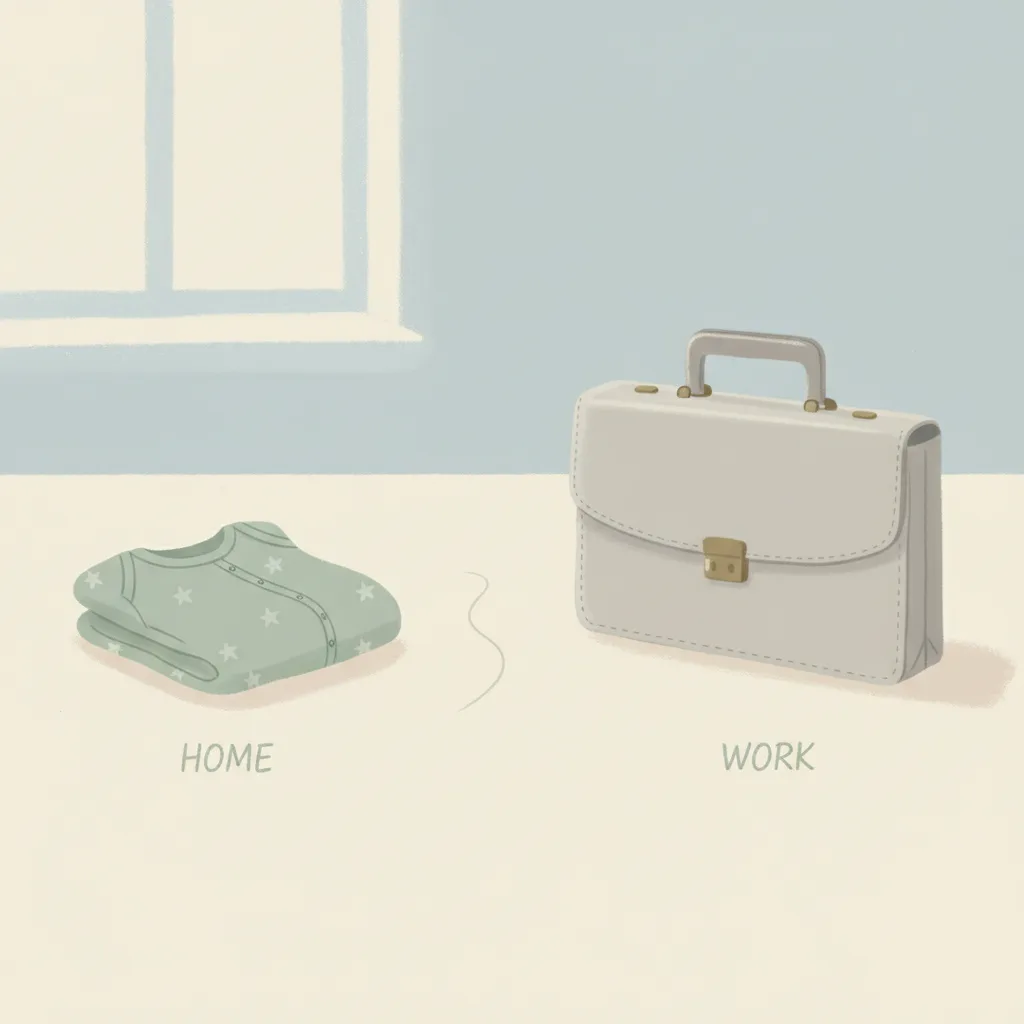
Zu Hause bleiben, um Kinder großzuziehen vs weiter arbeiten

Wenn du handelst

Zu Hause bleiben

64%

Wenn du nicht handelst

Neben der Elternschaft arbeiten

50%

Anteil derer, die jede Entscheidung später bereuen. Balken und vollständige Datengrundlage erscheinen unten.


Familie

Zuletzt überprüft 2026-04-26

Evidenzqualität 4.25/5

Bewertungsergebnis nach acht Dimensionen gemäß der Qualitätsrubrik . Jede Dimension wird mit 1–5 bewertet.

D1 Quellenüberprüfung
5/5
D2 Quellenautorität & Unabhängigkeit
5/5
D3 Genauigkeit der Bedauernsrate
2/5
D4 Vergleichbarkeit der Quellen
3/5
D5 Gilovich-Muster
4/5
D6 Prosaqualität
5/5
D7 Vollständigkeit der Einschränkungen
5/5
D8 Stichprobenqualität
5/5
Durchschnitt 4.25/5
A kitchen table split in two halves, one side with children's drawings and crayons, the other with a laptop and coffee mug.
Stellvertretende Daten — für diese Entscheidung gibt es keine direkte Bedauernsstudie. Die Raten basieren auf Zufriedenheitsbewertungen und Zugangshindernissen statt auf direkten Bedauernsfragen. Siehe Vorbehalte unten.

Reue fürs Handeln

Zu Hause bleiben

64%

Präferenz-Proxy, kein Bedauern: Nur 36 % der Vollzeit-Hausmütter bezeichnen es als ihr Ideal, überhaupt nicht zu arbeiten, sodass ~64 % eine gewisse Erwerbstätigkeit bevorzugen würden (Pew-Frage zur Idealsituation; viele davon bevorzugen Teilzeit, keine Rückkehr zur Vollzeitarbeit, sodass dies das Bedauern über das Zuhausebleiben überzeichnet)

US-hauptberufliche Mütter, national repräsentativ

retrospektiv, kein fester Zeitraum

Reue fürs Unterlassen

Neben der Elternschaft arbeiten

50%

Präferenz-Proxy, kein Bedauern: 50 % der Mütter mit Kindern unter 18 sagen, sie würden es bevorzugen, zu Hause zu bleiben, wenn sie frei wählen könnten (Gallup-Entweder-oder-Frage; dies sind alle Mütter mit minderjährigen Kindern, gemischt aus Hausmüttern und berufstätigen Müttern, nicht das rückblickende Bedauern berufstätiger Mütter)

US-Mütter mit Kindern unter 18, national repräsentativ

retrospektiv, kein fester Zeitraum

% bereuen diese Entscheidung

action dominates — Handeln dominiert — die meisten bereuen ihr Handeln.

Verwandte Entscheidungen

Semantisch ähnliche Entscheidungen — gleiches Terrain, andere Abwägungen.

family

Privat vs öffentlich

% bereuen diese Entscheidung

Untätigkeit überwiegt

Reue über Untätigkeit 3.2× höher

family

Pflegeheim vs. Heimpflege

% bereuen diese Entscheidung

Handlung überwiegt

Reue über Handlung 2.3× höher

family

Adoption vs. selbst erziehen

% bereuen diese Entscheidung

Handlung überwiegt

Reue über Handlung 4.8× höher

family

Familiengröße

% bereuen diese Entscheidung

Untätigkeit überwiegt

Reue über Untätigkeit 2.6× höher

family

Kinder bekommen

% bereuen diese Entscheidung

Ausgewogen

Weitgehend ausgewogen

family

Strukturiert vs freies Spiel

% bereuen diese Entscheidung

Handlung überwiegt

Reue über Handlung 2.6× höher

family

Elternzeit nehmen vs. überspringen

% bereuen diese Entscheidung

Untätigkeit überwiegt

Reue über Untätigkeit 4.5× höher

family

Eingreifen vs. selbst lösen lassen

% bereuen diese Entscheidung

Handlung überwiegt

Reue über Handlung 1.2× höher

64% of stay-at-home mothers say that not working is not their ideal situation, per Pew Research — only 36% called it ideal. Among all mothers with children under 18, 50% say they would prefer to stay home, according to Gallup. The 14-percentage-point gap puts this in action-dominates territory under Gilovich’s framework, though the underlying pattern is less about action vs inaction than about a forced binary vs a preferred middle.

The counterintuitive finding is the self-assessment gap. Stay-at-home mothers rate themselves lower as parents than working mothers do — 66% versus 78% calling themselves “excellent” or “very good” in Pew’s 2014 survey. One interpretation is that full-time proximity to children exposes every parenting failure in high definition, while working parents compare themselves against a lower baseline of available hours. Another is that the identity cost of leaving the workforce erodes confidence in ways that spill into parenting self-evaluation. Either way, the data undermines the assumption that staying home is the self-evidently superior parenting move.

The strongest signal in the research is that neither full-time work nor full-time homemaking is what most mothers actually want. A 47% plurality of adults told Pew that part-time work is the ideal arrangement for mothers of young children; only 12% said full-time work, and 33% said no work at all. Both rates here are preference proxies, not retrospective regret measures — no large-scale study has directly asked mothers on both sides whether they regret their employment decision. The dissatisfaction on both sides may say less about which choice is wrong than about a labor market that mostly offers all-or-nothing.

Quellen: Handeln

Quellenregister

Jede Zahl unten ist das, was die jeweilige Quelle berichtet hat — mit dem wörtlichen Zitat, auf das wir uns stützen, und wie wir zu unserer Zahl gelangt sind. Klicke auf einen Link, um direkt zu prüfen.

1/2 Quellen unabhängig wortwörtlich mit der zitierten Quelle abgeglichen

  1. [1] Pew Research Center — Public Views on Moms Staying at Home vs. Working Verifiziert
    Public Views on Moms Staying at Home vs. Working
    Statistik
    Only 36% of stay-at-home mothers say not working at all is ideal for them, down from 48% in 2007
    Auszug
    “"Only 36% of stay-at-home mothers say that not working at all is ideal for them. The share of stay-at-home mothers who say that not working at all is their ideal situation has fallen since 2007, when 48% said so." ”
    Quelldaten von
    2014-04-08
    Abgerufen
    2026-04-26
    Verifizierung
    Der Auszug wurde bei unserer Grounding-Prüfung unabhängig erneut abgerufen und Wort für Wort mit der zitierten Quelle abgeglichen.
    Berechnung
    Pew Research survey of 3,341 US adults, Jan 23–Feb 9 2014. Among stay-at-home mothers specifically, 36% called not working "ideal." We invert: 100% - 36% = 64% who say their current arrangement is not ideal — used as the action-side preference proxy.
  2. [2] Pew Research Center — Chapter 1: Comparing Stay-at-Home and Working Mothers
    Chapter 1: Comparing Stay-at-Home and Working Mothers
    Statistik
    66% of stay-at-home mothers rate themselves as excellent or very good parents, compared with 78% of working mothers
    Auszug
    “"Despite the additional time they spend on child care, mothers who do not work outside the home give themselves slightly lower ratings than working mothers for the job they are doing as parents. Some 66% of stay-at-home mothers rate themselves as doing an excellent or very good job as a parent, compared with 78% of working mothers." ”
    Quelldaten von
    2014-04-08
    Abgerufen
    2026-04-26
    Berechnung
    Same Pew 2012/2014 study. The 12-percentage-point self-rating gap (66% vs 78%) reinforces the finding that staying home does not reliably produce the parenting confidence one might expect.

Quellen: Nichthandeln

Quellenregister

Jede Zahl unten ist das, was die jeweilige Quelle berichtet hat — mit dem wörtlichen Zitat, auf das wir uns stützen, und wie wir zu unserer Zahl gelangt sind. Klicke auf einen Link, um direkt zu prüfen.

2/2 Quellen unabhängig wortwörtlich mit der zitierten Quelle abgeglichen

  1. [1] Gallup — Record-High 56% of U.S. Women Prefer Working to Homemaking Verifiziert
    Record-High 56% of U.S. Women Prefer Working to Homemaking
    Statistik
    50% of mothers with children under 18 prefer to stay home and take care of the house and family
    Auszug
    “"By 50% to 34%, mothers of children under 18 years of age are more likely than those with no children under 18 to prefer to stay at home and take care of the house and family." ”
    Quelldaten von
    2015-10-19
    Abgerufen
    2026-04-26
    Verifizierung
    Der Auszug wurde bei unserer Grounding-Prüfung unabhängig erneut abgerufen und Wort für Wort mit der zitierten Quelle abgeglichen.
    Berechnung
    Gallup annual Work and Education survey, nationally representative sample of US adults. Among mothers with children under 18, 50% said they would prefer to stay home. Used as inaction-regret proxy: half of working mothers report a preference mismatch.
  2. [2] Pew Research Center — Mothers and Work: What's 'Ideal'? Verifiziert
    Mothers and Work: What's 'Ideal'?
    Statistik
    A plurality of all mothers (47% of US adults) say part-time work is the ideal situation for mothers of young children
    Auszug
    “"Nearly half (47%) of the public said that working part time is the ideal situation for women with young children, 33% said not working outside the home is ideal, and another 12% said working full time would be ideal." ”
    Quelldaten von
    2013-08-19
    Abgerufen
    2026-04-26
    Verifizierung
    Der Auszug wurde bei unserer Grounding-Prüfung unabhängig erneut abgerufen und Wort für Wort mit der zitierten Quelle abgeglichen.
    Berechnung
    Pew Research Center analysis of survey data. The plurality preference for part-time work (47%) over full-time (12%) or no work (33%) contextualizes the inaction-side finding: most mothers want neither extreme.

Einschränkungen

Neither figure is a direct regret measurement — both are preference proxies, flagged as such in regret_display. The action-side 64% is inverted from Pew's "ideal situation" question; saying your current arrangement is not ideal is a weaker claim than saying you regret it. The inaction-side 50% is a stated preference from Gallup, not a retrospective regret judgment. No large-scale survey directly asks "do you regret staying home / going to work?" — extensive searching confirms this gap in the literature. The two figures come from different surveys with different framing (2014 Pew vs 2015 Gallup), making precise comparison questionable. A plurality of mothers in both groups say part-time work is the true ideal — suggesting the real regret may be about the forced binary rather than either side of it. Sample compositions also differ: Pew surveyed SAH mothers specifically while Gallup surveyed all mothers with minor children. The Bright Horizons Modern Family Index (2024) found that one in three working mothers considered downshifting careers, but this captures consideration rather than regret. Until a study directly measures retrospective regret on both sides using comparable methodology, these preference proxies are the best available anchors for this dilemma. Survey data are drawn exclusively from United States samples; satisfaction and regret rates in countries with different institutional structures — parental leave policies, childcare systems, family law — may differ substantially.

Rohdaten: /api/decisions.json

Zuletzt auf diesem Gerät angesehen