






Zum Inhalt springen
Likelier

Reue durch Handeln vs. Nichthandeln

Stillen vs Flaschennahrung für Ihr Baby

Wenn du handelst

Stillen

15%

Wenn du nicht handelst

Mit Säuglingsnahrung füttern

67%

Anteil derer, die jede Entscheidung später bereuen. Balken und vollständige Datengrundlage erscheinen unten.


Familie

Zuletzt überprüft 2026-04-26

Evidenzqualität 4.38/5

Bewertungsergebnis nach acht Dimensionen gemäß der Qualitätsrubrik . Jede Dimension wird mit 1–5 bewertet.

D1 Quellenüberprüfung
5/5
D2 Quellenautorität & Unabhängigkeit
5/5
D3 Genauigkeit der Bedauernsrate
2/5
D4 Vergleichbarkeit der Quellen
4/5
D5 Gilovich-Muster
5/5
D6 Prosaqualität
5/5
D7 Vollständigkeit der Einschränkungen
5/5
D8 Stichprobenqualität
4/5
Durchschnitt 4.38/5
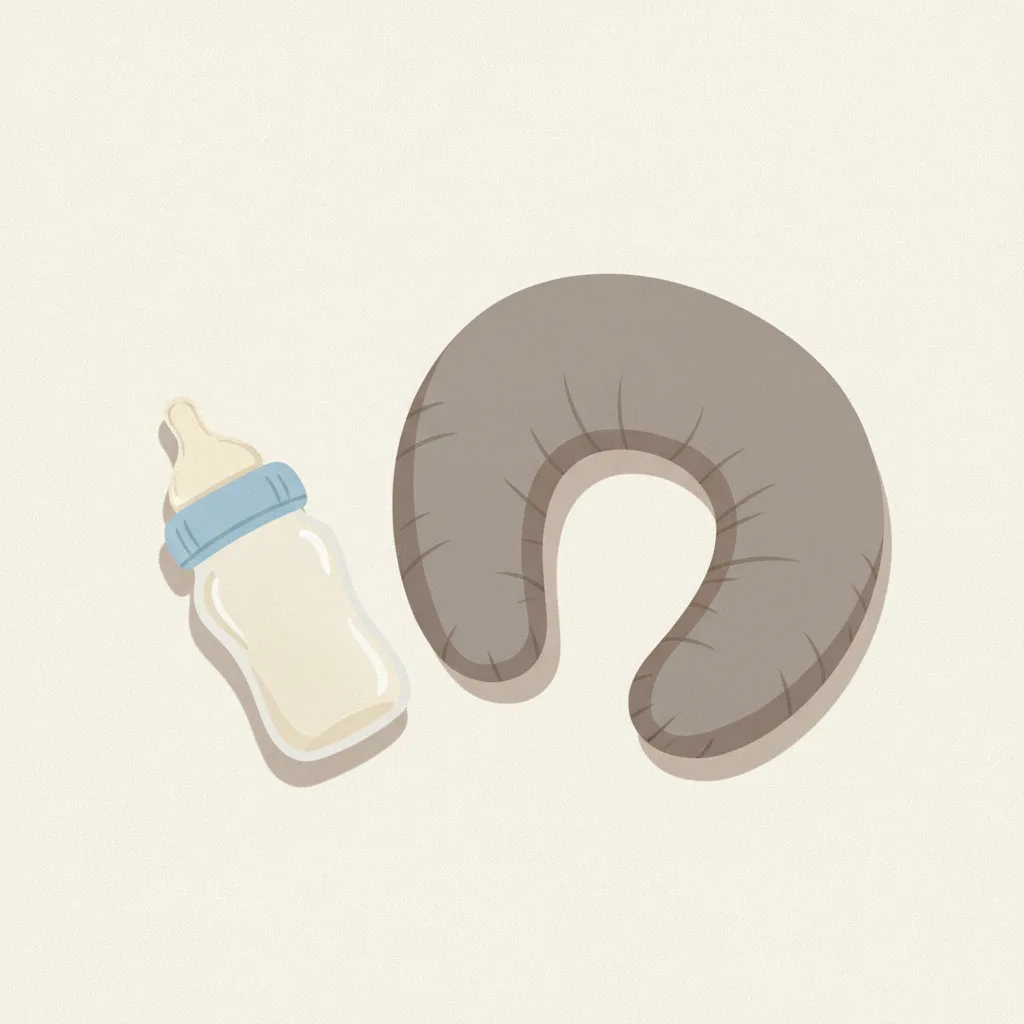
A baby bottle and a nursing pillow resting side by side on a neutral surface.

Reue fürs Handeln

Stillen

15%

15 % der stillenden Mütter berichten Schuldgefühle wegen ihrer Ernährungsmethode (Schuld-Näherung)

Mütter mit Säuglingen ≤ 26 Wochen, die mit Stillen begonnen hatten, rekrutiert über Social Media (international, mehrheitlich UK)

retrospektiv, Säuglinge bis 26 Wochen alt

Reue fürs Unterlassen

Mit Säuglingsnahrung füttern

67%

67 % der mit Säuglingsnahrung ernährenden Mütter berichten Schuldgefühle wegen ihrer Ernährungsmethode (Schuld-Näherung)

Mütter mit Säuglingen ≤ 26 Wochen, die aktuell in beliebiger Menge mit Säuglingsnahrung füttern, rekrutiert über Social Media (international, mehrheitlich UK)

retrospektiv, Säuglinge bis 26 Wochen alt

% bereuen diese Entscheidung

inaction dominates — Nichthandeln dominiert — die meisten bereuen, nicht gehandelt zu haben.

Verwandte Entscheidungen

Semantisch ähnliche Entscheidungen — gleiches Terrain, andere Abwägungen.

family

Zuhause vs berufstätig

% bereuen diese Entscheidung

Handlung überwiegt

Reue über Handlung 1.3× höher

family

Kinder bekommen

% bereuen diese Entscheidung

Ausgewogen

Weitgehend ausgewogen

family

Adoption vs. selbst erziehen

% bereuen diese Entscheidung

Handlung überwiegt

Reue über Handlung 4.8× höher

family

Frühe vs. späte Elternschaft

% bereuen diese Entscheidung

Untätigkeit überwiegt

Reue über Untätigkeit 1.7× höher

family

Geburtsart

% bereuen diese Entscheidung

Handlung überwiegt

Reue über Handlung 2.7× höher

family

Privat vs öffentlich

% bereuen diese Entscheidung

Untätigkeit überwiegt

Reue über Untätigkeit 3.2× höher

family

Familiengröße

% bereuen diese Entscheidung

Untätigkeit überwiegt

Reue über Untätigkeit 2.6× höher

family

Familienmediation vs Gerichtsverfahren

% bereuen diese Entscheidung

Untätigkeit überwiegt

Reue über Untätigkeit 3.1× höher

67% of formula-feeding mothers report guilt about their feeding method, compared with only 15% of breastfeeding mothers — a 4.5:1 ratio that makes infant feeding one of the sharpest guilt asymmetries in parenting research. Both figures come from companion studies by Fallon et al. at the University of Liverpool, using identical methodology on comparable populations (845 breastfeeding and 601 formula-feeding mothers with infants under six months). A 2021 systematic review of 20 studies by Jackson et al. confirmed the directional finding: formula feeders consistently report more guilt than breastfeeders across multiple countries and study designs. Russell et al. (2021) independently replicated the pattern in two UK samples, finding that guilt — but not shame — was elevated among formula feeders and predicted shorter breastfeeding duration.

The asymmetry is partly an artifact of public health framing. Decades of “breast is best” messaging created a norm against which formula feeding registers as a deviation, and deviations attract guilt. Fallon’s data show that guilt among formula feeders is more internally motivated (30%) than externally imposed (12%), though most mothers (55%) experienced both — a pattern consistent with internalized stigma rather than direct shaming. Among breastfeeders, the smaller guilt load still spikes among mothers who supplement with formula, suggesting that any departure from exclusive breastfeeding triggers the same normative penalty.

The critical caveat is that these figures measure guilt, not classical retrospective regret. Guilt is a proximal emotional response (“I feel bad about this choice”) rather than a considered counterfactual judgment (“I wish I had chosen differently”). Mothers who chose formula from the outset report substantially less guilt than those who intended to breastfeed but could not sustain it. The 67% average conflates deliberate choosers with reluctant switchers, and the latter subgroup drives much of the guilt signal. This means the asymmetry is less about formula itself and more about unmet expectations — a distinction that matters for anyone trying to read these numbers as guidance rather than just measurement.

Quellen: Handeln

Quellenregister

Jede Zahl unten ist das, was die jeweilige Quelle berichtet hat — mit dem wörtlichen Zitat, auf das wir uns stützen, und wie wir zu unserer Zahl gelangt sind. Klicke auf einen Link, um direkt zu prüfen.

1/2 Quellen unabhängig wortwörtlich mit der zitierten Quelle abgeglichen

  1. [1] Maternal & Child Nutrition (Fallon et al.) — Differences in the emotional and practical experiences of exclusively breastfeeding and combination feeding mothers Verifiziert
    Differences in the emotional and practical experiences of exclusively breastfeeding and combination feeding mothers
    Statistik
    15% of breastfeeding mothers reported feeling guilty about their feeding method
    Auszug
    “In the overall sample of breastfeeding mothers, 15% reported feeling guilty, 38% stigmatized, and 55% felt the need to defend their feeding choice. Negative emotional experiences did not occur as frequently as in formula feeders but were still present, particularly for those who supplemented breastfeeding with formula. ”
    Quelldaten von
    2016-10-03
    Abgerufen
    2026-04-26
    Verifizierung
    Der Auszug wurde bei unserer Grounding-Prüfung unabhängig erneut abgerufen und Wort für Wort mit der zitierten Quelle abgeglichen.
    Berechnung
    Fallon et al. (2016) surveyed 845 mothers with infants ≤26 weeks who had initiated breastfeeding. 15% of the total breastfeeding sample reported guilt. The study included both exclusively breastfeeding and combination-feeding mothers; guilt rates were higher among combination feeders. We use the overall 15% as the action-side rate.
  2. [2] Journal of Applied Social Psychology (Russell et al.) — Infant feeding and internalized stigma: The role of guilt and shame
    Infant feeding and internalized stigma: The role of guilt and shame
    Statistik
    Women who breastfed and women who formula-fed experienced similar levels of shame; guilt uniquely predicted shorter exclusive breastfeeding duration
    Auszug
    “Women who bottle-fed experienced more guilt, and guilt, but not shame, was related to whether women had the desire to carry on breastfeeding. Higher self-efficacy predicted lower internalized stigma of feeding choice. Women who breastfed and women who formula-fed experienced similar levels of shame. ”
    Quelldaten von
    2021-07-01
    Abgerufen
    2026-04-26
    Berechnung
    Russell et al. (2021) Study 1 (N=160) and Study 2 (N=118) examined guilt and shame across feeding methods. Confirms that guilt is present but lower among breastfeeders than formula feeders, and that the guilt construct is distinct from regret. Independent of the Fallon et al. Liverpool team.

Quellen: Nichthandeln

Quellenregister

Jede Zahl unten ist das, was die jeweilige Quelle berichtet hat — mit dem wörtlichen Zitat, auf das wir uns stützen, und wie wir zu unserer Zahl gelangt sind. Klicke auf einen Link, um direkt zu prüfen.

  1. [1] Maternal & Child Nutrition (Fallon et al.) — The emotional and practical experiences of formula-feeding mothers
    The emotional and practical experiences of formula-feeding mothers
    Statistik
    67% of formula-feeding mothers reported feeling guilty about their feeding method; 68% felt stigmatized; 76% felt the need to defend their choice
    Auszug
    “Of the 601 mothers, the majority experienced feelings of guilt (67%) about their choice of feeding method. Guilt was more likely to be internally motivated (30%) than stem from external sources (12%), although many experienced it from both channels (55%). Additionally, 68% felt stigmatized and 76% felt the need to defend their feeding choice. ”
    Quelldaten von
    2017-01-09
    Abgerufen
    2026-04-26
    Berechnung
    Fallon et al. (2017) recruited 890 formula-feeding mothers via social media; 601 completed the full survey. 67% of completers reported guilt. This is the companion paper to the breastfeeding study (Fallon et al. 2016) using the same methodology, making the two rates directly comparable.
  2. [2] Maternal & Child Nutrition (Jackson et al.) — Guilt, shame, and postpartum infant feeding outcomes: A systematic review
    Guilt, shame, and postpartum infant feeding outcomes: A systematic review
    Statistik
    Systematic review of 20 studies confirmed formula feeders experienced guilt more commonly than breastfeeding mothers
    Auszug
    “Quantitative results demonstrated formula feeders experienced guilt more commonly than breastfeeding mothers. Both guilt and shame were associated with self-perception as a bad mother and poorer maternal mental health. Mothers who initiated exclusive breastfeeding but stopped were at much higher risk of experiencing guilt. ”
    Quelldaten von
    2021-05-01
    Abgerufen
    2026-04-26
    Berechnung
    Jackson et al. (2021) systematic review of 20 studies (1997–2017). Confirms the directional finding that formula feeders experience guilt at higher rates than breastfeeders. Does not provide a single pooled estimate but corroborates the Fallon et al. figures.

Einschränkungen

Both rates measure guilt, not regret per se — guilt is a related but distinct construct. The "(guilt proxy)" label in regret_display flags this explicitly. Both studies used convenience samples recruited via social media, skewing toward engaged, internet-active mothers in the UK and similar Western countries. The 67% formula-feeding figure likely captures guilt amplified by pro-breastfeeding public health messaging (the "breast is best" norm); in populations with weaker breastfeeding promotion, the gap would almost certainly narrow. Mothers who formula-fed by choice from the start reported less guilt than those who switched after failed breastfeeding attempts, so the 67% average obscures meaningful within-group variation. Russell et al. (2021) confirmed that guilt is more salient for formula feeders than breastfeeders across independent UK samples. The 4.5:1 ratio is directionally robust but should not be read as a universal constant.

Rohdaten: /api/decisions.json

Zuletzt auf diesem Gerät angesehen