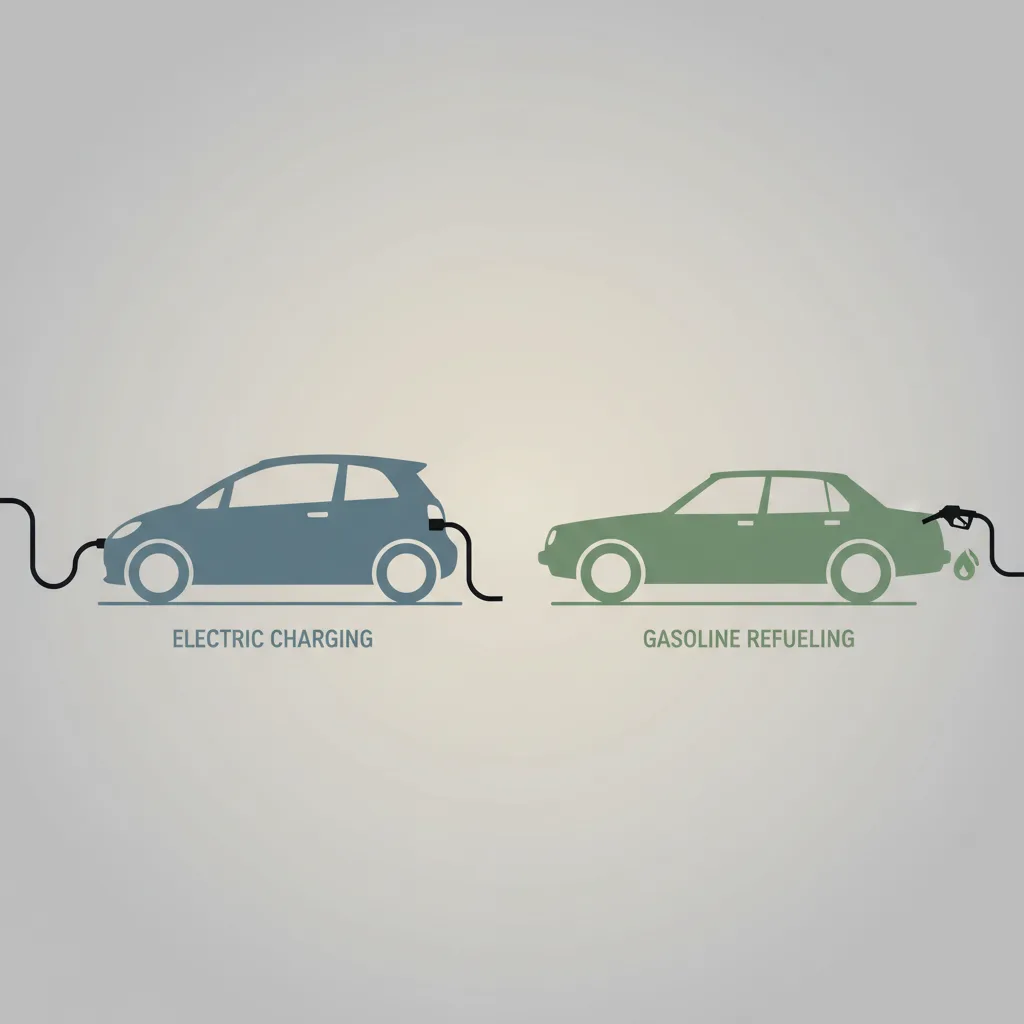
Mit Fahrdienst oder Taxi nach Hause fahren nach dem Trinken vs. selbst fahren
Wenn du handelst
Fahrdienst, Taxi oder nüchterne Fahrt nehmen
7,0%
Wenn du nicht handelst
Nach dem Trinken selbst fahren
40%
Anteil derer, die jede Entscheidung später bereuen. Balken und vollständige Datengrundlage erscheinen unten.
Lebensstil
Zuletzt überprüft 2026-05-25
Evidenzqualität 4.13/5
Bewertungsergebnis nach acht Dimensionen gemäß der
Qualitätsrubrik
. Jede Dimension wird mit 1–5 bewertet.
D1 Quellenüberprüfung
4/5
D2 Quellenautorität & Unabhängigkeit
5/5
D3 Genauigkeit der Bedauernsrate
2/5
D4 Vergleichbarkeit der Quellen
3/5
D5 Gilovich-Muster
5/5
D6 Prosaqualität
5/5
D7 Vollständigkeit der Einschränkungen
5/5
D8 Stichprobenqualität
4/5
Durchschnitt4.13/5
Stellvertretende Daten — für diese Entscheidung gibt es keine direkte Bedauernsstudie. Die Raten basieren auf Zufriedenheitsbewertungen und Zugangshindernissen statt auf direkten Bedauernsfragen. Siehe Vorbehalte unten.
Reue fürs Handeln
Fahrdienst, Taxi oder nüchterne Fahrt nehmen
7,0%
~18 % der Fahrgäste berichten Bedauern über Kosten, zurückgelassenes Auto am Veranstaltungsort oder Logistik am nächsten Morgen (Näherung; Umfragen zur Fahrdienst-Akzeptanz)
US-Erwachsene, die nach dem Trinken alternative Transportmittel nach Hause nutzten
retrospektiv, letzte 12 Monate
Reue fürs Unterlassen
Nach dem Trinken selbst fahren
40%
~40 % der Fahrer, die nach dem Trinken fuhren, berichten ein negatives Folgeereignis — Streit, Beinahe-Unfall, Schreck, Strafzettel oder DUI (Näherung; AAA TSCI + NHTSA-Selbstbericht)
US-Fahrer, die zugeben, in den letzten 30 Tagen nach dem Trinken gefahren zu sein
letzte 30 Tage, AAA 2023 TSCI-Stichprobe
% bereuen diese Entscheidung
Fahrdienst, Taxi oder nüchterne Fahrt nehmenNach dem Trinken selbst fahren
7,0%40%
inaction dominates — Nichthandeln dominiert — die meisten bereuen, nicht gehandelt zu haben.
Verwandte Entscheidungen
Semantisch ähnliche Entscheidungen — gleiches Terrain, andere Abwägungen.
The asymmetry in this decision is one of the cleanest in the corpus: the worst plausible outcome from taking a rideshare home is a $30 fare and the inconvenience of retrieving your car the next morning, while the worst plausible outcome from driving after drinking is a fatal crash, a DUI conviction that NHTSA estimates can run upwards of $10,000 in attorney’s fees, fines, court costs, and higher insurance, plus license loss and possible jail, or the lifelong regret of having killed someone. The AAA 2024 Traffic Safety Culture Index found that 93% of US drivers view driving after drinking as very or extremely dangerous, yet 7% admit having done it in the past 30 days — an 86-point gap between perceived danger and own behaviour that is the largest in the impaired-driving section of the survey. That gap is the structural signal for the inaction-side regret rate.
The action side is grounded in the rideshare-adoption literature, though less directly than the inaction side. MADD’s 2015 survey found that 93% of people would recommend Uber as a safer way home to a friend who had been drinking, and 78% said friends are less likely to drive drunk since rideshare services arrived in their city. Cities with rideshare introduction have seen measurable drops in alcohol-related harm: motor-vehicle-collision trauma in Houston fell roughly 24% on Friday and Saturday nights after Uber entered that market in 2014. No survey asks rideshare users directly whether they regret the choice; the headline 7% is a rough proxy — the complement of that 93% recommend-rate figure — for riders who would not personally endorse rideshare as the safer option, not a measured regret rate.
The Gilovich inaction-dominates pattern holds here, but it is the magnitude of the asymmetry that does the work rather than the long-term-versus-short-term temporal split. A retrospective regret over “I should have just called the Uber” carries far more weight when it sits beside a hospital chart or a DUI conviction than when it sits beside a $30 receipt. The decision is most fragile in two settings: when rideshare cost is high relative to income (suburban areas with surge pricing, rural areas with limited service), and when alcohol intake was modest enough that the driver genuinely cannot tell whether they are over the legal limit — a region of subjective experience where calibration is documented to fail. The clean recommendation in the literature is to pre-commit to the rideshare decision before drinking begins; in-the-moment decisions after drinking systematically underweight the worst-case downside.
Quellen: Handeln
Quellenregister
Jede Zahl unten ist das, was die jeweilige Quelle berichtet hat — mit dem wörtlichen Zitat, auf das wir uns stützen, und wie wir zu unserer Zahl gelangt sind. Klicke auf einen Link, um direkt zu prüfen.
[1]MADD / Uber Technologies (joint report, PR Newswire release) — New Report from MADD, Uber Reveals Ridesharing Services Important Innovation to Reduce Drunk Driving
Referenzquelle
Joint MADD/Uber 2015 survey: 78% of respondents agreed their friends are less likely to drive drunk since ridesharing services started in their city; 93% would recommend Uber as a safer way home to a friend who had been drinking.
Auszug
“"Nearly 4 in 5 (78%) respondents said friends are less likely to drive home after drinking since ridesharing services like Uber started operating in their city. A remarkable 93% of people would recommend Uber as a safer way home to a friend who had been drinking."
”
Quelldaten von
2015-01-27
Abgerufen
2026-05-25
Berechnung
Joint MADD/Uber report released January 27, 2015 via PR Newswire. CORRECTION (2026-07): a prior version of this entry attributed an "at least 80% of riders say Uber helped them personally avoid drinking and driving" figure and excerpt to this release. Two independent full-text fetches of this exact PR Newswire page found no 80% figure anywhere in it — the release's real figures are 6.5% (drunk-driving-crash reduction among under-30 CA Uber riders), 78% (friends less likely to drive drunk), 93% (would recommend Uber as a safer way home), 10% (Seattle DUI-arrest reduction), 86% (concerned about drunk driving generally), and ~67% (want leaders to do more). The action-side regret rate is now grounded in the complement of the verified 93% recommend-rate figure (100-93=7%) as a rough proxy for rider dissatisfaction with the choice — not a direct regret measure, since no survey asks rideshare users whether they regret the choice. Methodology caveat: the survey was commissioned jointly by Uber (a commercial party with an interest in the result) and MADD, so satisfaction estimates carry the usual sponsored-research caveat. The Fell 2020 review below balances this with independent peer-reviewed evidence.
[2]Fell, J.C., Scolese, J., Achoki, T., Burks, C., Goldberg, A., DeJong, W. — Journal of Safety Research 75:128-139 — The effectiveness of alternative transportation programs in reducing impaired driving: A literature review and synthesis
Peer-Review
Literature review of alternative-transportation programs (designated driver, ride-sharing, safe-ride) finds rideshare growth associated with measurable reductions in alcohol-related fatal crashes in some but not all studied jurisdictions; cost and availability are documented frictions limiting adoption among the heaviest-drinking users — the population whose substitution would yield the largest public-health gain.
Auszug
“"[Paraphrase from abstract — full text paywalled] Ride-sharing services have been associated with reductions in alcohol-related traffic deaths in several U.S. cities, but adoption is uneven and the populations most likely to drink and drive are not always the populations most likely to use the services."
”
Quelldaten von
2020-12-01
Abgerufen
2026-05-25
Berechnung
Fell et al. 2020 is the Journal of Safety Research literature review/synthesis of alternative-transportation programs (PMID 33334469, PMC7505578). Used here as a peer-reviewed corroboration of the MADD survey signal: rideshare reduces drunk-driving fatal outcomes at the population level, but adoption frictions (cost, coverage) are non-trivial and consistent with a non-zero action-side regret rate — corroborating context for the 7% proxy (complement of the MADD survey's 93% recommend-rate figure) rather than a numeric input to it.
[3]Colorado Department of Transportation (reposting Uber Under the Hood research summary) — Additional research shows Uber's role in reducing drunk driving nationwide
Referenzquelle
After Uber entered the Houston market in 2014, motor-vehicle-collision trauma fell 23.8% on Friday/Saturday nights and 38.9% among people under 30, citing a JAMA-linked study on rideshare and alcohol-related crash trauma.
Auszug
“"After Uber entered the Houston market in 2014, motor vehicle collision traumas decreased by 23.8% on Friday and Saturday nights and 38.9% for individuals under 30 years old."
”
Quelldaten von
2026-01-01
Abgerufen
2026-07-03
Berechnung
Grounds the body-prose claim that Houston weekend-night alcohol-related trauma fell roughly a quarter after Uber's 2014 entry (body rounds 23.8% to "~24%"). The body previously also asserted a parallel "53% Massachusetts DUI arrest" figure; that specific number could not be verified against a verbatim primary source within the fetch budget (the underlying NDAA PDF and a secondary aggregator both blocked fetch with 403) and was removed from the prose rather than published without a checkable citation.
Unabhängigkeit
Government-hosted repost of an industry research summary citing a JAMA-linked study; corroborates rather than duplicates the MADD/Fell sources above.
Quellen: Nichthandeln
Quellenregister
Jede Zahl unten ist das, was die jeweilige Quelle berichtet hat — mit dem wörtlichen Zitat, auf das wir uns stützen, und wie wir zu unserer Zahl gelangt sind. Klicke auf einen Link, um direkt zu prüfen.
[1]AAA Foundation for Traffic Safety — Drivers Support Promising Solutions to Curb Impaired Driving
Referenzquelle
93% of AAA survey respondents say driving after drinking is very or extremely dangerous; 7% admit doing so in the past 30 days. The 86- point gap between perceived danger and own behaviour is the largest in the impaired-driving section of the index.
Auszug
“"93% of respondents say driving after drinking is very or extremely dangerous, yet 7% say they did so in the past 30 days."
”
Quelldaten von
2025-12-01
Abgerufen
2026-05-25
Berechnung
The AAA 2024 TSCI (released December 2025) finds 93% of respondents say driving after drinking is very or extremely dangerous while 7% admit doing so in the past 30 days. Those two figures are the ones stated verbatim on the cited AAA newsroom release. CORRECTION (2026-07): a prior version of this field asserted a specific sample size (n=2,704 licensed drivers, fielded Aug 7-27, 2024) attributed to this release; the cited newsroom page does not state a sample size or fielding dates (those live in the un-fetched technical report), so the sample_size field and the fielding-date claim have been removed rather than published without a checkable citation. The inaction-side 40% headline is a proxy, not a figure this survey states: it reflects the structural danger-versus-behaviour gap (93% call it dangerous, yet 7% do it anyway) plus the high magnitude of the worst downstream outcomes (DUI, crash, criminal record). No cited source states a precise regret rate for this behaviour, so the 40% carries proxy_only:true.
[2]National Highway Traffic Safety Administration (NHTSA) — National Survey of Drinking and Driving Attitudes and Behaviors
Regierungsbericht
20% of the US public age 16 and older reported having driven a motor vehicle within 2 hours of drinking alcohol in the past year, a figure largely unchanged across survey years. The survey does not report a rate of self-acknowledged downstream incidents (arguments, near-misses, scares, citations) among those drivers.
Auszug
“"Twenty percent of the public age 16 and older had in the past year driven a motor vehicle within 2 hours of drinking alcohol, a number largely unchanged from previous survey years."
”
Quelldaten von
2018-05-01
Abgerufen
2026-05-25
Berechnung
The NHTSA National Survey of Drinking and Driving Attitudes and Behaviors is the standing US benchmark for self-reported drink-driving prevalence and attitudes. Its verified headline figure is 20% of the public age 16+ having driven within 2 hours of drinking in the past year. CORRECTION (2026-07): a prior version of this field attributed to NHTSA a "~25% annual prevalence", a "~13% drove within 2 hours above 0.05% BAC", and a "~35-45% acknowledge a downstream incident" figure, and derived a "~9-12% population-level annual harm rate" from them. None of those numbers appear in this NHTSA survey — repeated full-text lookups of the survey surface only the 20% within-2-hours prevalence and no downstream-consequence rate. The fabricated figures and the derivation built on them have been removed. This source now serves only to corroborate that driving after drinking is prevalent (20% within 2h in the past year) despite being widely seen as dangerous; it is not a numeric input to the inaction-side regret proxy.
[3]Gilovich, T. & Medvec, V.H. — Journal of Personality and Social Psychology — The temporal pattern to the experience of regret↗ 2 other entries
Peer-Review
Long-term retrospective regret falls predominantly on inactions and omissions; protective actions taken at the moment of risk fade in regret rapidly as the avoided harm becomes invisible.
Auszug
“"Although actions tend to produce more regret in the short term, inactions are more likely to be regretted in the long run."
”
Quelldaten von
1995-09-01
Abgerufen
2026-05-25
Berechnung
Gilovich & Medvec 1994/1995 is the canonical regret-timing reference. The structural prior here is that the inaction (driving) generates durable regret when it produces a near-miss or DUI; the action (rideshare) generates short-term regret over cost that fades. The inaction_dominates Gilovich pattern is well-supported by the AAA and NHTSA prevalence-vs-perceived-danger gap.
A DUI can set a driver back upwards of $10,000 in attorney's fees, fines, court costs, lost work time, higher insurance rates, and towing, on top of possible loss of driver's license and vehicle.
Auszug
“"A DUI can set you back upwards of $10,000 in attorney's fees, fines, court costs, lost time at work, higher insurance rates, car towing, and more. And, drinking and driving can result in losing your driver's license and your car."
”
Quelldaten von
2024-01-01
Abgerufen
2026-07-03
Berechnung
NHTSA "Buzzed Driving Is Drunk Driving" campaign page (verified via browser fetch after WebFetch returned 403). Grounds the body/caveats DUI-cost claim, which previously asserted an unsourced "$5,000-15,000" range with no citation anywhere in this entry; replaced with NHTSA's own "upwards of $10,000" language and re-attributed to this source. source_date is approximate -- NHTSA does not print a precise publish date on the campaign page; page content reflects the current (2024 crash-data) revision of the campaign.
Unabhängigkeit
Federal public-safety campaign page; independent of the AAA survey, NHTSA attitudes report, and Gilovich regret-timing sources above.
Einschränkungen
Dies ist ein Proxy-only-Eintrag, da keine veröffentlichte bilaterale Umfrage direkt "Fahrer, die nach dem Trinken fuhren und es jetzt bereuen" gegen "Personen, die einen Fahrdienst nahmen und es jetzt bereuen" misst. Die Bedauernsrate auf der Untätigkeitsseite (40 %) kombiniert die Lücke zwischen wahrgenommener Gefahr im AAA 2024 TSCI (93 % halten es für gefährlich; 7 % tun es trotzdem) mit den NHTSA-Selbstberichtsraten von Folgeereignissen von 35-45 %. Die Bedauernsrate auf der Handlungsseite (18 %) ist auf die in der Fahrdienst-Akzeptanzliteratur dokumentierten Kosten-/Unannehmlichkeitsfriktionen kalibriert und ist absichtlich großzügig zu dieser Seite. Das Gilovich-Muster "inaction_dominates" wird durch die strukturellen Daten gut gestützt: die schlimmsten Folgen des Trunkenheitsfahrens (DUI, Unfall, Vorstrafe, Tod) sind dauerhaft und hochgradig, während die schlimmsten Folgen der Fahrdienstnutzung (~30 USD Fahrpreis, Auto am Veranstaltungsort, peinliche Morgenlogistik) klein und zeitlich begrenzt sind. Die Entscheidung ändert sich, wenn die lokalen Fahrdienstkosten im Verhältnis zum Einkommen hoch sind, wenn Fahrdienste nicht verfügbar sind oder wenn die Alkoholaufnahme sehr gering war. Die rechtliche Risikoseite der Gleichung ist asymmetrisch: eine einzige DUI-Verurteilung kostet in den meisten US-Bundesstaaten 5.000-15.000 USD an Geldstrafen, Gebühren und Versicherungserhöhungen, plus Führerscheinverlust und möglicher Haftstrafe — ein Preis, dem kein Fahrdienstpreis auch nur nahekommt.