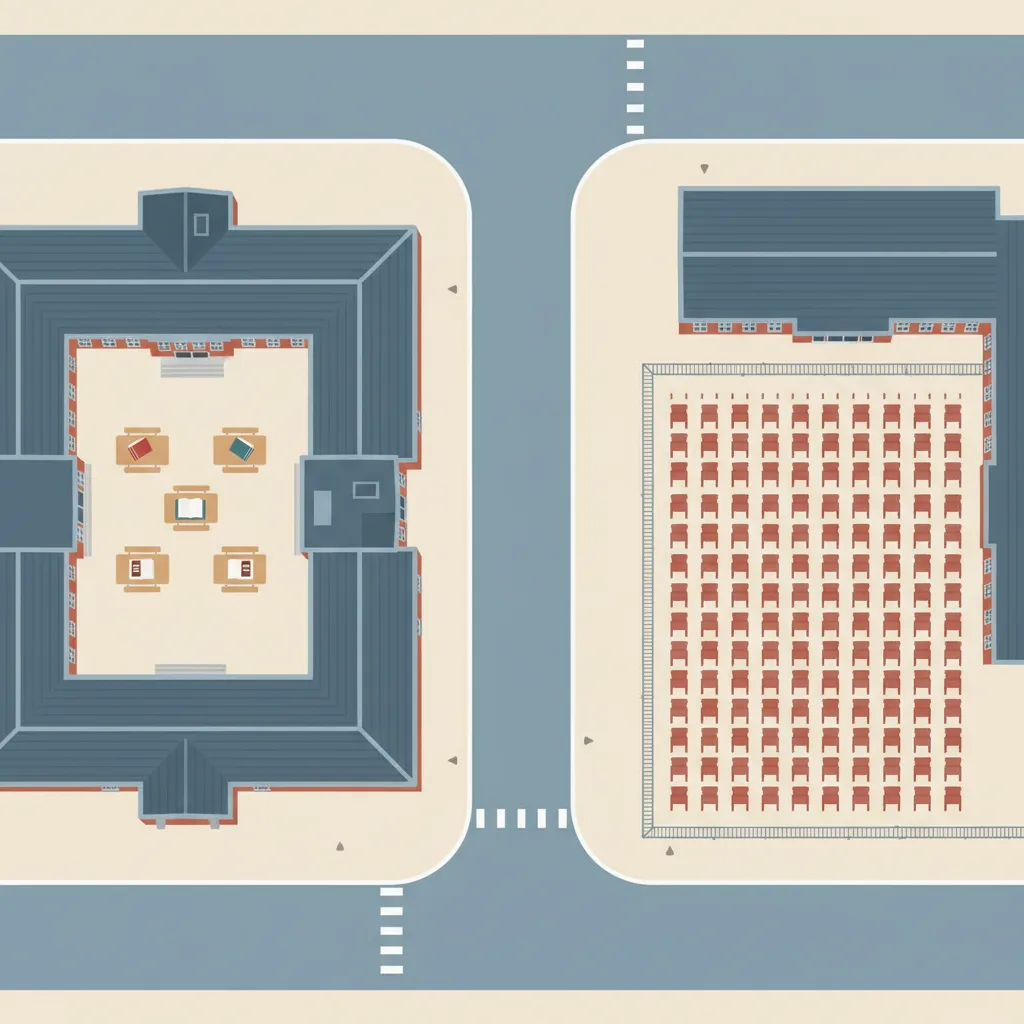
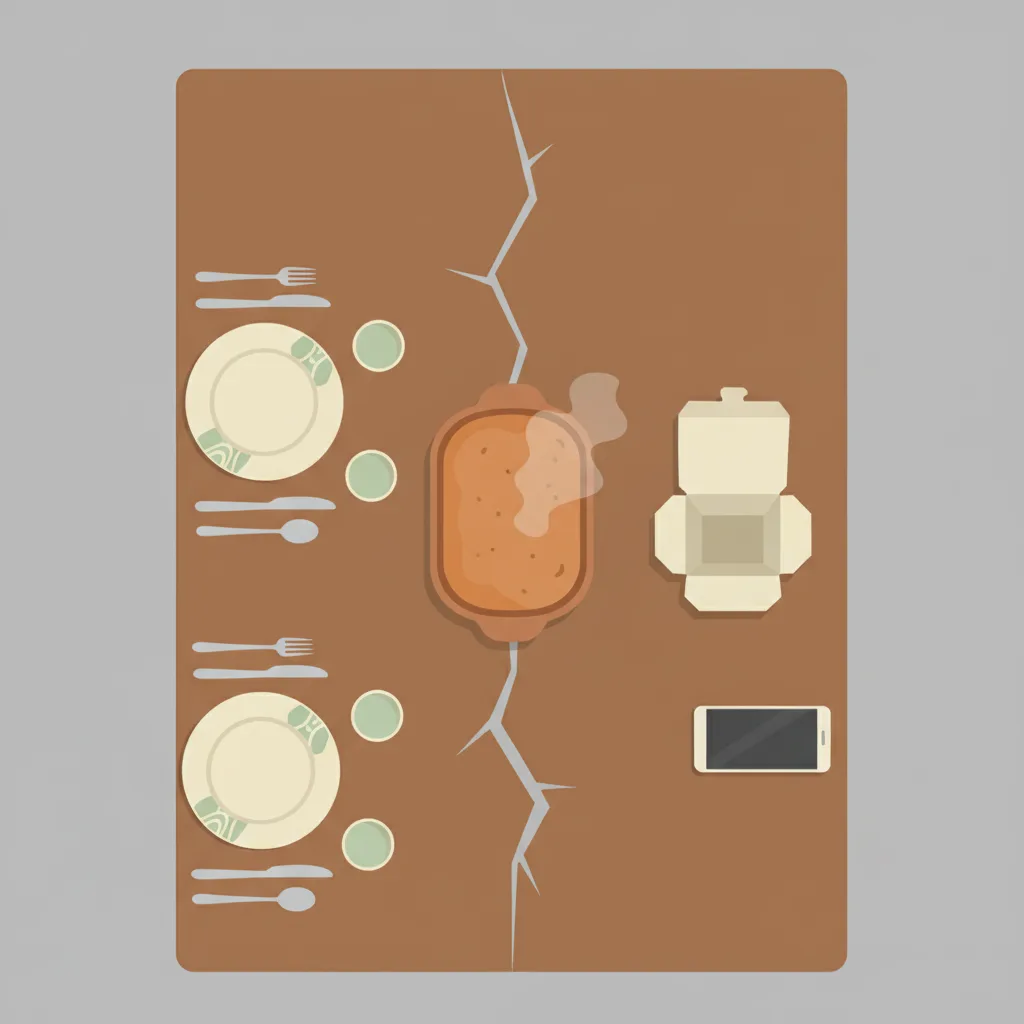
Das Leben deines Kindes regelmäßig in sozialen Medien zu posten vs. ihre digitale Privatsphäre zu schützen
Wenn du handelst
Das Leben des Kindes regelmäßig in sozialen Medien teilen
52%
Wenn du nicht handelst
Die digitale Privatsphäre des Kindes schützen
8,0%
Anteil derer, die jede Entscheidung später bereuen. Balken und vollständige Datengrundlage erscheinen unten.
Familie
Zuletzt überprüft 2026-05-13
Evidenzqualität 4.38/5
Bewertungsergebnis nach acht Dimensionen gemäß der
Qualitätsrubrik
. Jede Dimension wird mit 1–5 bewertet.
D1 Quellenüberprüfung
4/5
D2 Quellenautorität & Unabhängigkeit
5/5
D3 Genauigkeit der Bedauernsrate
5/5
D4 Vergleichbarkeit der Quellen
4/5
D5 Gilovich-Muster
4/5
D6 Prosaqualität
4/5
D7 Vollständigkeit der Einschränkungen
4/5
D8 Stichprobenqualität
5/5
Durchschnitt4.38/5
Stellvertretende Daten — für diese Entscheidung gibt es keine direkte Bedauernsstudie. Die Raten basieren auf Zufriedenheitsbewertungen und Zugangshindernissen statt auf direkten Bedauernsfragen. Siehe Vorbehalte unten.
Reue fürs Handeln
Das Leben des Kindes regelmäßig in sozialen Medien teilen
52%
52 % der Eltern befürchten, dass ihr Kind später durch das Geteilte in Verlegenheit gebracht wird (Sorgen-Proxy, keine gemessene Reue)
US-Eltern, die regelmäßig Fotos oder Videos ihres Kindes in Social Media posten
Querschnitt, 2015
Reue fürs Unterlassen
Die digitale Privatsphäre des Kindes schützen
8,0%
Keine Umfrage misst Reue unter datenschutzbewussten Eltern; die gezeigten ~8 % sind ein imputierter Platzhalter, keine gemessene Rate
US-Eltern, die das Posten über ihre Kinder in Social Media aktiv einschränken oder vermeiden
Querschnitt, 2019
% bereuen diese Entscheidung
Das Leben des Kindes regelmäßig in sozialen Medien teilenDie digitale Privatsphäre des Kindes schützen
52%8,0%
action dominates — Handeln dominiert — die meisten bereuen ihr Handeln.
Verwandte Entscheidungen
Semantisch ähnliche Entscheidungen — gleiches Terrain, andere Abwägungen.
Among US parents of children age four and under, 52% are concerned their child might be embarrassed when older by what is shared about them on social media, and roughly two-thirds are concerned about private information (68%) or photos (67%) being found, according to the C.S. Mott Children’s Hospital National Poll on Children’s Health (fielded 2014, n=569). These are concerns about a hypothetical future, not retrospective regret, and they coexist with continued sharing: a 2020 Pew Research Center survey found that 82% of social-media-using parents have posted photos, videos, or information about their children, yet only 16% say they worry sometimes or often that their child will later be upset about it. On the inaction side, no published survey directly asks non-sharing parents whether they regret their restraint. The ~8% shown for that side is an imputed placeholder, not a measured rate; the entry is flagged as a proxy comparison.
The decision differs structurally from most regret pairs because its full consequences unfold over years, not weeks. A child photographed extensively in infancy cannot consent and may, at age 12 or 16, discover years of publicly archived posts depicting their private developmental milestones, childhood embarrassments, or medical experiences. Once content is indexed, screenshot, or held by third-party data brokers, deletion from the original platform does not reliably remove it. The Mott Poll was fielded in late 2014, before the normalization of Stories, Reels, and TikTok — current sharenting rates are substantially higher, and the volume of archived content per child has grown accordingly.
Gilovich and Medvec’s temporal asymmetry research predicts that action regrets are more vivid in the short term but that inaction regrets accumulate over time. Sharenting is unusual in that the short-term feedback is consistently positive (social validation, likes, grandparent engagement) while the long-term cost accrues to the child, not the parent. This feedback mismatch — positive reinforcement at time of posting, negative consequence to a third party years later — may cause parents to systematically underestimate action-side regret at the moment of decision and encounter it only retrospectively, when the child is old enough to object.
Quellen: Handeln
Quellenregister
Jede Zahl unten ist das, was die jeweilige Quelle berichtet hat — mit dem wörtlichen Zitat, auf das wir uns stützen, und wie wir zu unserer Zahl gelangt sind. Klicke auf einen Link, um direkt zu prüfen.
1/2 Quellen unabhängig wortwörtlich mit der zitierten Quelle abgeglichen
[1]C.S. Mott Children's Hospital National Poll on Children's Health — Parents on Social Media: Likes and Dislikes of Sharenting
Primärstudie
52% of parents are concerned that, when older, their child might be embarrassed about what has been shared on social media; 68% are concerned about private information about their child being found, and 67% about photos being shared
Auszug
“"More than two-thirds of parents are concerned about someone finding out private information about their child (68%) or sharing photos of their child (67%). Over half (52%) are concerned that, when older, their child might be embarrassed about what is shared on social media."
”
Quelldaten von
2015-03-16
Abgerufen
2026-06-30
Berechnung
C.S. Mott Children's Hospital National Poll on Children's Health, Vol. 23 Issue 2 ("Parents on Social Media: Likes and Dislikes of Sharenting"), survey fielded November/December 2014, N=569 parents of children age 4 and under. Nationally representative US sample. The 52% captures parents concerned that their child might be embarrassed about shared content when older -- the side label is a forward-looking concern about future embarrassment, not a direct "I regret what I posted" question. The 0.52 numeral is the poll's verbatim embarrassment-concern reading but is a concern proxy, not measured regret.
[2]Pew Research Center — Parents' attitudes -- and experiences -- related to digital technology
Verifiziert
Primärstudie
82% of parents who use social media have posted photos, videos or other information about their children on these sites; 16% say they sometimes or often worry their children might be upset in the future about what was posted (83% rarely or never worry)
Auszug
“"82% of parents who use social media say they have posted photos, videos or other information about their children on these sites. ... The majority of parents who share photos, videos and information about their children on social media say they rarely or never (83%) worry that in the future their children might be upset about the things they posted about them on social media sites. Just 16% say they worry about this sometimes or often."
”
Quelldaten von
2020-07-28
Abgerufen
2026-06-30
Verifizierung
Der Auszug wurde bei unserer Grounding-Prüfung unabhängig erneut abgerufen und Wort für Wort mit der zitierten Quelle abgeglichen.
Berechnung
Pew Research Center, "Parenting Children in the Age of Screens" (American Trends Panel Wave 63, fielded March 2-15, 2020). Documents that sharenting is near-universal among social-media-using parents (82% have posted about their children) while only a 16% minority worry sometimes/often that their child will later be upset -- a lower self-reported worry rate than the Mott concern figures. Used as corroborating evidence on the action side, not in rate arithmetic.
Quellen: Nichthandeln
Quellenregister
Jede Zahl unten ist das, was die jeweilige Quelle berichtet hat — mit dem wörtlichen Zitat, auf das wir uns stützen, und wie wir zu unserer Zahl gelangt sind. Klicke auf einen Link, um direkt zu prüfen.
[1]Pew Research Center — Parenting Children in the Age of Screens↗ 1 other entry
Primärstudie
Among parents whose under-12 child uses a voice-activated assistant, about 39% are at least somewhat concerned about the data the assistant collects about their child (11% very concerned)
Auszug
“"About four-in-ten parents of a child age 11 or younger who uses or interacts with a voice-activated assistant (39%) say they are at least somewhat concerned about the data these assistants collect about their child, including 11% who say they are very concerned."
”
Quelldaten von
2020-07-28
Abgerufen
2026-06-30
Berechnung
Pew Research Center, "Parenting Children in the Age of Screens" (American Trends Panel Wave 63, fielded March 2-15, 2020). This source documents that parental concern about child data collection is real but partial (39% concerned about voice-assistant data among the relevant subgroup) -- it establishes the motivation behind privacy protection. It does NOT measure regret among privacy-protective parents. No published survey asks non-sharing parents whether they regret their restraint, so the inaction side carries no reliable regret estimate (see regret_display).
Einschränkungen
Both rates on this entry are proxies, not measured regret -- the entry is flagged proxy_only. The action-side figure captures parental CONCERN, not retrospective regret: 52% of parents in the C.S. Mott poll said they were concerned their child might be embarrassed when older by what is shared, and the same poll found 68%/67% concerned about private information or photos. These are forward-looking worries, not "I regret specific posts" answers, and many parents who voiced them kept sharing (Pew finds 82% of social-media-using parents have posted about their children, yet only 16% worry sometimes or often that their child will later be upset). The inaction-side 8% is NOT a measured rate: no published survey asks privacy-protective parents whether they regret their restraint, so the numeral is an imputed placeholder retained only because the schema requires a number -- treat the inaction side as having no reliable regret estimate. A distinctive feature of this decision is that regret may intensify as the child ages: children photographed extensively in early childhood cannot consent to their digital footprint and may later object to years of publicly archived posts. Content posted to platforms between 2010 and 2025 is likely to persist indefinitely even after deletion, given archiving, screenshots, and third-party data brokers. The Mott Poll was conducted in 2015, before the widespread normalization of Instagram Stories, TikTok, and BeReal-style spontaneous sharing -- sharenting rates and subsequent concerns have likely increased since then.