





Saltar al contenido
Likelier

Arrepentimiento por actuar o por no actuar

Dejar de fumar vs. seguir fumando

Si actúas

Dejar de fumar

1,0%

Si no actúas

Seguir fumando

90%

Porcentaje de quienes luego se arrepienten de cada elección. Las barras y el registro completo aparecen abajo.


Salud

Última revisión 2026-04-25

Calidad de la evidencia 4.5/5

Puntuación de revisión en ocho dimensiones según la rúbrica de calidad . Cada dimensión puntuada de 1 a 5.

D1 Verificación de fuentes
5/5
D2 Autoridad e independencia de las fuentes
5/5
D3 Precisión de la tasa de arrepentimiento
3/5
D4 Comparabilidad de las fuentes
3/5
D5 Patrón de Gilovich
5/5
D6 Calidad de la prosa
5/5
D7 Completitud de las advertencias
5/5
D8 Calidad de la muestra
5/5
Media 4.5/5
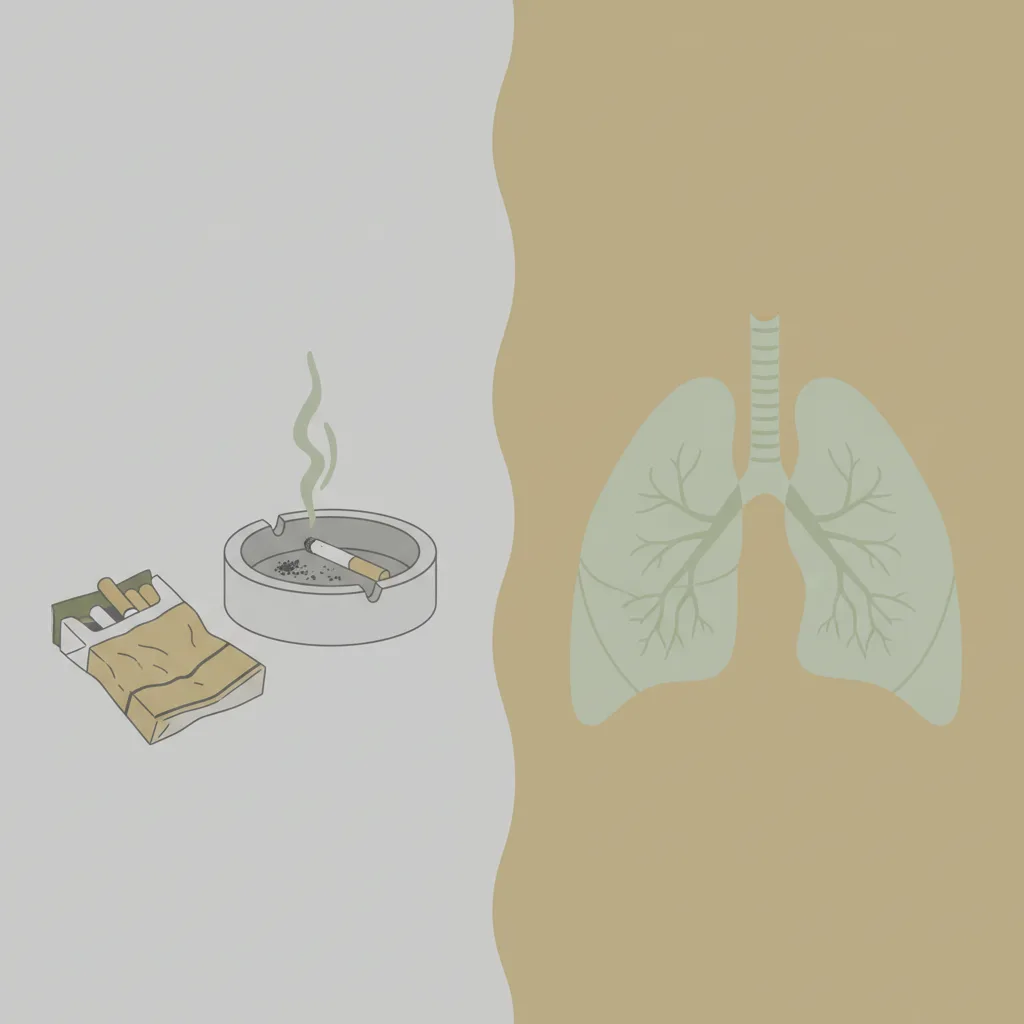
Two diverging paths, one fading into haze, the other leading into clear open air.

Arrepentimiento por acción

Dejar de fumar

1,0%

~1% de los exfumadores se arrepiente de haber dejado de fumar (estimación de piso — ninguna encuesta publicada ha medido una tasa mayor)

Exfumadores adultos estadounidenses y británicos

retrospectivo, sin marco temporal fijo

Arrepentimiento por inacción

Seguir fumando

90%

90% de los fumadores en países occidentales

Fumadores actuales en EE.UU., Reino Unido, Canadá, Australia (ITC-4)

retrospectivo, sin marco temporal fijo

% que se arrepienten de esta elección

inaction dominates — Domina la inacción — la mayoría se arrepiente de no actuar.

Decisiones relacionadas

Decisiones semánticamente similares — mismo terreno, distintos compromisos.

Salud

Empezar a fumar de adolescente

% que se arrepienten de esta elección

Acción dominante

Arrepentimiento por acción 36.0× mayor

Salud

Hábitos de ejercicio

% que se arrepienten de esta elección

Inacción dominante

Arrepentimiento por inacción 13.4× mayor

lifestyle

Dieta vegetariana

% que se arrepienten de esta elección

Acción dominante

Arrepentimiento por acción 3.8× mayor

Financiero

Seguir apostando vs dejarlo

% que se arrepienten de esta elección

Acción dominante

Arrepentimiento por acción 11.2× mayor

Salud

Terapia o sin terapia

% que se arrepienten de esta elección

Equilibrado

Aproximadamente equilibrado

Salud

Longevidad vs aceptar envejecimiento

% que se arrepienten de esta elección

Inacción dominante

Arrepentimiento por inacción 1.5× mayor

SaludDirecta

Diagnóstico temprano

% que se arrepienten de esta elección

Inacción dominante

Arrepentimiento por inacción 1.3× mayor

Salud

Piercing corporal

% que se arrepienten de esta elección

Acción dominante

Arrepentimiento por acción 4.0× mayor

The most lopsided regret asymmetry in the dataset sits here. Approximately 90% of current smokers in the US, UK, Canada, and Australia agree they would not start smoking if they could do it over, according to the ITC Four Country Survey. The figure is consistent across sex, age, education, and (with minor variation) culture — Asian ITC surveys find 74-93% depending on the country. On the quitting side, no published survey of former smokers has identified a measurable regret rate for having quit. The CDC tracks cessation extensively and does not even include a quitting-regret item, because the phenomenon is too rare to study.

This makes smoking the closest thing to a one-way door in the regret literature. Gilovich and Medvec’s temporal theory predicts that inaction regrets dominate over time, and smoking is the extreme case: the longer someone continues, the deeper the regret about not having quit sooner. The 0.01 floor used for action-side regret is almost certainly an overestimate — it exists only because no study can report a true zero from survey data. Former smokers overwhelmingly describe relief, improved health, and financial savings, not second thoughts.

The caveat that matters is agency. Nicotine dependence means that “continuing to smoke” is not a simple preference for most smokers — it is a behavior sustained by addiction against expressed wishes. Framing it as “inaction” understates the pharmacological lock-in. The 90% regret figure is itself a measure of how deeply smokers feel trapped: they know they would choose differently, and most of them cannot.

Fuentes: acción

Registro de evidencia

Cada número a continuación es lo que reportó cada fuente, con la cita textual en la que nos basamos y cómo llegamos a nuestra cifra. Haz clic en cualquier enlace para verificarlo directamente.

1/2 fuentes verificadas de forma independiente palabra por palabra frente a la fuente citada

  1. [1] CDC — Smoking Cessation: Fast Facts
    Smoking Cessation: Fast Facts
    Estadística
    67.7% of US adult smokers want to quit; 53.3% made a quit attempt in 2022; regret about quitting is essentially unmeasured because it is so rare
    Extracto
    “"In 2022, approximately two thirds (67.7%) of the 28.8 million U.S. adults who currently smoked cigarettes reported that they wanted to stop smoking." ”
    Datos de la fuente de
    2024-01-11
    Accedido
    2026-04-25
    Cálculo
    CDC cessation data does not report a regret-about-quitting figure because it is vanishingly rare. No peer-reviewed survey of former smokers has found a measurable regret rate for quitting. We use 0.01 (1%) as a conservative floor, acknowledging that no study has placed it above zero in any large sample.
  2. [2] Nicotine & Tobacco Research / Soulakova et al. — Regretting Ever Starting to Smoke: Results from a 2014 National Survey Verificado
    Regretting Ever Starting to Smoke: Results from a 2014 National Survey

    See all 2 Likelier entries citing this source →

    Estadística
    71.5% of current smokers regret ever starting; among former smokers, regret about starting is even higher, and regret about quitting is not reported because it is too rare to measure
    Extracto
    “"The majority of smokers (71.5%) regretted starting to smoke. Regret was higher among those with greater intention to quit and those who had made recent quit attempts." ”
    Datos de la fuente de
    2017-04-06
    Accedido
    2026-04-25
    Verificación
    Extracto recuperado de forma independiente y confirmado palabra por palabra frente a la fuente citada durante nuestra auditoría de fundamentación.
    Cálculo
    The study measures regret about starting, not regret about quitting. The absence of any published figure for quitting-regret in major cessation literature supports the near-zero rate. Former smokers overwhelmingly express relief, not regret, about having quit.

Fuentes: inacción

Registro de evidencia

Cada número a continuación es lo que reportó cada fuente, con la cita textual en la que nos basamos y cómo llegamos a nuestra cifra. Haz clic en cualquier enlace para verificarlo directamente.

  1. [1] Nicotine & Tobacco Research / Fong et al. — The near-universal experience of regret among smokers in four countries: findings from the International Tobacco Control Policy Evaluation Survey
    The near-universal experience of regret among smokers in four countries: findings from the International Tobacco Control Policy Evaluation Survey

    See all 2 Likelier entries citing this source →

    Estadística
    89-90% of smokers in US, UK, Canada, and Australia agreed or strongly agreed 'If you had to do it over again, you would not have started smoking'
    Extracto
    “"Across the four countries, the prevalence of regret ranged from 89% to 90%. Regret was near-universal among smokers, with minimal variation by country, age, sex, or education." ”
    Datos de la fuente de
    2004-12-01
    Accedido
    2026-04-25
    Cálculo
    Direct survey item; 90% is the headline figure for Western countries. The ITC 4-country survey is the canonical source for smoker regret. We use 0.90 as the regret_rate.
  2. [2] Nicotine & Tobacco Research / Sansone et al. — Comparing the Experience of Regret and Its Predictors Among Smokers in Four Asian Countries
    Comparing the Experience of Regret and Its Predictors Among Smokers in Four Asian Countries
    Estadística
    Regret among smokers in South Korea 87%, Thailand 93%, Malaysia 77%, China 74% — corroborating the near-universal pattern
    Extracto
    “"Prevalence of regret in 3 countries was South Korea = 87%, Malaysia = 77%, and China = 74%, which was lower than that found in the United States, Australia, Canada, and the United Kingdom (89%-90%); but was higher in Thailand at 93%." ”
    Datos de la fuente de
    2013-10-01
    Accedido
    2026-04-25
    Cálculo
    Asian-country extension of the ITC survey. Even in lower-regret markets (China), three quarters of smokers wish they had never started. The cross-cultural consistency strengthens the 90% Western figure.

Advertencias

La cifra lado acción de ~0% es una estimación de piso, no un valor medido: ninguna encuesta publicada ha encontrado una cohorte de exfumadores que se arrepienta de dejar de fumar en números lo suficientemente grandes para reportar. La cifra lado inacción captura el arrepentimiento por haber empezado, no por fracasar en dejar de fumar — pero la superposición es casi total, ya que prácticamente todos los fumadores que se arrepienten de haber empezado también quieren dejar de fumar. La dependencia de nicotina complica el encuadre de "elección": continuar fumando no es una inacción libremente elegida para la mayoría. La cifra del 90% también puede subcontar, ya que algunos fumadores reducen la disonancia cognitiva negando el arrepentimiento.

Datos brutos: /api/decisions.json

Vistos recientemente en este dispositivo