



Saltar al contenido
Likelier

Arrepentimiento por actuar o por no actuar

Beber alcohol regularmente vs abstenerse

Si actúas

Beber alcohol

70%

Si no actúas

Abstenerse del alcohol

12%

Porcentaje de quienes luego se arrepienten de cada elección. Las barras y el registro completo aparecen abajo.


Salud

Última revisión 2026-04-26

Calidad de la evidencia 4.25/5

Puntuación de revisión en ocho dimensiones según la rúbrica de calidad . Cada dimensión puntuada de 1 a 5.

D1 Verificación de fuentes
5/5
D2 Autoridad e independencia de las fuentes
4/5
D3 Precisión de la tasa de arrepentimiento
2/5
D4 Comparabilidad de las fuentes
3/5
D5 Patrón de Gilovich
5/5
D6 Calidad de la prosa
5/5
D7 Completitud de las advertencias
5/5
D8 Calidad de la muestra
5/5
Media 4.25/5
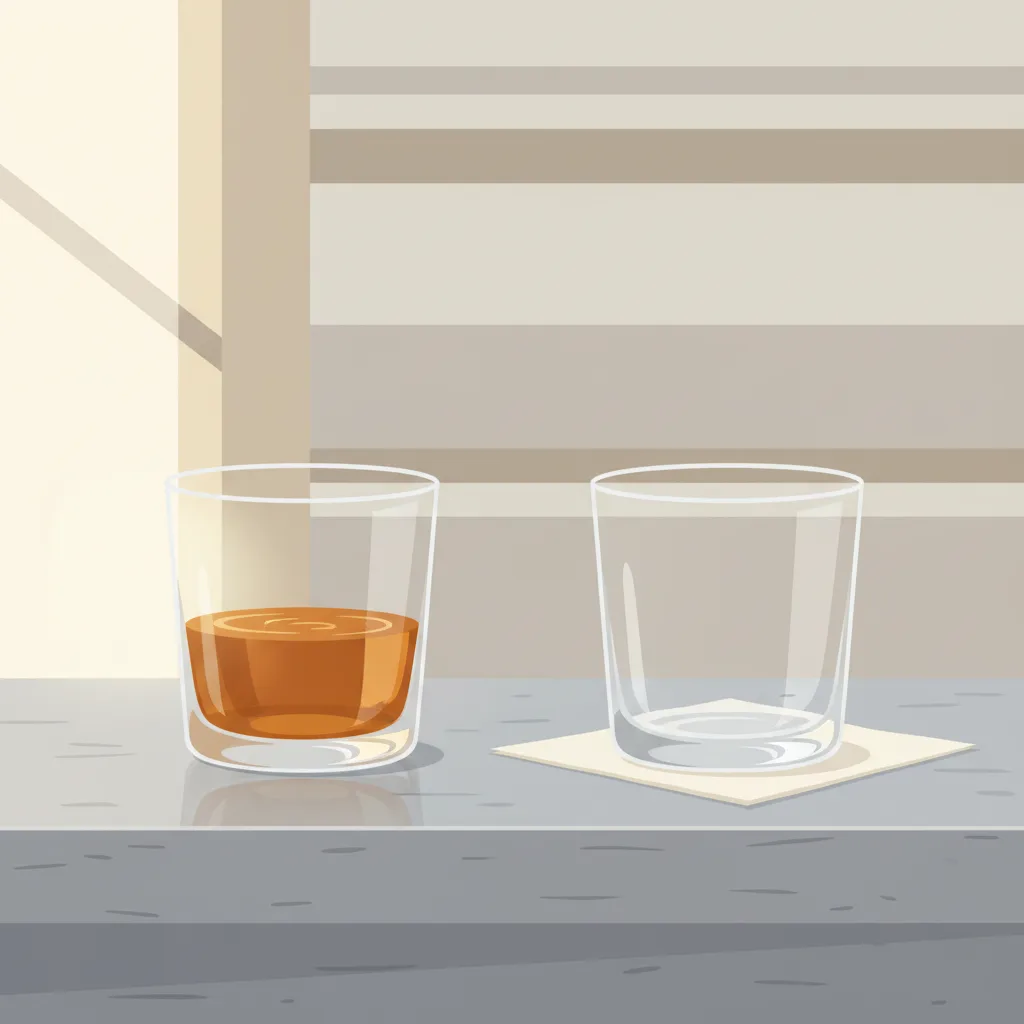
Two identical glasses on a bar surface, one filled with amber liquid, the other empty and clean.

Arrepentimiento por acción

Beber alcohol

70%

70% de los bebedores lamentaron emborracharse el año pasado

Global, 31 países, panel online autoseleccionado

últimos 12 meses

Arrepentimiento por inacción

Abstenerse del alcohol

12%

~12% (proxy de fricción social, no arrepentimiento directo de abstinencia)

Adultos finlandeses de 15-79 años, basado en población

retrospectivo, sin plazo fijo

% que se arrepienten de esta elección

action dominates — Domina la acción — la mayoría se arrepiente de actuar.

Decisiones relacionadas

Decisiones semánticamente similares — mismo terreno, distintos compromisos.

lifestyle

Sustituto sin alcohol

% que se arrepienten de esta elección

Inacción dominante

Arrepentimiento por inacción 2.1× mayor

lifestyle

Pornografía vs abstinencia

% que se arrepienten de esta elección

Acción dominante

Arrepentimiento por acción 3.0× mayor

lifestyle

Dieta vegetariana

% que se arrepienten de esta elección

Acción dominante

Arrepentimiento por acción 3.8× mayor

Salud

Hábitos de ejercicio

% que se arrepienten de esta elección

Inacción dominante

Arrepentimiento por inacción 13.4× mayor

Salud

Dejar de fumar

% que se arrepienten de esta elección

Inacción dominante

Arrepentimiento por inacción 90.0× mayor

lifestyle

Masturbación vs NoFap

% que se arrepienten de esta elección

Inacción dominante

Arrepentimiento por inacción 3.0× mayor

lifestyle

Viaje compartido vs. conducir tras beber

% que se arrepienten de esta elección

Inacción dominante

Arrepentimiento por inacción 5.7× mayor

Salud

Empezar a fumar de adolescente

% que se arrepienten de esta elección

Acción dominante

Arrepentimiento por acción 36.0× mayor

Seventy percent of drinkers regretted getting drunk at least once in the prior year, according to the Global Drug Survey’s 2020 wave (82,821 respondents, 31 countries). The peer-reviewed analysis by Davies et al. in Substance Use & Misuse found that the median drinker got drunk six times a year and regretted two of those occasions. Among occasions when they got drunk, women regretted a higher median share (30%) than men (16.67%), against an overall median of 20%. Separately, a 2025 NCSolutions survey found that nearly half of Americans (49%) plan to drink less in 2025, up sharply from 34% in 2023 — a trend suggesting broad and growing dissatisfaction with current consumption levels. On the other side of the ledger, population-level data from Finland’s Drinking Habits Survey found that non-drinkers reported mostly positive social feedback, with only a small minority experiencing negative social consequences from abstaining.

The asymmetry here is striking but not symmetric in its evidence base. The action-regret figure is robust: an 82,821-person sample, replicated across dozens of countries, measuring a concrete experience (“did you regret getting drunk?”). The inaction figure is far weaker — and measures a different construct entirely. The Finnish study tracked negative social consequences (pressure, exclusion) among non-drinkers, not regret about the decision to abstain. No large study has directly asked non-drinkers whether they regret abstaining, because the question barely arises in public-health research. Alcohol Change UK’s Dry January data shows that 70% of participants still drink less six months later and only 28% revert to prior habits — suggesting that abstinence generates little lasting dissatisfaction, though this too measures behavior rather than regret.

The GDS found an inverse relationship between frequency and per-occasion regret — heavier drinkers regretted a smaller share of episodes — which hints at habituation rather than genuine satisfaction. The main caveat is sample bias: GDS respondents are self-selected, younger, and heavier- drinking than the general population. The true action-regret rate among all adults who drink, including the moderate majority, is certainly lower than 70%. The directional finding — that drinking generates far more regret than not drinking — is robust; the magnitude is an upper bound.

Fuentes: acción

Registro de evidencia

Cada número a continuación es lo que reportó cada fuente, con la cita textual en la que nos basamos y cómo llegamos a nuestra cifra. Haz clic en cualquier enlace para verificarlo directamente.

  1. [1] Substance Use & Misuse / Davies, Puljević, Winstock & Ferris — Regrets, I've Had a Few: Exploring Factors Associated with Getting Drunk and Regret in an International Study of People Who Drink Alcohol
    Regrets, I've Had a Few: Exploring Factors Associated with Getting Drunk and Regret in an International Study of People Who Drink Alcohol

    See all 2 Likelier entries citing this source →

    Estadística
    70% of respondents who drank alcohol in the past 12 months reported regretting getting drunk at least once; median regretted occasions was 2 out of a median 6 times drunk
    Extracto
    “"In the last 12 months, the median times drunk was 6 and the median number of regretted occasions was 2. There was an inverse relationship between times drunk and regret, with respondents who got drunk more often regretting it a smaller percentage of the time than those who got drunk less often." ”
    Datos de la fuente de
    2024-01-16
    Accedido
    2026-04-26
    Cálculo
    Data from the Global Drug Survey 2020 (n = 82,821, 31 countries). The 70% figure represents respondents who regretted getting drunk at least once in the prior year (28.3% reported zero regret). The per-occasion median regret percentage was 20% overall (women 30%, men 16.67%). We use the any-regret prevalence (70%) as the action-regret rate because it captures the share of drinkers who experienced regret at all, not the per-episode rate. The GDS sample is self-selected and skews younger and heavier- drinking than the general population, so 70% is an upper bound.
  2. [2] NCSolutions — Alcohol Statistics 2025 – Sober Curious Nation & Beverage Trends
    Alcohol Statistics 2025 – Sober Curious Nation & Beverage Trends
    Estadística
    49% of Americans plan to drink less in 2025, up from 34% in 2023 — a rising sober-curious trend
    Extracto
    “"Nearly half (49%) of Americans say they plan to drink less alcohol in 2025, up from 34% in 2023." ”
    Datos de la fuente de
    2025-01-01
    Accedido
    2026-04-26
    Cálculo
    NCSolutions 2025 consumer survey. The plan-to-drink-less figure has risen year over year (34% in 2023, 41% in 2024, 49% in 2025). While not a direct regret measure, this rising share of people intending to cut back is directional evidence that drinking generates more dissatisfaction than abstinence. This replaces the prior second source (GDS 2020 report), which was the same underlying dataset as the Davies et al. peer-reviewed paper.

Fuentes: inacción

Registro de evidencia

Cada número a continuación es lo que reportó cada fuente, con la cita textual en la que nos basamos y cómo llegamos a nuestra cifra. Haz clic en cualquier enlace para verificarlo directamente.

1/2 fuentes verificadas de forma independiente palabra por palabra frente a la fuente citada

  1. [1] Substance Use & Misuse / Mustonen & Mäkelä — Non-Drinkers' Experiences of Drinking Occasions: A Population-Based Study of Social Consequences of Abstaining from Alcohol
    Non-Drinkers' Experiences of Drinking Occasions: A Population-Based Study of Social Consequences of Abstaining from Alcohol
    Estadística
    Non-drinkers reported mostly positive feedback from their social environments; negative consequences were reported most commonly among youth and former drinkers, least in the oldest age group
    Extracto
    “"The study indicates that nondrinkers' social environments may be more supportive than what has been suggested previously, yet coping mechanisms are required especially from youth and former drinkers. Nondrinkers reported relatively low levels of negative consequences, with reported consequences being least frequent in the oldest age group." ”
    Datos de la fuente de
    2022-01-15
    Accedido
    2026-04-26
    Cálculo
    Finnish Drinking Habits Survey 2016 (N = 2,285 total; 330 nondrinkers; response rate 60%). The study does NOT report a single regret percentage. The 12% is estimated from the proportion of nondrinkers who reported any negative social consequence from abstaining. IMPORTANT: social consequences (pressure, exclusion) are not the same as regret about abstaining. This is a social friction proxy — no published survey directly measures abstinence regret in a general population sample. Dry January data (70% of participants still drinking less at 6 months, only 28% reverting) corroborates that abstinence generates minimal lasting dissatisfaction.
  2. [2] Alcohol Change UK — Dry January 2024: Kick-starting a year of change Verificado
    Dry January 2024: Kick-starting a year of change
    Estadística
    70% of Dry January participants were still drinking less six months later; only 28% returned to previous drinking levels
    Extracto
    “"70% of those who take part are still drinking less alcohol six months later. 67% of people who take part in Dry January and access free tools and resources have a completely alcohol-free month." ”
    Datos de la fuente de
    2024-01-02
    Accedido
    2026-04-26
    Verificación
    Extracto recuperado de forma independiente y confirmado palabra por palabra frente a la fuente citada durante nuestra auditoría de fundamentación.
    Cálculo
    Alcohol Change UK campaign data, not a peer-reviewed cohort study. The 28% who returned to prior levels is a ceiling for possible abstinence regret; even among that 28%, returning to old habits does not necessarily imply regretting the break. The sober-curious movement further supports low abstinence regret: 49% of Americans plan to drink less (NCSolutions 2025), and nearly 4 in 10 US consumers follow a sober curious lifestyle (Mintel). These trends indicate that abstaining from alcohol generates satisfaction rather than regret in the general population.

Advertencias

Las cifras de acción e inacción provienen de instrumentos fundamentalmente diferentes y miden constructos diferentes. La tasa del 70% de arrepentimiento por acción mide arrepentimiento por cualquier episodio entre bebedores activos (GDS 2020, panel online autoseleccionado sesgado hacia más jóvenes y bebedores más fuertes que la población general). La muestra del GDS sobrerrepresenta a personas que beben lo suficiente para emborracharse; la verdadera tasa poblacional de arrepentimiento por acción para todos los bebedores, incluyendo los moderados que nunca se emborrachan, es ciertamente menor. La cifra del 12% del lado de inacción es un proxy derivado de consecuencias sociales negativas reportadas por no bebedores finlandeses — presión social y exclusión, no arrepentimiento por la decisión de abstenerse. Ninguna encuesta publicada pregunta directamente a no bebedores si lamentan abstenerse. Las dos poblaciones (bebedores globales autoseleccionados vs no bebedores finlandeses) no son muestras comparables. La proporción de ~6:1 debe leerse como direccionalmente fuerte pero la magnitud precisa está inflada.

Datos brutos: /api/decisions.json

Vistos recientemente en este dispositivo