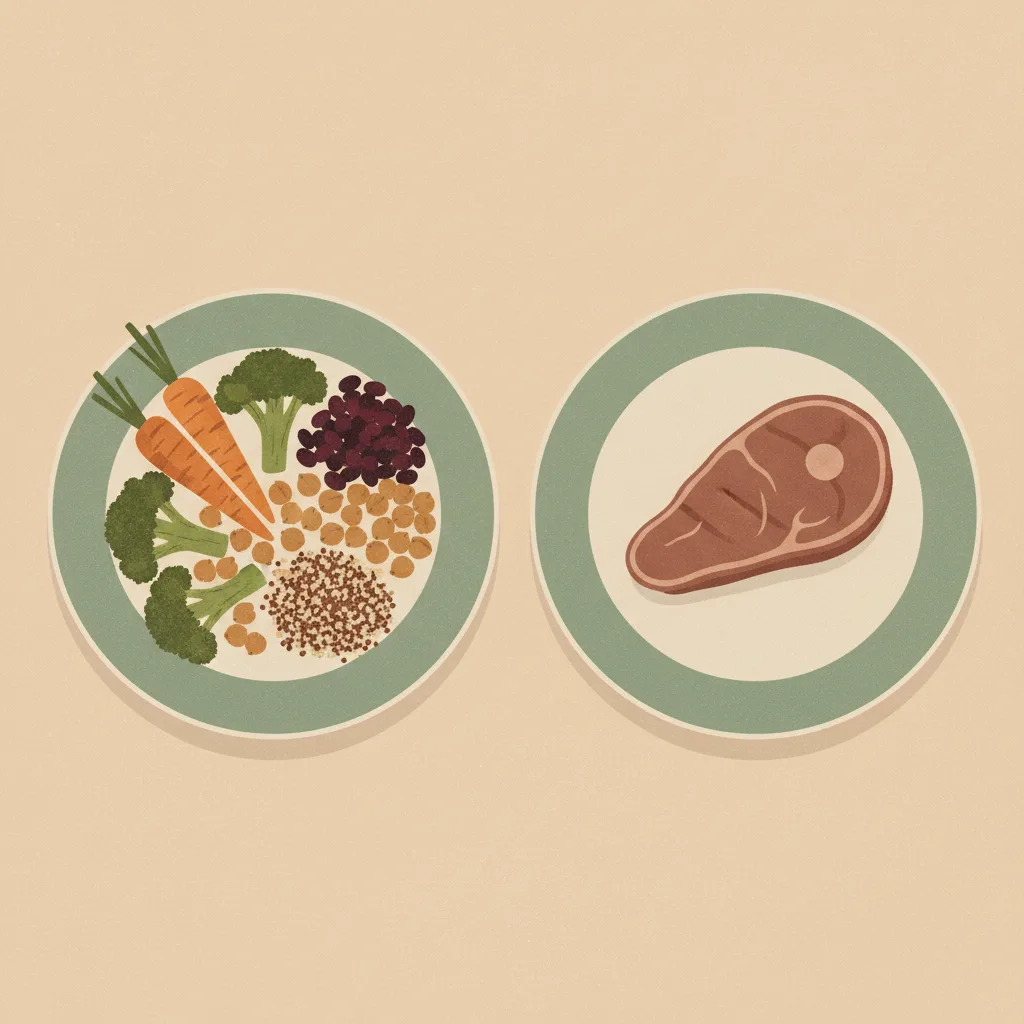
Salir del armario sobre tu sexualidad vs permanecer en el armario
Si actúas
Salir del armario
7,0%
Si no actúas
Permanecer en el armario
16%
Al menos una cifra es una estimación indirecta, no una tasa de arrepentimiento medida. Abajo se explica cómo se obtuvo cada cifra.
Estilo de vida
Última revisión 2026-04-27
Calidad de la evidencia 4.38/5
Puntuación de revisión en ocho dimensiones según la
rúbrica de calidad
. Cada dimensión puntuada de 1 a 5.
D1 Verificación de fuentes
5/5
D2 Autoridad e independencia de las fuentes
5/5
D3 Precisión de la tasa de arrepentimiento
2/5
D4 Comparabilidad de las fuentes
3/5
D5 Patrón de Gilovich
5/5
D6 Calidad de la prosa
5/5
D7 Completitud de las advertencias
5/5
D8 Calidad de la muestra
5/5
Media4.38/5
Datos indirectos: para esta decisión, al menos una cifra procede de una medida indirecta, como resultados, satisfacción o intención, o de una estimación editorial, y no de una encuesta directa sobre el arrepentimiento. Las notas de cada lado, más abajo, explican cómo se obtuvo su cifra.
Si actúas
Salir del armario
7,0%
7% de los adultos LGBT dicen que su orientación sexual es principalmente algo negativo en su vida (proxy)
Adultos estadounidenses autoidentificados como LGBT (predominantemente fuera del armario)
retrospectivo, sin plazo fijo
Si no actúas
Permanecer en el armario
16%
16% de tasa de intentos de suicidio del año pasado entre jóvenes LGBTQ que retrasaron salir del armario 2+ años (proxy)
Jóvenes LGBTQ+ de 13-24 años en EE.UU. que retrasaron la divulgación
año pasado, transversal
Cifra de cada elección (la medida se indica en la página)
Salir del armarioPermanecer en el armario
7,0%16%
Decisiones relacionadas
Decisiones semánticamente similares — mismo terreno, distintos compromisos.
The Trevor Project’s 2022 national survey of approximately 34,000 LGBTQ young
people found that those who delayed coming out by two or more years after first
recognizing their identity reported a past-year suicide attempt rate of 16%,
compared with 12% among those who came out within one year — the dominant
inaction-side signal in this entry. A 2021 meta-analysis across 193 studies
(n = 92,236) confirmed a small but consistent link between sexual orientation
concealment and internalizing mental health problems (effect size r = 0.126).
On the action side, Pew Research Center’s 2013 survey of 1,197 self-identified
LGBT adults found that 7% said their sexual orientation or gender identity
was “mainly something negative” in their life. Since 86% of this sample had
disclosed to at least one close friend and 54% said all or most important people
in their life knew, the 7% figure approximates dissatisfaction among a
predominantly out population. On outcomes: among those who told their mother,
14% reported the relationship grew weaker, 46% said it stayed the same, and
39% said it grew stronger.
The broad pattern aligns with Gilovich and Medvec’s prediction that inaction
regret tends to dominate over time. For those who came out, only 7% view their
orientation as a net negative, and 14% of disclosures to a mother produced
relational damage. Staying closeted, by
contrast, imposes a measurable psychological tax: the Pachankis and Bränström
meta-analysis documents elevated depression and anxiety tied to concealment
across decades of research, and the Trevor Project data show a 4-percentage-
point gap in past-year suicide attempts between delayed and early disclosers.
By 2024, Gallup found that 82% of LGBTQ adults had come out to at least one
person, and the median coming-out age has been falling across generations (17
for those under 30 vs. 26 for those over 65), consistent with a population
that increasingly treats disclosure as the preferred path.
Neither number is a true regret rate. The 7% captures those who view their
openly lived orientation as net negative, not a direct question about whether
coming out was a mistake. The 16% is a suicide attempt prevalence among youth
who delayed disclosure — a severe mental health outcome, not a measure of
whether closeted individuals wish they had come out. The two figures are drawn
from different populations (US adults in an online panel; help-seeking youth
ages 13-24 recruited via social media) and measure different constructs (life
satisfaction vs. mental health crisis), so the delta is directional rather than
precise. Survivorship bias is significant on the action side: people whose
outcomes were so negative they declined to participate in an LGBT survey are
missing from the Pew data. Cultural context varies enormously, and the cost-
benefit calculus of disclosure shifts with geography, family religiosity, and
the decade in question.
Fuentes: acción
Registro de evidencia
Cada número a continuación es lo que reportó cada fuente, con la cita textual en la que nos basamos y cómo llegamos a nuestra cifra. Haz clic en cualquier enlace para verificarlo directamente.
3/3 fuentes verificadas de forma independiente palabra por palabra frente a la fuente citada
[1]Pew Research Center — A Survey of LGBT Americans
Verificado
Estudio primario
7% of LGBT adults say their sexual orientation or gender identity is mainly something negative in their life
Extracto
“"About six-in-ten LGBT respondents (58%) say their sexual orientation or gender identity doesn't make much difference either way, while 34% say it is mainly something positive and just 7% say it is mainly something negative."
”
Datos de la fuente de
2013-06-13
Accedido
2026-04-27
Verificación
Extracto recuperado de forma independiente y confirmado palabra por palabra frente a la fuente citada durante nuestra auditoría de fundamentación.
Cálculo
Pew Research Center survey of 1,197 self-identified LGBT adults conducted April 11–29, 2013 (online). Since 86% of respondents had told at least one close friend and 54% said all or most important people in their life knew, this sample is predominantly out. The 7% who view their orientation as "mainly something negative" is the closest available proxy for action regret: it captures those whose lived experience of being openly LGBT is net negative. Of the rest, 34% see it as positive and 58% as neutral.
[2]Pew Research Center — Chapter 3: The Coming Out Experience
Verificado
Estudio primario
14% of LGBT adults who told their mother about their sexual orientation say the relationship grew weaker
Extracto
“"Four-in-ten LGBT adults (39%) who say they have told their mother about their sexual orientation say, since telling her, that their relationship has grown stronger. An additional 46% say their relationship with their mother has not changed, and 14% say their relationship has grown weaker."
”
Datos de la fuente de
2013-06-13
Accedido
2026-04-27
Verificación
Extracto recuperado de forma independiente y confirmado palabra por palabra frente a la fuente citada durante nuestra auditoría de fundamentación.
Cálculo
Same Pew 2013 survey. Among those who disclosed to their mother, 14% reported the relationship grew weaker. This is a secondary action-side metric — relationship damage is the most commonly cited fear deterring disclosure — but it measures a specific outcome, not overall regret. Of the rest, 46% reported neutral and 39% positive outcomes with their mother.
[3]Gallup — LGBTQ+ Adults Are Coming Out at Younger Ages Than in the Past
Verificado
Estudio primario
82% of LGBTQ+ adults have come out to at least one person (18% have never come out to anyone); median coming-out age is 17 for adults aged 18-29 vs. 26 for adults aged 65 and older
Extracto
“"Eighteen percent of LGBTQ+ respondents say they have never come out to anyone. ... The youngest LGBTQ+ adults, those aged 18 to 29, came out at a median age of 17, while those aged 30 to 49 and 50 to 64 came out in their early 20s. The median age adults aged 65 and older came out is 26."
”
Datos de la fuente de
2024-07-26
Accedido
2026-07-03
Verificación
Extracto recuperado de forma independiente y confirmado palabra por palabra frente a la fuente citada durante nuestra auditoría de fundamentación.
Cálculo
Gallup Panel web survey of 46,933 US adults aged 18+, conducted May 1–15, 2024. The 82% figure is the complement of the reported "18% have never come out to anyone" (100 - 18 = 82). Used as contextual evidence that disclosure has become both more common and happens earlier across generations -- this is not a regret measure, and is not the entry's action-side regret_rate (which remains the Pew 7% "mainly something negative" figure above). Added to ground the body text's "82%... 17 for those under 30 vs. 26 for those over 65" claim, previously attributed to Gallup without a corresponding source in this entry.
Fuentes: inacción
Registro de evidencia
Cada número a continuación es lo que reportó cada fuente, con la cita textual en la que nos basamos y cómo llegamos a nuestra cifra. Haz clic en cualquier enlace para verificarlo directamente.
2/2 fuentes verificadas de forma independiente palabra por palabra frente a la fuente citada
[1]The Trevor Project — Age of Sexual Orientation Outness & Suicide Risk
Verificado
Estudio primario
16% past-year suicide attempt rate among LGBTQ youth who came out 2+ years after first thinking they might be LGBTQ, vs 12% among those who came out within one year
Extracto
“"LGBTQ youth who came out within a year of realizing they may be LGBTQ reported lower rates of attempting suicide in the past year (12%), compared to LGBTQ youth who came out two or more years after realizing they might be LGBTQ (16%)."
”
Datos de la fuente de
2022-10-01
Accedido
2026-04-27
Verificación
Extracto recuperado de forma independiente y confirmado palabra por palabra frente a la fuente citada durante nuestra auditoría de fundamentación.
Cálculo
The Trevor Project research brief, based on their 2022 National Survey of approximately 34,000 LGBTQ young people ages 13–24. The 16% is the actual prevalence of past-year suicide attempts among youth who delayed disclosure by two or more years, compared with 12% among those who came out within one year. The previously cited 56% figure was an adjusted odds ratio (aOR 1.56), which cannot be used as a prevalence rate. We use the 16% prevalence as a proxy for inaction cost — prolonged concealment is associated with worse mental health outcomes, though suicide attempts are a more extreme outcome than regret per se.
[2]Psychological Bulletin (APA) — Sexual Orientation Concealment and Mental Health: A Conceptual and Meta-Analytic Review
Verificado
Revisado por pares
Across 193 studies (n = 92,236), concealment showed a small positive association with internalizing mental health problems (ESr = 0.126)
Extracto
“"Across 193 studies (n = 92,236), the meta-analysis finds a small positive association between sexual orientation concealment and internalizing mental health problems (i.e., depression, anxiety, distress, problematic eating; ESr = 0.126; 95% CI [0.102, 0.151]) and a small negative association between concealment and substance use problems (ESr = −0.061; 95% CI [−0.096, −0.026])."
”
Datos de la fuente de
2021-04-01
Accedido
2026-04-27
Verificación
Extracto recuperado de forma independiente y confirmado palabra por palabra frente a la fuente citada durante nuestra auditoría de fundamentación.
Cálculo
Pachankis & Bränström meta-analysis published in Psychological Bulletin. The effect size (r = 0.126) is small but robust across 92,236 participants. This supports the inaction-side framing: concealment carries a measurable mental health cost, though the relationship is complex — concealment can also protect against discrimination in hostile environments. The meta-analysis does not directly measure regret, but documents the psychological burden that accumulates with sustained concealment.
Advertencias
Ningún lado tiene una encuesta directa de arrepentimiento. El 7% del lado de acción es la proporción de adultos LGBT en la encuesta de Pew de 2013 que dicen que su orientación es «principalmente algo negativo» en su vida — un proxy laxo para el arrepentimiento entre una población predominantemente fuera del armario, no una pregunta directa sobre si salir del armario fue un error. El 16% del lado de inacción es la prevalencia de intentos de suicidio del año pasado entre jóvenes LGBTQ que retrasaron la divulgación por dos o más años (vs 12% entre los que se divulgaron temprano) — una medida de resultado severo, no una prevalencia de arrepentimiento. Las dos tasas miden constructos diferentes (satisfacción con la vida vs crisis de salud mental) en poblaciones diferentes. El sesgo de supervivencia afecta el lado de acción: las personas que salieron del armario y se retiraron de la identificación LGBT, o cuyos resultados fueron tan negativos que rechazaron una encuesta LGBT, faltan en los datos de Pew. El contexto cultural y geográfico importa enormemente: salir del armario en San Francisco en 2024 conlleva riesgos diferentes que salir en el Mississippi rural o en un país donde la homosexualidad está criminalizada.