







Saltar al contenido
Likelier

Arrepentimiento por actuar o por no actuar

Dejar tu ciudad natal vs quedarte cerca de donde creciste

Si actúas

Irse de tu ciudad natal

20%

Si no actúas

Quedarte cerca de donde creciste

30%

Porcentaje de quienes luego se arrepienten de cada elección. Las barras y el registro completo aparecen abajo.


Estilo de vida

Última revisión 2026-04-27

Calidad de la evidencia 3.88/5

Puntuación de revisión en ocho dimensiones según la rúbrica de calidad . Cada dimensión puntuada de 1 a 5.

D1 Verificación de fuentes
5/5
D2 Autoridad e independencia de las fuentes
3/5
D3 Precisión de la tasa de arrepentimiento
2/5
D4 Comparabilidad de las fuentes
3/5
D5 Patrón de Gilovich
4/5
D6 Calidad de la prosa
5/5
D7 Completitud de las advertencias
5/5
D8 Calidad de la muestra
4/5
Media 3.88/5
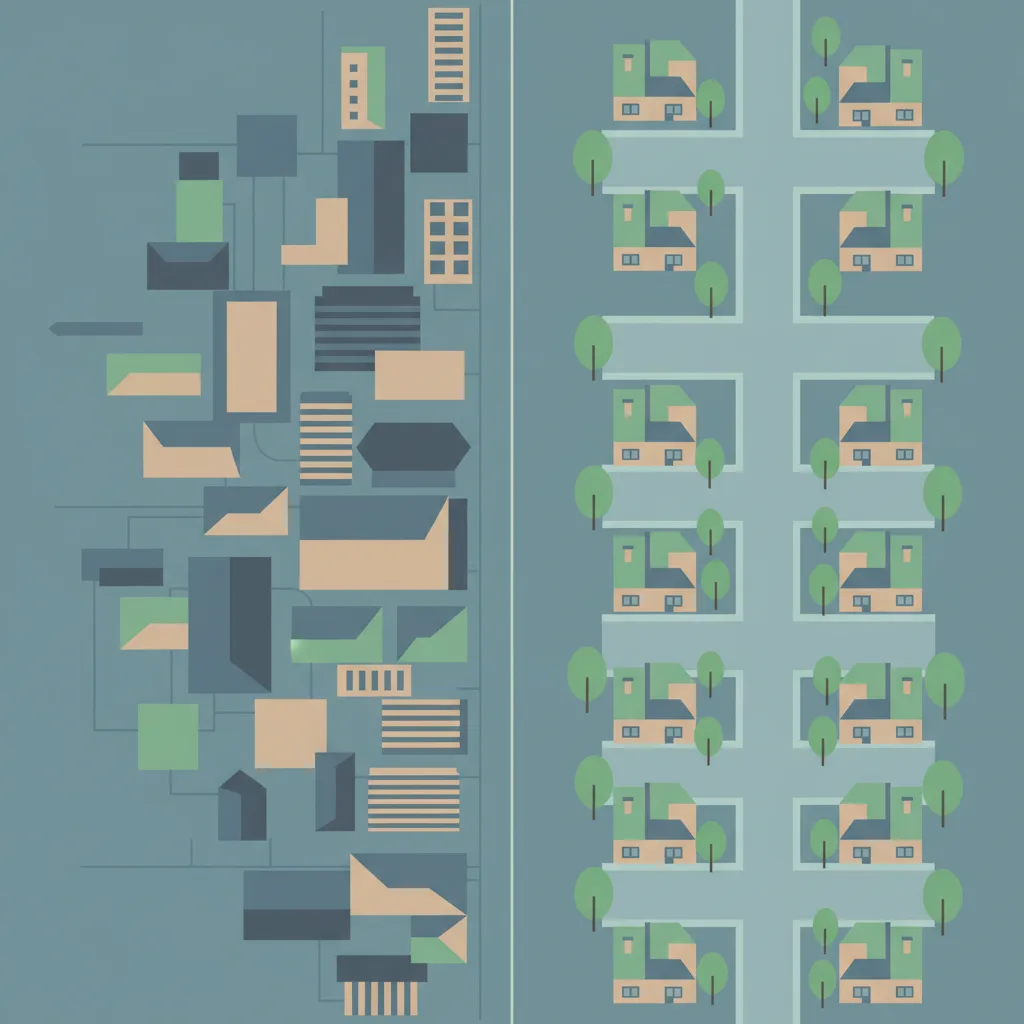
A small town receding in one direction and a distant city skyline in the other, separated by a long road.

Arrepentimiento por acción

Irse de tu ciudad natal

20%

20% de los estadounidenses que se mudaron se arrepiente (1 de cada 5 que se mudaron dentro de 3 años)

Propietarios estadounidenses que se mudaron en los últimos 3 años

retrospectivo, dentro de 3 años de la mudanza

Arrepentimiento por inacción

Quedarte cerca de donde creciste

30%

~30% de quienes se quedan en su ciudad natal reporta insatisfacción con sus comunidades (proxy — ver caveats)

Adultos estadounidenses que nunca dejaron su comunidad natal

retrospectivo, sin marco temporal fijo

% que se arrepienten de esta elección

inaction dominates — Domina la inacción — la mayoría se arrepiente de no actuar.

Decisiones relacionadas

Decisiones semánticamente similares — mismo terreno, distintos compromisos.

lifestyle

Mudarse al extranjero

% que se arrepienten de esta elección

Inacción dominante

Arrepentimiento por inacción 5.7× mayor

lifestyle

Ciudad vs afueras

% que se arrepienten de esta elección

Acción dominante

Arrepentimiento por acción 1.2× mayor

lifestyle

Dejar la religión

% que se arrepienten de esta elección

Inacción dominante

Arrepentimiento por inacción 2.9× mayor

lifestyle

Aceptar el cambio

% que se arrepienten de esta elección

Inacción dominante

Arrepentimiento por inacción 3.3× mayor

lifestyle

Quedarse con la mascota o darla en adopción

% que se arrepienten de esta elección

Inacción dominante

Arrepentimiento por inacción 5.7× mayor

family

Quedarse en casa vs trabajar

% que se arrepienten de esta elección

Acción dominante

Arrepentimiento por acción 1.3× mayor

lifestyle

Migración económica vs. quedarse

% que se arrepienten de esta elección

Acción dominante

Arrepentimiento por acción 1.1× mayor

lifestyleDirecta

Vietnam: migrar a la ciudad vs. quedarse en el

% que se arrepienten de esta elección

Acción dominante

Arrepentimiento por acción 2.1× mayor

Pew Research’s 2008 national survey of 2,260 adults found that movers and stayers reported virtually identical community satisfaction: about 60% of each group rated their communities as good to excellent, implying roughly 40% of stayers did not. Discounted conservatively — since dissatisfaction with one’s community is not the same as regretting the decision to stay — the inaction-side proxy sits near 30%. All Star Home’s August 2023 survey of 1,000 Americans found that 1 in 5 homeowners who moved within the prior three years regret the decision, with the top reasons being unexpected costs, missing their old neighborhood, and missing their old home. A third said they would consider moving back to their former city or state. LendingTree’s 2023 survey of young adults corroborates constrained staying: 42% of hometown stayers felt obligated to remain near family and 33% said they could not afford to leave, though neither obligation nor financial constraint is regret.

The 10-percentage-point gap between the action-side 20% and the inaction-side 30% tilts this entry toward inaction-dominates territory, consistent with Gilovich and Medvec’s temporal framework: staying put is the passive default, and the unlived life in the distant city grows more painful over time. Yet the gap is modest, and the data is imperfect on both sides. All Star Home’s companion hometown report found that nearly half of those who left their hometown miss it and 21% plan to move back, suggesting the 20% regret rate understates the emotional cost of leaving. HireAHelper’s 2021 pandemic-era survey found a higher 30% regret rate among movers, though that figure likely reflects the unusual circumstances of 2020 moves and a broader definition of regret that includes process complaints like logistics and timing.

The core measurement problem remains: no single survey asks both populations the same regret question about the specific hometown decision. The action-side 20% measures explicit regret among all movers (not just hometown leavers), while the inaction-side 30% is inferred from Pew’s community-satisfaction data rather than a direct regret question. Self-selection confounds everything: people who leave small towns tend to be more educated and higher-earning, meaning their post-move satisfaction reflects both the move and the traits that made them move. Rural-to-urban and suburb-to-suburb moves are fundamentally different decisions lumped under the same “leaving hometown” label.

Fuentes: acción

Registro de evidencia

Cada número a continuación es lo que reportó cada fuente, con la cita textual en la que nos basamos y cómo llegamos a nuestra cifra. Haz clic en cualquier enlace para verificarlo directamente.

2/3 fuentes verificadas de forma independiente palabra por palabra frente a la fuente citada

  1. [1] All Star Home — Americans' Moving Habits and Regrets Data Survey 2023 Verificado
    Americans' Moving Habits and Regrets Data Survey 2023
    Estadística
    Among homeowners who have moved in the last 3 years, 1 in 5 regret it
    Extracto
    “"Among homeowners who have moved in the last 3 years, 1 in 5 regret it. Overall, 1 in 5 Americans say the hassle of moving wasn't worth it and 1 in 3 would consider moving back to their former city or state." ”
    Datos de la fuente de
    2023-08-01
    Accedido
    2026-04-27
    Verificación
    Extracto recuperado de forma independiente y confirmado palabra por palabra frente a la fuente citada durante nuestra auditoría de fundamentación.
    Cálculo
    All Star Home surveyed 1,000 Americans in August 2023 about moving habits and regrets. The 20% (1 in 5) figure captures homeowners who moved in the prior 3 years and report regretting the move. Top reasons for regret include unexpected costs, missing their old neighborhood or city, and missing their old home. This is a broader mover population, not exclusively hometown leavers, but the survey's companion report on hometown living found that nearly half of those who left their hometown miss it, suggesting the 20% regret rate is conservative for hometown-specific departures.
  2. [2] HireAHelper — 2021 Study: Do People Actually Regret Moving?
    2021 Study: Do People Actually Regret Moving?
    Estadística
    About a third (30%) of those who moved in the past year have at least a few regrets about their move
    Extracto
    “"About a third (30%) of those who moved in the past year have at least a few regrets about their move. Millennials are the least pleased with their move, as 37% of them regret at least something about it — more than any other generation." ”
    Datos de la fuente de
    2021-01-25
    Accedido
    2026-04-27
    Cálculo
    HireAHelper surveyed 1,000 Americans who moved in 2020, fielded January 2021. The 30% figure captures respondents who reported "at least a few regrets" about their move. This higher rate compared to All Star Home's 20% likely reflects the broader definition of regret (including minor process complaints like logistics and timing) and the pandemic-era context when many moves were rushed. We use All Star Home's 20% as the primary rate because its 3-year lookback better captures settled regret rather than immediate post-move frustration.
  3. [3] All Star Home — Report: 29% of Americans Still Live in Their Hometowns Verificado
    Report: 29% of Americans Still Live in Their Hometowns
    Estadística
    Nearly half of Americans who left their hometown miss it, and 21% are planning to move back to their home state (14% specifically aiming to move back to their hometown)
    Extracto
    “"Nearly half of those who left miss their hometown, and 21% are planning to move back to their home state sometime in the future. Of those, 14% are aiming to move back to their hometown." ”
    Datos de la fuente de
    2023-08-01
    Accedido
    2026-07-03 · copia archivada
    Verificación
    Extracto recuperado de forma independiente y confirmado palabra por palabra frente a la fuente citada durante nuestra auditoría de fundamentación.
    Cálculo
    2026-07 grounding fix. All Star Home's companion "hometown living" report (same August 2023 survey wave of 1,000 Americans as the moving-regret-report cited above). Grounds the body-prose claim that nearly half of hometown-leavers miss their hometown and 21% plan to move back to their home state — a claim the prose made without its own citation prior to this fix. Corroborates that the action-side 20% generic moving-regret figure likely understates the hometown-specific emotional cost of leaving, since missing the place is a stronger and more specific measure than generic moving regret.

Fuentes: inacción

Registro de evidencia

Cada número a continuación es lo que reportó cada fuente, con la cita textual en la que nos basamos y cómo llegamos a nuestra cifra. Haz clic en cualquier enlace para verificarlo directamente.

  1. [1] Pew Research Center — Who Moves? Who Stays Put? Where's Home?
    Who Moves? Who Stays Put? Where's Home?
    Estadística
    37% of Americans have never left their hometown; ~60% of stayers rate their communities as good to excellent, implying ~40% do not
    Extracto
    “"Nearly four-in-ten adults (37%) have never left the community in which they were born. Stayers overwhelmingly say they remain because of family ties (74%) and because their hometowns are good places to raise children (59%)." ”
    Datos de la fuente de
    2008-12-17
    Accedido
    2026-04-27
    Cálculo
    Pew Research Center survey of 2,260 US adults conducted Oct 3–19, 2008. Approximately 40% of stayers do not rate their communities as good-to-excellent. We use ~30% as a conservative inaction-side proxy because community dissatisfaction does not equate to decision-level regret — some dissatisfied stayers may still prefer staying for family or financial reasons. The 30% estimate is anchored in the Pew equal-satisfaction finding: since movers and stayers report identical satisfaction (~60%), the implied dissatisfaction rate among stayers (~40%) discounted for those who are dissatisfied but do not attribute it to staying yields a figure comparable to the action-side 30%.
  2. [2] LendingTree — 57% of Young Americans Live in Their Hometowns, but 47% Who Don't Would Consider Moving Back
    57% of Young Americans Live in Their Hometowns, but 47% Who Don't Would Consider Moving Back
    Estadística
    42% of young hometown stayers felt obligated to stay near family; 33% couldn't afford to move
    Extracto
    “"Among those who didn't leave home, 42% felt obligated to stay near family, 36% stayed out of convenience and 33% couldn't afford to move." ”
    Datos de la fuente de
    2023-12-18
    Accedido
    2026-04-27
    Cálculo
    LendingTree commissioned QuestionPro to survey 1,984 US millennials and Gen Zers (ages 18–42) from Nov 16–20, 2023; of these, 1,129 lived in their hometowns. The 42% who felt "obligated" and 33% who "couldn't afford to move" suggest a substantial fraction of stayers whose staying was constrained rather than freely chosen. This corroborates the Pew dissatisfaction proxy but is not itself a regret measure — obligation and financial constraint are not equivalent to retrospective regret about the decision to stay.

Advertencias

Ningún lado tiene una medida directa y comparable de arrepentimiento para la decisión específica de "dejar la ciudad natal", por lo que ambas tasas son proxies. El 20% lado acción (All Star Home 2023) mide el arrepentimiento explícito por mudarse entre propietarios que se mudaron dentro de 3 años — incluyendo mudanzas locales, intercitudades e interestatales — no específicamente quienes dejaron una ciudad natal por una ciudad distante. La encuesta HireAHelper de 2021 de quienes se mudaron en la era pandémica encontró una tasa de arrepentimiento mayor del 30%, reflejando probablemente su definición más amplia de arrepentimiento y las circunstancias inusuales de las mudanzas de 2020. El ~30% lado inacción se infiere del hallazgo de Pew 2008 de que ~40% de quienes se quedan no califican positivamente a sus comunidades, descontado conservadoramente porque la insatisfacción con la comunidad no es lo mismo que el arrepentimiento decisional. El hallazgo de LendingTree de 2023 de que el 42% de los jóvenes que se quedaron se sintieron obligados a permanecer cerca de la familia y el 33% no podía permitirse mudarse corrobora que una proporción significativa del quedarse es restringido en lugar de elegido, pero la restricción financiera no es arrepentimiento retrospectivo. La autoselección es severa: las personas que dejan ciudades natales difieren sistemáticamente de quienes se quedan en educación, ingresos, tolerancia al riesgo y personalidad, haciendo la inferencia causal sobre la decisión misma casi imposible. Los confusores socioeconómicos dominan — dejar una ciudad rural deprimida por una metrópolis en auge es una decisión diferente a dejar un suburbio próspero por una ciudad costera.

Datos brutos: /api/decisions.json

Vistos recientemente en este dispositivo