








Aller au contenu
Likelier

Regret d’agir vs. de ne pas agir

Recourir à la FIV pour avoir un enfant biologique vs. adopter

Si vous agissez

Recourir à la FIV

19%

Si vous n’agissez pas

Adopter un enfant

5,0%

Pourcentage de personnes qui regrettent ensuite chaque choix. Les barres et le registre complet s’affichent ci-dessous.


Famille

Dernière révision 2026-05-04

Qualité des preuves 3.75/5

Score d’évaluation en huit dimensions selon la grille de qualité . Chaque dimension notée de 1 à 5.

D1 Vérification des sources
3/5
D2 Autorité et indépendance des sources
4/5
D3 Précision du taux de regret
3/5
D4 Comparabilité des sources
3/5
D5 Motif de Gilovich
5/5
D6 Qualité de la prose
4/5
D7 Complétude des réserves
4/5
D8 Qualité de l’échantillon
4/5
Moyenne 3.75/5
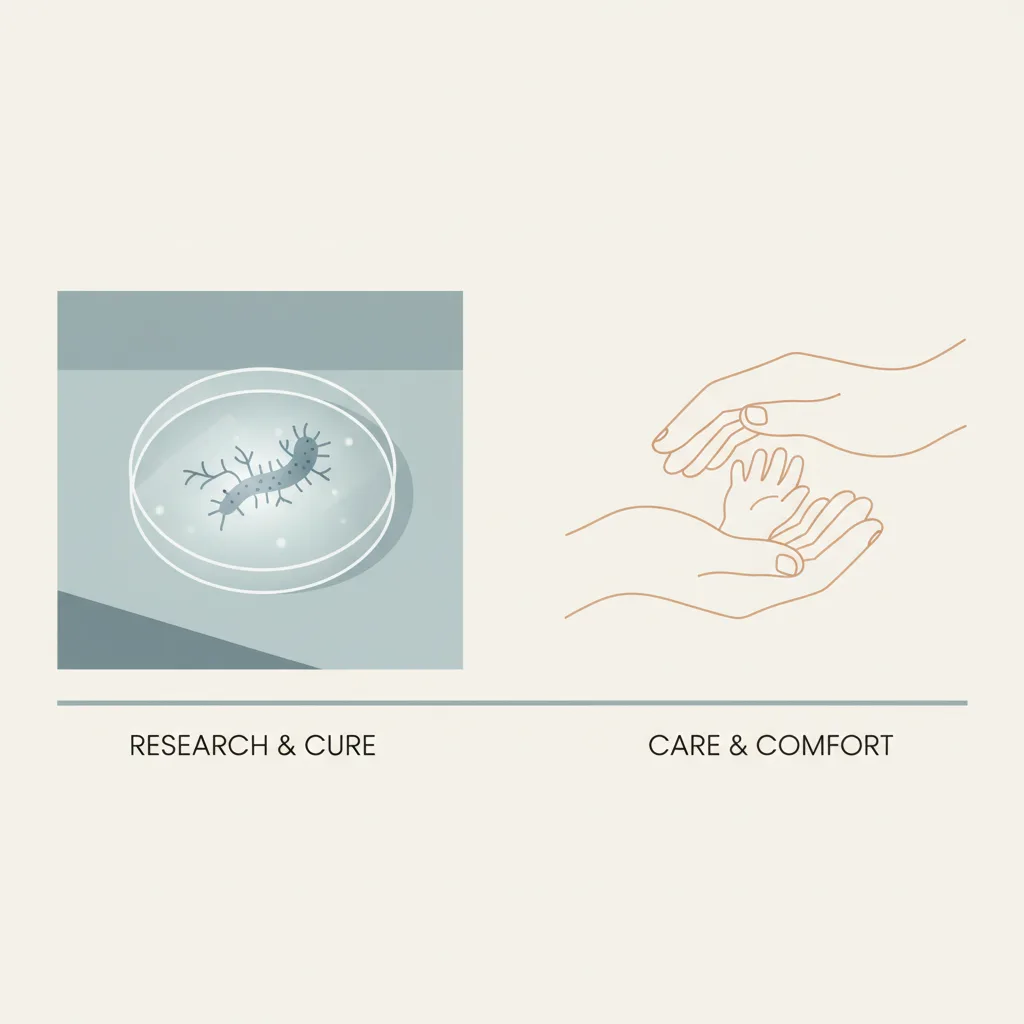
A flat vector illustration of a laboratory embryo dish alongside a simple outline of two adult hands holding a small hand

Regret d'action

Recourir à la FIV

19%

~1 femme sur 5 (≈19%) ayant suivi un traitement de l'infertilité rapporte un regret décisionnel modéré à sévère — concentré chez celles dont le traitement n'a pas abouti à un enfant

Couples ayant subi ≥2 cycles de FIV mondialement (revue systématique Verhaak et al. 2007 ; données ART mondiales ICMART)

18 mois après la dernière tentative de FIV

Regret d'inaction

Adopter un enfant

5,0%

~5% des parents adoptifs rapportent un regret significatif (87% adopteraient « certainement » à nouveau dans l'enquête nationale) ; la rupture/dissolution de placement n'est plus élevée que pour les adoptions d'enfants plus âgés ou à besoins spécifiques

Parents adoptifs domestiques et internationaux (données US AFCARS ; revue Brodzinsky et al.)

dans les 2 ans suivant le placement

% regrettent ce choix

action dominates — L'action domine — la plupart regrettent d'avoir agi.

Décisions associées

Décisions sémantiquement similaires — même terrain, compromis différents.

Santé

Traitement de fertilité vs. accepter l'absence

% regrettent ce choix

L'inaction domine

Regret d'inaction 1.7× plus élevé

family

Adoption vs élever soi-même

% regrettent ce choix

L'action domine

Regret d'action 4.8× plus élevé

family

Gestation pour autrui vs. vie sans enfant

% regrettent ce choix

L'inaction domine

Regret d'inaction 2.1× plus élevé

family

Dire vs. cacher l'adoption

% regrettent ce choix

L'inaction domine

Regret d'inaction 4.0× plus élevé

family

Congélation d'ovules/sperme vs. attendre

% regrettent ce choix

L'inaction domine

Regret d'inaction 3.2× plus élevé

family

Avoir des enfants

% regrettent ce choix

Équilibré

À peu près équilibré

family

Un enfant de plus vs. s'arrêter

% regrettent ce choix

L'inaction domine

Regret d'inaction 2.6× plus élevé

family

Parentalité précoce vs tardive

% regrettent ce choix

L'inaction domine

Regret d'inaction 1.7× plus élevé

Risques derrière cette décision

Les probabilités qui sous-tendent ce choix.

Most single IVF transfers do not result in a live birth. The International Committee for Monitoring Assisted Reproductive Technology’s world report for treatment performed in 2017 and 2018 — 2.9 to 3.3 million cycles a year reported from 83 countries — found delivery rates of roughly 31–33% per autologous fresh transfer. Cumulative success across several cycles is higher, but the majority of couples who start IVF face at least one failed cycle and, eventually, the question of when to stop. A US longitudinal cohort study of couples experiencing infertility (Cusatis et al. 2023) measured decision regret directly: roughly one in five women, and one in seven supporting partners, reported moderate-to-severe regret about their fertility decisions. Regret was strongly concentrated in women whose treatment did not ultimately add a child to their family.

The adoption pathway shows a markedly different regret structure. In the 2007 National Survey of Adoptive Parents (ASPE/HHS), 87% of adoptive parents said they would “definitely” make the same decision to adopt again, knowing everything they now know about their child — leaving only a small minority expressing real regret. Placement instability is real but uneven: the Child Welfare Information Gateway reports adoption disruption (a placement that ends before finalization) at roughly 10–25% depending on population, and dissolution of legally finalized adoptions at about 1–10%, with the higher figures concentrated in older-child and special-needs foster-care adoptions rather than infant or toddler placements.

The critical framing issue is that IVF and adoption are rarely strict alternatives — most couples pursuing family formation consider IVF first, then adoption if IVF fails. The decision at the margin is usually not “IVF or adoption?” but “should we do another IVF cycle, or pivot to adoption?” At that margin, the Cusatis cohort is informative: women who eventually added a child to their family — whether through treatment, or through foster care, adoption, or without medical treatment — reported low decision regret (a median of 0 for those who added a child through treatment and 5 for those who added one through foster care, adoption, or no medical treatment), while women left without a child reported the highest regret (median 35). Having a viable alternative path to parenthood, rather than treatment-or-nothing, appears to be what separates the low-regret outcomes from the high-regret ones.

Sources : action

Registre des sources

Chaque chiffre ci-dessous correspond à ce que la source a rapporté, avec la citation textuelle sur laquelle nous nous sommes appuyés et la méthode de calcul. Cliquez sur un lien pour vérifier directement.

1/2 sources vérifiées de manière indépendante, mot pour mot, par rapport à la source citée

  1. [1] Reproductive Health (BMC) — Decision regret among couples experiencing infertility: a mixed methods longitudinal cohort study Vérifié
    Decision regret among couples experiencing infertility: a mixed methods longitudinal cohort study

    See all 2 Likelier entries citing this source →

    Statistique
    One in 5 women (≈19%) and 1 in 7 partners expressed moderate-to-severe decision regret after pursuing infertility treatment; women who did not add a child to their family had significantly higher regret than those who did
    Extrait
    “"Half (n = 61) of participants expressed no regret, which was similar by role (median 0 for women and supporting partners, F = .08; p = .77). One in 5 women and 1 in 7 partners expressed moderate-to-severe regret. Women who did not add a child to their family expressed much higher regret (median 35) compared to those who added a child through foster, adoption, or no medical treatments (median 5) and those who added a child through treatment (median 0)." ”
    Données source de
    2023-11-02
    Consulté le
    2026-06-30
    Vérification
    Extrait récupéré et confirmé de manière indépendante, mot pour mot, par rapport à la source citée lors de notre audit de vérification.
    Calcul
    Cusatis et al. 2023, Reproductive Health 20:165 (DOI 10.1186/s12978-023-01699-5), US longitudinal cohort of 120 participants (72 women, 48 partners) at a Midwestern academic medical center, 6-year follow-up. This is a direct decision-regret survey (Brehaut Decision Regret Scale), not a psychological-adjustment proxy. "One in 5 women expressed moderate-to-severe regret" (19.4%) is the primary anchor for the action-side regret_rate (0.19). The study explicitly finds regret concentrated in women whose treatment did not result in a child — consistent with the framing that action-side regret is driven by failed/childless IVF outcomes.
  2. [2] Human Reproduction / ICMART — International Committee for Monitoring Assisted Reproductive Technology world report: assisted reproductive technology 2017 and 2018
    International Committee for Monitoring Assisted Reproductive Technology world report: assisted reproductive technology 2017 and 2018
    Statistique
    Global ART (2017–2018): 2.9–3.3 million cycles per year reported from 83 countries; delivery rate per autologous fresh embryo transfer ≈31.3–32.5%, meaning most single fresh transfers do not result in a live birth
    Extrait
    “"A total of 2 913 498 cycles and 671 012 babies born were reported for treatment performed in 2017, increasing to 3 303 505 cycles and 728 383 babies born for treatment performed in 2018." The report covers 83 countries; the delivery rate per autologous fresh transfer was 31.3–32.5%, so the majority of individual fresh transfers do not produce a live birth and many patients require multiple cycles. ”
    Données source de
    2025-06-01
    Consulté le
    2026-06-30
    Calcul
    ICMART world report for ART performed in 2017 and 2018, published in Human Reproduction 40(6):1110–1126 (2025). Global ART data from 83 countries. Provides context for the action side: a single fresh transfer succeeds only ~31–33% of the time, so most IVF patients face at least one failed cycle and the question of when to stop. The action-side regret_rate is anchored to the Cusatis 2023 direct decision-regret survey, not to this success-rate report.

Sources : inaction

Registre des sources

Chaque chiffre ci-dessous correspond à ce que la source a rapporté, avec la citation textuelle sur laquelle nous nous sommes appuyés et la méthode de calcul. Cliquez sur un lien pour vérifier directement.

1/2 sources vérifiées de manière indépendante, mot pour mot, par rapport à la source citée

  1. [1] Child Welfare Information Gateway, US Children's Bureau — Discontinuity and Disruption in Adoptions and Guardianships
    Discontinuity and Disruption in Adoptions and Guardianships
    Statistique
    Adoption disruption (placement ends before legal finalization) is estimated at ~10–25% of placements depending on population; dissolution of legally finalized adoptions occurs in roughly 1–10%, highest for older-child and special-needs/foster-care adoptions
    Extrait
    “Disruption refers to an adoption process that ends after the child is placed in an adoptive home but before the adoption is legally finalized; dissolution refers to the legal relationship being severed after finalization. Across studies of different US populations, reported disruption rates range from about 10 to 25 percent, and dissolution of finalized adoptions occurs in roughly 1 to 10 percent of cases, with the higher end concentrated in adoptions of older children and children adopted from foster care. ”
    Données source de
    2021-01-01
    Consulté le
    2026-06-30
    Calcul
    Child Welfare Information Gateway (US Children's Bureau, 2021), "Discontinuity and Disruption in Adoptions and Guardianships." Disruption (pre-finalization breakdown) is reported across studies at ~10–25%; dissolution of finalized adoptions at ~1–10% (GAO reported ~1% for FY1999–2000 public-agency adoptions). The inaction-side regret_rate (0.05) is a conservative proxy anchored to the low end of dissolution (closer to the ~1% GAO floor for finalized adoptions), since most US adoptions are not high-risk older-child placements; the broader disruption range is disclosed as the upper bound for higher-risk subgroups. Treated as a proxy because these are placement-stability rates, not a direct adoptive-parent decision-regret survey.
  2. [2] US Office of the Assistant Secretary for Planning and Evaluation (ASPE), HHS — Adoption USA: A Chartbook Based on the 2007 National Survey of Adoptive Parents Vérifié
    Adoption USA: A Chartbook Based on the 2007 National Survey of Adoptive Parents
    Statistique
    87% of adopted children (across foster-care, private domestic, and international adoptions) have parents who said they would 'definitely' make the same decision to adopt again; implying low adoptive-parent decision regret
    Extrait
    “"Overall, 87 percent of adopted children have parents who said they would 'definitely' make the same decision to adopt their child, knowing everything then that they now know about their child." ”
    Données source de
    2009-07-01
    Consulté le
    2026-06-30
    Vérification
    Extrait récupéré et confirmé de manière indépendante, mot pour mot, par rapport à la source citée lors de notre audit de vérification.
    Calcul
    "Adoption USA: A Chartbook Based on the 2007 National Survey of Adoptive Parents" (ASPE/HHS), nationally representative survey covering foster-care, private domestic, and international adoptions. 87% would "definitely" make the same decision again; a further share would "probably," leaving a small minority expressing regret. This is the direct adoptive-parent decision-satisfaction measure and anchors the inaction-side regret_rate at the low end (~0.05). Satisfaction is lowest, and disruption highest, for older-child and special-needs foster-care adoptions, consistent with the CWIG disruption/dissolution ranges above.

Réserves

La FIV et l'adoption ne sont pas des options nettement comparables : la FIV cherche un enfant biologiquement apparenté tandis que l'adoption fournit un enfant qui existe déjà. Le choix entre les deux est souvent vécu de façon séquentielle (essayer d'abord la FIV, puis envisager l'adoption) plutôt que simultanée. Le cadre action/inaction de Gilovich est ici : FIV = intervention médicale active au résultat incertain vs adoption = accueil d'un enfant existant sans risque médical. Le regret du côté action est concentré dans les cas de FIV échouée ; les couples qui réussissent la FIV ont un regret très faible. Le regret du côté inaction (adoption) est concentré dans des sous-groupes spécifiques : l'adoption en famille d'accueil d'enfants plus âgés avec des antécédents de traumatismes complexes a un taux de rupture plus élevé que l'adoption de nourrissons. Les populations sont aussi auto-sélectionnées : les couples qui choisissent l'adoption ont généralement déjà accepté la parentalité non biologique comme acceptable ; ceux qui choisissent la FIV ont des préférences plus fortes pour le lien biologique. Les taux de regret doivent être interprétés ainsi : étant donné que vous êtes en position de choisir entre les deux voies, que suggèrent les données quant à l'endroit où se situe le regret ? L'adoption internationale décline rapidement en raison des restrictions de la Convention de La Haye ; la voie d'adoption la plus pertinente pour la plupart des candidats des pays à revenu élevé est la famille d'accueil nationale ou l'adoption nationale de nourrissons.

Données brutes : /api/decisions.json

Récemment consultés sur cet appareil