







Lewati ke konten
Likelier

Penyesalan bertindak vs. tidak bertindak

Menerima perubahan besar vs bertahan di zona nyaman

Jika Anda bertindak

Merangkul perubahan

10%

Jika Anda tidak bertindak

Bertahan di zona nyaman

33%

Persentase orang yang kemudian menyesali setiap pilihan. Diagram batang dan catatan lengkap ditampilkan di bawah.


Lifestyle

Terakhir ditinjau 2026-04-26

Kualitas bukti 4.13/5

Skor tinjauan delapan dimensi terhadap rubrik kualitas . Setiap dimensi dinilai 1–5.

D1 Verifikasi sumber
4/5
D2 Otoritas & independensi sumber
4/5
D3 Akurasi tingkat penyesalan
2/5
D4 Keterbandingan sumber
3/5
D5 Pola Gilovich
5/5
D6 Kualitas prosa
5/5
D7 Kelengkapan peringatan
5/5
D8 Kualitas sampel
5/5
Rata-rata 4.13/5
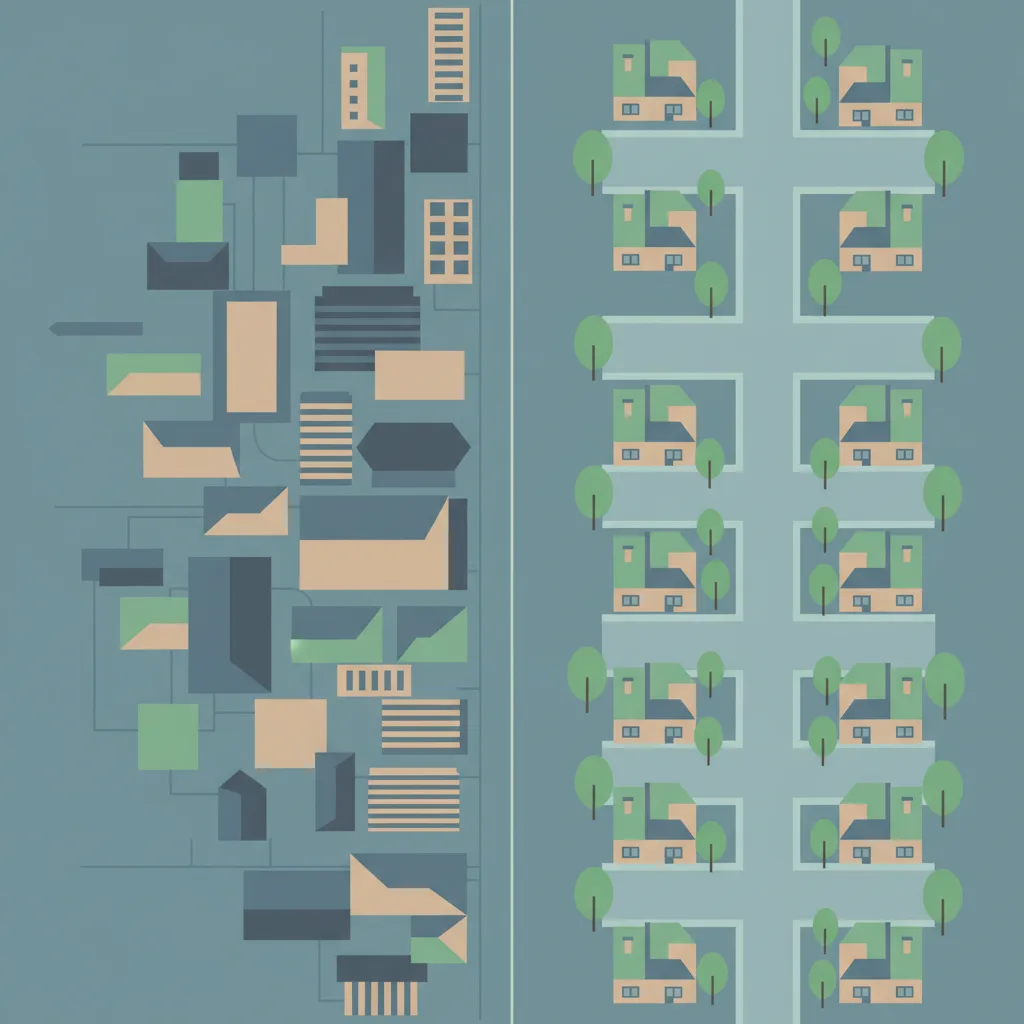
Two doors side by side, one open onto a sunlit path, the other closed with a worn welcome mat.

Penyesalan atas tindakan

Merangkul perubahan

10%

~10% penyesalan dalam Survei Penyesalan Dunia Pink adalah penyesalan moral (kategori terkecil) (proksi)

Orang dewasa secara global, survei terbuka

retrospektif, seumur hidup

Penyesalan atas kelambanan

Bertahan di zona nyaman

33%

~33% dari semua penyesalan adalah penyesalan keberanian (Survei Penyesalan Dunia Pink) (proksi)

Orang dewasa secara global, survei terbuka

retrospektif, seumur hidup

% menyesal dengan pilihan ini

inaction dominates — Tidak bertindak mendominasi — sebagian besar menyesali karena tidak bertindak.

Keputusan terkait

Keputusan yang serupa secara semantik — area yang sama, kompromi yang berbeda.

lifestyle

Pindah ke luar negeri

% menyesal dengan pilihan ini

Ketidakaktifan mendominasi

Penyesalan tidak bertindak 5.7× lebih tinggi

lifestyle

Meninggalkan kampung

% menyesal dengan pilihan ini

Ketidakaktifan mendominasi

Penyesalan tidak bertindak 1.5× lebih tinggi

lifestyle

Meninggalkan agama

% menyesal dengan pilihan ini

Ketidakaktifan mendominasi

Penyesalan tidak bertindak 2.9× lebih tinggi

lifestyle

Kota vs pinggiran

% menyesal dengan pilihan ini

Tindakan mendominasi

Penyesalan bertindak 1.2× lebih tinggi

lifestyle

Prokrastinasi

% menyesal dengan pilihan ini

Ketidakaktifan mendominasi

Penyesalan tidak bertindak 4.7× lebih tinggi

lifestyle

Pengembangan diri vs santai

% menyesal dengan pilihan ini

Ketidakaktifan mendominasi

Penyesalan tidak bertindak 1.5× lebih tinggi

lifestyle

Gap year vs. langsung ke universitas

% menyesal dengan pilihan ini

Ketidakaktifan mendominasi

Penyesalan tidak bertindak 3.1× lebih tinggi

lifestyle

Minta maaf

% menyesal dengan pilihan ini

Ketidakaktifan mendominasi

Penyesalan tidak bertindak 2.0× lebih tinggi

Daniel Pink’s World Regret Survey — 26,000+ open-ended regret narratives from 134 countries — estimates that roughly 33% of all lifetime regrets are boldness regrets: chances not taken, risks left on the table, comfort zones never exited. Pink coded regrets into four categories: foundation (failing to be prudent), boldness (failing to take chances), moral (taking the low road), and connection (neglecting relationships). Inaction regrets outnumber action regrets 2:1 overall, with boldness regrets among the largest categories. By contrast, moral regrets — the primary action-type category, where someone did something bold that violated their values or hurt others — were the smallest at roughly 10%.

The forced-choice laboratory paradigm tells a different story. Richardson and Gilovich (2023) collected regret classifications from 2,600 museum visitors in Chicago and found the long-term split was 51% action to 49% inaction — essentially coin-flip territory. The discrepancy with Pink’s 2:1 ratio likely reflects methodological differences: forced-choice constrains respondents to pick one type regardless of emotional weight, while open-ended coding allows the natural skew toward elaborative inaction narratives to emerge. Neither method is “correct” — they measure different aspects of the regret experience.

The practical implication of Pink’s data is that boldness regrets — the comfort zone left unexited — represent a substantial and persistent category of human regret, while regrets about having been too bold are comparatively rare (mapping primarily to the small moral-regret category). This is consistent with Gilovich and Medvec’s temporal model: actions that go wrong generate concrete feedback amenable to repair, while inactions produce only a counterfactual that grows rosier with time. The caveat is that “boldness regret” encompasses specific missed opportunities (a job offer, a move abroad) more than a general dispositional complaint about being insufficiently adventurous.

Sumber: tindakan

Buku besar klaim

Setiap angka di bawah ini adalah apa yang dilaporkan masing-masing sumber, dengan kutipan kata demi kata yang kami andalkan dan bagaimana kami sampai pada angka kami. Klik tautan mana saja untuk memverifikasi langsung.

1/2 sumber diverifikasi secara independen kata demi kata terhadap sumber terkutip

  1. [1] Psychology Today — The 4 Major Kinds of Regret Terverifikasi
    The 4 Major Kinds of Regret
    Statistik
    In Pink's World Regret Survey, moral regrets — the primary action-type category, where someone had a choice and took the low road — made up the smallest of the four categories, at roughly 10% of all regrets collected
    Kutipan
    “"This category represents those times when you had a choice and took the low road. These regrets made up the smallest of the four categories, representing only about 10 percent of the total regrets Pink and his team collected." ”
    Data sumber dari
    2022-02-24
    Diakses
    2026-07-01
    Verifikasi
    Kutipan diambil ulang secara independen dan dikonfirmasi kata demi kata terhadap sumber terkutip selama audit pendasaran kami.
    Perhitungan
    Pink's World Regret Survey coded open-ended regret narratives into four categories: foundation, boldness, moral, and connection. Moral regrets — the primary action-type category (someone did something that violated their values or hurt others) — were the smallest at roughly 10%. We use 10% as the action-side proxy for "regretting having taken bold action," since bold-action regrets map primarily to the moral-regret category. This is a proxy, not a direct survey of change- embracers who regret embracing change.
  2. [2] Royal Society Open Science — A very public replication of the temporal pattern to people's regrets
    A very public replication of the temporal pattern to people's regrets

    See all 2 Likelier entries citing this source →

    Statistik
    In the long-term condition, 51% of 1,316 respondents named an action and 49% named an inaction as their single biggest regret in a forced-choice paradigm
    Kutipan
    “"For long-term regrets, 51% (n = 675) named an action and 49% (n = 641) named an inaction — a non-significant difference that diverges from the original 84/16 split reported by Gilovich and Medvec (1994)." ”
    Data sumber dari
    2023-06-21
    Diakses
    2026-04-26
    Perhitungan
    Richardson & Gilovich (2023), n = 2,600 total. The forced-choice paradigm found near-parity (51/49) but this format constrains respondents to pick one type regardless of magnitude. Pink's open-ended methodology, which allows for more nuanced categorization, found a stronger inaction skew. We retain this as context but use Pink's domain-specific data as primary.

Sumber: tidak bertindak

Buku besar klaim

Setiap angka di bawah ini adalah apa yang dilaporkan masing-masing sumber, dengan kutipan kata demi kata yang kami andalkan dan bagaimana kami sampai pada angka kami. Klik tautan mana saja untuk memverifikasi langsung.

1/2 sumber diverifikasi secara independen kata demi kata terhadap sumber terkutip

  1. [1] Behavioral Scientist — What Is the Power of Regret? A Conversation with Daniel Pink Terverifikasi
    What Is the Power of Regret? A Conversation with Daniel Pink

    See all 3 Likelier entries citing this source →

    Statistik
    Boldness regrets — 'regrets about not taking the chance,' about choosing to play it safe — are one of Pink's four core regret categories; inaction regrets are, in general, about twice as prevalent as action regrets
    Kutipan
    “"What I found are these four core regrets: foundation, boldness, moral and connection." ... "Those are regrets about not taking the chance. Those are regrets about being at a juncture and choosing to play it safe rather than taking a chance." ... "Inaction regrets are, in general, about twice as prevalent as action regrets." ”
    Data sumber dari
    2022-02-08
    Diakses
    2026-07-01
    Verifikasi
    Kutipan diambil ulang secara independen dan dikonfirmasi kata demi kata terhadap sumber terkutip selama audit pendasaran kami.
    Perhitungan
    Pink identified four core regret categories: foundation, boldness, moral, and connection. Moral regrets were the smallest (~10%). The remaining ~90% distributed across three inaction- dominant categories. Given the 2:1 inaction-to-action ratio and four roughly distributed categories (with moral being smallest), boldness regrets likely represent approximately one-third of the total. We estimate ~33% as the boldness-regret share. This is an approximation — Pink does not publish exact category percentages beyond noting moral is smallest.
  2. [2] Riverhead Books / Daniel Pink — The Power of Regret: How Looking Backward Moves Us Forward
    The Power of Regret: How Looking Backward Moves Us Forward
    Statistik
    26,000+ respondents across 134 countries; boldness regrets centered on education, career, and romance opportunities not pursued
    Kutipan
    “"People's deepest regrets fall into four core categories. Boldness regrets stem from the failure to take full advantage of life's fleeting opportunities — to be braver, bolder, and more adventurous." ”
    Data sumber dari
    2022-02-01
    Diakses
    2026-04-26
    Perhitungan
    Book description and supporting materials for The Power of Regret. Establishes that boldness regrets are a substantial category and thematically map directly to "regretting staying in comfort zone" — missed opportunities for adventure, career moves, romantic pursuits, and personal growth.

Catatan

Tingkat yang ditunjukkan adalah aproksimasi dari Survei Penyesalan Dunia Pink (26.000+ responden, 134 negara), yang menggunakan narasi penyesalan terbuka yang dikodekan ke dalam empat kategori. Pink melaporkan bahwa penyesalan moral (terutama jenis tindakan) adalah kategori terkecil sekitar 10%, dan bahwa non-tindakan mengalahkan tindakan 2:1 secara keseluruhan. Angka ~33% penyesalan keberanian adalah perkiraan kami berdasarkan struktur empat kategori. Metodologi terbuka menghasilkan hasil berbeda daripada paradigma pilihan paksa: Richardson & Gilovich (2023, n=2.600) menemukan pembagian tindakan/non-tindakan 51/49 menggunakan pilihan paksa, sementara pengkodean terbuka Pink menemukan dominasi non-tindakan 2:1. Pemetaan dari "penyesalan keberanian" ke "menyesali tinggal di zona nyaman" kuat tetapi tidak sempurna.

Data mentah: /api/decisions.json

Baru-baru ini dilihat di perangkat ini