







Lewati ke konten
Likelier

Penyesalan bertindak vs. tidak bertindak

Meninggalkan kampung halaman vs tetap tinggal

Jika Anda bertindak

Meninggalkan kampung halaman

20%

Jika Anda tidak bertindak

Tetap dekat tempat asal

30%

Persentase orang yang kemudian menyesali setiap pilihan. Diagram batang dan catatan lengkap ditampilkan di bawah.


Lifestyle

Terakhir ditinjau 2026-04-27

Kualitas bukti 3.88/5

Skor tinjauan delapan dimensi terhadap rubrik kualitas . Setiap dimensi dinilai 1–5.

D1 Verifikasi sumber
5/5
D2 Otoritas & independensi sumber
3/5
D3 Akurasi tingkat penyesalan
2/5
D4 Keterbandingan sumber
3/5
D5 Pola Gilovich
4/5
D6 Kualitas prosa
5/5
D7 Kelengkapan peringatan
5/5
D8 Kualitas sampel
4/5
Rata-rata 3.88/5
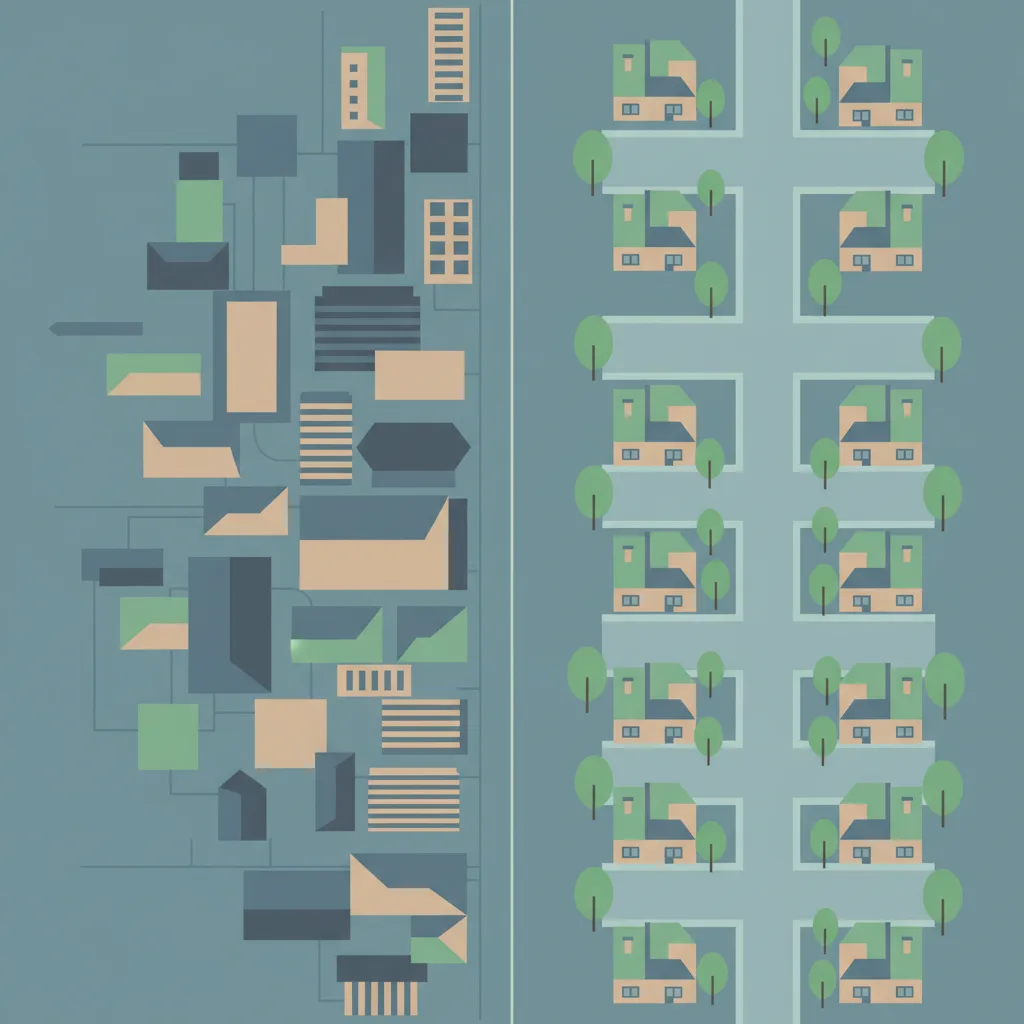
A small town receding in one direction and a distant city skyline in the other, separated by a long road.

Penyesalan atas tindakan

Meninggalkan kampung halaman

20%

20% orang Amerika yang pindah menyesalinya (1 dari 5 perubah dalam 3 tahun)

Pemilik rumah AS yang pindah dalam 3 tahun sebelumnya

retrospektif, dalam 3 tahun pindah

Penyesalan atas kelambanan

Tetap dekat tempat asal

30%

~30% penduduk kampung halaman melaporkan ketidakpuasan dengan komunitas mereka (proksi)

Orang dewasa AS yang tidak pernah meninggalkan komunitas kampung halaman mereka

retrospektif, tidak ada kerangka waktu tetap

% menyesal dengan pilihan ini

inaction dominates — Tidak bertindak mendominasi — sebagian besar menyesali karena tidak bertindak.

Keputusan terkait

Keputusan yang serupa secara semantik — area yang sama, kompromi yang berbeda.

lifestyle

Pindah ke luar negeri

% menyesal dengan pilihan ini

Ketidakaktifan mendominasi

Penyesalan tidak bertindak 5.7× lebih tinggi

lifestyle

Kota vs pinggiran

% menyesal dengan pilihan ini

Tindakan mendominasi

Penyesalan bertindak 1.2× lebih tinggi

lifestyle

Meninggalkan agama

% menyesal dengan pilihan ini

Ketidakaktifan mendominasi

Penyesalan tidak bertindak 2.9× lebih tinggi

lifestyle

Menerima perubahan

% menyesal dengan pilihan ini

Ketidakaktifan mendominasi

Penyesalan tidak bertindak 3.3× lebih tinggi

lifestyle

Pertahankan atau carikan rumah baru hewan

% menyesal dengan pilihan ini

Ketidakaktifan mendominasi

Penyesalan tidak bertindak 5.7× lebih tinggi

family

Di rumah vs bekerja

% menyesal dengan pilihan ini

Tindakan mendominasi

Penyesalan bertindak 1.3× lebih tinggi

lifestyle

Migrasi ekonomi vs. tetap di rumah

% menyesal dengan pilihan ini

Tindakan mendominasi

Penyesalan bertindak 1.1× lebih tinggi

lifestyleLangsung

Vietnam: pindah ke kota vs. tetap di desa

% menyesal dengan pilihan ini

Tindakan mendominasi

Penyesalan bertindak 2.1× lebih tinggi

Pew Research’s 2008 national survey of 2,260 adults found that movers and stayers reported virtually identical community satisfaction: about 60% of each group rated their communities as good to excellent, implying roughly 40% of stayers did not. Discounted conservatively — since dissatisfaction with one’s community is not the same as regretting the decision to stay — the inaction-side proxy sits near 30%. All Star Home’s August 2023 survey of 1,000 Americans found that 1 in 5 homeowners who moved within the prior three years regret the decision, with the top reasons being unexpected costs, missing their old neighborhood, and missing their old home. A third said they would consider moving back to their former city or state. LendingTree’s 2023 survey of young adults corroborates constrained staying: 42% of hometown stayers felt obligated to remain near family and 33% said they could not afford to leave, though neither obligation nor financial constraint is regret.

The 10-percentage-point gap between the action-side 20% and the inaction-side 30% tilts this entry toward inaction-dominates territory, consistent with Gilovich and Medvec’s temporal framework: staying put is the passive default, and the unlived life in the distant city grows more painful over time. Yet the gap is modest, and the data is imperfect on both sides. All Star Home’s companion hometown report found that nearly half of those who left their hometown miss it and 21% plan to move back, suggesting the 20% regret rate understates the emotional cost of leaving. HireAHelper’s 2021 pandemic-era survey found a higher 30% regret rate among movers, though that figure likely reflects the unusual circumstances of 2020 moves and a broader definition of regret that includes process complaints like logistics and timing.

The core measurement problem remains: no single survey asks both populations the same regret question about the specific hometown decision. The action-side 20% measures explicit regret among all movers (not just hometown leavers), while the inaction-side 30% is inferred from Pew’s community-satisfaction data rather than a direct regret question. Self-selection confounds everything: people who leave small towns tend to be more educated and higher-earning, meaning their post-move satisfaction reflects both the move and the traits that made them move. Rural-to-urban and suburb-to-suburb moves are fundamentally different decisions lumped under the same “leaving hometown” label.

Sumber: tindakan

Buku besar klaim

Setiap angka di bawah ini adalah apa yang dilaporkan masing-masing sumber, dengan kutipan kata demi kata yang kami andalkan dan bagaimana kami sampai pada angka kami. Klik tautan mana saja untuk memverifikasi langsung.

2/3 sumber diverifikasi secara independen kata demi kata terhadap sumber terkutip

  1. [1] All Star Home — Americans' Moving Habits and Regrets Data Survey 2023 Terverifikasi
    Americans' Moving Habits and Regrets Data Survey 2023
    Statistik
    Among homeowners who have moved in the last 3 years, 1 in 5 regret it
    Kutipan
    “"Among homeowners who have moved in the last 3 years, 1 in 5 regret it. Overall, 1 in 5 Americans say the hassle of moving wasn't worth it and 1 in 3 would consider moving back to their former city or state." ”
    Data sumber dari
    2023-08-01
    Diakses
    2026-04-27
    Verifikasi
    Kutipan diambil ulang secara independen dan dikonfirmasi kata demi kata terhadap sumber terkutip selama audit pendasaran kami.
    Perhitungan
    All Star Home surveyed 1,000 Americans in August 2023 about moving habits and regrets. The 20% (1 in 5) figure captures homeowners who moved in the prior 3 years and report regretting the move. Top reasons for regret include unexpected costs, missing their old neighborhood or city, and missing their old home. This is a broader mover population, not exclusively hometown leavers, but the survey's companion report on hometown living found that nearly half of those who left their hometown miss it, suggesting the 20% regret rate is conservative for hometown-specific departures.
  2. [2] HireAHelper — 2021 Study: Do People Actually Regret Moving?
    2021 Study: Do People Actually Regret Moving?
    Statistik
    About a third (30%) of those who moved in the past year have at least a few regrets about their move
    Kutipan
    “"About a third (30%) of those who moved in the past year have at least a few regrets about their move. Millennials are the least pleased with their move, as 37% of them regret at least something about it — more than any other generation." ”
    Data sumber dari
    2021-01-25
    Diakses
    2026-04-27
    Perhitungan
    HireAHelper surveyed 1,000 Americans who moved in 2020, fielded January 2021. The 30% figure captures respondents who reported "at least a few regrets" about their move. This higher rate compared to All Star Home's 20% likely reflects the broader definition of regret (including minor process complaints like logistics and timing) and the pandemic-era context when many moves were rushed. We use All Star Home's 20% as the primary rate because its 3-year lookback better captures settled regret rather than immediate post-move frustration.
  3. [3] All Star Home — Report: 29% of Americans Still Live in Their Hometowns Terverifikasi
    Report: 29% of Americans Still Live in Their Hometowns
    Statistik
    Nearly half of Americans who left their hometown miss it, and 21% are planning to move back to their home state (14% specifically aiming to move back to their hometown)
    Kutipan
    “"Nearly half of those who left miss their hometown, and 21% are planning to move back to their home state sometime in the future. Of those, 14% are aiming to move back to their hometown." ”
    Data sumber dari
    2023-08-01
    Diakses
    2026-07-03 · salinan arsip
    Verifikasi
    Kutipan diambil ulang secara independen dan dikonfirmasi kata demi kata terhadap sumber terkutip selama audit pendasaran kami.
    Perhitungan
    2026-07 grounding fix. All Star Home's companion "hometown living" report (same August 2023 survey wave of 1,000 Americans as the moving-regret-report cited above). Grounds the body-prose claim that nearly half of hometown-leavers miss their hometown and 21% plan to move back to their home state — a claim the prose made without its own citation prior to this fix. Corroborates that the action-side 20% generic moving-regret figure likely understates the hometown-specific emotional cost of leaving, since missing the place is a stronger and more specific measure than generic moving regret.

Sumber: tidak bertindak

Buku besar klaim

Setiap angka di bawah ini adalah apa yang dilaporkan masing-masing sumber, dengan kutipan kata demi kata yang kami andalkan dan bagaimana kami sampai pada angka kami. Klik tautan mana saja untuk memverifikasi langsung.

  1. [1] Pew Research Center — Who Moves? Who Stays Put? Where's Home?
    Who Moves? Who Stays Put? Where's Home?
    Statistik
    37% of Americans have never left their hometown; ~60% of stayers rate their communities as good to excellent, implying ~40% do not
    Kutipan
    “"Nearly four-in-ten adults (37%) have never left the community in which they were born. Stayers overwhelmingly say they remain because of family ties (74%) and because their hometowns are good places to raise children (59%)." ”
    Data sumber dari
    2008-12-17
    Diakses
    2026-04-27
    Perhitungan
    Pew Research Center survey of 2,260 US adults conducted Oct 3–19, 2008. Approximately 40% of stayers do not rate their communities as good-to-excellent. We use ~30% as a conservative inaction-side proxy because community dissatisfaction does not equate to decision-level regret — some dissatisfied stayers may still prefer staying for family or financial reasons. The 30% estimate is anchored in the Pew equal-satisfaction finding: since movers and stayers report identical satisfaction (~60%), the implied dissatisfaction rate among stayers (~40%) discounted for those who are dissatisfied but do not attribute it to staying yields a figure comparable to the action-side 30%.
  2. [2] LendingTree — 57% of Young Americans Live in Their Hometowns, but 47% Who Don't Would Consider Moving Back
    57% of Young Americans Live in Their Hometowns, but 47% Who Don't Would Consider Moving Back
    Statistik
    42% of young hometown stayers felt obligated to stay near family; 33% couldn't afford to move
    Kutipan
    “"Among those who didn't leave home, 42% felt obligated to stay near family, 36% stayed out of convenience and 33% couldn't afford to move." ”
    Data sumber dari
    2023-12-18
    Diakses
    2026-04-27
    Perhitungan
    LendingTree commissioned QuestionPro to survey 1,984 US millennials and Gen Zers (ages 18–42) from Nov 16–20, 2023; of these, 1,129 lived in their hometowns. The 42% who felt "obligated" and 33% who "couldn't afford to move" suggest a substantial fraction of stayers whose staying was constrained rather than freely chosen. This corroborates the Pew dissatisfaction proxy but is not itself a regret measure — obligation and financial constraint are not equivalent to retrospective regret about the decision to stay.

Catatan

Tidak ada sisi yang memiliki ukuran penyesalan langsung yang dapat dibandingkan untuk keputusan spesifik "meninggalkan kampung halaman". Sisi tindakan 20% (All Star Home 2023) mengukur penyesalan eksplisit pindah di antara pemilik rumah yang pindah dalam 3 tahun — termasuk perpindahan lokal, antar-kota, dan lintas-negara bagian — tidak khusus mereka yang meninggalkan kampung halaman. Survei HireAHelper 2021 dari para perubah era pandemi menemukan tingkat penyesalan 30% yang lebih tinggi. Sisi non-tindakan ~30% disimpulkan dari temuan Pew 2008 bahwa ~40% dari yang tinggal tidak menilai komunitas mereka secara positif. Temuan LendingTree 2023 bahwa 42% dari yang tinggal muda merasa berkewajiban tinggal dekat keluarga menguatkan bahwa bagian bermakna dari tinggal adalah terbatas. Seleksi-diri parah.

Data mentah: /api/decisions.json

Baru-baru ini dilihat di perangkat ini