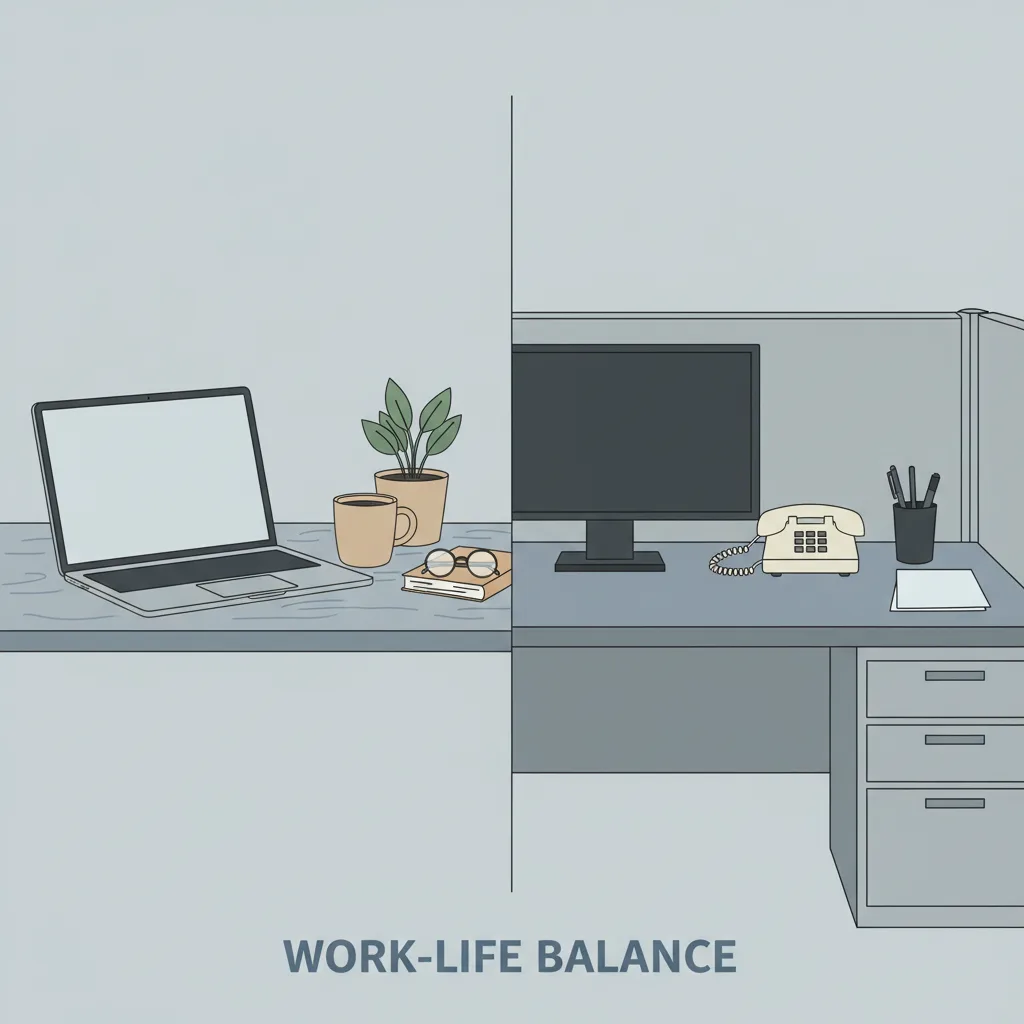
Mengejar karier agresif vs mengutamakan keseimbangan hidup-kerja
Jika Anda bertindak
Mengejar karier secara agresif
59%
Jika Anda tidak bertindak
Mengutamakan keseimbangan kerja-hidup
44%
Persentase orang yang kemudian menyesali setiap pilihan. Diagram batang dan catatan lengkap ditampilkan di bawah.
Career
Terakhir ditinjau 2026-04-26
Kualitas bukti 4.13/5
Skor tinjauan delapan dimensi terhadap
rubrik kualitas
. Setiap dimensi dinilai 1–5.
D1 Verifikasi sumber
4/5
D2 Otoritas & independensi sumber
4/5
D3 Akurasi tingkat penyesalan
3/5
D4 Keterbandingan sumber
3/5
D5 Pola Gilovich
5/5
D6 Kualitas prosa
5/5
D7 Kelengkapan peringatan
5/5
D8 Kualitas sampel
4/5
Rata-rata4.13/5
Data proksi — tidak ada survei penyesalan langsung untuk keputusan ini. Tingkat diturunkan dari skor kepuasan dan data hambatan akses daripada pertanyaan yang langsung menanyakan tentang penyesalan. Lihat peringatan di bawah.
Penyesalan atas tindakan
Mengejar karier secara agresif
59%
59% menyesali tidak memprioritaskan keseimbangan kerja-kehidupan
Pekerja di AS, Inggris, Prancis, Jerman
retrospektif, tanpa kerangka waktu tetap
Penyesalan atas kelambanan
Mengutamakan keseimbangan kerja-hidup
44%
~33% menyesali tidak mengambil lebih banyak risiko karier (proxy)
Pekerja di AS, Inggris, Prancis, Jerman
retrospektif, tanpa kerangka waktu tetap
% menyesal dengan pilihan ini
Mengejar karier secara agresifMengutamakan keseimbangan kerja-hidup
59%44%
action dominates — Bertindak mendominasi — sebagian besar menyesali karena bertindak.
Keputusan terkait
Keputusan yang serupa secara semantik — area yang sama, kompromi yang berbeda.
59% of workers regret not prioritizing work-life balance, according to
Resume Now’s International Career Regrets survey of 1,000 workers across
four countries. On the other side, 44% — “more than 4 in 10” — regret
not trying to make a full career change, the closest career-underinvestment
figure the same survey reports. The resulting roughly 1.3:1 ratio favors
action-regret — an unusual outcome in the regret literature, where Gilovich
and Medvec’s temporal pattern predicts that inaction regrets dominate over
the long term. Career overinvestment appears to be one of the rare domains
where the pattern inverts, likely because the opportunity costs are uniquely
irreversible: you cannot retroactively attend your child’s first steps.
Deloitte’s workplace burnout survey quantifies the mechanism. Seventy-seven
percent of professionals report experiencing burnout at their current job,
and 83% say it has negatively impacted their personal relationships. The
APA’s 2024 Work in America survey corroborates: 45% of workers report
working more hours than they want to, and 67% report experiencing at
least one burnout-related outcome, such as low energy or lack of
motivation, in the past month. The Harvard Study of Adult Development —
an 87-year longitudinal study — found that relationship satisfaction at
age 50 predicted physical health at 80 more reliably than cholesterol
levels. These converging datasets, from different methodologies and
timeframes, all point the same direction.
The main caveat is measurement asymmetry. The 59% and 44% figures come from
different survey questions, not from a clean forced-choice between career
and balance. A respondent could plausibly endorse both regrets
simultaneously. The 44% inaction figure (“not making a full career change”)
is a proxy for career-underinvestment regret, not a direct measure of
regretting a balance-first choice. The Harvard Grant Study tracked an elite,
all-male cohort that entered Harvard in the late 1930s — a population with
more career optionality than most. The Deloitte burnout figure (77%)
measures stress prevalence, not regret. The directional finding
(career-overinvestment regret exceeds career-underinvestment regret) is
robust across all sources; the precise 1.3:1 ratio is an artifact of
combining non-identical survey items and should be treated as indicative,
not calibrated.
Sumber: tindakan
Buku besar klaim
Setiap angka di bawah ini adalah apa yang dilaporkan masing-masing sumber, dengan kutipan kata demi kata yang kami andalkan dan bagaimana kami sampai pada angka kami. Klik tautan mana saja untuk memverifikasi langsung.
2/3 sumber diverifikasi secara independen kata demi kata terhadap sumber terkutip
[1]Resume Now — The Road Not Taken: Greatest Career Regrets Revealed
Terverifikasi
↗ 7 other entries
Studi primer
59% of workers regret not prioritizing work-life balance in their career
Kutipan
“"Top career regrets include not asking for a pay increase (60%), not prioritizing work-life balance in one's career (59%), staying at a job too long (58%), and not negotiating salary when taking a job (58%). Two-thirds of Gen Z and Millennial workers regret not prioritizing work-life balance."
”
Data sumber dari
2024-01-10
Diakses
2026-04-26
Verifikasi
Kutipan diambil ulang secara independen dan dikonfirmasi kata demi kata terhadap sumber terkutip selama audit pendasaran kami.
Perhitungan
Resume Now International Career Regrets survey of 1,000 workers in US, UK, France, and Germany (January 2024). The 59% figure captures respondents who identified not prioritizing work-life balance as a career regret — effectively measuring action-side regret among those who pursued career at the expense of balance.
[2]Deloitte — Workplace Burnout Survey
Studi primer
77% of workers have experienced burnout at their current job; 91% say unmanageable stress negatively impacts work quality
Kutipan
“"77% of respondents have experienced employee burnout at their current job, with more than half citing more than one occurrence. 91% of respondents say that having an unmanageable amount of stress or frustration negatively impacts the quality of their work. 83% say burnout from work negatively impacts their personal relationships."
”
Data sumber dari
2024-01-15
Diakses
2026-04-26
Perhitungan
Deloitte surveyed 1,000 full-time US professionals. The 77% burnout prevalence and 83% relationship-impact figure provide quantitative support for the career-overinvestment regret mechanism. While burnout is not identical to regret, the 83% who report damaged personal relationships directly parallels the "worked too hard" regret pattern. This replaces the Bronnie Ware qualitative source with quantitative survey data.
[3]American Psychological Association (APA) / The Harris Poll — 2024 Work in America Survey: Psychological Safety in the Changing Workplace
Terverifikasi
Studi primer
45% of employed US adults say they have to work more hours per week than they want to; 67% report experiencing at least one outcome often associated with workplace burnout in the past month
Kutipan
“"More than two in five (45%) employed adults said they have to work more hours per week than they want to. … A majority (67%) of workers reported experiencing, in the last month, at least one outcome often associated with workplace burnout, such as lack of interest, motivation, or low energy, feeling lonely or isolated, and a lack of effort at work."
”
Data sumber dari
2024-06-14
Diakses
2026-07-03
Verifikasi
Kutipan diambil ulang secara independen dan dikonfirmasi kata demi kata terhadap sumber terkutip selama audit pendasaran kami.
Perhitungan
APA's Work in America Survey, conducted online by The Harris Poll on behalf of APA among 2,027 employed US adults, fielded March 25 - April 3, 2024, released June 14, 2024. Provides further corroborating quantitative support for the career-overinvestment regret mechanism alongside the Deloitte burnout figures: nearly half of workers are already working more than they want to, and two-thirds report at least one burnout symptom in the past month.
Sumber: tidak bertindak
Buku besar klaim
Setiap angka di bawah ini adalah apa yang dilaporkan masing-masing sumber, dengan kutipan kata demi kata yang kami andalkan dan bagaimana kami sampai pada angka kami. Klik tautan mana saja untuk memverifikasi langsung.
[1]Resume Now — The Road Not Taken: Greatest Career Regrets Revealed↗ 7 other entries
Studi primer
44% regret not making a full career change (more than 4 in 10)
Kutipan
“"Not making a full career change – 44% … More than 4 in 10 regret not trying to make a career change."
”
Data sumber dari
2024-01-10
Diakses
2026-07-10
Perhitungan
Same Resume Now survey (n=1,000). The cited page lists "Not making a full career change – 44%" and narrates it as "More than 4 in 10 regret not trying to make a career change." Used here as a proxy for inaction-side (career-underinvestment) regret: respondents who prioritized stability or balance and later regretted not making a bolder career move. Note this is a distinct multi-select item from the action-side "work-life balance" question, not a forced-choice counterpart (see caveats). The page's own "one-third (34%)" figure refers to those with NO career regrets, so it is not usable as an inaction-regret rate; the prior "over one-third wished they had taken more risks" and "nearly 98 percent" excerpts did not appear on the cited page and were removed.
[2]Harvard Gazette — Over nearly 80 years, Harvard study has been showing how to live a healthy and happy life
Sumber referensi
Relationship quality at age 50 predicted health at 80 better than cholesterol levels
Kutipan
“"The surprising finding is that our relationships and how happy we are in our relationships has a powerful influence on our health. Close relationships, more than money or fame, are what keep people happy throughout their lives. Those ties protect people from life's discontents, help to delay mental and physical decline, and are better predictors of long and happy lives than social class, IQ, or even genes."
”
Data sumber dari
2017-04-11
Diakses
2026-04-26
Perhitungan
Harvard Study of Adult Development (Grant Study), an 87-year longitudinal study of 268 Harvard men begun in 1938, now directed by Robert Waldinger. Qualitative context only — this source does not ground either regret rate. The finding that relationships outperform career success as a predictor of late-life satisfaction and health lends directional support to the interpretation that those who chose balance and invested in relationships report higher life satisfaction in old age.
Catatan
Tingkat tindakan dan ketidakaktifan berasal dari survei Resume Now yang sama tetapi dari pertanyaan multi-pilih yang berbeda — "tidak memprioritaskan keseimbangan kerja-kehidupan" (59%) vs "tidak mengambil lebih banyak risiko karier" (~33%). Ini bukan biner bersih: responden tunggal dapat mendukung kedua penyesalan secara bersamaan, dan banyak yang kemungkinan demikian. Survei tidak menyajikan pilihan paksa antara mengejar karier dan keseimbangan. Angka penyesalan-tindakan 59% kemungkinan mencakup orang di semua tingkat intensitas karier, bukan hanya mereka yang agresif mengejar kemajuan. Angka ~33% dilaporkan sebagai "lebih dari satu pertiga" — persentase tepat tidak dipublikasikan. Data burnout Deloitte mengukur mekanisme (prevalensi burnout 77%, 83% melaporkan hubungan rusak) tetapi mengukur hasil stres tempat kerja daripada penyesalan retrospektif per se. Harvard Grant Study mengikuti kohort elit semua-pria yang dimulai tahun 1938 — itu tidak menggeneralisasi secara bersih ke populasi gender-campuran, kelas-campuran kontemporer. Temuan dominasi-tindakan di sini tidak biasa dalam kerangka Gilovich, di mana ketidakaktifan biasanya mendominasi jangka panjang; namun, penyesalan "bekerja terlalu keras" mungkin mewakili domain langka di mana penyesalan tindakan bertahan hingga usia tua karena biaya kesempatan (hubungan yang hilang, tonggak masa kanak-kanak yang hilang) tidak dapat dibalik.