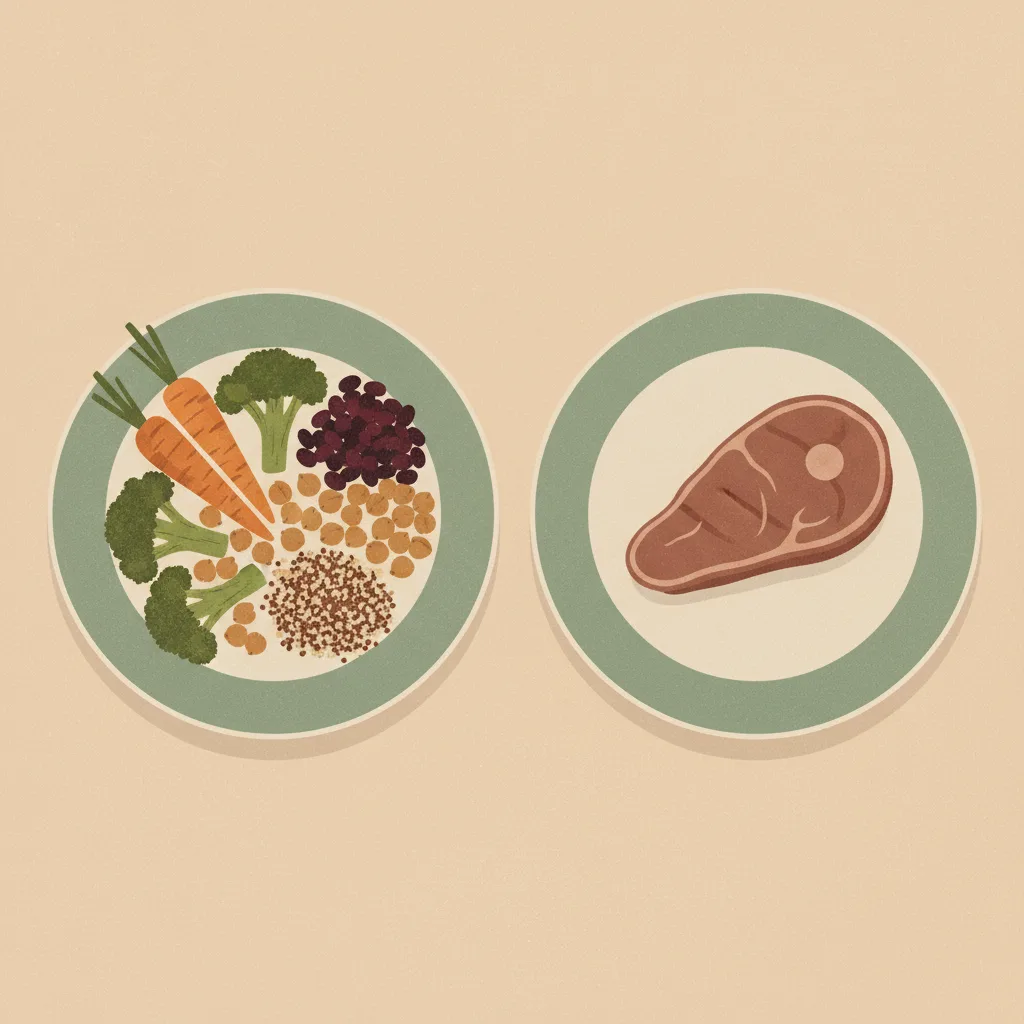
Ngemil di antara waktu makan (pola merumput modern) vs makan hanya pada 2–3 waktu makan tertentu tanpa camilan
Jika Anda bertindak
Ngemil di antara waktu makan
15%
Jika Anda tidak bertindak
Makan hanya pada 2–3 waktu makan tertentu (tanpa camilan)
27%
Persentase orang yang kemudian menyesali setiap pilihan. Diagram batang dan catatan lengkap ditampilkan di bawah.
Lifestyle
Terakhir ditinjau 2026-05-30
Kualitas bukti 3.75/5
Skor tinjauan delapan dimensi terhadap
rubrik kualitas
. Setiap dimensi dinilai 1–5.
D1 Verifikasi sumber
4/5
D2 Otoritas & independensi sumber
5/5
D3 Akurasi tingkat penyesalan
2/5
D4 Keterbandingan sumber
4/5
D5 Pola Gilovich
3/5
D6 Kualitas prosa
4/5
D7 Kelengkapan peringatan
3/5
D8 Kualitas sampel
5/5
Rata-rata3.75/5
Data proksi — tidak ada survei penyesalan langsung untuk keputusan ini. Tingkat diturunkan dari skor kepuasan dan data hambatan akses daripada pertanyaan yang langsung menanyakan tentang penyesalan. Lihat peringatan di bawah.
Penyesalan atas tindakan
Ngemil di antara waktu makan
15%
~15% orang dewasa AS menetapkan resolusi Tahun Baru yang menargetkan pengurangan camilan/makanan manis (bagian spesifik-camilan dari angka 25% resolusi-makanan-apa-pun Purdue — niat prospektif yang dinyatakan, bukan penyesalan retrospektif)
Orang dewasa AS, representatif secara nasional
potongan-melintang, dilakukan Januari 2024
Penyesalan atas kelambanan
Makan hanya pada 2–3 waktu makan tertentu (tanpa camilan)
27%
27% orang dewasa AS secara aktif berupaya menurunkan berat badan (proksi niat-manajemen-berat, bukan penyesalan langsung tentang pola makan-saja)
Orang dewasa AS, representatif secara nasional
potongan-melintang, dilakukan 6–20 November 2024
% menyesal dengan pilihan ini
Ngemil di antara waktu makanMakan hanya pada 2–3 waktu makan tertentu (tanpa camilan)
15%27%
inaction dominates — Tidak bertindak mendominasi — sebagian besar menyesali karena tidak bertindak.
Keputusan terkait
Keputusan yang serupa secara semantik — area yang sama, kompromi yang berbeda.
Twenty-seven percent of US adults are actively working to lose
weight, per Gallup’s November 2024 national poll of 1,001 adults
— the closest available proxy for dissatisfaction with eating patterns
that might motivate adopting a meals-only structure. That figure is
the inaction-side proxy shown above. It falls short of a direct regret
measure: the meals-only pattern is the minority position in the US,
so the question “do you regret not snacking?” is structurally rare,
and most adults who restrict to defined meals do so deliberately as
a weight-management or blood-sugar strategy rather than as a
regret-driven reversal of a prior snacking habit.
On the other side, 25% of US consumers set a food or nutrition-
related New Year’s resolution in 2024, per Purdue’s Consumer Food
Insights survey of 1,200 US adults — up six percentage points from
2023, with “the majority” planning to limit salty snacks, sugary
foods, regular soft drinks and alcohol. That 25% spans many dietary
goals, not snacking, so the action-side proxy is the snacking-specific
slice: roughly 13-18% of all US adults if “the majority” means about
half to two-thirds of those with resolutions, which we set at ~15%.
Even that ~15% is prospective intent to cut snacks, not retrospective
regret about a snacking habit. The structural
backdrop: USDA NHANES 2017-March 2020 data show 95% of US adults
snack on a given day, 78% snack multiple times, and among consumers
snacks contribute 24% of daily energy and 43% of added sugars. The
two figures come from different instruments (Purdue resolution
intent vs Gallup active weight-management) and measure different
constructs (prospective resolution vs current effort), so any
cross-side comparison is approximate.
The meal-frequency question is genuinely contested in the nutrition
literature. Bellisle’s 2014 Physiology & Behavior review concludes
that snacking neither clearly causes obesity nor clearly prevents
it, that eating frequency does not independently predict body weight
when total energy intake is controlled, and that the same eating
pattern can have different effects depending on food quality and
context. That weakens the case for either side carrying strong
regret: most US adults snack, most US adults who snack are not
measurably worse off for it when energy intake is matched, and the
few who reverse to a meals-only pattern do not have unambiguous
evidence that their previous behavior caused them measurable harm.
The ~12-point gap between the ~15% snacking-resolution share and the
27% active weight-management share is a difference between two weak,
non-comparable proxy instruments, not a measured difference in
regret. Readers should treat both figures as proxies for different
constructs and not read the delta as a precise regret comparison.
Sumber: tindakan
Buku besar klaim
Setiap angka di bawah ini adalah apa yang dilaporkan masing-masing sumber, dengan kutipan kata demi kata yang kami andalkan dan bagaimana kami sampai pada angka kami. Klik tautan mana saja untuk memverifikasi langsung.
1/3 sumber diverifikasi secara independen kata demi kata terhadap sumber terkutip
[1]News-Medical / coverage of Purdue Consumer Food Insights Jan 2024 — Increasing New Year's resolutions for healthier eating, Purdue report finds
Sumber referensi
25% of US consumers had a food/nutrition-related New Year's resolution in 2024 (up 6 pp from 2023); the majority plan to increase fruits, vegetables and water while limiting salty snacks, sugary foods, regular soft drinks and alcohol; 46% anticipate cravings as an obstacle
Kutipan
“"25% of consumers responded 'yes' when asked if they had any food or nutrition-related New Year's resolutions, up 6 percentage points from the response to the same question last year... the survey-based report out of Purdue University's Center for Food Demand Analysis and Sustainability...included 1,200 consumers across the U.S."
”
Data sumber dari
2024-02-15
Diakses
2026-05-30
Perhitungan
Purdue Center for Food Demand Analysis and Sustainability, Consumer Food Insights, Volume 3 Issue 1, January 2024, N=1,200 US consumers. The 25% headline is the share of US consumers with ANY food/nutrition-related New Year's resolution, covering many dietary goals (more fruit/veg/water, less salty snacks, sugary foods, soft drinks, alcohol) — it is NOT a snacking-specific figure and NOT a regret measure. Because the report says \"the majority\" of those resolutions target the salty-snacks/sugary-foods/soft-drinks/alcohol basket (not snacking alone), the snacking-targeted share is roughly 0.25 x ~50-70% = 13-18% of all US adults. We therefore set the action-side proxy to the midpoint, ~15% (regret_rate 0.15), and label it explicitly as prospective resolution intent to cut snacks/sugary foods, not retrospective regret about snacking. The earlier 25% figure fused the all-resolutions headline with a snacking claim and overstated the snacking-targeted signal; this has been corrected.
Independensi
Independent academic survey from Purdue's Center for Food Demand Analysis and Sustainability with publicly disclosed methodology; no commercial sponsorship of the consumer insights series.
[2]USDA Agricultural Research Service / Sebastian, Hoy, Goldman, Moshfegh — Snack Consumption by U.S. Adults: What We Eat in America, NHANES 2017 - March 2020
Laporan pemerintah
95% of US adults aged 20+ consume one or more foods or beverages as a snack on the intake day; 78% consume two or more snacks; snacks provide on average 24% of daily energy and 43% of added sugars among consumers
Kutipan
“"Among adults aged 20 years and older, 95% consume one or more foods and/or beverages at a snack on the intake day... Currently, consuming multiple snacks is the norm, with 78% consuming two or more on any given day. Among consumers, snacks provide on average 24% of daily intake of energy and 43% of added sugars."
”
Data sumber dari
2024-04-01
Diakses
2026-05-30
Perhitungan
USDA Dietary Data Brief No. 53, based on NHANES 2017-March 2020 nationally representative dietary recall data. Establishes the prevalence baseline: 95% of US adults snack at least once on a given day; 78% snack multiple times; snacks contribute 24% of daily energy and 43% of added sugars on average. Used here on the action side as the govt_report context: snacking is the normal modern US eating pattern, not a deviation. This is NOT the regret-rate figure; that is from Purdue Jan 2024 (see above). The NHANES data establishes that the question \"do you regret snacking?\" applies to nearly all US adults if at all, and that the dietary stakes (43% of added sugars from snacks among consumers) are concrete.
Independensi
US federal government data (NHANES via USDA ARS) with publicly disclosed methodology; no commercial sponsorship of the survey or analysis. Independent of the Purdue insights series.
[3]Journal of Nutrition / Piernas & Popkin — Snacking Increased among U.S. Adults between 1977 and 2006
Terverifikasi
Telaah sejawat
US adult snacking prevalence increased from 71% to 97% between 1977-78 and 2003-06; contribution of snacks to total energy intake increased from 18% to 24%
Kutipan
“"snacking prevalence increased significantly from 71 to 97% in 2003-2006... the percentage of snacking on both d 1 and d 2 increased from 42 to 78%... the contribution of snacks to total energy intake increased from 18 to 24%."
”
Data sumber dari
2010-02-01
Diakses
2026-05-30
Verifikasi
Kutipan diambil ulang secara independen dan dikonfirmasi kata demi kata terhadap sumber terkutip selama audit pendasaran kami.
Perhitungan
Piernas & Popkin (J Nutr 2010) established the long-run shift: US adult snacking went from a minority behavior (71% on any given day in 1977-78) to near-universal (97% by 2003-06), with the share of daily energy from snacks rising from 18% to 24%. Used on the action side as the peer-reviewed historical baseline for the prevalence claim above. This is NOT the action-side regret-rate figure; that is the snacking-specific share (~15%) derived from Purdue's January 2024 resolution survey (see above). Snacking-related regret has not been directly surveyed in the US, so the action side relies on a prospective resolution-intent proxy, not a retrospective regret measure.
Independensi
Independent academic analysis of CDC NHANES data; methodology publicly disclosed. No commercial sponsorship of the analysis.
Sumber: tidak bertindak
Buku besar klaim
Setiap angka di bawah ini adalah apa yang dilaporkan masing-masing sumber, dengan kutipan kata demi kata yang kami andalkan dan bagaimana kami sampai pada angka kami. Klik tautan mana saja untuk memverifikasi langsung.
2/2 sumber diverifikasi secara independen kata demi kata terhadap sumber terkutip
[1]Gallup News — 43% of Americans Say They Are Overweight; 55% Want to Slim Down
Terverifikasi
↗ 1 other entry
Sumber referensi
27% of US adults are actively working to lose weight; 55% want to lose weight; 43% view themselves as overweight
Kutipan
“"43%, view themselves as overweight... 55%, say they want to lose weight... only 27% report they are actively working toward that goal."
”
Data sumber dari
2024-12-10
Diakses
2026-05-30
Verifikasi
Kutipan diambil ulang secara independen dan dikonfirmasi kata demi kata terhadap sumber terkutip selama audit pendasaran kami.
Perhitungan
Gallup national poll, N=1,001 US adults, fielded November 6-20, 2024, margin of error ±4 percentage points. Used here as the inaction-side proxy: 27% of US adults are actively pursuing weight management, a state that implies current dissatisfaction with some aspect of current eating behavior including the absence of structural snacking discipline. This is NOT a direct regret measure about the meals-only pattern; in fact, the meals-only pattern is the minority position (95% of US adults snack daily per NHANES), so the question \"do you regret not snacking?\" is structurally rare. The 27% captures the directional signal: a substantial minority of US adults are actively dissatisfied enough with their current diet to do something about it, and \"cut the snacks\" is one of the most common dietary-change targets in popular guidance.
Independensi
Independent Gallup national poll using random-digit-dial methodology; no shared sample with USDA NHANES or Piernas & Popkin. Different methodology and different construct.
[2]Physiology & Behavior / France Bellisle — Meals and snacking, diet quality and energy balance
Terverifikasi
Telaah sejawat
Snacking may contribute to excess energy intake and weight gain via context, frequency and food quality; in some reports snacking facilitates energy-intake adjustment to needs, in others (especially obese populations) it contributes energy but little nutrition
Kutipan
“"Snacking may contribute to excess energy intake and weight gain through different ways, for example: context/environment of eating, frequency of consumption and quality of food choices. In many reports, snacking appears to facilitate the adjustment of energy intake to needs, and to contribute carbohydrates, rather than fats, to the diet. By contrast, snacking often appears to contribute much energy but little nutrition in the diet of other consumers, particularly obese children and adults."
”
Data sumber dari
2014-07-01
Diakses
2026-05-30
Verifikasi
Kutipan diambil ulang secara independen dan dikonfirmasi kata demi kata terhadap sumber terkutip selama audit pendasaran kami.
Perhitungan
Bellisle (Physiology & Behavior 2014) is the canonical peer- reviewed review framing the meal-frequency literature. The critical finding: eating frequency does not independently predict body weight when total energy intake is controlled. Used here on the inaction side as the literature basis for the observation that the case for a meals-only pattern is genuinely contested — snacking neither clearly causes obesity nor clearly prevents it, and the same eating pattern can have different effects depending on food quality and context. This is NOT the regret rate; that is from Gallup 2024. Bellisle's review provides the scientific context that weakens the case for the inaction side carrying strong regret: most US adults snack, most US adults who snack are not measurably worse off for it when energy intake is matched, and the few who reverse to a meals-only pattern do not have unambiguous evidence that their previous behavior was harmful.
Independensi
Independent peer-reviewed academic review with publicly disclosed methodology; Bellisle has published widely on eating frequency, including some industry-funded studies on snacking listed in her overall body of work but the 2014 P&B review is not directly industry-sponsored.
Catatan
Tidak satu pun sisi mengukur penyesalan secara langsung, dan tidak ada survei AS yang diterbitkan menanyakan "apakah Anda menyesal ngemil di antara waktu makan?" atau "apakah Anda menyesal tidak ngemil?" secara langsung. Pertanyaan frekuensi makan benar-benar diperdebatkan dalam literatur nutrisi (Bellisle 2014, Physiol Behav): frekuensi makan tidak secara independen memprediksi berat badan ketika total asupan energi dikendalikan. Survei Purdue Consumer Food Insights Januari 2024 menemukan 25% konsumen AS memiliki resolusi Tahun Baru makanan/nutrisi APA PUN; 25% itu mencakup banyak tujuan diet, bukan ngemil. Karena "mayoritas" dari resolusi tersebut menargetkan keranjang camilan-asin/makanan-manis/minuman-ringan/alkohol, bagian spesifik-ngemil kira-kira 13-18% dari semua orang dewasa AS, sehingga kami menetapkan proksi sisi-tindakan pada titik tengah, ~15%. (Versi sebelumnya menggunakan 25% penuh, yang memfusi judul semua-resolusi dengan klaim ngemil dan melebih-lebihkan sinyal tindakan.) Bahkan pada 15% ini adalah niat resolusi prospektif, bukan penyesalan retrospektif tentang ngemil. Angka 27% sisi-kelambanan adalah bagian Gallup November 2024 dari orang dewasa AS yang secara aktif berupaya menurunkan berat badan — sinyal terkait tetapi tidak langsung, dan pola makan-saja itu sendiri merupakan posisi minoritas di AS (95% orang dewasa AS ngemil setiap hari menurut USDA NHANES 2017-Maret 2020), sehingga pertanyaan "apakah Anda menyesal tidak ngemil?" secara struktural jarang. Kami menggunakan angka 27% upaya-berat-aktif sebagai proksi berdekatan-penyesalan terdekat yang tersedia. Kedua angka berasal dari instrumen dan populasi berbeda (survei niat-resolusi Purdue vs jajak pendapat manajemen-berat-aktif Gallup) dan mengukur konstruk berbeda (resolusi prospektif vs upaya saat ini), sehingga perbandingan lintas-sisi apa pun bersifat aproksimasi dan tidak boleh dibaca sebagai selisih penyesalan yang presisi. regret_delta ~12 poin mencerminkan dua instrumen proksi yang tidak dapat dibandingkan, bukan perbedaan penyesalan yang terukur. Yang mendasari pertanyaan penyesalan adalah kausalitas yang diperdebatkan: data NHANES menunjukkan camilan menyumbang 24% energi harian dan 43% gula tambahan di antara konsumen, yang menetapkan pola ngemil sebagai kontributor utama asupan kalori miskin-nutrisi, tetapi ulasan Bellisle berargumen bahwa dimensi frekuensi-makan sebagian besar tunduk pada total asupan energi dan kualitas makanan.