





Lewati ke konten
Likelier

Penyesalan bertindak vs. tidak bertindak

Beralih ke mobil listrik vs tetap pakai mobil bensin

Jika Anda bertindak

Beralih ke mobil listrik

46%

Jika Anda tidak bertindak

Tetap memakai mobil bensin

16%

Persentase orang yang kemudian menyesali setiap pilihan. Diagram batang dan catatan lengkap ditampilkan di bawah.


Lifestyle

Terakhir ditinjau 2026-04-26

Kualitas bukti 4.25/5

Skor tinjauan delapan dimensi terhadap rubrik kualitas . Setiap dimensi dinilai 1–5.

D1 Verifikasi sumber
5/5
D2 Otoritas & independensi sumber
4/5
D3 Akurasi tingkat penyesalan
2/5
D4 Keterbandingan sumber
3/5
D5 Pola Gilovich
5/5
D6 Kualitas prosa
5/5
D7 Kelengkapan peringatan
5/5
D8 Kualitas sampel
5/5
Rata-rata 4.25/5
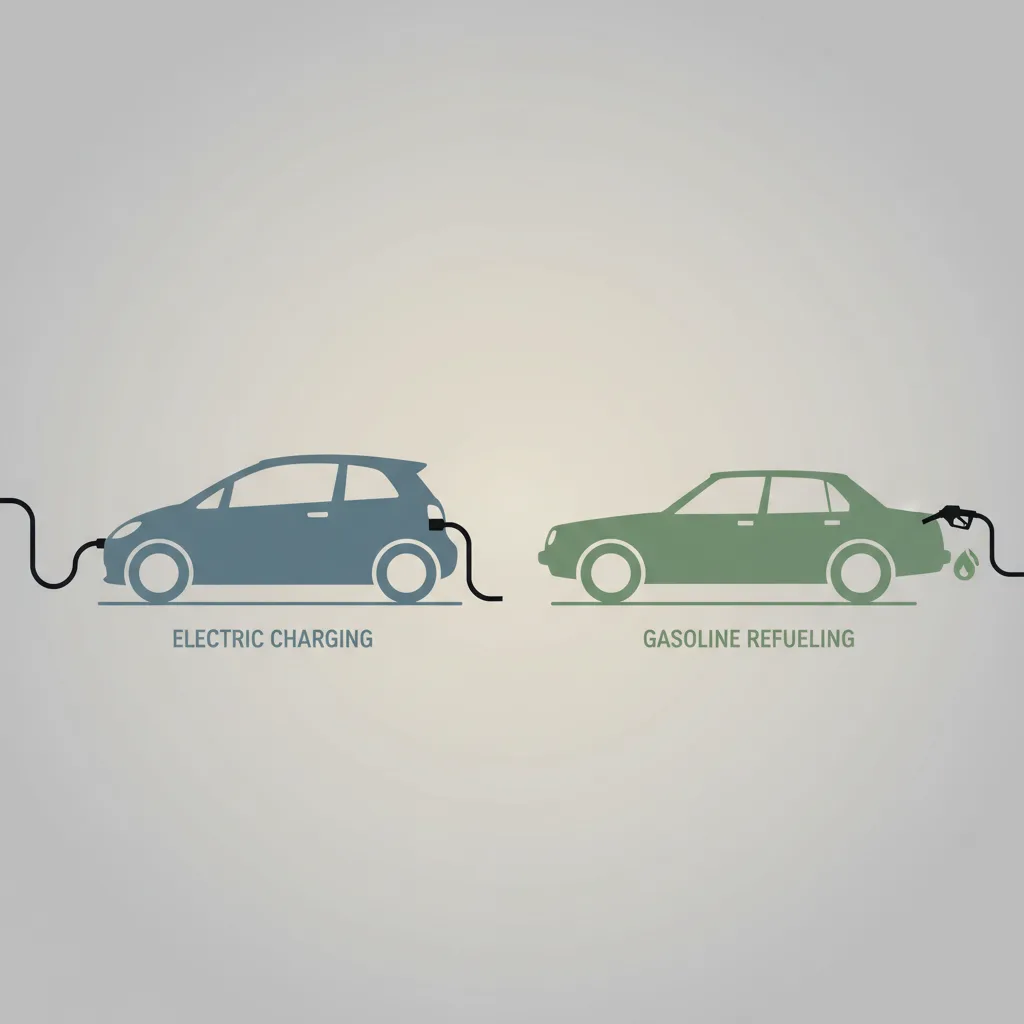
Two car silhouettes side by side, one with an electric plug, the other with a gas pump nozzle.

Penyesalan atas tindakan

Beralih ke mobil listrik

46%

46% pemilik EV AS ingin beralih kembali (proksi niat)

Pemilik EV AS, panel online

retrospektif, tidak ada kerangka waktu tetap

Penyesalan atas kelambanan

Tetap memakai mobil bensin

16%

16% orang dewasa AS kemungkinan akan membeli EV berikutnya (proksi niat)

Orang dewasa AS, panel berbasis probabilitas

retrospektif, tidak ada kerangka waktu tetap

% menyesal dengan pilihan ini

action dominates — Bertindak mendominasi — sebagian besar menyesali karena bertindak.

Keputusan terkait

Keputusan yang serupa secara semantik — area yang sama, kompromi yang berbeda.

Keuangan

Renovasi rumah

% menyesal dengan pilihan ini

Tindakan mendominasi

Penyesalan bertindak 2.3× lebih tinggi

lifestyle

Diet vegetarian

% menyesal dengan pilihan ini

Tindakan mendominasi

Penyesalan bertindak 3.8× lebih tinggi

Keuangan

Kripto vs. investasi tradisional

% menyesal dengan pilihan ini

Tindakan mendominasi

Penyesalan bertindak 2.9× lebih tinggi

lifestyle

Biaya perjalanan

% menyesal dengan pilihan ini

Ketidakaktifan mendominasi

Penyesalan tidak bertindak 11.8× lebih tinggi

KeuanganLangsung

Pas vs. kebesaran

% menyesal dengan pilihan ini

Tindakan mendominasi

Penyesalan bertindak 1.6× lebih tinggi

KeuanganLangsung

Beli rumah

% menyesal dengan pilihan ini

Ketidakaktifan mendominasi

Penyesalan tidak bertindak 5.6× lebih tinggi

lifestyle

Pertahankan atau carikan rumah baru hewan

% menyesal dengan pilihan ini

Ketidakaktifan mendominasi

Penyesalan tidak bertindak 5.7× lebih tinggi

Keuangan

Negosiasi harga mobil

% menyesal dengan pilihan ini

Ketidakaktifan mendominasi

Penyesalan tidak bertindak 1.6× lebih tinggi

Nearly 46% of American EV owners say they are “very likely” to switch back to a gas-powered vehicle, according to McKinsey’s 2024 Mobility Consumer Pulse survey of over 4,000 US respondents. The top complaints are predictable infrastructure gripes: inadequate public charging (35%), high total ownership costs (34%), and the logistical headache of planning long trips (32%). On the other side, only 16% of US adults say they are likely to buy an EV as their next car, per AAA’s 2025 survey — a figure that has been falling, not rising. Both figures are intent proxies, not direct regret measures, which makes the 30-point delta less certain than it appears.

The McKinsey number deserves heavy caveats. InsideEVs and other analysts noted that the survey’s “switch back” framing may capture people who want to add a gas car to their household fleet, not necessarily abandon electric entirely. The respondent pool skewed toward newer, non-Tesla owners — people who bought affordable EVs on lease deals but lack home charging and rely on patchy public networks. J.D. Power’s competing 2025 EVX study found that only 12% of EV owners would consider an ICE replacement — implying action regret closer to 4–12%, not 46%. The 2026 J.D. Power study raised BEV repurchase intent to 96%, leaving only about 4% who would not consider another EV. The gulf between 46% wanting to “switch back” and the 4-12% who won’t consider another EV or lean toward ICE suggests the McKinsey question is measuring something broader than pure regret.

The asymmetry may also be transient. Early adoption of any technology produces higher buyer’s remorse because infrastructure, pricing, and product quality are still maturing. Gas cars benefit from a century of sunk-cost infrastructure that makes inaction nearly frictionless. If charging networks densify and battery costs continue falling, the action- regret rate will likely compress. For now, the data says what it says: most gas-car owners feel no pull toward EVs, and a large minority of EV owners express interest in returning to gas — though whether that constitutes regret or merely flexibility remains genuinely unclear.

Sumber: tindakan

Buku besar klaim

Setiap angka di bawah ini adalah apa yang dilaporkan masing-masing sumber, dengan kutipan kata demi kata yang kami andalkan dan bagaimana kami sampai pada angka kami. Klik tautan mana saja untuk memverifikasi langsung.

1/3 sumber diverifikasi secara independen kata demi kata terhadap sumber terkutip

  1. [1] McKinsey & Company — New twists in the electric-vehicle transition: A consumer perspective
    New twists in the electric-vehicle transition: A consumer perspective
    Statistik
    46% of US EV owners said they were 'very likely' to switch back to a gas-powered vehicle for their next purchase
    Kutipan
    “"Forty-six percent of battery electric vehicle owners in the United States said they were 'very likely' to switch back to owning an internal-combustion-engine vehicle for their next purchase. Thirty-five percent cited inadequate public charging infrastructure, 34% said total costs were too high, and 32% said long-trip planning was too difficult." ”
    Data sumber dari
    2024-06-18
    Diakses
    2026-04-26
    Perhitungan
    McKinsey Mobility Consumer Pulse, February 2024. Surveyed 36,954 mobility users across nine countries; US subsample N = 4,112. The 46% figure reflects those selecting "very likely" to switch back to ICE. This measures switching intent, not regret directly — some respondents may want to add a gas car while keeping their EV, not abandon electric entirely.
  2. [2] InsideEVs — Are Half Of EV Owners Really 'Switching Back' To Gas? It's Complicated.
    Are Half Of EV Owners Really 'Switching Back' To Gas? It's Complicated.
    Statistik
    The 46% figure includes new EV owners who lack home charging, bought non-Tesla EVs with weaker charging networks, and may be considering adding a gas car rather than fully abandoning EVs
    Kutipan
    “"Those new owners surveyed are increasingly moving away from the profile that long-defined EV life: upper-income or wealthy, probably a single-family homeowner and probably buying a Tesla. Instead, they're buying from other brands at more affordable prices, often enticed by aggressive leasing and financing deals for EVs. But that also means that they're living without Tesla's robust and reliable fast-charging network; may live in apartments without easy access to charging; and are less willing to put up with the kinds of EV-related headaches that many early adopters took in stride." ”
    Data sumber dari
    2024-06-25
    Diakses
    2026-04-26
    Perhitungan
    InsideEVs contextual analysis. Notes that "switch back" may include adding a gas vehicle to the household fleet rather than pure abandonment. The McKinsey methodology was not fully disclosed, and the question wording may conflate fleet diversification with outright regret.
  3. [3] J.D. Power — 2025 U.S. Electric Vehicle Experience (EVX) Ownership Study Terverifikasi
    2025 U.S. Electric Vehicle Experience (EVX) Ownership Study
    Statistik
    94% of BEV owners are likely to consider purchasing another BEV; only 12% likely to consider replacing EV with ICE
    Kutipan
    “"94% of pure EV (BEV) owners are likely to consider purchasing another BEV for their next vehicle. Only 12% of BEV owners are likely to consider replacing their EV with an internal combustion engine-powered vehicle during their next purchase." ”
    Data sumber dari
    2025-03-12
    Diakses
    2026-04-26
    Verifikasi
    Kutipan diambil ulang secara independen dan dikonfirmasi kata demi kata terhadap sumber terkutip selama audit pendasaran kami.
    Perhitungan
    J.D. Power 2025 EVX Ownership Study provides a contradicting data point. The 12% ICE-switch rate vs McKinsey's 46% likely reflects differences in question wording, sample composition, and what "switch back" means. J.D. Power's 2026 study raised BEV repurchase intent to 96%. The true action-regret rate likely falls between 12% and 46% depending on how strictly one defines "regret."

Sumber: tidak bertindak

Buku besar klaim

Setiap angka di bawah ini adalah apa yang dilaporkan masing-masing sumber, dengan kutipan kata demi kata yang kami andalkan dan bagaimana kami sampai pada angka kami. Klik tautan mana saja untuk memverifikasi langsung.

2/2 sumber diverifikasi secara independen kata demi kata terhadap sumber terkutip

  1. [1] AAA — AAA: Americans Slow to Adopt Electric Vehicles Terverifikasi
    AAA: Americans Slow to Adopt Electric Vehicles
    Statistik
    Only 16% of US adults said they were 'very likely' or 'likely' to purchase an EV as their next vehicle; 63% said they were 'unlikely' or 'very unlikely'
    Kutipan
    “"Only 16% of U.S. adults report being 'very likely' or 'likely' to purchase a fully electric vehicle (EV) as their next car. The percentage of consumers indicating they would be 'unlikely' or 'very unlikely' to purchase an EV rose to 63%, the highest since 2022." ”
    Data sumber dari
    2025-06-12
    Diakses
    2026-04-26
    Verifikasi
    Kutipan diambil ulang secara independen dan dikonfirmasi kata demi kata terhadap sumber terkutip selama audit pendasaran kami.
    Perhitungan
    AAA survey conducted March 6-10, 2025, probability-based panel representative of US households, N = 1,128. The 16% "likely to buy EV" figure is an upper-bound proxy for inaction regret among gas-car keepers — it captures aspiration toward switching, not regret per se. The true inaction-regret rate is likely lower because stated purchase intent overstates actual switching behavior.
  2. [2] Gallup — EV Ownership Ticks Up, but Fewer Nonowners Want to Buy One Terverifikasi
    EV Ownership Ticks Up, but Fewer Nonowners Want to Buy One
    Statistik
    Only 44% of US adults say they are 'seriously considering or might consider' buying an EV, down from 55% in 2023; 48% say they do not intend to buy one
    Kutipan
    “"Less than half of adults, 44%, now say they are either seriously considering or might consider buying an EV in the future, down from 55% in 2023, while the proportion not intending to buy one has increased from 41% to 48%. Sixty-one percent of lower-income Americans say they would not buy an EV, up 18 percentage points from 43% in 2023." ”
    Data sumber dari
    2024-04-08
    Diakses
    2026-04-26
    Verifikasi
    Kutipan diambil ulang secara independen dan dikonfirmasi kata demi kata terhadap sumber terkutip selama audit pendasaran kami.
    Perhitungan
    Gallup annual tracking poll. The declining EV interest corroborates the AAA finding that most gas-car owners are content with their choice. Among non-owners, interest has fallen 7 points year-over-year, suggesting inaction regret is not intensifying.

Catatan

PERINGATAN PROKSI: Tidak ada tingkat yang merupakan pengukuran penyesalan langsung. McKinsey 46% menangkap niat menyatakan untuk "beralih kembali," yang menggabungkan penyesalan dengan diversifikasi armada — beberapa responden mungkin hanya ingin menambahkan mobil bensin sambil tetap memiliki EV mereka. AAA 16% menangkap kemungkinan pembelian, bukan penyesalan. Survei pesaing tajam bertentangan dengan angka McKinsey: studi J.D. Power EVX 2025 menemukan bahwa 94% pemilik EV akan mempertimbangkan membeli EV lagi, dan studi 2026 mereka menaikkan itu menjadi 96%. Perbedaan kemungkinan berasal dari kata-kata pertanyaan, komposisi sampel (panel McKinsey memasukkan banyak pemilik non-Tesla pertama kali tanpa pengisian di rumah), dan apakah "beralih kembali" berarti "meninggalkan EV sepenuhnya" atau "menambahkan mobil bensin." Dominasi tindakan tidak biasa dalam literatur Gilovich dan mungkin mencerminkan momen teknologi transisi daripada pola penyesalan jangka panjang yang stabil.

Data mentah: /api/decisions.json

Baru-baru ini dilihat di perangkat ini