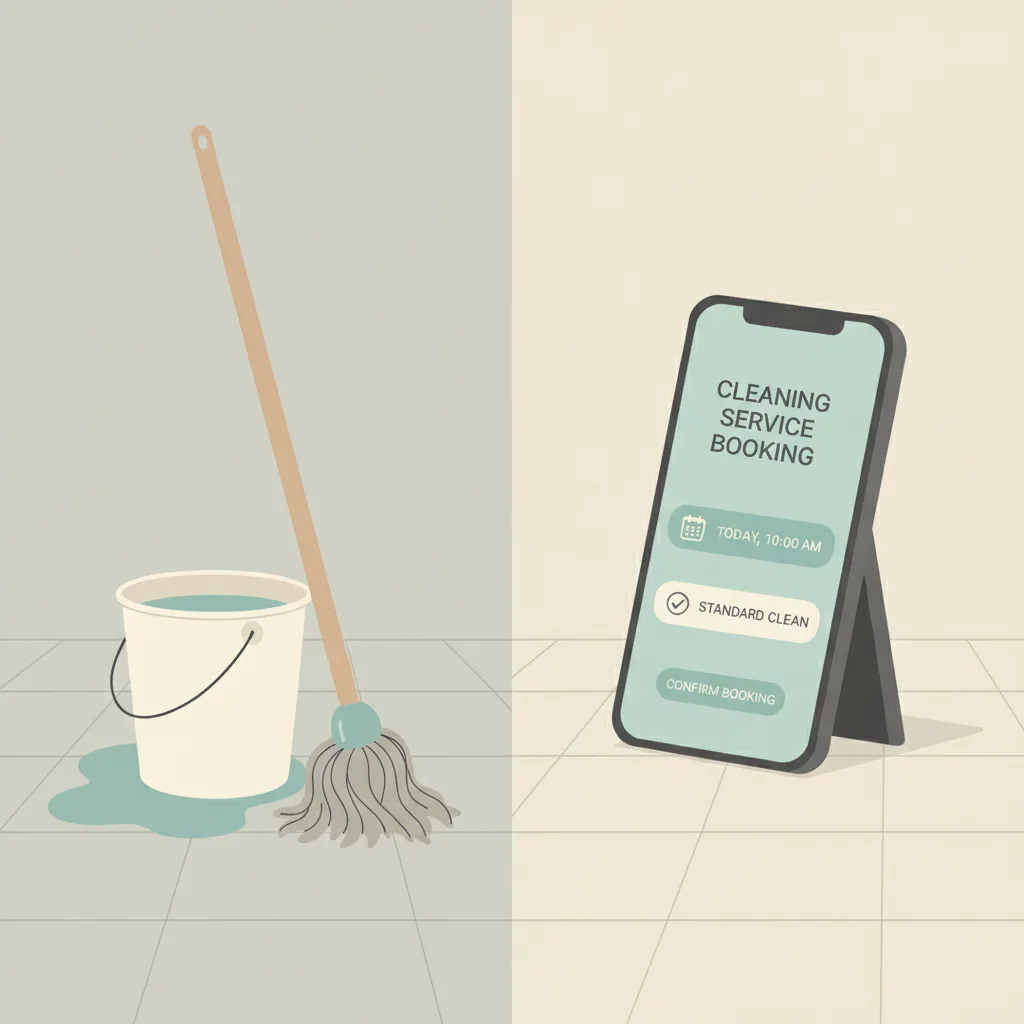
Persentase orang yang kemudian menyesali setiap pilihan. Diagram batang dan catatan lengkap ditampilkan di bawah.
Lifestyle
Terakhir ditinjau 2026-04-26
Kualitas bukti 4.13/5
Skor tinjauan delapan dimensi terhadap
rubrik kualitas
. Setiap dimensi dinilai 1–5.
D1 Verifikasi sumber
5/5
D2 Otoritas & independensi sumber
4/5
D3 Akurasi tingkat penyesalan
2/5
D4 Keterbandingan sumber
3/5
D5 Pola Gilovich
5/5
D6 Kualitas prosa
5/5
D7 Kelengkapan peringatan
5/5
D8 Kualitas sampel
4/5
Rata-rata4.13/5
Data proksi — tidak ada survei penyesalan langsung untuk keputusan ini. Tingkat diturunkan dari skor kepuasan dan data hambatan akses daripada pertanyaan yang langsung menanyakan tentang penyesalan. Lihat peringatan di bawah.
Penyesalan atas tindakan
Menyewa jasa bersih-bersih
9,0%
Tidak ada survei penyesalan langsung; pembelanjaan penghemat-waktu meningkatkan kebahagiaan rata-rata di seluruh tingkat pendapatan, sehingga penyesalan-tindakan diperlakukan rendah (proxy kesejahteraan nominal, bukan tingkat yang disurvei)
Orang dewasa yang bekerja, AS/Kanada/Denmark/Belanda
retrospektif, tidak ada kerangka waktu tetap
Penyesalan atas kelambanan
Membersihkan sendiri
50%
~50% rumah tangga mampu tidak mengeluarkan apa pun untuk mengalihdayakan tugas yang tidak disukai meskipun mampu membiayainya (proxy non-penggunaan perilaku, bukan survei penyesalan)
Jutawan Belanda dan orang dewasa yang bekerja, 4 negara
retrospektif, tidak ada kerangka waktu tetap
% menyesal dengan pilihan ini
Menyewa jasa bersih-bersihMembersihkan sendiri
9,0%50%
inaction dominates — Tidak bertindak mendominasi — sebagian besar menyesali karena tidak bertindak.
Keputusan terkait
Keputusan yang serupa secara semantik — area yang sama, kompromi yang berbeda.
Among Dutch millionaires — people for whom cost is irrelevant — just
under half spent nothing on outsourcing disliked tasks, according to
Whillans et al.’s PNAS study. That non-outsourcing fraction is the closest
available proxy for inaction in this domain: roughly half of those who
could easily afford to outsource cleaning choose not to. Importantly, the
paper does not report that non-outsourcers have lower life satisfaction —
it reports a positive association for those who do buy time, so the 50%
here is a behavioral non-use figure, not a measured regret rate. On the
action side, Whillans et al. surveyed 6,271 working adults across four
countries and found that those who spent on time-saving services reported
higher life satisfaction; a field experiment gave 60 adults $40 to spend
on a time-saving purchase one weekend and a material purchase the next,
and the time-saving weekend produced higher positive affect (mean 4.00
vs 3.71 on the SPANE scale, d=0.33). The benefit was not moderated by
income or wealth (Z=−0.35, P=0.729), and subsequent research found that
time-saving spending also improved relationship satisfaction regardless of
whether the specific purchase was practical or indulgent.
The paradox is that almost nobody acts on this. When 98 working adults were
asked how they would spend a $40 windfall, only 2% chose time-saving.
Among 818 Dutch millionaires — people for whom cost is irrelevant — nearly
half spent nothing on outsourcing disliked tasks in a typical month. Trübner
(2024) catalogued the barriers in a German sample of 1,479 couples: guilt
about perceived laziness, gendered expectations that housework is a domestic
duty, privacy concerns about strangers in the home, and discomfort with
anything resembling “servant culture.” These are psychological barriers, not
economic ones, and they track cleanly with Gilovich’s inaction-dominance
pattern: people forgo a well-documented happiness gain, and the status quo
persists because the cost of inaction is diffuse and invisible.
The caveat worth flagging is that this entry measures well-being and
behavior, not regret. The evidence shows that buying time tends to raise
happiness; it does not show that people who clean their own homes feel
worse off, and it certainly does not measure whether they regret the
choice — some genuinely prefer the routine, the exercise, or the sense of
control. The rates here are proxies, not direct survey findings, and the
ratio between the two sides should be read as a well-being-and-behavior
asymmetry rather than a regret asymmetry in the strict Gilovich sense. The directional finding
is clear: outsourcing time-draining tasks improves well-being for most people
who try it. Whether not doing so constitutes “regret” depends on how much
you trust revealed preferences over stated ones.
Sumber: tindakan
Buku besar klaim
Setiap angka di bawah ini adalah apa yang dilaporkan masing-masing sumber, dengan kutipan kata demi kata yang kami andalkan dan bagaimana kami sampai pada angka kami. Klik tautan mana saja untuk memverifikasi langsung.
1/2 sumber diverifikasi secara independen kata demi kata terhadap sumber terkutip
In a field experiment (n=60), working adults reported greater end-of-day positive affect after a time-saving purchase (mean 4.00) than a material one (mean 3.71), t(59)=2.57, P=0.007, d=0.33; the benefit was not moderated by income or wealth (Z=-0.35, P=0.729)
Kutipan
“"Using large, diverse samples from the United States, Canada, Denmark, and The Netherlands (n = 6,271), we show that individuals who spend money on time-saving services report greater life satisfaction. A field experiment provides causal evidence that working adults report greater happiness after spending money on a time-saving purchase than on a material purchase."
”
Data sumber dari
2017-08-08
Diakses
2026-04-26
Perhitungan
Whillans et al. surveyed 6,271 adults across four countries and ran a field experiment with 60 working adults spending $40 on a time-saving vs a material purchase on consecutive weekends. The time-saving weekend produced higher positive affect (4.00 vs 3.71 on the SPANE, d=0.33), and the effect did not vary by income or wealth (Z=-0.35, P=0.729). The paper reports a positive well-being effect, not a regret rate or a "no-gain" fraction; the study did not survey regret about hiring cleaning help. The display rate is a well-being proxy, not a surveyed regret figure (see proxy_only and caveats). The study included cleaning, cooking, and errand outsourcing as time-saving categories.
[2]Harvard Business School Working Knowledge — Why Outsourcing Chores Is Good for Your Relationship
Terverifikasi
Sumber referensi
Couples who spent money to save time reported greater relationship satisfaction regardless of whether the purchase was practical or fun
Kutipan
“"It didn't matter if they bought products or services or if they paid for a practical service like Instacart or a fun treat like gourmet takeout — they still reported greater relationship satisfaction if they spent money to save time."
”
Data sumber dari
2023-05-15
Diakses
2026-04-26
Verifikasi
Kutipan diambil ulang secara independen dan dikonfirmasi kata demi kata terhadap sumber terkutip selama audit pendasaran kami.
Perhitungan
HBS research building on Whillans's earlier work. Extends the finding from individual happiness to relationship satisfaction, strengthening the case that outsourcing domestic tasks produces broad well-being gains. The effect was consistent across income levels and purchase types.
Sumber: tidak bertindak
Buku besar klaim
Setiap angka di bawah ini adalah apa yang dilaporkan masing-masing sumber, dengan kutipan kata demi kata yang kami andalkan dan bagaimana kami sampai pada angka kami. Klik tautan mana saja untuk memverifikasi langsung.
Just under half of the 818 surveyed Dutch millionaires — people for whom cost is no barrier — spent no money outsourcing disliked tasks; across samples, those who bought time reported greater life satisfaction
Kutipan
“"Despite the potential benefits of buying time, many respondents allocated no discretionary income to buying time, even when they could afford it: just under half of the 818 millionaires that we surveyed spent no money outsourcing disliked tasks."
”
Data sumber dari
2017-08-08
Diakses
2026-04-26
Perhitungan
The ~50% inaction display is anchored to a real BEHAVIORAL fraction: just under half of the 818 Dutch millionaires — people with no financial barrier — spent no money outsourcing disliked tasks. The paper does NOT report that non-outsourcers had lower life satisfaction; it reports a positive association for those who bought time. The display therefore states the measured construct (the non-outsourcing fraction among the financially able), not a surveyed regret rate. Many non-outsourcers genuinely prefer cleaning themselves, so this is a proxy, not direct regret (see proxy_only and caveats).
[2]International Journal of Consumer Studies / Trübner — Sociocultural barriers to outsourcing housework: Unraveling the non-use of domestic services
Telaah sejawat
Guilt, perceived laziness, and gendered norms are the primary sociocultural barriers preventing households from outsourcing housework even when they can afford it
Kutipan
“"Demand for paid domestic services is low, even for households with sufficient financial resources. Women are significantly more likely to be personal and complete rejectors of outsourcing than men, confirming expectations about gendered attitudes toward outsourcing."
”
Data sumber dari
2024-01-15
Diakses
2026-04-26
Perhitungan
Trübner (2024) surveyed 1,479 German cohabiting couples who had not used domestic services. Five distinct barrier profiles were identified, with guilt and perceived laziness as dominant factors. This explains why the inaction rate remains high even among affluent households — the barrier is psychological, not financial.
Catatan
PERINGATAN PROXY: Tidak ada tingkat yang merupakan pengukuran penyesalan langsung, dan tidak ada survei terbit yang menanyakan orang apakah mereka menyesal menyewa (atau tidak menyewa) pembersih. Studi PNAS Whillans mengukur kepuasan hidup dan afek positif dari pembelian penghemat-waktu secara umum (pengantaran makanan, bersih-bersih, pekerjaan sampingan), bukan bersih-bersih secara terpisah. Tingkat tindakan 9% BUKAN angka yang disurvei: makalah tersebut melaporkan efek kesejahteraan positif, bukan fraksi "tanpa-keuntungan" atau penyesalan, sehingga tingkat tindakan rendah adalah placeholder nominal untuk "membeli waktu membantu rata-rata." Tingkat ketidaktindakan 50% adalah fraksi non-penggunaan perilaku — hampir separuh dari 818 miliuner Belanda tidak mengeluarkan apa pun untuk mengalihdayakan tugas yang tidak disukai meskipun mampu membiayainya. Makalah tersebut TIDAK melaporkan bahwa non-pengalihdaya ini memiliki kepuasan hidup lebih rendah; menyamakan "memilih tidak mengalihdayakan" dengan "penyesalan" melebih-lebihkan buktinya. proxy_only ditetapkan pada entri ini karena alasan itu. Tidak ditemukan survei terbit yang secara langsung menanyakan "apakah Anda menyesal menyewa/tidak menyewa pembersih?" Banyak orang sungguh-sungguh lebih suka mengerjakan pekerjaan rumah tangga sendiri dan tidak melaporkan penyesalan. Studi hambatan Trübner berasal dari Jerman, bukan AS, dan sikap budaya terhadap bantuan rumah tangga sangat bervariasi. Bias seleksi-diri hadir di kedua sisi: orang yang menyewa pembersih mungkin secara disposisi lebih bahagia, dan orang yang menolak mungkin menghargai kemandirian dengan cara yang mengimbangi biaya kesejahteraan apa pun. Rasio 5,6:1 harus dibaca sebagai asimetri kesejahteraan, bukan asimetri penyesalan dalam pengertian Gilovich yang ketat. Data kesejahteraan utama diambil dari sampel Amerika Serikat dan Eropa Barat; tingkat kepuasan dan penyesalan di negara-negara dengan struktur institusional berbeda — norma konsumen, biaya tenaga kerja rumah tangga, dan sikap terhadap bantuan sewaan — mungkin berbeda substansial.