




Lewati ke konten
Likelier

Penyesalan bertindak vs. tidak bertindak

Minum alkohol secara teratur vs tidak minum

Jika Anda bertindak

Minum alkohol

70%

Jika Anda tidak bertindak

Tidak minum alkohol

12%

Persentase orang yang kemudian menyesali setiap pilihan. Diagram batang dan catatan lengkap ditampilkan di bawah.


Kesehatan

Terakhir ditinjau 2026-04-26

Kualitas bukti 4.25/5

Skor tinjauan delapan dimensi terhadap rubrik kualitas . Setiap dimensi dinilai 1–5.

D1 Verifikasi sumber
5/5
D2 Otoritas & independensi sumber
4/5
D3 Akurasi tingkat penyesalan
2/5
D4 Keterbandingan sumber
3/5
D5 Pola Gilovich
5/5
D6 Kualitas prosa
5/5
D7 Kelengkapan peringatan
5/5
D8 Kualitas sampel
5/5
Rata-rata 4.25/5
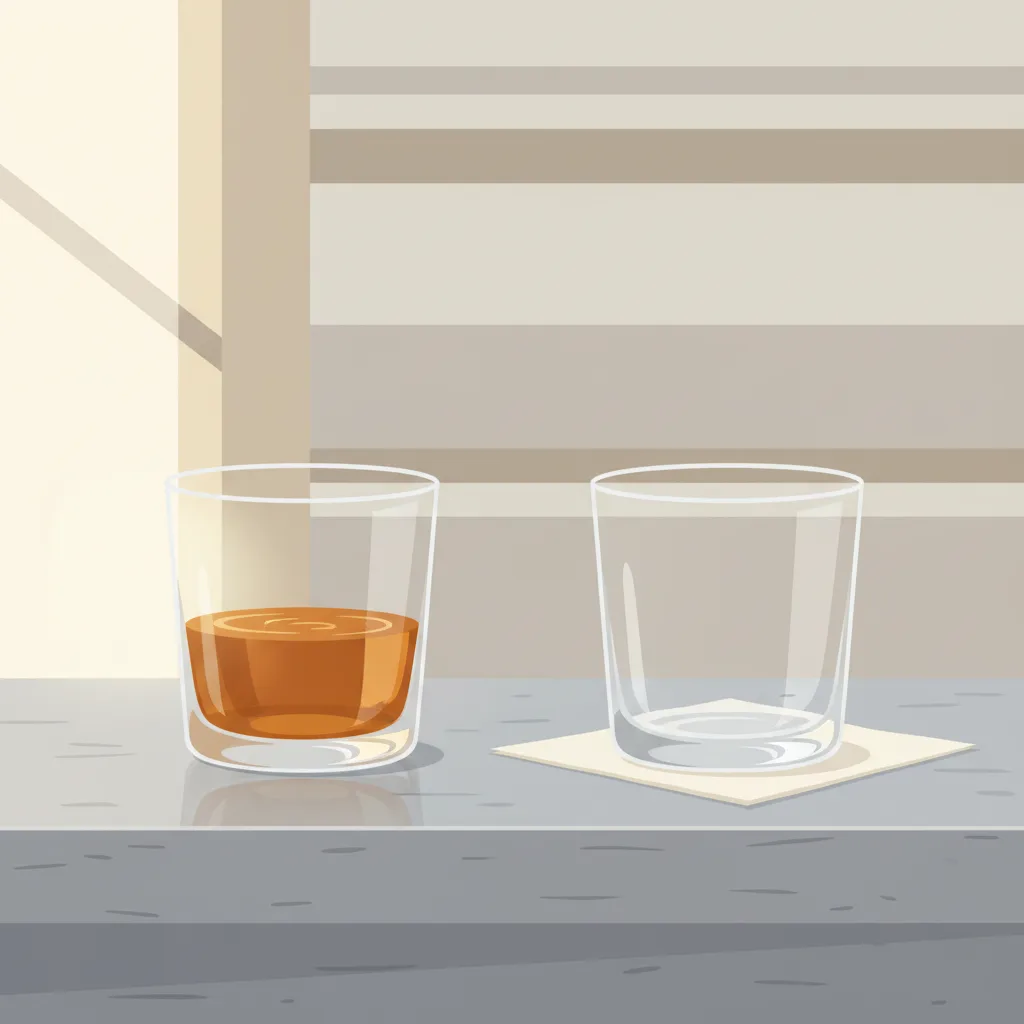
Two identical glasses on a bar surface, one filled with amber liquid, the other empty and clean.

Penyesalan atas tindakan

Minum alkohol

70%

70% peminum menyesali mabuk dalam satu tahun terakhir

Global, 31 negara, panel online dengan pemilihan-sendiri

12 bulan terakhir

Penyesalan atas kelambanan

Tidak minum alkohol

12%

~12% (proxy friksi sosial, bukan penyesalan abstinensi langsung)

Orang dewasa Finlandia berusia 15-79, berbasis populasi

retrospektif, tanpa kerangka waktu tetap

% menyesal dengan pilihan ini

action dominates — Bertindak mendominasi — sebagian besar menyesali karena bertindak.

Keputusan terkait

Keputusan yang serupa secara semantik — area yang sama, kompromi yang berbeda.

lifestyle

Pengganti NA

% menyesal dengan pilihan ini

Ketidakaktifan mendominasi

Penyesalan tidak bertindak 2.1× lebih tinggi

lifestyle

Penggunaan porno vs pantang

% menyesal dengan pilihan ini

Tindakan mendominasi

Penyesalan bertindak 3.0× lebih tinggi

lifestyle

Diet vegetarian

% menyesal dengan pilihan ini

Tindakan mendominasi

Penyesalan bertindak 3.8× lebih tinggi

Kesehatan

Kebiasaan olahraga

% menyesal dengan pilihan ini

Ketidakaktifan mendominasi

Penyesalan tidak bertindak 13.4× lebih tinggi

Kesehatan

Berhenti merokok

% menyesal dengan pilihan ini

Ketidakaktifan mendominasi

Penyesalan tidak bertindak 90.0× lebih tinggi

lifestyle

Masturbasi vs NoFap

% menyesal dengan pilihan ini

Ketidakaktifan mendominasi

Penyesalan tidak bertindak 3.0× lebih tinggi

lifestyle

Ride-share vs mengemudi setelah minum

% menyesal dengan pilihan ini

Ketidakaktifan mendominasi

Penyesalan tidak bertindak 5.7× lebih tinggi

Kesehatan

Mulai merokok saat remaja

% menyesal dengan pilihan ini

Tindakan mendominasi

Penyesalan bertindak 36.0× lebih tinggi

Seventy percent of drinkers regretted getting drunk at least once in the prior year, according to the Global Drug Survey’s 2020 wave (82,821 respondents, 31 countries). The peer-reviewed analysis by Davies et al. in Substance Use & Misuse found that the median drinker got drunk six times a year and regretted two of those occasions. Among occasions when they got drunk, women regretted a higher median share (30%) than men (16.67%), against an overall median of 20%. Separately, a 2025 NCSolutions survey found that nearly half of Americans (49%) plan to drink less in 2025, up sharply from 34% in 2023 — a trend suggesting broad and growing dissatisfaction with current consumption levels. On the other side of the ledger, population-level data from Finland’s Drinking Habits Survey found that non-drinkers reported mostly positive social feedback, with only a small minority experiencing negative social consequences from abstaining.

The asymmetry here is striking but not symmetric in its evidence base. The action-regret figure is robust: an 82,821-person sample, replicated across dozens of countries, measuring a concrete experience (“did you regret getting drunk?”). The inaction figure is far weaker — and measures a different construct entirely. The Finnish study tracked negative social consequences (pressure, exclusion) among non-drinkers, not regret about the decision to abstain. No large study has directly asked non-drinkers whether they regret abstaining, because the question barely arises in public-health research. Alcohol Change UK’s Dry January data shows that 70% of participants still drink less six months later and only 28% revert to prior habits — suggesting that abstinence generates little lasting dissatisfaction, though this too measures behavior rather than regret.

The GDS found an inverse relationship between frequency and per-occasion regret — heavier drinkers regretted a smaller share of episodes — which hints at habituation rather than genuine satisfaction. The main caveat is sample bias: GDS respondents are self-selected, younger, and heavier- drinking than the general population. The true action-regret rate among all adults who drink, including the moderate majority, is certainly lower than 70%. The directional finding — that drinking generates far more regret than not drinking — is robust; the magnitude is an upper bound.

Sumber: tindakan

Buku besar klaim

Setiap angka di bawah ini adalah apa yang dilaporkan masing-masing sumber, dengan kutipan kata demi kata yang kami andalkan dan bagaimana kami sampai pada angka kami. Klik tautan mana saja untuk memverifikasi langsung.

  1. [1] Substance Use & Misuse / Davies, Puljević, Winstock & Ferris — Regrets, I've Had a Few: Exploring Factors Associated with Getting Drunk and Regret in an International Study of People Who Drink Alcohol
    Regrets, I've Had a Few: Exploring Factors Associated with Getting Drunk and Regret in an International Study of People Who Drink Alcohol

    See all 2 Likelier entries citing this source →

    Statistik
    70% of respondents who drank alcohol in the past 12 months reported regretting getting drunk at least once; median regretted occasions was 2 out of a median 6 times drunk
    Kutipan
    “"In the last 12 months, the median times drunk was 6 and the median number of regretted occasions was 2. There was an inverse relationship between times drunk and regret, with respondents who got drunk more often regretting it a smaller percentage of the time than those who got drunk less often." ”
    Data sumber dari
    2024-01-16
    Diakses
    2026-04-26
    Perhitungan
    Data from the Global Drug Survey 2020 (n = 82,821, 31 countries). The 70% figure represents respondents who regretted getting drunk at least once in the prior year (28.3% reported zero regret). The per-occasion median regret percentage was 20% overall (women 30%, men 16.67%). We use the any-regret prevalence (70%) as the action-regret rate because it captures the share of drinkers who experienced regret at all, not the per-episode rate. The GDS sample is self-selected and skews younger and heavier- drinking than the general population, so 70% is an upper bound.
  2. [2] NCSolutions — Alcohol Statistics 2025 – Sober Curious Nation & Beverage Trends
    Alcohol Statistics 2025 – Sober Curious Nation & Beverage Trends
    Statistik
    49% of Americans plan to drink less in 2025, up from 34% in 2023 — a rising sober-curious trend
    Kutipan
    “"Nearly half (49%) of Americans say they plan to drink less alcohol in 2025, up from 34% in 2023." ”
    Data sumber dari
    2025-01-01
    Diakses
    2026-04-26
    Perhitungan
    NCSolutions 2025 consumer survey. The plan-to-drink-less figure has risen year over year (34% in 2023, 41% in 2024, 49% in 2025). While not a direct regret measure, this rising share of people intending to cut back is directional evidence that drinking generates more dissatisfaction than abstinence. This replaces the prior second source (GDS 2020 report), which was the same underlying dataset as the Davies et al. peer-reviewed paper.

Sumber: tidak bertindak

Buku besar klaim

Setiap angka di bawah ini adalah apa yang dilaporkan masing-masing sumber, dengan kutipan kata demi kata yang kami andalkan dan bagaimana kami sampai pada angka kami. Klik tautan mana saja untuk memverifikasi langsung.

1/2 sumber diverifikasi secara independen kata demi kata terhadap sumber terkutip

  1. [1] Substance Use & Misuse / Mustonen & Mäkelä — Non-Drinkers' Experiences of Drinking Occasions: A Population-Based Study of Social Consequences of Abstaining from Alcohol
    Non-Drinkers' Experiences of Drinking Occasions: A Population-Based Study of Social Consequences of Abstaining from Alcohol
    Statistik
    Non-drinkers reported mostly positive feedback from their social environments; negative consequences were reported most commonly among youth and former drinkers, least in the oldest age group
    Kutipan
    “"The study indicates that nondrinkers' social environments may be more supportive than what has been suggested previously, yet coping mechanisms are required especially from youth and former drinkers. Nondrinkers reported relatively low levels of negative consequences, with reported consequences being least frequent in the oldest age group." ”
    Data sumber dari
    2022-01-15
    Diakses
    2026-04-26
    Perhitungan
    Finnish Drinking Habits Survey 2016 (N = 2,285 total; 330 nondrinkers; response rate 60%). The study does NOT report a single regret percentage. The 12% is estimated from the proportion of nondrinkers who reported any negative social consequence from abstaining. IMPORTANT: social consequences (pressure, exclusion) are not the same as regret about abstaining. This is a social friction proxy — no published survey directly measures abstinence regret in a general population sample. Dry January data (70% of participants still drinking less at 6 months, only 28% reverting) corroborates that abstinence generates minimal lasting dissatisfaction.
  2. [2] Alcohol Change UK — Dry January 2024: Kick-starting a year of change Terverifikasi
    Dry January 2024: Kick-starting a year of change
    Statistik
    70% of Dry January participants were still drinking less six months later; only 28% returned to previous drinking levels
    Kutipan
    “"70% of those who take part are still drinking less alcohol six months later. 67% of people who take part in Dry January and access free tools and resources have a completely alcohol-free month." ”
    Data sumber dari
    2024-01-02
    Diakses
    2026-04-26
    Verifikasi
    Kutipan diambil ulang secara independen dan dikonfirmasi kata demi kata terhadap sumber terkutip selama audit pendasaran kami.
    Perhitungan
    Alcohol Change UK campaign data, not a peer-reviewed cohort study. The 28% who returned to prior levels is a ceiling for possible abstinence regret; even among that 28%, returning to old habits does not necessarily imply regretting the break. The sober-curious movement further supports low abstinence regret: 49% of Americans plan to drink less (NCSolutions 2025), and nearly 4 in 10 US consumers follow a sober curious lifestyle (Mintel). These trends indicate that abstaining from alcohol generates satisfaction rather than regret in the general population.

Catatan

Angka tindakan dan ketidakaktifan berasal dari instrumen yang berbeda secara mendasar dan mengukur konstruksi yang berbeda. Tingkat penyesalan-tindakan 70% mengukur penyesalan-episode-apa-pun di antara peminum aktif (GDS 2020, panel online dengan pemilihan-sendiri yang miring ke arah lebih muda dan lebih banyak minum dibandingkan populasi umum). Sampel GDS terlalu mewakili orang yang minum cukup untuk mabuk; tingkat penyesalan-tindakan sebenarnya tingkat-populasi untuk semua peminum, termasuk yang moderat yang tidak pernah mabuk, pasti lebih rendah. Angka sisi-ketidakaktifan 12% adalah proxy yang berasal dari konsekuensi sosial negatif yang dilaporkan oleh non-peminum Finlandia — tekanan dan eksklusi sosial, bukan penyesalan tentang keputusan untuk abstain. Tidak ada survei yang dipublikasikan secara langsung menanyakan non-peminum apakah mereka menyesali abstain. Kedua populasi (peminum global pilih-sendiri vs non-peminum Finlandia) bukan sampel yang sebanding. Rasio ~6:1 harus dibaca sebagai kuat secara arah — peminum reguler secara luar biasa melaporkan penyesalan — tetapi besaran tepat digelembungkan oleh baik asimetri sampel maupun ketidakcocokan konstruksi (penyesalan vs friksi sosial).

Data mentah: /api/decisions.json

Baru-baru ini dilihat di perangkat ini