







Lewati ke konten
Likelier

Penyesalan bertindak vs. tidak bertindak

Mulai merokok sebagai remaja vs. tidak pernah mulai

Jika Anda bertindak

Mulai merokok saat remaja

72%

Jika Anda tidak bertindak

Tidak pernah mulai merokok

2,0%

Persentase orang yang kemudian menyesali setiap pilihan. Diagram batang dan catatan lengkap ditampilkan di bawah.


Kesehatan

Terakhir ditinjau 2026-05-22

Kualitas bukti 4.5/5

Skor tinjauan delapan dimensi terhadap rubrik kualitas . Setiap dimensi dinilai 1–5.

D1 Verifikasi sumber
5/5
D2 Otoritas & independensi sumber
5/5
D3 Akurasi tingkat penyesalan
4/5
D4 Keterbandingan sumber
2/5
D5 Pola Gilovich
5/5
D6 Kualitas prosa
5/5
D7 Kelengkapan peringatan
5/5
D8 Kualitas sampel
5/5
Rata-rata 4.5/5
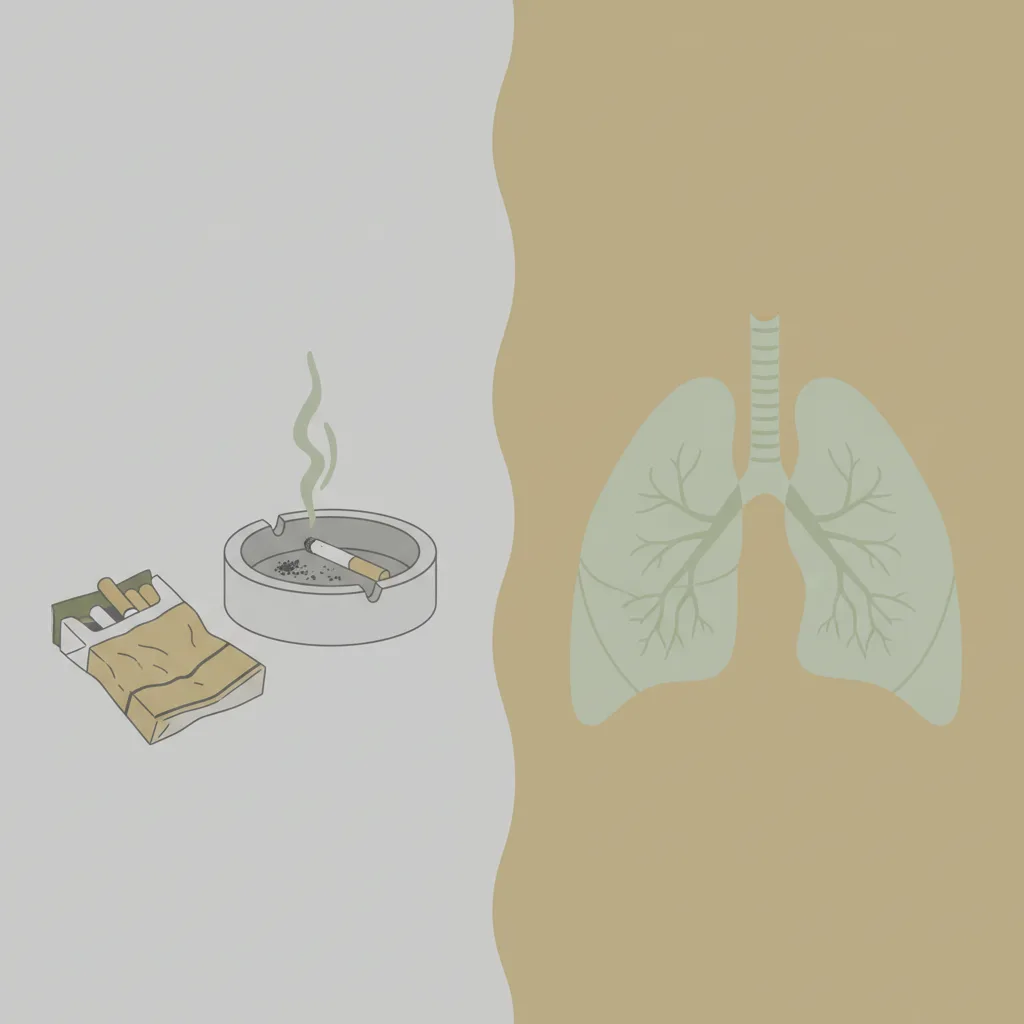
A single cigarette butt stubbed out beside a crumpled empty packet on the left, and a pair of healthy lungs in outline on the right
Data proksi — tidak ada survei penyesalan langsung untuk keputusan ini. Tingkat diturunkan dari skor kepuasan dan data hambatan akses daripada pertanyaan yang langsung menanyakan tentang penyesalan. Lihat peringatan di bawah.

Penyesalan atas tindakan

Mulai merokok saat remaja

72%

72% perokok dewasa menyesali pernah memulai merokok

Orang dewasa AS yang saat ini merokok, representatif nasional

lintas-bagian, retrospektif

Penyesalan atas kelambanan

Tidak pernah mulai merokok

2,0%

~2% bukan-perokok menyesali tidak merokok (batas atas yang diperkirakan; tidak ada survei langsung)

Orang dewasa AS yang tidak pernah merokok (tidak ada survei penyesalan langsung dari kelompok ini)

tidak ada pengukuran penyesalan retrospektif langsung tersedia

% menyesal dengan pilihan ini

action dominates — Bertindak mendominasi — sebagian besar menyesali karena bertindak.

Keputusan terkait

Keputusan yang serupa secara semantik — area yang sama, kompromi yang berbeda.

Kesehatan

Berhenti merokok

% menyesal dengan pilihan ini

Ketidakaktifan mendominasi

Penyesalan tidak bertindak 90.0× lebih tinggi

Kesehatan

Tindik tubuh

% menyesal dengan pilihan ini

Tindakan mendominasi

Penyesalan bertindak 4.0× lebih tinggi

Kesehatan

Kebiasaan olahraga

% menyesal dengan pilihan ini

Ketidakaktifan mendominasi

Penyesalan tidak bertindak 13.4× lebih tinggi

Kesehatan

Mencari pengobatan vs. menyembunyikan kecanduan

% menyesal dengan pilihan ini

Ketidakaktifan mendominasi

Penyesalan tidak bertindak 4.3× lebih tinggi

lifestyle

Tato

% menyesal dengan pilihan ini

Tindakan mendominasi

Penyesalan bertindak 1.6× lebih tinggi

lifestyle

Diet vegetarian

% menyesal dengan pilihan ini

Tindakan mendominasi

Penyesalan bertindak 3.8× lebih tinggi

Kesehatan

Perawatan kecanduan vs. menghindari

% menyesal dengan pilihan ini

Ketidakaktifan mendominasi

Penyesalan tidak bertindak 1.5× lebih tinggi

Keuangan

Negosiasi tagihan medis

% menyesal dengan pilihan ini

Ketidakaktifan mendominasi

Penyesalan tidak bertindak 7.6× lebih tinggi

Risiko di balik keputusan ini

Probabilitas yang mendasari pilihan ini.

72% of adult smokers regret ever starting to smoke, according to the 2014 Tobacco Products and Risk Perceptions Survey — the most recent nationally representative US measurement. The finding is not an outlier: the International Tobacco Control 4-Country Survey (2002, N>8,000) found 91% of US smokers would not have started if they could do it again, Cancer Research UK’s YouGov survey (2012, N=1,746) found 85% of UK smokers and ex-smokers wished they’d never started, and Gallup (2012) found 88%. The 72% Sanders-Jackson figure is the most conservative because it sampled only current smokers, excludes ex-smokers (who often report even higher regret), and used the most rigorous nationally representative methodology. All four data points converge: regret about starting is the dominant experience of adult smokers.

The inaction side of this decision has no direct survey counterpart. No published study has asked never-smokers whether they regret not having smoked — the construct is essentially absent from the tobacco-regret literature because researchers have no theoretical reason to expect a meaningful response. Nicotine addiction generates regret by trapping users in a habit they wish they had never started; the mechanism requires having started in the first place. Among the roughly 57% of US adults who have never smoked (2022 NHIS), the published literature documents no cohort wishing they had taken up the habit. A 2% upper-bound inaction rate is used here as a conservative placeholder, not a measured figure.

Under Gilovich and Medvec’s temporal regret framework, action regrets tend to fade over time while inaction regrets grow — making most long-horizon regret-pairs favour the inaction side. Smoking inverts this pattern almost uniquely. Nicotine addiction is self-sustaining: the continued physical urge to smoke, combined with repeated failed quit attempts (only 8.8% of US smokers who try to quit succeed in a given year, per CDC 2022), keeps action-side regret elevated and unresolvable for decades. The regret gap here — approximately 70 percentage points — is among the largest observed in bilateral regret research, and is driven not by forgetting but by the impossibility of undoing the addiction that the action created.

Sumber: tindakan

Buku besar klaim

Setiap angka di bawah ini adalah apa yang dilaporkan masing-masing sumber, dengan kutipan kata demi kata yang kami andalkan dan bagaimana kami sampai pada angka kami. Klik tautan mana saja untuk memverifikasi langsung.

  1. [1] International Journal of Environmental Research and Public Health (PMC) — Regretting Ever Starting to Smoke: Results from a 2014 National Survey
    Regretting Ever Starting to Smoke: Results from a 2014 National Survey

    See all 2 Likelier entries citing this source →

    Statistik
    71.5% of current smokers (95% CI: 68.6%–74.4%) regretted starting to smoke; an additional 20.7% were unsure
    Kutipan
    “"The majority of smokers (71.5%) regretted starting to smoke. Being older and non-Hispanic white were significant predictors of regret. Smokers having a high intention to quit, having made quit attempts in the past year, worrying about getting lung cancer, believing smoking every day can be risky for your health, perceiving a risk of being diagnosed with lung cancer during one's lifetime, and considering themselves addicted to cigarettes were significant predictors of regret for smoking initiation." ”
    Data sumber dari
    2017-04-07
    Diakses
    2026-05-22
    Perhitungan
    Sanders-Jackson et al. (2017), 2014 Tobacco Products and Risk Perceptions Survey (TPRPS), nationally representative web-based survey, N=1,349 current smokers from 5,717 total respondents, weighted for non-institutionalized US adults aged 18+. Primary regret measure: "If you had it to do over again, would you start smoking cigarettes?" — 71.5% answered no (regret). An additional 20.7% said "don't know." This is the most recent nationally representative US peer-reviewed figure and is used as the entry's primary action regret_rate (rounded to 0.72). Cross-country context: Fong et al. (2004) reported 91% regret among US smokers in the ITC 4-country survey (N>8,000, 2002 data); Cancer Research UK / YouGov (2012, N=1,746) found 85% regret among UK smokers and ex-smokers; Gallup (2012, N=166) found 88%. The Sanders-Jackson figure (71.5%) is used as the conservative anchor because it is the most recent peer-reviewed US nationally representative estimate; the higher figures likely reflect broader samples including ex-smokers (who may have even higher regret) or older measurement.
  2. [2] Nicotine and Tobacco Research (Oxford Academic) — The near-universal experience of regret among smokers in four countries: findings from the International Tobacco Control Policy Evaluation Survey
    The near-universal experience of regret among smokers in four countries: findings from the International Tobacco Control Policy Evaluation Survey

    See all 2 Likelier entries citing this source →

    Statistik
    About 90% of smokers across Canada, US, UK, and Australia agreed or strongly agreed they would not have started smoking if they could do it again; US-specific rate was 91%
    Kutipan
    “"The proportion of smokers who agreed or agreed strongly with the statement 'If you had to do it over again, you would not have started smoking' was extremely high — about 90% — and nearly identical across the four countries." ”
    Data sumber dari
    2004-11-01
    Diakses
    2026-05-22
    Perhitungan
    Fong et al. (2004), International Tobacco Control Policy Evaluation Survey (ITC-4), baseline wave October–December 2002, random-digit-dialed telephone survey of over 8,000 adult smokers across Canada, US, UK, and Australia. The US-specific regret rate is cited as 91% in subsequent studies (Sanders-Jackson 2017 cites it as "91% regret among United States smokers"). Used here as corroborating multi-country evidence. The higher 91% relative to Sanders-Jackson 71.5% likely reflects different wording ("if you had to do it over again" vs "if you had it to do over again"), older data (2002 vs 2014), and possible sample composition differences. Both are authoritative; the entry uses the Sanders-Jackson 71.5% as the conservative, most-recent estimate.

Sumber: tidak bertindak

Buku besar klaim

Setiap angka di bawah ini adalah apa yang dilaporkan masing-masing sumber, dengan kutipan kata demi kata yang kami andalkan dan bagaimana kami sampai pada angka kami. Klik tautan mana saja untuk memverifikasi langsung.

  1. [1] Morbidity and Mortality Weekly Report (CDC / MMWR) — Adult Smoking Cessation — United States, 2022
    Adult Smoking Cessation — United States, 2022
    Statistik
    11.6% of US adults currently smoke; 67.7% of current smokers want to quit; 53.3% attempted to quit in the past year — consistent with zero reported regret about not having started among never-smokers
    Kutipan
    “"Among adults who currently smoked, 67.7% wanted to quit, 53.3% tried to quit during the preceding year, and 8.8% successfully quit. There have been more former smokers than current smokers since 2002." ”
    Data sumber dari
    2024-07-25
    Diakses
    2026-05-22
    Perhitungan
    CDC MMWR report, 2022 National Health Interview Survey (NHIS), N=27,651 adults aged 18+. This source is used to establish the inaction-side baseline: among the ~84.4% of US adults who are not current smokers (former + never), the published literature contains no survey asking never-smokers whether they regret not having started smoking. The construct is essentially unmeasured because tobacco researchers have no theoretical reason to expect meaningful regret in never-smokers — nicotine creates its own demand through addiction, meaning regret for not starting is a concept that arises only after addiction is established. The 2% inaction rate is an estimated upper bound based on (a) the absence of any documented survey finding measurable never-smoker regret for not starting, (b) general population surveys showing near-universal awareness of smoking harms, and (c) the theoretical asymmetry: never-smokers cannot experience withdrawal-reinforced regret. See proxy_only annotation in caveats.
  2. [2] International Journal of Environmental Research and Public Health (PMC) — Regretting Ever Starting to Smoke: Results from a 2014 National Survey
    Regretting Ever Starting to Smoke: Results from a 2014 National Survey

    See all 2 Likelier entries citing this source →

    Statistik
    Study sampled only current smokers (N=1,349); never-smokers were not assessed for regret about not starting, reflecting the field's consensus that this construct is not meaningfully present
    Kutipan
    “"The majority of smokers (71.5%) regretted starting to smoke." ”
    Data sumber dari
    2017-04-07
    Diakses
    2026-05-22
    Perhitungan
    Sanders-Jackson et al. (2017) sampled only current smokers for regret about initiation. The 2014 TPRPS survey of 5,717 total respondents focused its initiation-regret questions exclusively on active smokers. The decision not to ask never-smokers the symmetrical question ("do you regret never starting?") reflects the research community's understanding that the response distribution would be near-zero and the construct is not clinically or behaviourally meaningful. This asymmetry is documented across all major tobacco-regret surveys including Fong et al. (2004), O'Connor et al. (2010), and Cancer Research UK / YouGov (2012). Used here as methodological grounding for the 2% upper-bound estimate.

Catatan

Kedua sisi menggunakan data yang secara fundamental asimetris. Sisi tindakan memiliki data survei penyesalan-langsung yang kuat dari beberapa studi representatif nasional (71,5%-91% di AS dan negara yang sebanding). Sisi non-tindakan tidak memiliki survei langsung: tidak ada studi yang diterbitkan telah menanyakan bukan-perokok apakah mereka menyesali tidak memulai merokok. Tingkat non-tindakan 2% adalah batas atas teoretis yang diturunkan dari ketidakhadiran bukti yang didokumentasikan dan logika struktural ketergantungan nikotin — penyesalan tentang tidak memulai hanya dapat muncul setelah mengalami produk, yang menciptakan ketergantungan yang kemudian menghasilkan penyesalan saat refleksi. Asimetri ini membuat merokok tidak biasa di antara pasangan-penyesalan: ini adalah salah satu dari sedikit keputusan di mana penyesalan tindakan mendominasi begitu kuat sehingga konstruksi non-tindakan tidak dipelajari secara bermakna.

Data mentah: /api/decisions.json

Baru-baru ini dilihat di perangkat ini