






Lewati ke konten
Likelier

Penyesalan bertindak vs. tidak bertindak

Menjadi vegetarian vs tetap makan daging

Jika Anda bertindak

Menjadi vegetarian/vegan

84%

Jika Anda tidak bertindak

Tetap makan daging

22%

Persentase orang yang kemudian menyesali setiap pilihan. Diagram batang dan catatan lengkap ditampilkan di bawah.


Lifestyle

Terakhir ditinjau 2026-04-26

Kualitas bukti 4.0/5

Skor tinjauan delapan dimensi terhadap rubrik kualitas . Setiap dimensi dinilai 1–5.

D1 Verifikasi sumber
5/5
D2 Otoritas & independensi sumber
4/5
D3 Akurasi tingkat penyesalan
2/5
D4 Keterbandingan sumber
3/5
D5 Pola Gilovich
3/5
D6 Kualitas prosa
5/5
D7 Kelengkapan peringatan
5/5
D8 Kualitas sampel
5/5
Rata-rata 4.0/5
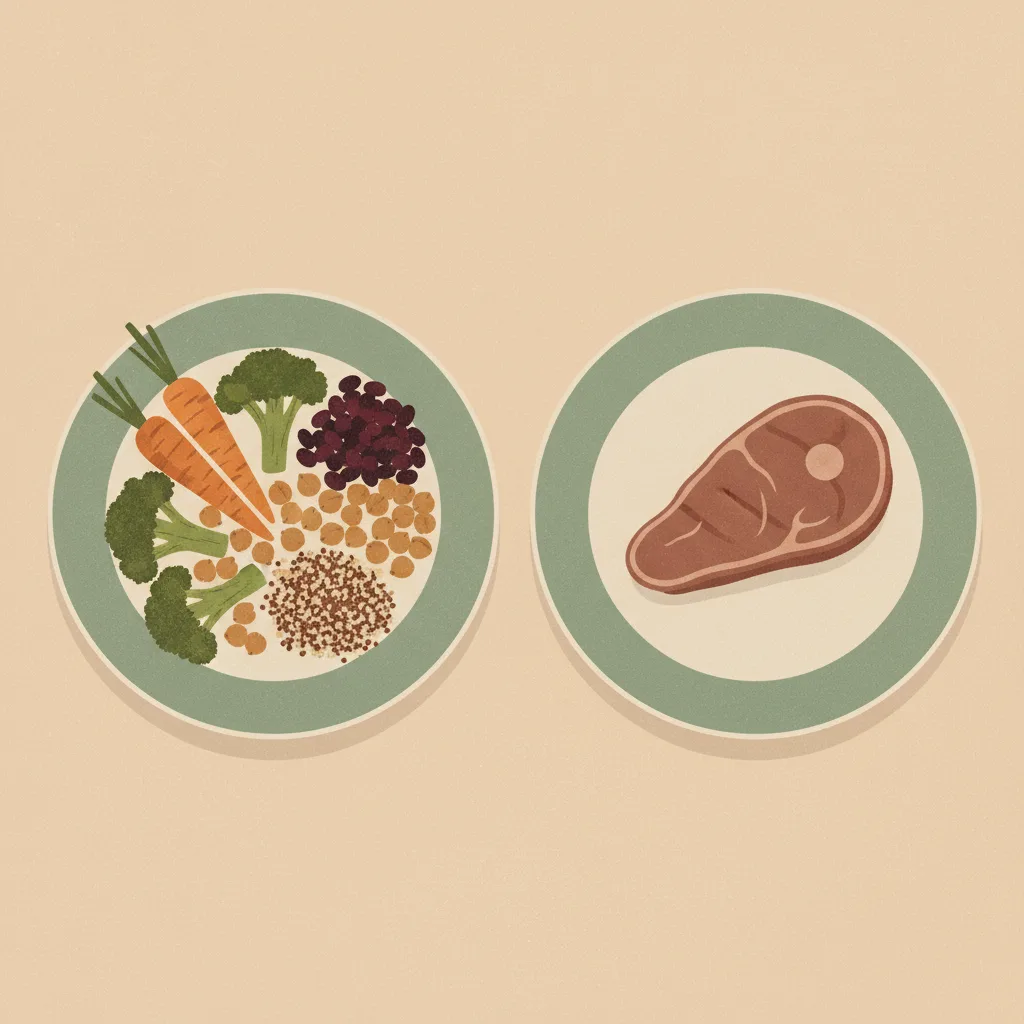
Two plates side by side, one with vegetables and legumes, the other with a cut of meat, both slightly faded.

Penyesalan atas tindakan

Menjadi vegetarian/vegan

84%

84% berhenti dari vegetarianisme (proksi penghentian — tingkat penolakan, bukan penyesalan langsung)

Orang dewasa AS yang telah mencoba vegetarianisme atau veganisme

retrospektif, tidak ada kerangka waktu tetap

Penyesalan atas kelambanan

Tetap makan daging

22%

22% merasa bersalah tentang makan daging sepanjang waktu (proksi bersalah — bukan penyesalan langsung)

Orang dewasa non-vegan Inggris, representatif nasional

retrospektif, tidak ada kerangka waktu tetap

% menyesal dengan pilihan ini

action dominates — Bertindak mendominasi — sebagian besar menyesali karena bertindak.

Keputusan terkait

Keputusan yang serupa secara semantik — area yang sama, kompromi yang berbeda.

lifestyle

Pertahankan atau carikan rumah baru hewan

% menyesal dengan pilihan ini

Ketidakaktifan mendominasi

Penyesalan tidak bertindak 5.7× lebih tinggi

lifestyle

Tato

% menyesal dengan pilihan ini

Tindakan mendominasi

Penyesalan bertindak 1.6× lebih tinggi

Kesehatan

Berhenti merokok

% menyesal dengan pilihan ini

Ketidakaktifan mendominasi

Penyesalan tidak bertindak 90.0× lebih tinggi

lifestyle

Puasa intermiten

% menyesal dengan pilihan ini

Tindakan mendominasi

Penyesalan bertindak 2.9× lebih tinggi

lifestyle

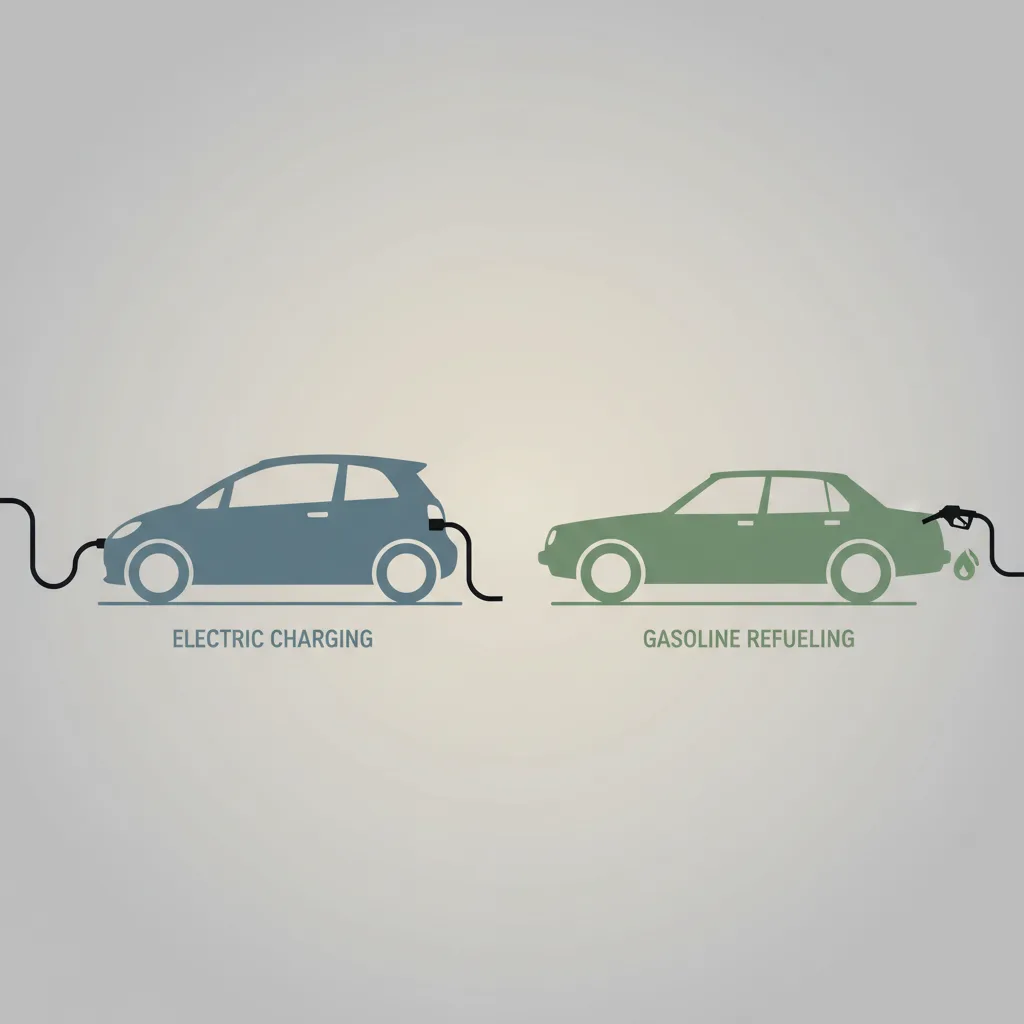
Mobil listrik vs bensin

% menyesal dengan pilihan ini

Tindakan mendominasi

Penyesalan bertindak 2.9× lebih tinggi

Kesehatan

Tindik tubuh

% menyesal dengan pilihan ini

Tindakan mendominasi

Penyesalan bertindak 4.0× lebih tinggi

lifestyle

Meninggalkan agama

% menyesal dengan pilihan ini

Ketidakaktifan mendominasi

Penyesalan tidak bertindak 2.9× lebih tinggi

Kesehatan

Kejar umur panjang vs terima penuaan

% menyesal dengan pilihan ini

Ketidakaktifan mendominasi

Penyesalan tidak bertindak 1.5× lebih tinggi

The largest study of vegetarian and vegan retention — Faunalytics’ 2014 survey of 11,399 US adults via Harris Interactive — found that 84% of people who adopted a vegetarian or vegan diet eventually returned to eating meat. That number is the action-side proxy shown above, used directly rather than the previously constructed composite. But lapse rate is not regret rate. Crucially, 37% of the lapsed expressed interest in re-adopting, meaning they do not regret the diet itself — they regret stopping it, or faced barriers they could not overcome. A Faunalytics obstacle analysis found that social isolation (84% were not part of any veg community), food access, and meal prep difficulty — not principled rejection of the diet — drove most lapses.

On the other side, a 2022 Vegan Society survey of 2,000 non-vegan UK adults found that 22% report feeling guilty about eating meat all of the time — a persistent-guilt figure we use as the inaction proxy rather than the combined 71% who report guilt “some” or “all” of the time. Persistent guilt maps more closely to a regret-adjacent construct than intermittent discomfort. Cognitive dissonance research (Bastian et al., 2012) shows that meat-related guilt is often resolved through justification strategies — “the guilt persists but produces no corresponding desire to act.” The Vegan Society, as the commissioning body, has an advocacy interest in high guilt numbers.

What the data establishes is that dietary identity is unstable: most people who try vegetarianism quit (though many want to try again), and roughly one in five meat eaters carries persistent guilt about it. The action-dominates pattern reflects an asymmetry between a very high lapse rate and a modest persistent-guilt rate, but readers should note that lapsing conflates genuine dissatisfaction with situational barriers. Both figures are proxies for different constructs (behavioral abandonment vs affective discomfort), so the large delta should be read with caution.

Sumber: tindakan

Buku besar klaim

Setiap angka di bawah ini adalah apa yang dilaporkan masing-masing sumber, dengan kutipan kata demi kata yang kami andalkan dan bagaimana kami sampai pada angka kami. Klik tautan mana saja untuk memverifikasi langsung.

1/2 sumber diverifikasi secara independen kata demi kata terhadap sumber terkutip

  1. [1] Faunalytics / Harris Interactive — A Summary of Faunalytics' Study of Current and Former Vegetarians and Vegans Terverifikasi
    A Summary of Faunalytics' Study of Current and Former Vegetarians and Vegans
    Statistik
    84% of people who have adopted a vegetarian or vegan diet subsequently abandon it; 53% lasted less than one year; 37% of the lapsed are interested in re-adopting
    Kutipan
    “"84% of vegetarians/vegans abandon their diet. About a third (34%) of lapsed vegetarians/vegans maintained the diet for three months or less, and slightly more than half (53%) adhered to the diet for less than one year. The only motivation cited by a majority (58%) of former vegetarians/vegans was health." ”
    Data sumber dari
    2014-12-02
    Diakses
    2026-04-26
    Verifikasi
    Kutipan diambil ulang secara independen dan dikonfirmasi kata demi kata terhadap sumber terkutip selama audit pendasaran kami.
    Perhitungan
    Faunalytics commissioned Harris Interactive to survey 11,399 US adults aged 17+. Of those who had ever identified as vegetarian/vegan, 84% had reverted to eating meat. We use the 84% lapse rate directly as the action-side proxy. This is NOT a regret measure — it counts anyone who tried vegetarianism even briefly as a "former vegetarian." Crucially, 37% of lapsed expressed interest in re-adopting, meaning many lapsed for situational reasons (social isolation, food access) rather than because they regret the decision in principle.
  2. [2] Faunalytics — Bringing Back Former Vegans And Vegetarians: An Obstacle Analysis
    Bringing Back Former Vegans And Vegetarians: An Obstacle Analysis
    Statistik
    Food dissatisfaction is the most common struggle; accessibility and meal preparation time are the primary must-haves for re-adoption
    Kutipan
    “"Dissatisfaction with veg*n food is the most common struggle, with nearly half of lapsed veg*ns experiencing cravings, boredom with their veg*n diet, feeling hungry on the diet, and other issues related to food dissatisfaction." ”
    Data sumber dari
    2019-10-01
    Diakses
    2026-04-26
    Perhitungan
    Faunalytics obstacle analysis of former veg*ns. Confirms that many lapsed for practical/situational reasons (access, time, social isolation) rather than regretting the decision in principle. 84% of former veg*ns were not part of any vegetarian community, and 63% disliked sticking out from the crowd.

Sumber: tidak bertindak

Buku besar klaim

Setiap angka di bawah ini adalah apa yang dilaporkan masing-masing sumber, dengan kutipan kata demi kata yang kami andalkan dan bagaimana kami sampai pada angka kami. Klik tautan mana saja untuk memverifikasi langsung.

  1. [1] The Vegan Society / Attest — Younger people feel more guilty about eating meat than older people, Vegan Society research finds
    Younger people feel more guilty about eating meat than older people, Vegan Society research finds
    Statistik
    22% of non-vegan UK adults feel guilty about eating meat all of the time; an additional 49% feel guilty some of the time
    Kutipan
    “"49 per cent of respondents felt guilty about eating meat 'some' of the time, while a further 22 per cent felt guilty 'all' of the time. Even amongst those not limiting their consumption of meat and animal products at all, 45 per cent said they felt guilty about it 'some' or 'all' of the time." ”
    Data sumber dari
    2022-11-01
    Diakses
    2026-04-26
    Perhitungan
    Vegan Society commissioned Attest to survey 2,000 non-vegan UK adults (working age, nationally representative for age, gender, and region) in October 2022. We use the 22% "guilty all the time" figure rather than the combined 71% (some + all), because persistent guilt is a closer proxy for regret-adjacent affect than intermittent guilt. The Vegan Society as commissioning body has an advocacy interest in high guilt numbers. Guilt about eating meat is NOT the same as regret about not going vegetarian — cognitive dissonance research shows meat-guilt is often resolved through justification strategies.
  2. [2] Faunalytics / Harris Interactive — A Summary of Faunalytics' Study of Current and Former Vegetarians and Vegans
    A Summary of Faunalytics' Study of Current and Former Vegetarians and Vegans
    Statistik
    88% of US adults have never tried vegetarianism or veganism; 10% are former veg*ns; 2% are current veg*ns
    Kutipan
    “"About 88 percent of the U.S. population had never attempted a vegetarian or vegan diet, yet among the 12 percent who tried, only 2 percent had stuck with it." ”
    Data sumber dari
    2014-12-02
    Diakses
    2026-04-26
    Perhitungan
    Faunalytics population data. 88% of US adults have never tried vegetarianism, providing context: the vast majority of meat eaters have not even considered the alternative seriously, making "regret about not going vegetarian" a narrow phenomenon even if guilt about meat is widespread.

Catatan

Tidak ada sisi yang mengukur penyesalan secara langsung. Sisi tindakan 84% adalah tingkat penghentian — itu menghitung siapa pun yang mencoba vegetarianisme dan kembali, termasuk eksperimen di bawah 3 bulan. Penghentian bukan penyesalan: 37% dari yang berhenti menyatakan minat untuk mengadopsi kembali, dan analisis hambatan Faunalytics menemukan bahwa hambatan praktis (isolasi sosial, akses makanan, kesulitan persiapan makan) mendorong sebagian besar penghentian daripada penolakan berprinsip. 84% mentah harus dibaca sebagai "diet gagal menempel" daripada "mereka menyesali mencoba." 22% sisi non-tindakan adalah rasa bersalah yang persisten ("sepanjang waktu") tentang makan daging, bukan penyesalan tentang gagal menjadi vegetarian. Penelitian disonansi kognitif (Bastian et al., 2012) menunjukkan bahwa rasa bersalah terkait daging sering diselesaikan melalui strategi pembenaran tanpa perubahan perilaku. Kedua sampel berasal dari negara yang berbeda (AS vs Inggris) dan dekade yang berbeda (2014 vs 2022). Pola action-dominates mencerminkan asimetri antara tingkat penghentian tinggi dan tingkat rasa bersalah persisten yang sederhana.

Data mentah: /api/decisions.json

Baru-baru ini dilihat di perangkat ini