


Lewati ke konten
Likelier

Penyesalan bertindak vs. tidak bertindak

Memasang tindik tubuh vs. tidak memasangnya

Jika Anda bertindak

Memasang tindik

32%

Jika Anda tidak bertindak

Tidak memasang tindik

8,0%

Persentase orang yang kemudian menyesali setiap pilihan. Diagram batang dan catatan lengkap ditampilkan di bawah.


Kesehatan

Terakhir ditinjau 2026-05-10

Kualitas bukti 3.5/5

Skor tinjauan delapan dimensi terhadap rubrik kualitas . Setiap dimensi dinilai 1–5.

D1 Verifikasi sumber
4/5
D2 Otoritas & independensi sumber
4/5
D3 Akurasi tingkat penyesalan
2/5
D4 Keterbandingan sumber
3/5
D5 Pola Gilovich
4/5
D6 Kualitas prosa
4/5
D7 Kelengkapan peringatan
4/5
D8 Kualitas sampel
3/5
Rata-rata 3.5/5
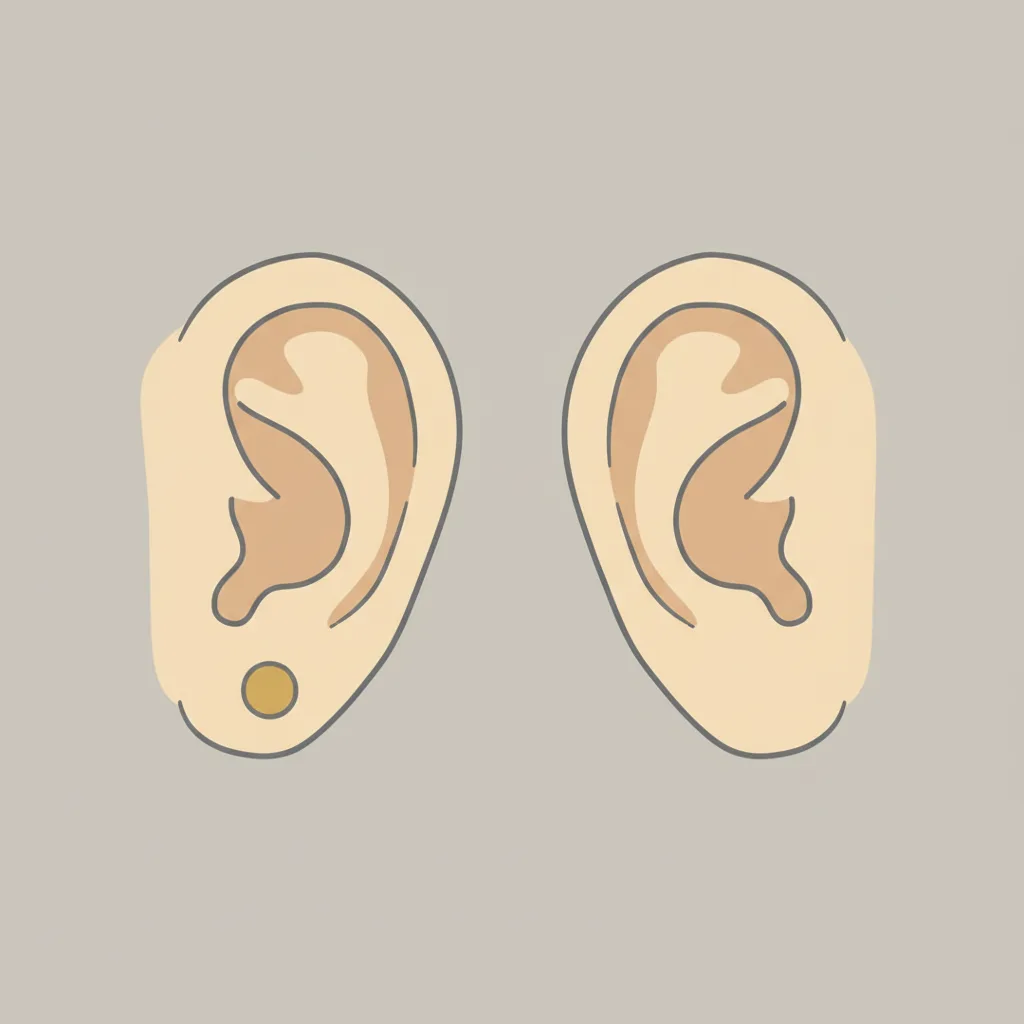
Two identical ears side by side on a neutral background, one with a small stud earring, the other bare.
Data proksi — tidak ada survei penyesalan langsung untuk keputusan ini. Tingkat diturunkan dari skor kepuasan dan data hambatan akses daripada pertanyaan yang langsung menanyakan tentang penyesalan. Lihat peringatan di bawah.

Penyesalan atas tindakan

Memasang tindik

32%

32% orang Amerika dengan piercing melaporkan beberapa penyesalan

Orang dewasa AS dengan piercing tubuh, survei online

retrospektif, tidak ada kerangka waktu tetap

Penyesalan atas kelambanan

Tidak memasang tindik

8,0%

~8% (proksi yang dibangun — tidak ada survei penyesalan-non-tindakan langsung)

Orang dewasa AS tanpa piercing tubuh, diperkirakan

retrospektif, tidak ada kerangka waktu tetap

% menyesal dengan pilihan ini

action dominates — Bertindak mendominasi — sebagian besar menyesali karena bertindak.

Keputusan terkait

Keputusan yang serupa secara semantik — area yang sama, kompromi yang berbeda.

lifestyle

Tato

% menyesal dengan pilihan ini

Tindakan mendominasi

Penyesalan bertindak 1.6× lebih tinggi

Kesehatan

Pembesaran payudara

% menyesal dengan pilihan ini

Seimbang

Hampir seimbang

Kesehatan

Transplantasi rambut

% menyesal dengan pilihan ini

Ketidakaktifan mendominasi

Penyesalan tidak bertindak 5.0× lebih tinggi

lifestyle

Diet vegetarian

% menyesal dengan pilihan ini

Tindakan mendominasi

Penyesalan bertindak 3.8× lebih tinggi

Kesehatan

Operasi kosmetik

% menyesal dengan pilihan ini

Seimbang

Hampir seimbang

Kesehatan

Vasektomi

% menyesal dengan pilihan ini

Seimbang

Hampir seimbang

Kesehatan

Korea: operasi kosmetik vs. menolak

% menyesal dengan pilihan ini

Tindakan mendominasi

Penyesalan bertindak 4.0× lebih tinggi

Kesehatan

Brazilian Butt Lift (BBL)

% menyesal dengan pilihan ini

Seimbang

Hampir seimbang

About 32% of Americans who have a body piercing report some regret, according to a 2017 Statista survey — the complement of the 68% who said they had no regrets. The regret rate is uneven by gender: only 22% of pierced women reported regret versus a substantially higher share among men — plausibly because men more often choose piercings that later close or are removed (ear stretching, industrial, septum) rather than the simple ear piercings that dominate among women. A 2011 BMC Public Health peer-reviewed survey of European undergraduates found that 13% of body-art recipients reported complications — infections, keloids, allergic reactions — a common driver of removal and dissatisfaction across populations. On the inaction side, no published survey directly asks non-pierced adults whether they regret not having a piercing. The 8% inaction proxy is a conservative estimate anchored below the tattoo inaction proxy (15%) because the lower permanence of piercings reduces the barrier to future action.

The psychology of piercing regret fits a modified version of the Gilovich and Medvec action-dominates pattern. Piercings are far more reversible than tattoos — most close within weeks if the jewelry is removed — yet action regret still runs higher in the available data. The asymmetry most likely reflects the social visibility of piercings during the period of wear: an industrial piercing or nose ring that attracts negative reactions at work or from family creates immediate, concrete negative feedback that sustains regret even after the hole closes. Inaction regret for piercings is structurally low because the option remains open — a non-pierced adult can act at any time, which defuses the counterfactual. This “open option” effect is a well-documented suppressor of inaction regret in Gilovich’s research: regret is highest when the path is permanently closed.

The main caveat is the quality of the evidence. The 32% action figure is from a Statista survey with opaque methodology — question wording, sampling frame, and weighting are not publicly documented. The 8% inaction figure is a constructed proxy, not a finding. Because the two sides rely on different measurement approaches, the delta (0.24) should be read as indicating that action regret is substantially higher than inaction regret, not as a precise quantitative ratio. The peer-reviewed literature on piercing focuses on complications and health outcomes rather than regret per se; a large-scale, nationally representative survey with a direct regret question on both sides would substantially improve the evidence base for this entry.

Sumber: tindakan

Buku besar klaim

Setiap angka di bawah ini adalah apa yang dilaporkan masing-masing sumber, dengan kutipan kata demi kata yang kami andalkan dan bagaimana kami sampai pada angka kami. Klik tautan mana saja untuk memverifikasi langsung.

1/2 sumber diverifikasi secara independen kata demi kata terhadap sumber terkutip

  1. [1] Statista (Statista Survey) — United States -- regretting body piercings in 2017 Terverifikasi
    United States -- regretting body piercings in 2017
    Statistik
    68% of Americans with piercings said they have no regrets; approximately 32% reported some regret
    Kutipan
    “"68 percent of respondents said they have no regrets having a piercing. Among respondents aged 18 to 29, 67 percent said they have no regrets having one. Among female respondents, 78 percent said they have no regrets having one." ”
    Data sumber dari
    2017-06-22
    Diakses
    2026-05-10
    Verifikasi
    Kutipan diambil ulang secara independen dan dikonfirmasi kata demi kata terhadap sumber terkutip selama audit pendasaran kami.
    Perhitungan
    Statista Survey conducted June 22, 2017. The 32% figure is the complement of the 68% who reported no regret (68% overall no-regret is stated on the source page; the 32% action-regret rate is derived as its complement). The exact sample size is not disclosed on the public (non-paywalled) Statista page, so no source-attributed n is claimed here. Used directly as action-regret rate. Note: the source's 78% no-regret rate among women implies a female regret rate of ~22%; the overall 32% is skewed by higher male regret. Men more commonly get piercings that later close or are removed (ear stretching, industrial, septum), which may drive the higher regret rate in this sample.
  2. [2] BMC Public Health — Body piercing and tattoos: a survey on young adults' knowledge of the risks and practices in body art
    Body piercing and tattoos: a survey on young adults' knowledge of the risks and practices in body art
    Statistik
    Among 1,598 Italian university freshmen, 29% had at least one piercing or tattoo, and 13.2% of those with body art reported complications after the procedure
    Kutipan
    “"Of the 1.598 sample, 463 (29%) have at least one piercing or tattoo. [...] Sixty-one (13.2%) of the interviewees who underwent body art had had complications after it." ”
    Data sumber dari
    2011-10-14
    Diakses
    2026-07-01
    Perhitungan
    BMC Public Health 2011 peer-reviewed survey of 1,598 freshmen at the University of Bari, Italy (academic year 2009-2010, 96.5% response rate). Not a US sample and does not directly report a US regret rate. Used as corroborating evidence that piercing complications (infection, keloids, allergic reactions) are a common driver of removal and dissatisfaction across populations -- 13.2% of body-art recipients reported complications -- consistent with the Statista US action-side finding.

Sumber: tidak bertindak

Buku besar klaim

Setiap angka di bawah ini adalah apa yang dilaporkan masing-masing sumber, dengan kutipan kata demi kata yang kami andalkan dan bagaimana kami sampai pada angka kami. Klik tautan mana saja untuk memverifikasi langsung.

1/2 sumber diverifikasi secara independen kata demi kata terhadap sumber terkutip

  1. [1] Statista (Statista Survey) — United States -- regretting body piercings in 2017
    United States -- regretting body piercings in 2017
    Statistik
    Among US adults with piercings, 68% report no regret; data does not include inaction-side direct measurement
    Kutipan
    “"68 percent of respondents said they have no regrets having a piercing. Among respondents aged 18 to 29, 67 percent said they have no regrets having one." ”
    Data sumber dari
    2017-06-22
    Diakses
    2026-05-10
    Perhitungan
    No published survey directly asks non-pierced adults whether they regret not getting a piercing. The 8% inaction estimate is a conservative constructed proxy. Piercings are far more reversible than tattoos -- most close within weeks to months if removed -- which substantially lowers the inaction-regret burden compared to the tattoo entry. The proxy is anchored below the tattoo inaction proxy (15%) because the barrier to trying piercings is lower than for tattoos, meaning fewer non-pierced adults are likely to harbour strong lasting regret about not having acted.
  2. [2] Journal of the American Osteopathic Association — Body art: attitudes and practices regarding body piercing among urban undergraduates Terverifikasi
    Body art: attitudes and practices regarding body piercing among urban undergraduates
    Statistik
    Among 100 urban undergraduates with usable surveys, 56% reported having a body piercing at one time; nonpierced participants estimated the probability of an adverse event at 43% versus 30% among pierced participants
    Kutipan
    “"One hundred (97%) out of the 103 surveys distributed had sufficient data for analysis. Fifty-six percent of participants (age range, 17 to 25 years) reported having a body piercing at one time." ”
    Data sumber dari
    2007-10-01
    Diakses
    2026-07-01
    Verifikasi
    Kutipan diambil ulang secara independen dan dikonfirmasi kata demi kata terhadap sumber terkutip selama audit pendasaran kami.
    Perhitungan
    JAOA 2007 peer-reviewed study of 103 urban undergraduates (100 usable surveys). Provides context on the non-pierced side: nonpierced participants estimated the probability of an adverse event higher (43%) than pierced participants did (30%), suggesting non-pierced individuals perceive piercing as riskier rather than harbouring unfulfilled desire. Used to keep the inaction-regret proxy low. This is a US convenience sample of undergraduates, not a nationally representative adult sample, and it does not measure regret about not getting a piercing directly.

Catatan

Angka sisi tindakan 32% berasal dari survei Statista 2017, dan metodologi yang mendasarinya (komposisi sampel, kata-kata pertanyaan, kerangka pengambilan sampel) tidak sepenuhnya didokumentasikan dalam deskripsi publik Statista. Angka 32% mewakili komplemen "tanpa penyesalan" dan mungkin menangkap ketidakpuasan ringan serta penyesalan yang kuat — interpretasi yang lebih luas daripada pertanyaan "apakah Anda menyesali ini?" langsung. Sisi non-tindakan 8% adalah proksi penampung yang dibangun: tidak ada survei sampel besar yang secara langsung menanyakan orang dewasa yang tidak di-pierce apakah mereka menyesali tidak memiliki piercing. Angka 8% harus dibaca sebagai perkiraan urutan besarnya, bukan temuan. Piercing berbeda dari tato dalam satu cara kunci: reversibilitas. Sebagian besar piercing menutup dalam beberapa minggu atau bulan. Meskipun demikian, penyesalan tindakan masih mendominasi dalam data yang tersedia. Data survei berasal dari sampel AS dan Eropa.

Data mentah: /api/decisions.json

Baru-baru ini dilihat di perangkat ini