Menegosiasikan harga mobil vs. menerima penawaran pertama dealer
Jika Anda bertindak
Menegosiasikan harga
14%
Jika Anda tidak bertindak
Menerima penawaran pertama dealer
23%
Persentase orang yang kemudian menyesali setiap pilihan. Diagram batang dan catatan lengkap ditampilkan di bawah.
Keuangan
Terakhir ditinjau 2026-05-11
Kualitas bukti 4.13/5
Skor tinjauan delapan dimensi terhadap
rubrik kualitas
. Setiap dimensi dinilai 1–5.
D1 Verifikasi sumber
5/5
D2 Otoritas & independensi sumber
4/5
D3 Akurasi tingkat penyesalan
2/5
D4 Keterbandingan sumber
3/5
D5 Pola Gilovich
5/5
D6 Kualitas prosa
5/5
D7 Kelengkapan peringatan
5/5
D8 Kualitas sampel
4/5
Rata-rata4.13/5
Data proksi — tidak ada survei penyesalan langsung untuk keputusan ini. Tingkat diturunkan dari skor kepuasan dan data hambatan akses daripada pertanyaan yang langsung menanyakan tentang penyesalan. Lihat peringatan di bawah.
Penyesalan atas tindakan
Menegosiasikan harga
14%
~14% pembeli mobil yang bernegosiasi melaporkan ketidakpuasan dengan proses atau hasil (proksi)
Pembeli mobil AS dan Inggris yang mencoba negosiasi harga
retrospektif, tidak ada kerangka waktu tetap
Penyesalan atas kelambanan
Menerima penawaran pertama dealer
23%
23% pembeli mobil mengatakan membayar berlebih adalah kesalahan pembelian mobil terburuk mereka
Orang dewasa AS yang membeli mobil
retrospektif, tidak ada kerangka waktu tetap
% menyesal dengan pilihan ini
Menegosiasikan hargaMenerima penawaran pertama dealer
14%23%
inaction dominates — Tidak bertindak mendominasi — sebagian besar menyesali karena tidak bertindak.
Keputusan terkait
Keputusan yang serupa secara semantik — area yang sama, kompromi yang berbeda.
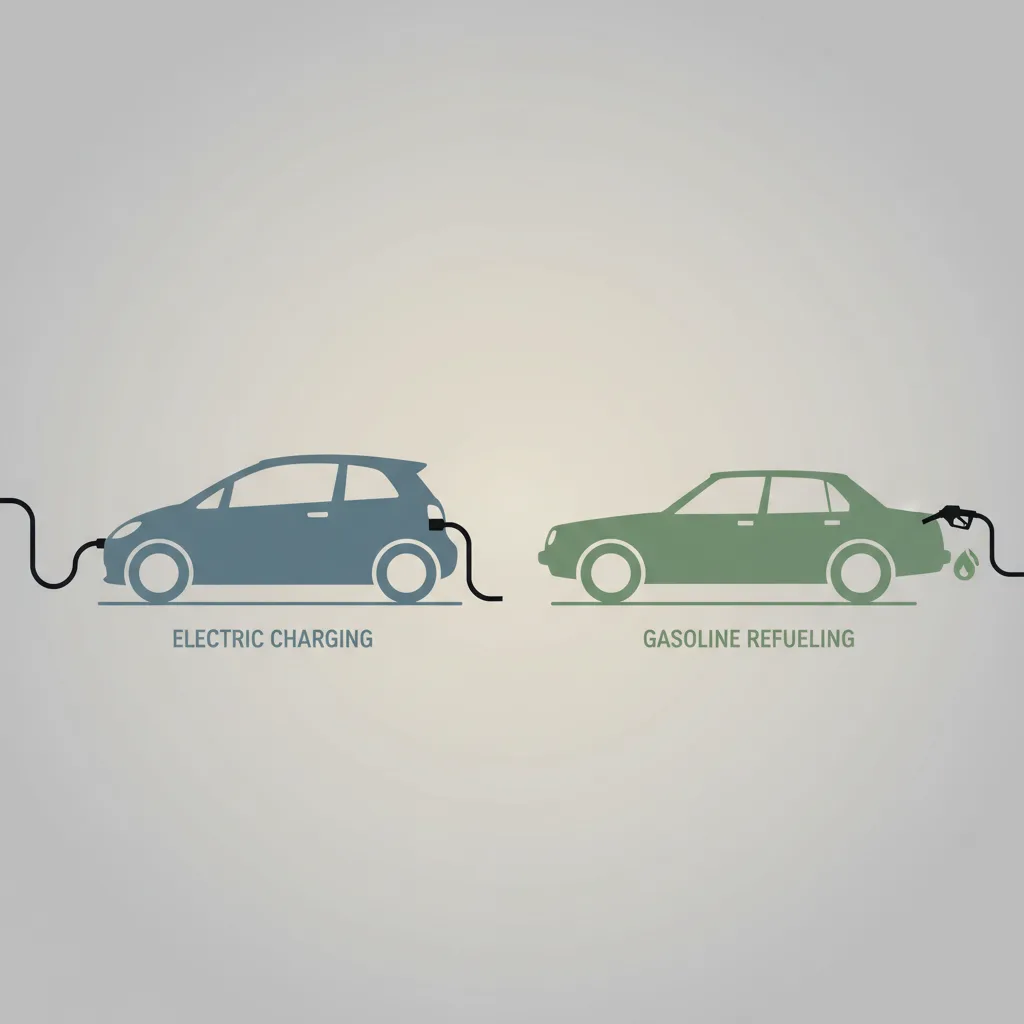
Beralih ke mobil listrikTetap memakai mobil bensin
46%16%
Tindakan mendominasi
Penyesalan bertindak 2.9× lebih tinggi
Among used-car buyers who attempted to negotiate, 83% succeeded in paying less than the asking price, with a median saving of $900 — roughly 8% off the sticker — according to a Consumer Reports survey of 1,006 US buyers. The group that did not negotiate accepted a higher price for no reason other than not asking. An Ipsos survey of 1,005 US adults found that 23% of car buyers named overpaying as their single worst mistake in the car-buying process, ranking it ahead of not doing enough research (20%), buying the wrong car (14%), and buying from an untrustworthy source (14%). The LendingTree car-regrets survey (n=1,919) separately found that 8% of recent buyers specifically regret not shopping around for a better deal — a narrower, more direct measure of negotiation regret.
The asymmetry tracks cleanly with the Gilovich-Medvec inaction-dominance pattern. Negotiating and failing costs nothing in price — you end up paying exactly what non-negotiators pay, and in most cases you still drive away with the car. Negotiating and succeeding saves hundreds to thousands of dollars. Not negotiating locks in the sticker price permanently. The expected value of asking is positive, the downside is minimal, and yet a large share of buyers accept the first number without countering. Edmunds data shows that by Q3 2024, the average US new-vehicle buyer was leaving with the car $1,744 below MSRP — a figure that reflects an entire population of buyers, including those who did not negotiate, being averaged against those who did. Individual negotiators likely fared better than the mean.
The caveats are real. Market conditions shift the leverage dramatically: during the 2021–2022 inventory shortage, used-car prices spiked well above pre-pandemic levels and dealers routinely added markups above MSRP, making negotiation nearly impossible for popular models. In a surplus market — the environment most buyers will encounter across their lifetime — the leverage returns to the buyer. The Ipsos regret figure (23%) almost certainly conflates depreciation disappointment with negotiation failure; buyers who timed their purchase during a price peak, negotiated well, and still watched the car lose value quickly would also report this regret. The CarGurus UK data shows 53% of buyers find negotiation uncomfortable — a real barrier that suppresses attempts — but discomfort during the process does not reliably translate into regret about having tried.
Sumber: tindakan
Buku besar klaim
Setiap angka di bawah ini adalah apa yang dilaporkan masing-masing sumber, dengan kutipan kata demi kata yang kami andalkan dan bagaimana kami sampai pada angka kami. Klik tautan mana saja untuk memverifikasi langsung.
1/2 sumber diverifikasi secara independen kata demi kata terhadap sumber terkutip
[1]Consumer Reports — Why Haggling for Your Next Car Really Pays
Terverifikasi
Sumber referensi
70% of used-car buyers who haggled succeeded 83% of the time, saving a median of $900 (8% off asking price)
Kutipan
“"70 percent of used-car buyers haggled over the price, succeeding in getting a better deal 83 percent of the time. The median was $900, or 8 percent less than the asking price."
”
Data sumber dari
2023-01-01
Diakses
2026-05-11
Verifikasi
Kutipan diambil ulang secara independen dan dikonfirmasi kata demi kata terhadap sumber terkutip selama audit pendasaran kami.
Perhitungan
Consumer Reports survey of n=1,006 US adults who purchased a used car in the past five years. The 83% success rate among negotiators implies 17% failed to improve the price. Even among those who failed, they were no worse off than non-negotiators. Low post-negotiation regret is estimated from the inverse: the majority who succeeded saved real money (median $900), the minority who failed got the same price they would have accepted anyway. The 14% action-regret proxy is derived conservatively from the failure rate (17%) adjusted downward by the fact that failed negotiators lose nothing — they pay the same price as non-negotiators.
[2]CarGurus UK — Car Negotiation Tips — Consumer Survey
Sumber referensi
53% of car buyers found negotiating 'too uncomfortable'; among successful negotiators, average savings were £896 (~$1,100)
Kutipan
“"Fewer than a third of car buyers (29%) always try to negotiate. 53% found negotiating too uncomfortable. Among those who did negotiate successfully, the average saving was £896."
”
Data sumber dari
2023-05-01
Diakses
2026-05-11
Perhitungan
CarGurus UK commissioned survey of n=2,000 UK motorists, May 2023. The discomfort figure (53%) represents anxiety during the process, not post-purchase regret. UK negotiation norms differ from US; the discomfort rate is used as a proxy upper bound for action-side regret, acknowledging the methodological mismatch. The savings figure (£896) contextualizes stakes: real money is on the table, which suppresses retrospective regret even when the process was uncomfortable.
Sumber: tidak bertindak
Buku besar klaim
Setiap angka di bawah ini adalah apa yang dilaporkan masing-masing sumber, dengan kutipan kata demi kata yang kami andalkan dan bagaimana kami sampai pada angka kami. Klik tautan mana saja untuk memverifikasi langsung.
1/2 sumber diverifikasi secara independen kata demi kata terhadap sumber terkutip
[1]Ipsos — Top Car Buyer Regrets Include Overpaying for a New Car and Not Doing Enough Research
Terverifikasi
Sumber referensi
23% of car buyers say overpaying for a new car that quickly depreciated was their single worst mistake
Kutipan
“"Roughly a quarter (23%) say that their worst mistake when purchasing a car was overpaying for a new car that quickly depreciated. One in five (20%) say their worst mistake was not doing enough research."
”
Data sumber dari
2009-01-01
Diakses
2026-05-11
Verifikasi
Kutipan diambil ulang secara independen dan dikonfirmasi kata demi kata terhadap sumber terkutip selama audit pendasaran kami.
Perhitungan
Ipsos online panel survey of n=1,005 US adults ages 18+, January 2009. Margin of error ±3.1pp. The question asked respondents to identify their single worst car-buying mistake. "Overpaying for a new car that quickly depreciated" encompasses both depreciation timing and price negotiation failure; it is the closest available US survey data linking car purchase regret to price paid. Because the question conflates depreciation and negotiation failure, the 23% figure is an upper bound for negotiation-specific regret. No more recent US survey with comparable methodology on car-price- specific regret was identified. Used as the inaction-regret rate.
[2]LendingTree — Car Regrets Survey: Nearly 4 in 10 Who Bought a Car in the Past Year Have Regrets
Sumber referensi
8% of recent car buyers specifically regret not shopping around for a better deal
Kutipan
“"Nearly 4 in 10 who bought a car in the past year have regrets. Top regrets include wrong make/model (14%), bought an unaffordable car (10%), and not shopping around for a better car deal (8%)."
”
Data sumber dari
2021-12-01
Diakses
2026-05-11
Perhitungan
LendingTree survey of n=1,919 US car owners conducted via Qualtrics, December 2021. The 8% figure is the direct measurement of "not shopping around for a better deal" as a reported regret — the closest available operationalization of not-negotiating regret. Because shopping around and price negotiation are related but not identical, and because this question allows multiple regrets while Ipsos forced a single worst mistake, the two figures are not directly comparable. The 23% Ipsos upper bound and 8% LendingTree lower bound bracket the inaction-regret range. We use 0.23 as the conservative estimate of stated regret about overpaying.
Catatan
PENGUKURAN PROKSI SEPENUHNYA. Tidak ada survei yang langsung bertanya: "Apakah Anda gagal menegosiasikan harga mobil, dan apakah Anda menyesalinya?" Angka non-tindakan 23% (Ipsos 2009) menggabungkan penyesalan depresiasi dengan penyesalan negosiasi. Data Ipsos juga berusia 16 tahun dan mendahului kekurangan inventaris era COVID (2021-2022). Perkiraan penyesalan-tindakan 14% diturunkan dari tingkat kegagalan-untuk-meningkatkan 17% Consumer Reports yang disesuaikan ke bawah. Data Edmunds (Q3 2024) menunjukkan pembeli kendaraan baru sekarang rata-rata $1.744-$1.884 di bawah MSRP. Angka ketidaknyamanan CarGurus (53% merasa tidak nyaman bernegosiasi) adalah ukuran proses. Arah keseluruhan — penyesalan non-tindakan melebihi penyesalan tindakan — didukung secara kuat. Kondisi pasar penting.