Mengambil pinjaman harian vs. berjalan tanpa uang tersebut
Jika Anda bertindak
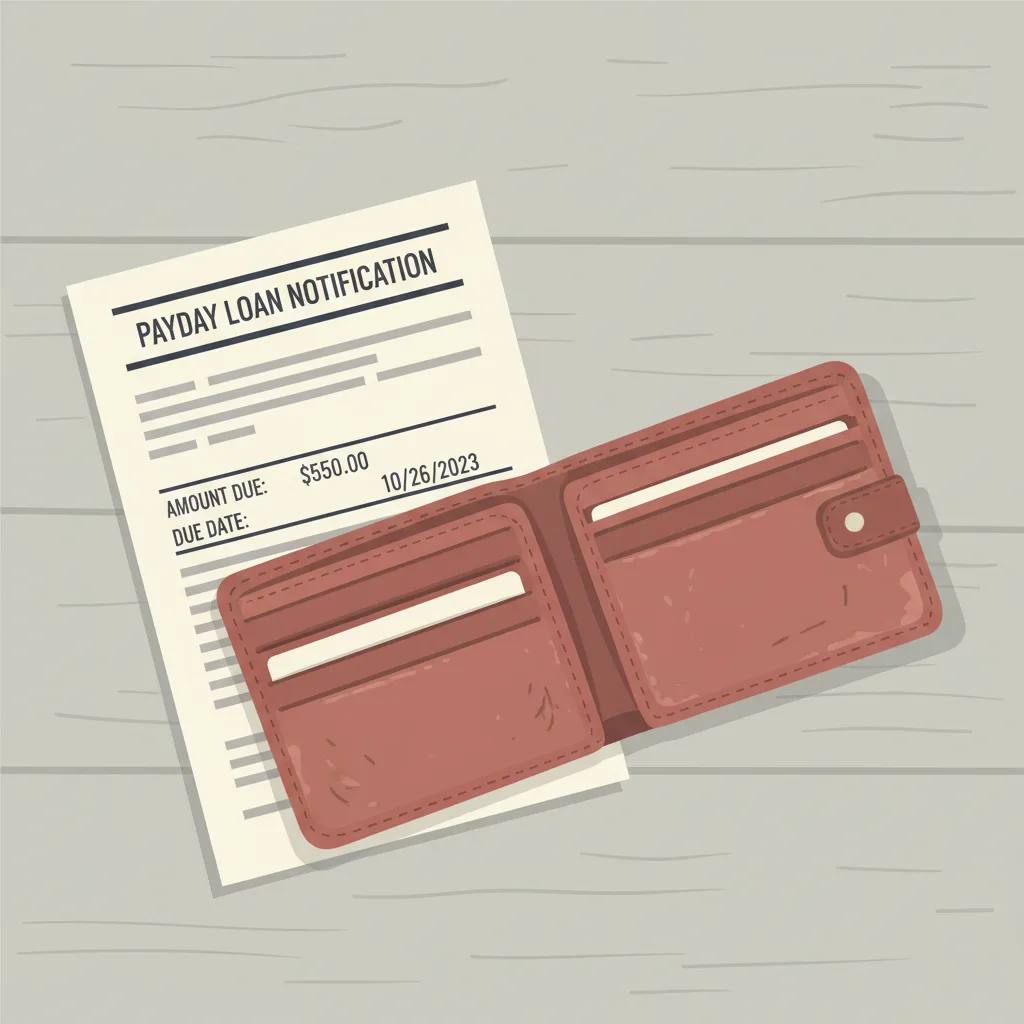
Mengambil pinjaman gajian (payday loan)
37%
Jika Anda tidak bertindak
Bertahan tanpa pinjaman
81%
Persentase orang yang kemudian menyesali setiap pilihan. Diagram batang dan catatan lengkap ditampilkan di bawah.
Keuangan
Terakhir ditinjau 2026-05-14
Kualitas bukti 4.75/5
Skor tinjauan delapan dimensi terhadap
rubrik kualitas
. Setiap dimensi dinilai 1–5.
D1 Verifikasi sumber
5/5
D2 Otoritas & independensi sumber
5/5
D3 Akurasi tingkat penyesalan
4/5
D4 Keterbandingan sumber
4/5
D5 Pola Gilovich
5/5
D6 Kualitas prosa
5/5
D7 Kelengkapan peringatan
5/5
D8 Kualitas sampel
5/5
Rata-rata4.75/5
Data proksi — tidak ada survei penyesalan langsung untuk keputusan ini. Tingkat diturunkan dari skor kepuasan dan data hambatan akses daripada pertanyaan yang langsung menanyakan tentang penyesalan. Lihat peringatan di bawah.
Penyesalan atas tindakan
Mengambil pinjaman gajian (payday loan)
37%
37% peminjam payday mengatakan mereka berada dalam situasi keuangan yang begitu sulit sehingga mereka akan mengambil pinjaman payday dengan syarat apa pun yang ditawarkan
Peminjam pinjaman payday AS, survei representatif nasional
retrospektif, dinilai selama peminjaman aktif
Penyesalan atas kelambanan
Bertahan tanpa pinjaman
81%
81% peminjam payday gerai fisik mengatakan mereka akan mengurangi pengeluaran seperti makanan dan pakaian jika pinjaman payday tidak tersedia
Peminjam pinjaman payday gerai fisik AS yang melaporkan bagaimana mereka akan bertahan jika pinjaman tidak tersedia (survei representatif nasional)
retrospektif, alternatif hipotetis untuk meminjam
% menyesal dengan pilihan ini
Mengambil pinjaman gajian (payday loan)Bertahan tanpa pinjaman
37%81%
inaction dominates — Tidak bertindak mendominasi — sebagian besar menyesali karena tidak bertindak.
Keputusan terkait
Keputusan yang serupa secara semantik — area yang sama, kompromi yang berbeda.
Menanam tabungan di mata uang kriptoTetap pada aset tradisional
46%16%
Tindakan mendominasi
Penyesalan bertindak 2.9× lebih tinggi
A Pew Charitable Trusts survey of more than 33,000 US adults found that 37% of payday loan borrowers say they were in such a difficult financial situation that they would take a loan on any terms offered — desperation, not free choice, drives a large share of the borrowing. Pew separately found that a majority of borrowers say the loans take advantage of them. The same research documented why the harm runs deep: the average borrower spends five months repaying what is marketed as a two-week product, paying $520 in fees to repeatedly service a $375 principal. That fee-to-principal ratio of 139% explains the harm — the product routinely transforms a short-term cash shortfall into a multi-month debt spiral before the borrower can exit.
Independent analysis by the Consumer Financial Protection Bureau, drawing on 12 million storefront payday loans, found that four out of five loans are rolled over or renewed within two weeks. Only 15% of borrowers repay without re-borrowing within 14 days; over 60% of all loans go to borrowers in sequences of seven or more consecutive loans. The gap between the marketed product (a short-term bridge) and the actual product (a recurring fee mechanism) is the structural reason harm rates are as high as they are.
The inaction side carries real costs. Pew asked borrowers what they would do if payday loans were unavailable: 81% said they would cut back on expenses such as food and clothing, and majorities said they would delay paying some bills, borrow from family or friends, or sell possessions. In other words, the underlying cash shortfall does not disappear when the loan is off the table — it gets shifted onto other necessities and bills. That is the hardship going without imposes. But it is the same shortfall that borrowers who take the loan also carry: Pew separately reports that a majority of borrowers say the loans take advantage of them. Going without the money produces hardship for a large share of people in that position, yet without adding the fee-driven debt spiral that the loan brings. The two figures shown here are proxies drawn from different survey questions — the 37% is Pew’s desperation measure (would borrow on any terms), the 81% is Pew’s coping measure (would cut back on necessities without the loan) — so the raw gap between them is not a clean regret comparison. The signal that survives is severity: CFPB’s rollover data show the harm from taking the loan, when it lands, is deep and prolonged, whereas going without shifts the same shortfall onto other bills without the debt trap.
Sumber: tindakan
Buku besar klaim
Setiap angka di bawah ini adalah apa yang dilaporkan masing-masing sumber, dengan kutipan kata demi kata yang kami andalkan dan bagaimana kami sampai pada angka kami. Klik tautan mana saja untuk memverifikasi langsung.
1/2 sumber diverifikasi secara independen kata demi kata terhadap sumber terkutip
[1]Pew Charitable Trusts — Payday Lending in America: How Borrowers Choose and Repay Payday Loans (Overview)
Studi primer
37% of borrowers say they have been in such a difficult financial situation that they would take a payday loan on any terms offered; a majority of borrowers say payday loans take advantage of them
Kutipan
“"Desperation also influences the choice of 37 percent of borrowers who say they have been in such a difficult financial situation that they would take a payday loan on any terms offered." ... "A majority of borrowers say payday loans take advantage of them, and a majority also say they provide relief."
”
Data sumber dari
2013-02-20
Diakses
2026-06-30
Perhitungan
Pew Charitable Trusts "Payday Lending in America" series, drawn from the same nationally representative survey of 33,576 US adults. The 37% figure is Pew's exact, directly reported measure of borrowers who say they were so financially desperate they would accept a payday loan on any terms — a desperation/harm-sentiment construct, NOT a self-report that the loan "made their finances worse" (no such Pew statistic exists). It is used as the action-side rate to label the share of borrowers who took the loan out of acute desperation rather than genuine choice; Pew separately finds a majority say the loans take advantage of them. This is a relabeled sentiment proxy, not a direct regret survey.
[2]Consumer Financial Protection Bureau — CFPB Finds Four Out of Five Payday Loans Are Rolled Over or Renewed
Terverifikasi
Laporan pemerintah
80% of payday loans are rolled over or renewed within 14 days; over 60% of loans go to borrowers in sequences of 7 or more loans; only 15% of borrowers repay without re-borrowing
Kutipan
“"Four out of five payday loans are rolled over or renewed within two weeks. Over 60 percent of loans are made to borrowers in the course of loan sequences lasting seven or more loans. Only 15 percent of borrowers repay all of their payday debts when due without re-borrowing within 14 days."
”
Data sumber dari
2014-03-25
Diakses
2026-05-14
Verifikasi
Kutipan diambil ulang secara independen dan dikonfirmasi kata demi kata terhadap sumber terkutip selama audit pendasaran kami.
Perhitungan
CFPB analysis of 12 million storefront payday loans over a 12-month period, published March 2014. The 80% rollover rate and the finding that only 15% of borrowers escape without re-borrowing corroborate the action-side harm framing: the debt-trap structure makes the loan more harmful and prolonged than most borrowers anticipate at origination, consistent with Pew's finding that desperation, not free choice, drives a large share of borrowing. These figures are from the CFPB press release, which cites the full study: https://files.consumerfinance.gov/f/201403_cfpb_report_payday-lending.pdf
Sumber: tidak bertindak
Buku besar klaim
Setiap angka di bawah ini adalah apa yang dilaporkan masing-masing sumber, dengan kutipan kata demi kata yang kami andalkan dan bagaimana kami sampai pada angka kami. Klik tautan mana saja untuk memverifikasi langsung.
[1]Pew Charitable Trusts — Payday Lending in America: Who Borrows, Where They Borrow, and Why
Studi primer
If payday loans were unavailable, 81% of borrowers say they would cut back on expenses such as food and clothing, and majorities say they would delay paying some bills — the shortfall the loan was meant to cover is not resolved but shifted
Kutipan
“"If faced with a cash shortfall and payday loans were unavailable, 81 percent of borrowers say they would cut back on expenses. Many also would delay paying some bills, rely on friends and family, or sell personal possessions." ... "Eighty-one percent of those who have used a storefront payday loan would cut back on expenses such as food and clothing. Majorities also would delay paying bills, borrow from family or friends, or sell or pawn possessions."
”
Data sumber dari
2012-07-19
Diakses
2026-05-14
Perhitungan
The 0.81 inaction-side rate is Pew's exact, directly reported figure: 81% of those who have used a storefront payday loan say they would cut back on expenses such as food and clothing if payday loans were unavailable. It is used here as a hardship proxy for the inaction side — the share who, without the loan, absorb the cash shortfall by cutting back on necessities (and, for majorities, delaying bills, borrowing from family or friends, or selling possessions). This is a coping-response proxy, NOT a direct regret survey of people who went without a payday loan (no such survey exists); "would cut back on food and clothing" is disclosed as a hardship-sentiment stretch rather than a self-reported regret measure. The number itself is taken verbatim from Pew's stated 81%; it is not adjusted or derived downward, because no source states any intermediate value and inventing one would be ungrounded.
Catatan
Tingkat 37% sisi-tindakan adalah ukuran tepat Pew dari peminjam yang mengatakan mereka berada dalam situasi keuangan yang begitu sulit sehingga mereka akan mengambil pinjaman payday dengan syarat apa pun yang ditawarkan — sebuah konstruksi keputusasaan/persepsi bahaya, BUKAN laporan diri bahwa pinjaman «memperburuk keuangan mereka» (tidak ada statistik Pew semacam itu). Ini berasal dari survei representatif nasional 33.576 orang dewasa AS dari seri «Payday Lending in America»; Pew secara terpisah melaporkan bahwa mayoritas peminjam mengatakan pinjaman memanfaatkan mereka. Tingkat 81% sisi-non-tindakan adalah angka tepat yang dilaporkan langsung oleh Pew: 81% peminjam payday gerai fisik akan mengurangi pengeluaran seperti makanan dan pakaian jika pinjaman payday tidak tersedia — digunakan di sini sebagai proksi kesulitan untuk sisi tidak meminjam, bukan survei penyesalan langsung dari orang-orang yang menolak pinjaman payday (tidak ada survei semacam itu ditemukan). Karena kedua proksi bertumpu pada pertanyaan yang berbeda (keputusasaan untuk meminjam dengan syarat apa pun vs. mengurangi pengeluaran untuk kebutuhan jika pinjaman tidak ada), selisih di antara keduanya (delta = -0,44) adalah perbandingan proksi yang bersifat indikatif, bukan selisih penyesalan yang presisi: ini menunjuk secara terarah bahwa tidak meminjam adalah jalur yang lebih mahal — 81% yang mengurangi pengeluaran untuk kebutuhan adalah sinyal kesulitan yang lebih luas daripada ukuran 37% keputusasaan untuk meminjam yang lebih sempit — tetapi besarannya tidak terkalibrasi. Sinyal yang lebih andal adalah keparahan, bukan tingkat: di sisi tindakan, analisis CFPB dari 12 juta pinjaman menemukan lebih dari 80% bergulir dalam 14 hari dan hanya 15% peminjam yang lepas tanpa meminjam ulang. Tidak meminjam menggeser kesulitan ke tagihan dan kebutuhan lain tetapi menghindari spiral utang yang didorong biaya. Data Pew 2012 mendahului aturan pinjaman payday Consumer Financial Protection Bureau 2017 (yang kemudian dikurangi pada 2020).