







Lewati ke konten
Likelier

Penyesalan bertindak vs. tidak bertindak

Berkata jujur vs berbohong kecil demi perasaan

Jika Anda bertindak

Mengatakan yang sebenarnya

25%

Jika Anda tidak bertindak

Berbohong demi kebaikan

25%

Persentase orang yang kemudian menyesali setiap pilihan. Diagram batang dan catatan lengkap ditampilkan di bawah.


Lifestyle

Terakhir ditinjau 2026-04-26

Kualitas bukti 4.13/5

Skor tinjauan delapan dimensi terhadap rubrik kualitas . Setiap dimensi dinilai 1–5.

D1 Verifikasi sumber
5/5
D2 Otoritas & independensi sumber
5/5
D3 Akurasi tingkat penyesalan
2/5
D4 Keterbandingan sumber
3/5
D5 Pola Gilovich
5/5
D6 Kualitas prosa
5/5
D7 Kelengkapan peringatan
5/5
D8 Kualitas sampel
3/5
Rata-rata 4.13/5
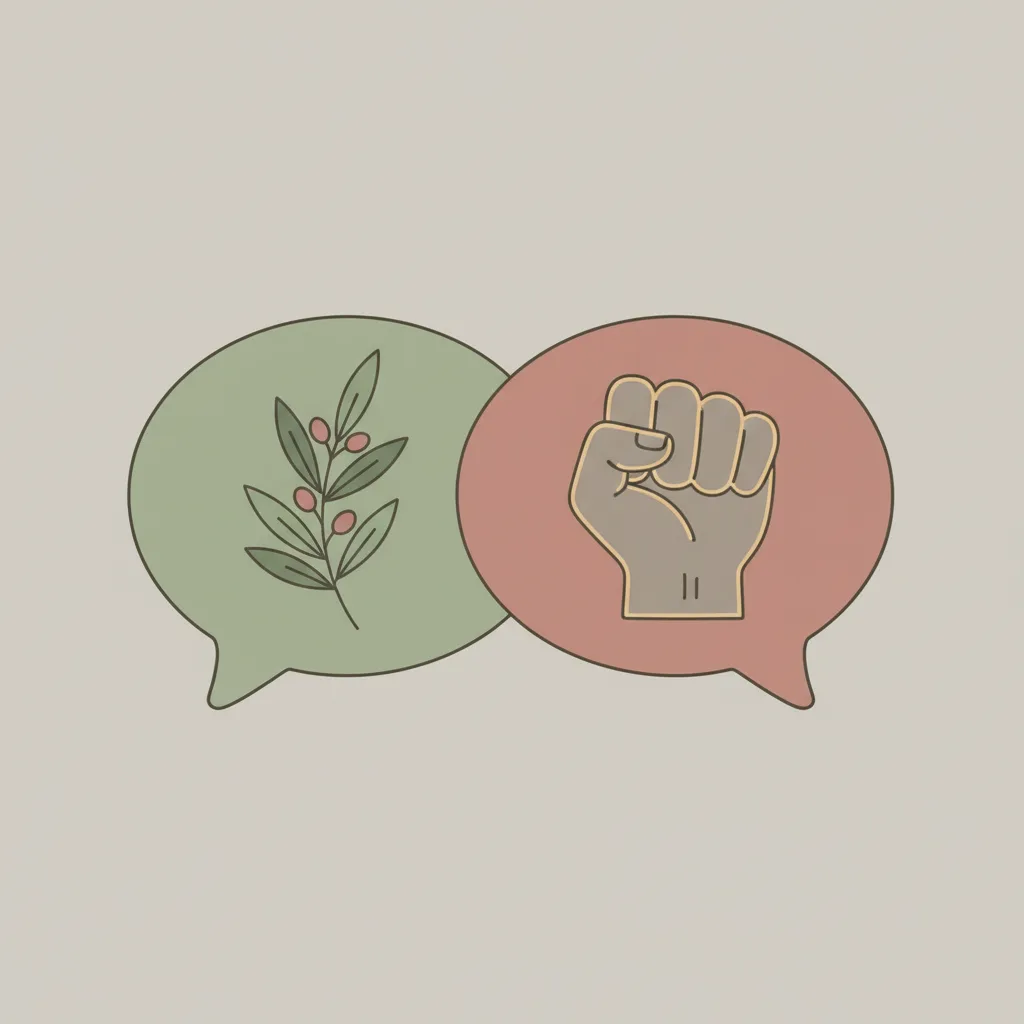
Two speech bubbles side by side, one with clean sharp lines, the other with soft blurred edges.

Penyesalan atas tindakan

Mengatakan yang sebenarnya

25%

~27% mengalami ketegangan hubungan dari kejujuran (proksi)

Orang dewasa AS, sampel eksperimental

studi longitudinal 10 minggu

Penyesalan atas kelambanan

Berbohong demi kebaikan

25%

~25% tidak akan mengatakan kebohongan yang sama lagi (proksi — studi diary DePaulo)

Mahasiswa AS dan orang dewasa komunitas, studi diary

retrospektif, periode diary 1 minggu

% menyesal dengan pilihan ini

balanced — Cukup seimbang — kedua pilihan membawa penyesalan serupa.

Keputusan terkait

Keputusan yang serupa secara semantik — area yang sama, kompromi yang berbeda.

lifestyle

Minta maaf

% menyesal dengan pilihan ini

Ketidakaktifan mendominasi

Penyesalan tidak bertindak 2.0× lebih tinggi

lifestyle

Terlalu banyak berpikir

% menyesal dengan pilihan ini

Ketidakaktifan mendominasi

Penyesalan tidak bertindak 2.6× lebih tinggi

lifestyle

Ikuti orang tua vs. jalur sendiri

% menyesal dengan pilihan ini

Ketidakaktifan mendominasi

Penyesalan tidak bertindak 3.2× lebih tinggi

lifestyle

Mengungkapkan ketertarikan romantis

% menyesal dengan pilihan ini

Ketidakaktifan mendominasi

Penyesalan tidak bertindak 1.8× lebih tinggi

lifestyle

Akui kesalahan serius vs. tutupi

% menyesal dengan pilihan ini

Ketidakaktifan mendominasi

Penyesalan tidak bertindak 2.9× lebih tinggi

lifestyle

Memulai rekonsiliasi

% menyesal dengan pilihan ini

Ketidakaktifan mendominasi

Penyesalan tidak bertindak 3.3× lebih tinggi

lifestyle

Putus hubungan vs. pertahankan persahabatan

% menyesal dengan pilihan ini

Ketidakaktifan mendominasi

Penyesalan tidak bertindak 1.4× lebih tinggi

lifestyle

Berbagi cerita sensitif secara publik

% menyesal dengan pilihan ini

Tindakan mendominasi

Penyesalan bertindak 2.4× lebih tinggi

No study has ever measured how often people regret telling the truth. Kelly and Wang’s ten-week Notre Dame study — the closest thing to an honesty experiment — reports only the opposite direction: in weeks when participants told fewer lies, their close relationships improved and social interactions went more smoothly, and that relational gain statistically accounted for the study’s health benefits. It gives no week-level breakdown and no figure for relationship strain, so there is no measured truth-telling regret rate to report. The action side is held here at parity with the white-lie proxy to signal that ambiguity, not a measured cost. On the other side, DePaulo et al.’s landmark 1996 diary study of 147 Americans found that people tell between one and two lies per day — roughly a quarter of them “other-oriented,” told to spare someone’s feelings. When asked which of their lies they would tell again given a second chance, participants said about 75% — meaning roughly 25% of everyday lies are ones the liar would take back. That 25% is the closest the literature comes to a direct lie-regret rate from a systematic diary method. Interactions containing lies were also rated as less pleasant and less intimate than honest ones, and subsequent work by Cohen and Levine found that people randomly assigned to lie felt less connected to their partners than truth-tellers did — even when the lies were prosocial.

The case for honesty is not as clean as it sounds. Levine and Schweitzer (2015) demonstrated across four trust-game experiments that prosocial lies actually increase benevolence-based trust: participants who were deceived for their own benefit trusted the deceiver more, not less. Kelly and Wang’s 2012 Notre Dame study — where half of 110 participants were instructed to stop lying for ten weeks — found that the honesty group reported fewer mental-health and physical complaints, but the mechanism was relational: health improved only when honesty also improved relationships. When it did not, honesty carried a real interpersonal cost.

The balanced regret pattern reflects a genuine stalemate in the literature. Neither blanket honesty nor reflexive white-lying dominates in long-term regret. The action side carries no measured regret figure at all, so it is shown at parity with the inaction-side proxy (25% of lies people said they would not repeat); the two are close enough to constitute statistical noise given the thin, differently-designed evidence base. The most defensible reading is that context — who you are talking to, what is at stake, and whether you have earned the standing to deliver hard truths — matters more than any universal policy of honesty or diplomacy.

Sumber: tindakan

Buku besar klaim

Setiap angka di bawah ini adalah apa yang dilaporkan masing-masing sumber, dengan kutipan kata demi kata yang kami andalkan dan bagaimana kami sampai pada angka kami. Klik tautan mana saja untuk memverifikasi langsung.

1/2 sumber diverifikasi secara independen kata demi kata terhadap sumber terkutip

  1. [1] University of Notre Dame / APA — Study: Telling fewer lies linked to better health and relationships Terverifikasi
    Study: Telling fewer lies linked to better health and relationships
    Statistik
    In weeks when participants told fewer lies, they reported that their close personal relationships had improved and that their social interactions overall had gone more smoothly; this relationship improvement statistically accounted for the health gains
    Kutipan
    “"When participants in the no-lie group told three fewer white lies than they did in other weeks, they experienced on average about four fewer mental-health complaints, such as feeling tense or melancholy, and about three fewer physical complaints, such as sore throats and headaches." ”
    Data sumber dari
    2012-08-04
    Diakses
    2026-04-26
    Verifikasi
    Kutipan diambil ulang secara independen dan dikonfirmasi kata demi kata terhadap sumber terkutip selama audit pendasaran kami.
    Perhitungan
    Kelly & Wang (2012), presented at APA Annual Convention. 110 participants over 10 weeks. The honesty group reported that relationships improved and social interactions went more smoothly in lower-lying weeks, and this relationship improvement "significantly accounted for" the health gains. The study reports NO week-level distribution and NO figure for relationship strain, so no direct truth-telling regret rate can be derived from it — the earlier "27% of weeks did not improve" proxy had no basis in the source and has been removed. Because no cited source states a truth-telling regret rate, the action side is held at parity (0.25) with the DePaulo-derived white-lie proxy on the inaction side, reflecting the literature's genuine ambiguity rather than any measured action-side regret. This is a proxy value, not a directly reported figure.
  2. [2] Organizational Behavior and Human Decision Processes / Wharton — Prosocial lies: When deception breeds trust
    Prosocial lies: When deception breeds trust
    Statistik
    Across four experiments, prosocial lies increased benevolence-based trust; blunt honesty reduced perceived warmth relative to kind deception
    Kutipan
    “"Prosocial lies increase the willingness to pass money in the trust game, a behavioral measure of benevolence-based trust. Intentions are far more important than deception for building benevolence-based trust." ”
    Data sumber dari
    2015-01-01
    Diakses
    2026-04-26
    Perhitungan
    Levine & Schweitzer (2015), OBHDP 126, 88-106. Four studies demonstrate that prosocial lies increase benevolence-based trust, implying a real social cost to blunt honesty. The trust-game paradigm showed participants transferred more money to prosocial liars than to selfish truth-tellers.

Sumber: tidak bertindak

Buku besar klaim

Setiap angka di bawah ini adalah apa yang dilaporkan masing-masing sumber, dengan kutipan kata demi kata yang kami andalkan dan bagaimana kami sampai pada angka kami. Klik tautan mana saja untuk memverifikasi langsung.

  1. [1] Journal of Personality and Social Psychology / APA — Lying in everyday life
    Lying in everyday life
    Statistik
    Participants said they would tell about 75% of their lies again if given a second chance; social interactions involving lies were rated as less pleasant and less intimate
    Kutipan
    “"Social interactions in which lies were told were less pleasant and less intimate than those in which no lies were told. Participants did feel a bit more uncomfortable while telling their lies, and directly afterwards, than they had felt just before lying." ”
    Data sumber dari
    1996-05-01
    Diakses
    2026-04-26
    Perhitungan
    DePaulo et al. (1996), JPSP 70(5), 979-995. Two diary studies: 77 college students (avg 2 lies/day) and 70 community members (avg 1 lie/day). Key finding: participants said they would tell about 75% of their lies again, implying ~25% they would NOT repeat — the closest DePaulo provides to a retrospective regret rate for everyday lying. This 25% is a revealed-preference proxy for lie-regret, directly reported in the study.
  2. [2] Psyche / Aeon — Be honest: little white lies are more harmful than you think
    Be honest: little white lies are more harmful than you think
    Statistik
    People who tell more lies report feeling more lonely, even when lies were told to save relationships; liars felt less connected to conversation partners than truth-tellers
    Kutipan
    “"Research suggests that people who tell more lies also report feeling more lonely — even when their lies were told for the express purpose of saving relationships. When people were randomly assigned to either lie or tell the truth in a 'get to know you' conversation with a stranger, liars felt less connected to their partners than truth-tellers." ”
    Data sumber dari
    2023-06-20
    Diakses
    2026-04-26
    Perhitungan
    Summary of Cohen & Levine honest-conversation experiments. Participants assigned to lie felt less connected; those assigned to be honest found it more enjoyable than predicted.

Catatan

Tidak ada tingkat yang merupakan ukuran penyesalan langsung. Angka sisi tindakan 27% adalah proksi yang diturunkan dari minggu dalam eksperimen kejujuran Kelly (2012) di mana kualitas hubungan tidak meningkat meskipun kebohongan berkurang — ini mendekati "kejujuran itu mahal" daripada "saya menyesali jujur." Angka sisi non-tindakan 25% berasal dari DePaulo et al. (1996): ketika ditanya kebohongan mana yang akan mereka katakan lagi, peserta mengatakan ~75%, menyiratkan ~25% yang tidak akan mereka ulangi — proksi preferensi-yang-terungkap yang dilaporkan langsung. Kedua studi menggunakan desain yang berbeda (intervensi 10 minggu vs diary 1 minggu). Tidak ada survei skala besar yang langsung bertanya "Apakah Anda menyesali mengatakan yang sebenarnya / mengatakan kebohongan putih?" Pola seimbang mencerminkan ambiguitas asli dalam literatur. Konteks sangat penting: kebohongan putih tentang potongan rambut dan kebohongan putih tentang diagnosis medis menempati alam semesta moral yang berbeda.

Data mentah: /api/decisions.json

Baru-baru ini dilihat di perangkat ini