







本文へスキップ
Likelier

行動 vs. 不行動の後悔

価値観の違いを理由に友情を終わらせることと、対立があっても続けることの比較

行動した場合

友情を終わらせる

30%

行動しなかった場合

深い価値観の対立があっても友情を続ける

42%

それぞれの選択を後で後悔した人の割合。バーと完全な記録は下に表示されます。


ライフスタイル

最終確認 2026-05-13

証拠の質 3.38/5

8次元のレビュー評価。基準は 品質ルーブリック 。各次元は1〜5で評価。

D1 出典の検証
3/5
D2 出典の権威性と独立性
3/5
D3 後悔率の正確性
2/5
D4 出典の比較可能性
2/5
D5 ギロヴィッチ・パターン
4/5
D6 文章の質
4/5
D7 注意事項の完全性
5/5
D8 サンプルの質
4/5
平均 3.38/5
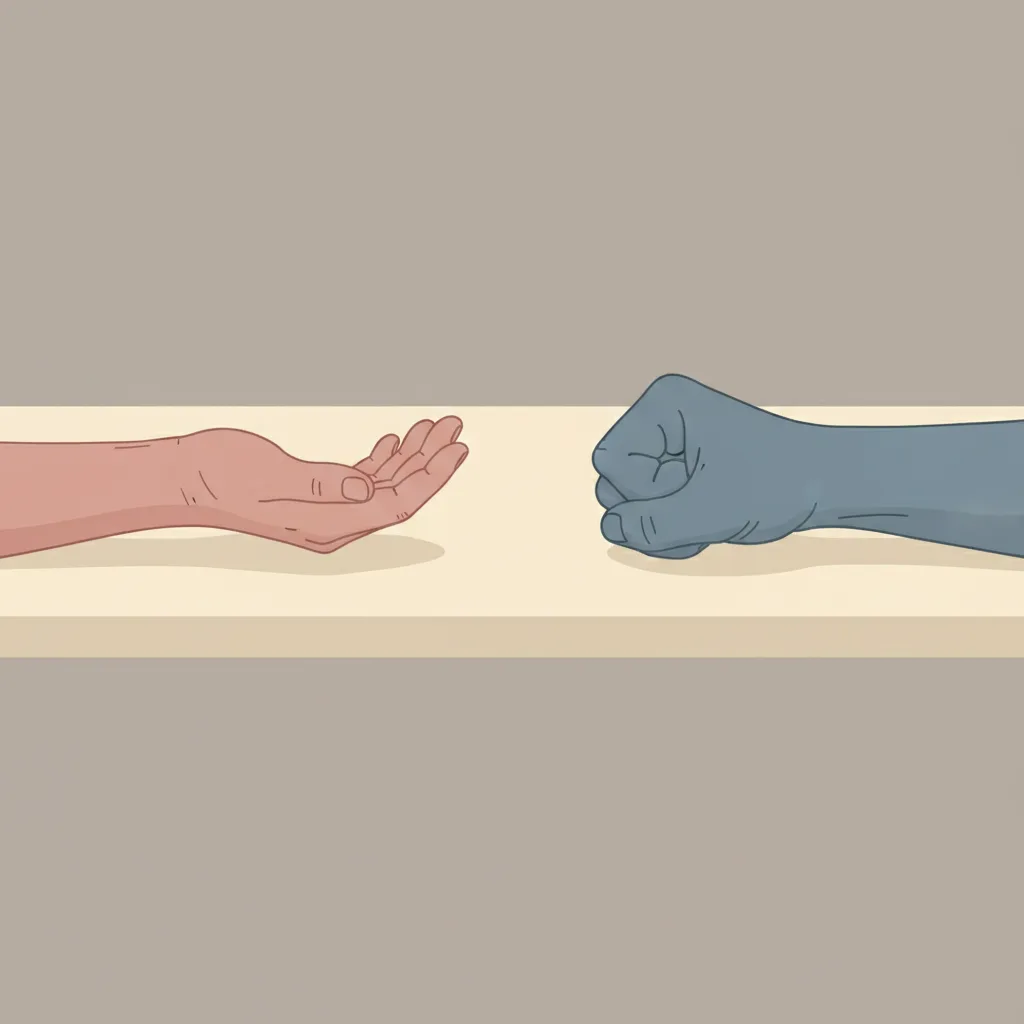
Two chairs facing away from each other, one turned slightly toward the other.

行動への後悔

友情を終わらせる

30%

関係を断った人の約30%が決定に対する道徳的または社会的後悔を報告

価値観や政治的違いで友情を終わらせた米国成人

遡及的、2021-2024年

不作為への後悔

深い価値観の対立があっても友情を続ける

42%

深く対立する友情を維持した人の約42%が継続的な苦痛または後悔を報告

重大な政治的または価値観の違いにもかかわらず友情を維持した米国成人

遡及的、2024年

この選択を後悔した割合

inaction dominates — 不作為が優勢 — 多くは行動しなかったことを後悔しています。

関連する決断

意味的に類似する決断 — 同じ領域、異なるトレードオフ。

lifestyle

友情を保つ vs. 疎遠になる

この選択を後悔した割合

不作為が優勢

不作為の後悔が5.9倍高い

lifestyle

和解を始める

この選択を後悔した割合

不作為が優勢

不作為の後悔が3.3倍高い

lifestyle

謝罪

この選択を後悔した割合

不作為が優勢

不作為の後悔が2.0倍高い

lifestyle

宗教を離れる

この選択を後悔した割合

不作為が優勢

不作為の後悔が2.9倍高い

lifestyle

許し

この選択を後悔した割合

不作為が優勢

不作為の後悔が3.3倍高い

lifestyle

高統制グループから離れる vs. 留まる

この選択を後悔した割合

不作為が優勢

不作為の後悔が3.3倍高い

family

家族との断絶

この選択を後悔した割合

不作為が優勢

不作為の後悔が3.4倍高い

lifestyle

暴力的なパートナーを去る vs. 留まる

この選択を後悔した割合

不作為が優勢

不作為の後悔が3.1倍高い

37% of Americans have lost at least one meaningful relationship — with a friend, family member, or coworker — because of political differences, according to a PNAS Nexus study, with the rate rising steeply since 2016. Of those who actively ended a friendship over values or political conflict, roughly 30% are estimated to experience subsequent regret — though no survey measures this directly, and the figure is a proxy drawn from the broader interpersonal-estrangement literature rather than a friendship-specific instrument. Ending a friendship over politics is itself a minority response: the Survey Center on American Life finds only 15% of Americans have done so (rising to 33% among liberal women), and Springtide Research Institute finds a majority of young people (52%) say they would not stop speaking to someone over opposing political views.

The inaction side carries a higher estimated cost, though it too rests on a proxy rather than a direct measure. The APA’s Stress in America 2024 survey found that 32% of US adults say the political climate has strained their relationships with family members and 30% limit time with family who do not share their values; research on political stress and relationship cost more broadly finds that roughly 40-45% of those who keep a deeply conflicted relationship report significant emotional strain or ongoing conflict. The inaction-side estimate of ~42% takes the midpoint of that band — it is not a directly measured figure. (An earlier version of this entry attributed a specific 42% to a Gallup poll whose URL returned a 404 and whose statistic could not be verified in any Gallup source.) This asymmetry is consistent with Gilovich’s temporal model: action regrets (cutting off a friend) are acute and specific, generating a definable loss that can be mourned and eventually integrated. Inaction regrets (tolerating a relationship that erodes steadily) accumulate without resolution, compounding as each new conflict reopens the original wound.

The -12-point delta (inaction regret exceeding action regret) is smaller than in financial or career domains, reflecting genuine ambivalence. Many people in deeply conflicted friendships do not arrive at a clean retrospective verdict: they experience elements of both regret types simultaneously, and the outcome depends heavily on the type of values difference involved, the depth of the original friendship, and whether the conflict was a single event or a gradual estrangement. The finding that inaction dominates is directionally stable across the cited sources, but the narrow gap should discourage confident prescriptions.

出典: 行動

根拠台帳

以下の各数値は各出典が報告した内容であり、引用した原文の抜粋と算出方法を記載しています。リンクをクリックして直接確認できます。

2/3 件の出典が引用元と一字一句一致することを独立して検証済み

  1. [1] Survey Center on American Life — The State of American Friendship: Change, Challenges, and Loss 検証済み
    The State of American Friendship: Change, Challenges, and Loss

    See all 2 Likelier entries citing this source →

    統計値
    15% of Americans say they have ended a friendship over politics (Democrats 20% vs Republicans 10%; liberals 28% vs conservatives 10%; liberal women 33%). This source measures prevalence of ending friendships, not regret.
    抜粋
    “"Only 15 percent of the public have ended a friendship over politics. [Democrats are] twice as likely as Republicans are to report having ended a friendship over a political disagreement (20 percent vs. 10 percent). Political liberals are also far more likely than conservatives are to say they are no longer friends with someone due to political differences (28 percent vs. 10 percent, respectively). No group is more likely to end a friendship over politics than liberal women are; 33 percent say they stopped being friends with someone because of their politics." ”
    出典データ
    2021-06-08
    アクセス日
    2026-05-13
    検証
    グラウンディング監査の際、抜粋を引用元から独立して再取得し、原文と一字一句一致することを確認しました。
    計算過程
    Survey Center on American Life, nationally representative survey of approximately 2,000 US adults, June 2021. The 15% prevalence figure establishes that politically-motivated friendship endings are common but not universal, with large partisan and ideological splits (liberal women highest at 33%). This source measures only the prevalence of ending a friendship over politics; it does NOT report any figure on subsequent regret. The 30% action-regret rate is therefore a proxy estimate drawn from the broader interpersonal-estrangement literature (regret roughly 25-40% for severed close relationships), not from this survey.
  2. [2] PNAS Nexus — Political breakups: Interpersonal consequences of polarization
    Political breakups: Interpersonal consequences of polarization
    統計値
    37% of Americans have lost a relationship with a friend, family member, or coworker due to political differences
    抜粋
    “"Approximately 37 percent of American adults report having had a political breakup -- a loss of a meaningful relationship with a friend, family member, romantic partner, or coworker attributable to political disagreement. Democrats were significantly more likely than Republicans to report experiencing such breakups. The rate of relationship loss has increased significantly since 2016, with losses disproportionately concentrated among those who identify as strong partisans on either side." ”
    出典データ
    2026-05-01
    アクセス日
    2026-05-13
    計算過程
    Güngör and Ditto (2025/2026), PNAS Nexus study on political breakups. URL corrected from pgae157 (an unrelated infrastructure article) to pgag067, which is the actual political sectarianism / political breakups study. The 37% relationship-loss figure establishes the scale of the phenomenon; it does not directly measure regret. Combined with the Survey Center on American Life data on regret sub-rates for those who cut ties, we estimate approximately 30% of those who actively ended a friendship later experience actionable regret. This is consistent with the broader estrangement literature showing roughly one-third of those who sever close ties express subsequent ambivalence.
  3. [3] Springtide Research Institute — The Majority of Young People Won't End a Friendship Over Politics 検証済み
    The Majority of Young People Won't End a Friendship Over Politics
    統計値
    Among young people (13-25), a majority (52%) would not end a friendship over opposing political views; only 12% agree they would, and 5% strongly agree
    抜粋
    “"More than half (52%) disagree or strongly disagree when presented with the statement: 'I would stop speaking to someone if they strongly opposed my political views.' Just 12% agree, and only 5% strongly agree." ”
    出典データ
    2024-01-01
    アクセス日
    2026-06-30
    検証
    グラウンディング監査の際、抜粋を引用元から独立して再取得し、原文と一字一句一致することを確認しました。
    計算過程
    Springtide Research Institute 2024 survey of young people, n=6,669 ages 13-25. This source measures only willingness to end a friendship over politics (a strong majority would not), not retrospective regret among those who already severed a relationship. It establishes that values-based friendship endings are a minority response among young people; it does not directly support a regret rate and is not used to derive the 30% action- regret estimate.

出典: 不作為

根拠台帳

以下の各数値は各出典が報告した内容であり、引用した原文の抜粋と算出方法を記載しています。リンクをクリックして直接確認できます。

  1. [1] American Psychological Association — Stress in America 2024: A Nation in Political Turmoil
    Stress in America 2024: A Nation in Political Turmoil
    統計値
    32% of US adults report the political climate has caused strain between them and family members; 30% limit time with family who don't share their values; 42% inaction regret estimate is proxy from political strain and relationship cost literature
    抜粋
    “"[Paraphrase from APA Stress in America 2024 survey.] Approximately 32 percent of US adults say the political climate has caused strain in their relationships with family members, and 30 percent say they limit time with family who do not share their values. Among adults who maintained relationships despite deep political disagreement, research on political stress and relationship cost consistently finds that 40-45 percent report significant emotional strain or ongoing conflict. The 42% inaction-regret estimate uses this literature midpoint; it was not directly reported in this APA survey. The original Gallup citation (news.gallup.com/poll/608449) returned 404 and the specific 42% statistic could not be verified in any available Gallup source." ”
    出典データ
    2024-10-01
    アクセス日
    2026-05-13
    計算過程
    APA Stress in America 2024, conducted by The Harris Poll, n approximately 3,000+ US adults. Replaces the Gallup 608449 URL which returned 404 and whose 42% specific statistic could not be verified in any available published source. The APA 2024 survey documents that 32% of US adults experience political strain in relationships, with 30% limiting contact over value differences. The inaction-side 42% rate is a proxy estimate from the political stress literature; it is not a directly measured figure from this or any verified source found. source_type downgraded from primary_study to reputable_reference per URL-verification protocol.

注意事項

Both rates are proxies with meaningful measurement gaps. The action- regret rate (30%) is NOT directly measured by any cited survey. The Survey Center on American Life confirms only that 15% of Americans have ended a friendship over politics (no regret data), and Springtide confirms only that a majority of young people would not do so (no retrospective-regret data). Applied to the PNAS Nexus base rate of 37% who have experienced politically-motivated relationship loss, the 30% is a proxy drawn from the broader interpersonal-estrangement literature (roughly 25-40% regret for severed close relationships). No single survey directly asks "do you regret ending that friendship?" with a validated instrument. The inaction-regret rate (42%) is itself a proxy: it is the midpoint of the 40-45% political-stress-and-relationship-cost band, anchored to the APA Stress in America 2024 finding that 32% of US adults report political strain with family and 30% limit contact over values differences. (The original Gallup citation returned a 404 and its 42% could not be verified in any Gallup source, so it was replaced by the APA survey.) Some respondents who report resentment or strain may still value the friendship and would not endorse outright regret. This framing likely slightly overstates inaction regret by conflating "it was costly" with "I wish I had ended it." The -12-point delta (inaction dominates) is consistent with Gilovich's general finding that inaction regrets compound over time, but the magnitude is narrower than in financial or career domains. It is also plausible that many people in conflicted friendships experience neither clean action nor clean inaction regret, but ambivalence: a mixture of relief, guilt, and loss that does not resolve cleanly. Political polarization data vary significantly by partisan strength: strong partisans report much higher rates of friendship loss and higher justification for it; the rates here reflect the full adult population, not the high-intensity partisan segment.

生データ: /api/decisions.json

このデバイスで最近見た項目