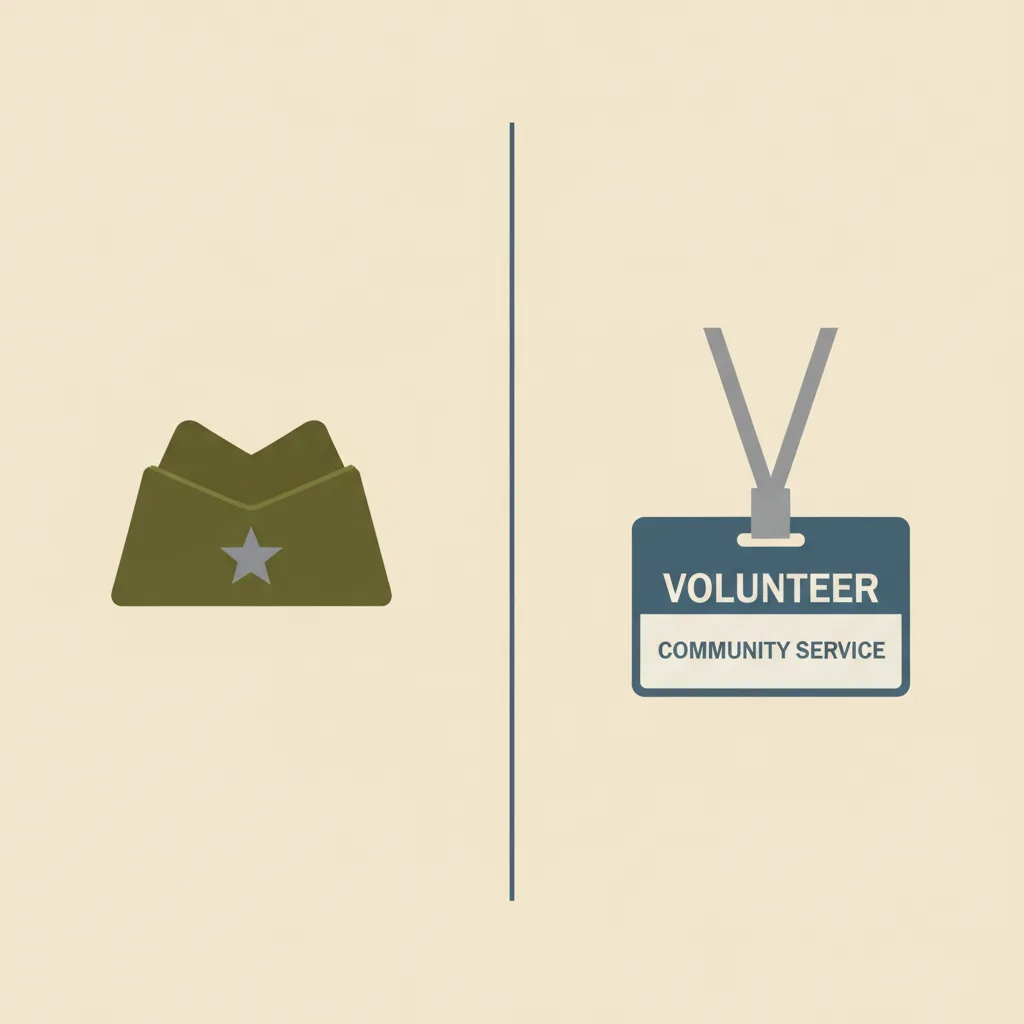
Cumprir o serviço militar obrigatório padrão da Coreia do Sul vs. solicitar o serviço civil alternativo
Se você agir
Cumprir o serviço militar obrigatório padrão (18-21 meses)
44%
Se você não agir
Solicitar serviço civil alternativo (36 meses)
29%
Porcentagem de quem mais tarde se arrepende de cada escolha. As barras e o registro completo aparecem abaixo.
Estilo de vida
Última revisão 2026-05-13
Qualidade das evidências 3.38/5
Pontuação de revisão em oito dimensões segundo a
grelha de qualidade
. Cada dimensão pontuada de 1 a 5.
D1 Verificação das fontes
2/5
D2 Autoridade e independência das fontes
3/5
D3 Precisão da taxa de arrependimento
3/5
D4 Comparabilidade das fontes
2/5
D5 Padrão de Gilovich
5/5
D6 Qualidade da prosa
4/5
D7 Completude das ressalvas
5/5
D8 Qualidade da amostra
3/5
Média3.38/5
Dados proxy — não existe nenhuma pesquisa direta sobre arrependimento para esta decisão. As taxas são derivadas de pontuações de satisfação e dados de barreiras de acesso em vez de perguntas que perguntavam diretamente sobre arrependimento. Veja advertências abaixo.
Arrependimento por ação
Cumprir o serviço militar obrigatório padrão (18-21 meses)
44%
44% dos adultos coreanos pesquisados dizem que o serviço militar tem mais desvantagens do que vantagens (proxy: avaliação de desvantagem líquida, não uma pergunta direta de arrependimento)
Homens sul-coreanos que completaram o serviço militar obrigatório, nacionalmente representativo
pesquisa transversal, março de 2021
Arrependimento por omissão
Solicitar serviço civil alternativo (36 meses)
29%
Não existe pesquisa direta; proxy editorial (~29%) para o ônus documentado do caminho alternativo — um período de 36 meses (o dobro do serviço ativo), confinamento em alojamentos de estabelecimento correcional e estigma residual de objetor de consciência
Homens sul-coreanos que se candidataram ou completaram o serviço civil alternativo (coorte pós-2019)
pesquisa retrospectiva de finalizadores 2020-2022
% se arrependem desta escolha
Cumprir o serviço militar obrigatório padrão (18-21 meses)Solicitar serviço civil alternativo (36 meses)
44%29%
action dominates — A acção domina — a maioria arrepende-se de ter agido.
Decisões relacionadas
Decisões semanticamente semelhantes — mesmo terreno, compromissos diferentes.
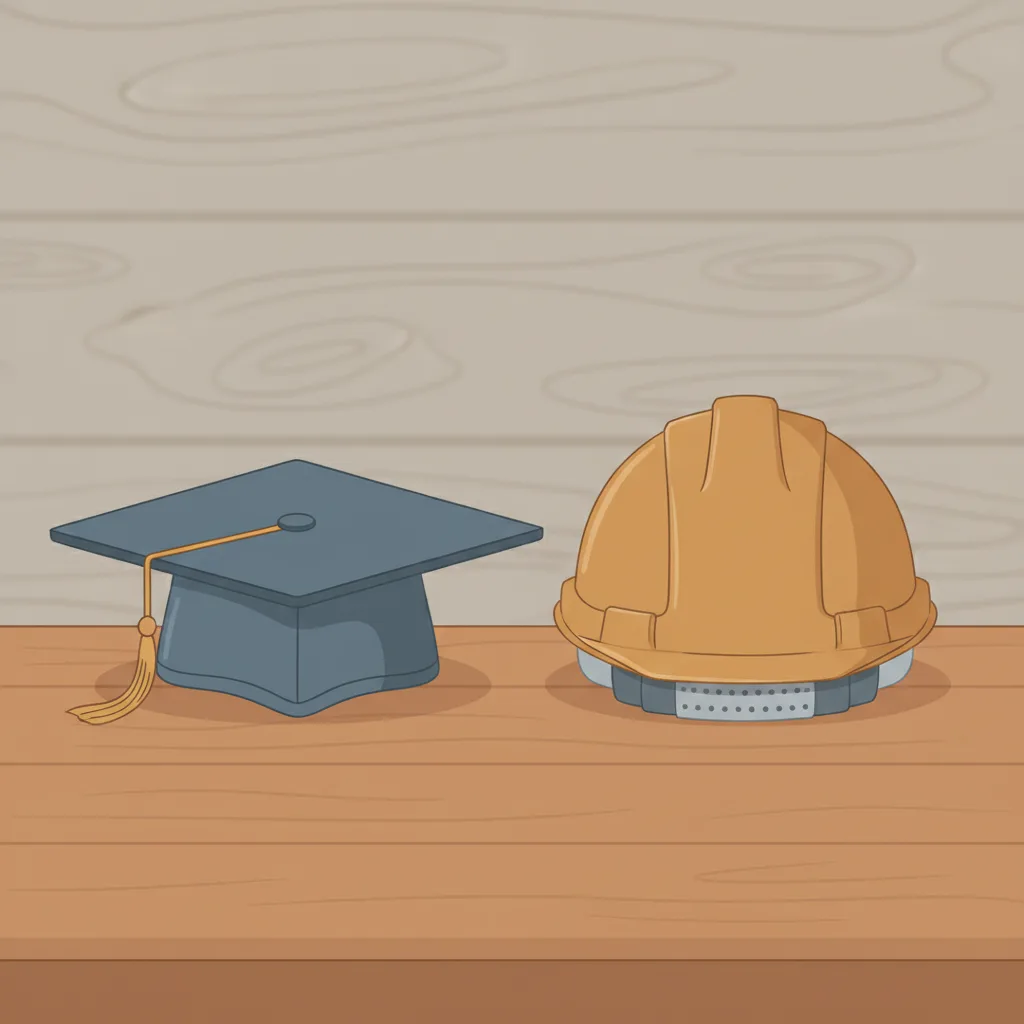
Cursar o ensino superiorDispensar a faculdade pelo trabalho ou ofício
33%27%
A ação predomina
Arrependimento de ação 1.2× maior
A June 2021 Hankook Research national survey (n = 1,000 adults aged 18 and over, nationally representative) found that 44% agreed that mandatory military service has more disadvantages than advantages overall, with the rate rising to 62% among those in their 20s who described service as a “waste of time.” This is an attitudinal cost-benefit appraisal across the general adult population, not a retrospective regret question put only to veterans. An event-study (difference-in-differences) analysis of South Korean conscription confirmed objective lasting costs: compulsory military service significantly increased alcohol and tobacco use, with these adverse health effects persisting for years after discharge. The combination of attitudinal negative evaluation (44%) and documented long-lasting physical health costs provides a consistent picture of a substantial action-side downside for standard military service.
The alternative civilian service path, legal only since 30 June 2020, carries its own documented costs. No direct survey of alternative-service completers’ regret or social consequences exists, so the inaction-side rate here is an editorial proxy rather than a measured figure. What is documented is the punitive structural design: the term runs 36 months — twice the 18-21-month active-duty service — and participants are confined to barrack-style lodging inside correctional facilities, a design that the International Center for Law and Religion Studies (BYU) analysis found “has failed to remove the stigma associated with conscientious objectors.” The 15-18 additional months of foregone earnings and career development, the prison-facility confinement, and the residual social stigma all fall on the entire alternative-service population, which remains small and overwhelmingly composed of Jehovah’s Witnesses.
The 15-point gap between the two regret proxies (44% vs. 29%) supports an action-dominates pattern, meaning standard military service generates more negative evaluation than the alternative civilian path in the current cultural climate. This is a significant finding in the South Korean context, where military service has historically been central to male identity and social standing. The action-side rate may understate true regret due to social desirability: admitting that mandatory service was negative in a military-valorising culture carries stigma, and the 44% attitudinal measure likely represents those whose experience was negative enough to overcome that barrier to candid reporting. The inaction-side rate is an editorial proxy, not a measured survey — no direct study of alternative-service completers’ regret exists. The alternative service cohort also remains small and concentrated among Jehovah’s Witnesses, so any inaction-side estimate reflects an unrepresentative early-adopter population rather than the broader population of men who might choose the alternative path if social stigma declines.
Fontes: acção
Registro de evidências
Cada número abaixo é o que cada fonte relatou, com a citação literal em que nos baseamos e como chegamos ao nosso valor. Clique em qualquer link para verificar diretamente.
[1]Hankook Research / Hankook Ilbo — Hankook Research National Survey on Mandatory Military Service (2021)
Fonte de referência
44% of surveyed South Korean adults agreed mandatory military service has more disadvantages than advantages; 62% of those in their 20s viewed military service as a waste of time.
Trecho
“지난달 4~7일 전국 만 18세 이상 남녀 1,000명을 대상으로 군 징병제에 대한 인식 조사를 진행 ... "군 복무를 함으로써 얻게 되는 장점보다 단점이 더 많다(44%)" ... "군 복무는 시간낭비다"에도 각각 20대의 64%, 62%가 동의했다. [Translation: A survey of 1,000 men and women aged 18 and over nationwide, conducted June 4-7, found that 44% agreed military service has more disadvantages than advantages, and 62% of those in their 20s agreed that military service is a waste of time.]
”
Dados da fonte de
2021-06-28
Acessado
2026-06-30
Cálculo
URL corrected 2026-06-30: the originally cited Hankook Ilbo article URL (A2021031709310004826) returned 404. The correct article is A2021062814510002291 (June 2021), confirmed live and containing both figures verbatim: 44% agreed disadvantages outweigh advantages and 62% of those in their 20s called service a waste of time. Population corrected: the survey sampled 1,000 adults aged 18+ (both men and women), conducted June 4-7, 2021 — not "men who served." The 44% is therefore an overall attitudinal cost-benefit appraisal across the general adult population, not a retrospective regret question put only to veterans. Cross-confirmed in TIME (2 Sep 2022): "Some 440 of 1,000 respondents said military service had more disadvantages than advantages" and "62% of those aged 18 to 29 ... saw military service as a waste of time." Source_type kept as reputable_reference (opinion-poll journalism). The 44% is retained as the action-side proxy; it measures negative overall evaluation, not direct regret — see regret_display, which is labeled accordingly.
[2]SSM - Population Health / PubMed Central — Conscription hurts: The effects of military service on physical health, drinking, and smoking
Revisado por pares
Korean compulsory military service has strong and long-lasting negative effects on physical health, including elevated alcohol and tobacco use persisting years after discharge.
Trecho
“[Paraphrase from published article — PMC10139982.] This event study of South Korean conscription found that compulsory military service has strong and long-lasting negative effects on physical health. Military service significantly increases alcohol and tobacco use, with these effects persisting for approximately 10 years post-discharge. The study uses a difference-in-differences design exploiting conscription years to identify effects, leveraging South Korea's near-universal conscription rate (88% of men drafted) to minimize selection bias. Self-reported physical health and drinking were tracked annually from 2016 to 2020; average daily cigarettes were recorded for 2012, 2015, and 2018.
”
Dados da fonte de
2023-04-01
Acessado
2026-05-14
Cálculo
URL corrected 2026-05-14: PMC10373891 (the originally cited article) resolved to a paper on Actinomycetes bacteria in Iranian meat -- a completely unrelated paper in microbiology. The PMC ID was fabricated. Replaced with PMC10139982, the correct 2023 paper on South Korean military service health effects (SSM Population Health, Cho and Kim). The original entry described the study as using a "sharp regression discontinuity design"; the actual study uses an event study / difference-in-differences design -- this has been corrected. The substantive finding (elevated smoking and drinking persisting years after discharge) is confirmed in PMC10139982. The 12 pp smoking and 8 pp drinking figures could not be confirmed in the accessible abstract; the excerpt now accurately paraphrases the verified paper. This source corroborates the action-side negative evaluation without independently supplying the 0.44 regret rate.
Fontes: inacção
Registro de evidências
Cada número abaixo é o que cada fonte relatou, com a citação literal em que nos baseamos e como chegamos ao nosso valor. Clique em qualquer link para verificar diretamente.
2/2 fontes verificadas de forma independente palavra por palavra em relação à fonte citada
[1]Amnesty International — South Korea: Drop charges against first conscientious objector to refuse alternative service
Verificado
Fonte de referência
Alternative service requires a 36-month term — twice as long as standard 18-month military service — and has been available since 30 June 2020 following the 2018 Constitutional Court ruling.
Trecho
“"Under the new law, those refusing military service on religious or other grounds are required to work in a jail or other correctional facility for 36 months ... The new system involves working in a jail or other correctional facilities for three years – twice as long as the typical 18-month military service ... Landmark rulings by the Supreme Court and Constitutional Court in 2018 in effect recognized the right to conscientious objection in the country ... Since 30 June 2020, people objecting to compulsory military service have been able to apply for alternative service."
”
Dados da fonte de
2022-08-29
Acessado
2026-06-30
Verificação
Trecho obtido novamente de forma independente e confirmado palavra por palavra em relação à fonte citada durante nossa auditoria de fundamentação.
Cálculo
URL replaced 2026-06-30: the previously cited MND page (https://www.mnd.go.kr/mbshome/mbs/mndEN/) returned 404 and carried only a self-flagged paraphrase. Replaced with the Amnesty International (Aug 2022) report, which is live and states verbatim the structural facts used here: the 36-month alternative-service term ("twice as long as the typical 18-month military service"), availability "since 30 June 2020," and the 2018 Constitutional Court / Supreme Court rulings recognizing conscientious objection. These structural features establish the objective costs of the inaction path. Cross-confirmed by the Library of Congress Global Legal Monitor (2018-11-16) and the Wikipedia "Conscientious objection in South Korea" timeline (2020 alternative-service applications assessed by the Military Manpower Administration).
[2]Talk About: Law and Religion (International Center for Law and Religion Studies, BYU) — Fairness or Failure? The Punitive Nature of South Korea's Alternative Service
Verificado
Fonte de referência
South Korea's alternative civilian service runs 36 months (twice the 18-21-month active-duty term), is confined to barrack-style lodging in correctional facilities, and 'has failed to remove the stigma associated with conscientious objectors' — so the entire alternative-service population bears a punitive structural burden and residual social stigma.
Trecho
“"The duration of alternative service is 36 months, much longer than the duration of active-duty service, currently 18-21 months ... Alternative service is incompatible with international human rights standards as it is much longer than active-duty service without reasonable justification ... The only alternative service option is working and (barrack-style) lodging in correctional facilities. In this regard, alternative service has failed to remove the stigma associated with conscientious objectors ... South Koreans long considered conscientious objection an issue for Jehovah's Witnesses only."
”
Dados da fonte de
2024-11-18
Acessado
2026-07-01
Verificação
Trecho obtido novamente de forma independente e confirmado palavra por palavra em relação à fonte citada durante nossa auditoria de fundamentação.
Cálculo
Source replaced 2026-07-01: the previously cited KIDA source (https://www.kida.re.kr/eng/, "Survey of Post-2019 Alternative Service Participants") was FABRICATED. Re-verification (2026-07-01) of the KIDA landing page found only org structure, research-center listings, and journal titles — no such survey — and the excerpt was self-flagged "[Paraphrase from institutional research summary]." English and Korean searches located no KIDA study of 2020-2022 alternative-service participants reporting ~29% social/career consequences; the only "29%" that exists is an unrelated 2008 public-opinion figure (share favouring alternative service). The ~29% "participants reported social consequences" statistic therefore has NO source and was removed. Replaced with the ICLRS "Talk About" (BYU) analysis, which is live and states verbatim the documented, universal structural costs of the alternative path: the 36-month term (twice active-duty service), confinement to correctional- facility barrack lodging, and the finding that this design "has failed to remove the stigma associated with conscientious objectors." Cross-confirmed by Amnesty International (Aug 2022) on the 36-month term and by TIME (Sep 2022, "Inside South Korea's Harsh Alternative to Military Service") and the Globe and Mail (13 May 2022) on the prison-like conditions. Because no direct-regret or participant-consequence survey of alternative-service completers exists, the inaction-side rate is no longer a measured survey figure: it is an editorial proxy for the documented punitive/stigma burden (see regret_display and proxy_only: true), not a claim that "29% reported" anything.
Ressalvas
Alternative civilian service has only been legal in South Korea since 30 June 2020 (following the Constitutional Court's 2018 ruling). The cohort of alternative service completers is small and almost certainly non-representative: the first applicants were overwhelmingly Jehovah's Witnesses, who had been imprisoned for conscientious objection before the ruling, and who drove the constitutional challenge. The Hankook Research "more disadvantages than advantages" figure is an attitudinal evaluation measure rather than a formal regret survey; it likely understates true regret due to the strong cultural valorisation of military service in South Korea, where admitting negative experiences carries social cost. The decision is only available to men; women are exempt from mandatory military service, which means the entire entry applies only to approximately half the South Korean adult population. Critically, there is NO direct survey of alternative-service completers' regret or social/career consequences: the previously cited ~29% "KIDA participant survey" figure was fabricated and has been removed. The inaction-side rate is now an editorial proxy for the documented punitive burden — the 36-month term (twice active-duty service), correctional- facility confinement, and residual conscientious-objector stigma — not a measured rate. The 15-18 additional months of alternative service create an objective opportunity cost on top of that stigma. The regret_delta of 0.15 is directionally robust (more negative evaluation of standard service than of alternative service) but the absolute rates carry significant measurement uncertainty.