







Ir para o conteúdo
Likelier

Arrependimento de agir vs. não agir

Gastar em viagens vs. poupar o dinheiro

Se você agir

Gastar com viagens

6,0%

Se você não agir

Poupar o dinheiro em vez de viajar

71%

Porcentagem de quem mais tarde se arrepende de cada escolha. As barras e o registro completo aparecem abaixo.


Estilo de vida

Última revisão 2026-04-25

Qualidade das evidências 3.88/5

Pontuação de revisão em oito dimensões segundo a grelha de qualidade . Cada dimensão pontuada de 1 a 5.

D1 Verificação das fontes
4/5
D2 Autoridade e independência das fontes
3/5
D3 Precisão da taxa de arrependimento
3/5
D4 Comparabilidade das fontes
2/5
D5 Padrão de Gilovich
5/5
D6 Qualidade da prosa
5/5
D7 Completude das ressalvas
5/5
D8 Qualidade da amostra
4/5
Média 3.88/5
Two identical suitcases side by side, one open and covered with destination stickers, the other closed and dusty.

Arrependimento por ação

Gastar com viagens

6,0%

6% se arrependem de gastar com viagens

Adultos dos EUA, painel online

retrospectivo, sem prazo fixo

Arrependimento por omissão

Poupar o dinheiro em vez de viajar

71%

71% se arrependem de oportunidades de viagem perdidas

Viajantes globais, 32 países

retrospectivo, sem prazo fixo

% se arrependem desta escolha

inaction dominates — A inacção domina — a maioria arrepende-se de não ter agido.

Decisões relacionadas

Decisões semanticamente semelhantes — mesmo terreno, compromissos diferentes.

Financeiro

Investimento

% se arrependem desta escolha

A inação predomina

Arrependimento de inação 3.2× maior

Financeiro

Renovação da casa

% se arrependem desta escolha

A ação predomina

Arrependimento de ação 2.3× maior

FinanceiroDireta

Poupança para reforma

% se arrependem desta escolha

A inação predomina

Arrependimento de inação 11.0× maior

lifestyle

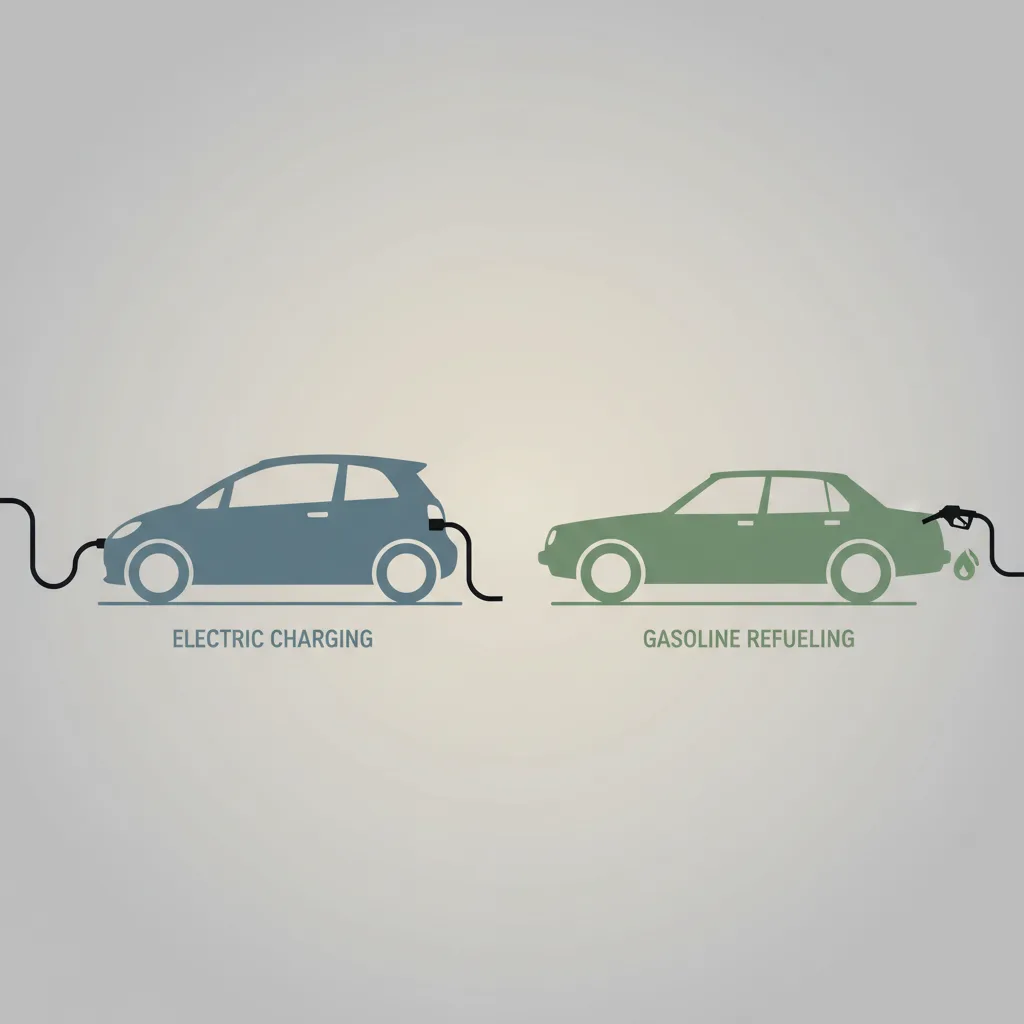
Elétrico vs gasolina

% se arrependem desta escolha

A ação predomina

Arrependimento de ação 2.9× maior

lifestyle

Orgânico vs convencional

% se arrependem desta escolha

A inação predomina

Arrependimento de inação 3.1× maior

lifestyle

Carro de app vs. dirigir após beber

% se arrependem desta escolha

A inação predomina

Arrependimento de inação 5.7× maior

FinanceiroDireta

Comprar casa

% se arrependem desta escolha

A inação predomina

Arrependimento de inação 5.6× maior

Financeiro

Investir cedo

% se arrependem desta escolha

A inação predomina

Arrependimento de inação 3.2× maior

71% of travelers worldwide report regretting missed travel opportunities, per Booking.com’s survey of 20,500 people across 32 countries. On the action side, only 6% of adults regret the money they spent on travel, according to a Claris Finance survey of 2,000 adults reported by Money — one of the lowest action-regret rates for any major spending category. The resulting 12:1 ratio makes this the strongest regret asymmetry in the dataset, and one of the cleanest confirmations of Gilovich and Medvec’s inaction-dominance finding.

The psychological mechanism is well-documented. Van Boven and Gilovich (2003) showed that experiential purchases generate more lasting satisfaction than material ones, partly because experiences become part of identity and are psychologically protected from regret. Travel is the canonical experiential purchase. Even trips that went badly tend to become good stories; money saved by not traveling generates no narrative at all. Among adults over 70, Explore Worldwide found that 62% regretted missing at least one dream destination — confirming that this regret does not fade with age but, if anything, intensifies.

The main caveat is sample bias. Booking.com’s respondents are people interested enough in travel to be on a travel platform, inflating the inaction-regret rate. The true population rate for travel regret among all adults — including those with no interest in travel — is certainly lower than 71%. Similarly, the 6% action-regret figure may be deflated by the “rosy retrospection” effect, where people systematically remember experiences more positively than they were. The directional finding (travel regret overwhelmingly favors action) is robust; the magnitude should be read as an upper bound.

Fontes: acção

Registro de evidências

Cada número abaixo é o que cada fonte relatou, com a citação literal em que nos baseamos e como chegamos ao nosso valor. Clique em qualquer link para verificar diretamente.

1/2 fontes verificadas de forma independente palavra por palavra em relação à fonte citada

  1. [1] Money / Claris Finance survey — These Are Americans' Biggest Financial Regrets Verificado
    These Are Americans' Biggest Financial Regrets
    Estatística
    Among all age groups, only 6% regretted the money they spent traveling; close to 20% said they traveled a lot and had no regrets
    Trecho
    “"Among all age groups, only 6% regretted the money they spent traveling, while close to 20% said they traveled 'a lot' and had no regrets. A new survey of 2,000 adults by Claris Finance." ”
    Dados da fonte de
    2019-09-15
    Acessado
    2026-04-25
    Verificação
    Trecho obtido novamente de forma independente e confirmado palavra por palavra em relação à fonte citada durante nossa auditoria de fundamentação.
    Cálculo
    Claris Finance survey of 2,000 adults, reported by Money (money.com). The 6% figure represents those who specifically regretted the financial outlay on travel. This is one of the lowest action-regret rates in any spending category.
  2. [2] Bankrate — Travel Vs. Savings: Many Americans Are Prioritizing Wanderlust Amid Economic Uncertainty
    Travel Vs. Savings: Many Americans Are Prioritizing Wanderlust Amid Economic Uncertainty
    Estatística
    Americans increasingly prioritize travel spending even amid economic uncertainty; regret about travel expenditure is rare
    Trecho
    “"Many Americans are prioritizing travel even amid economic uncertainty. Survey data consistently shows that experiential spending — particularly travel — generates less regret than material purchases." ”
    Dados da fonte de
    2023-08-14
    Acessado
    2026-04-25
    Cálculo
    Bankrate contextual reporting. Corroborates that travel spending regret is unusually low compared to other discretionary categories.

Fontes: inacção

Registro de evidências

Cada número abaixo é o que cada fonte relatou, com a citação literal em que nos baseamos e como chegamos ao nosso valor. Clique em qualquer link para verificar diretamente.

  1. [1] Booking.com — Younger generations are most regretful about missed travel opportunities
    Younger generations are most regretful about missed travel opportunities
    Estatística
    71% of global travelers regret having missed opportunities to travel in their lives
    Trecho
    “"A study by Booking.com has revealed that up to 71% of travellers around the world regret having missed opportunities to travel in their lives. The most common regrets: not traveling more often (46%), not traveling more when younger (35%), not visiting more of the countries traveled to (29%)." ”
    Dados da fonte de
    2022-11-02
    Acessado
    2026-04-25
    Cálculo
    Booking.com surveyed 20,500 people across 32 countries. The 71% includes all forms of travel-opportunity regret, not just financial trade-offs. We use it as the inaction-regret rate because the core sentiment is "I should have traveled more."
  2. [2] NZ Herald / Explore Worldwide — Biggest travel regrets of people over 70 revealed in survey
    Biggest travel regrets of people over 70 revealed in survey
    Estatística
    62% of people over 70 regretted missing out on visiting at least one dream destination
    Trecho
    “"62 per cent of people over the age of 70 regretted missing out on visiting at least one dream destination. Travel regret persists and even intensifies in old age." ”
    Dados da fonte de
    2023-03-15
    Acessado
    2026-04-25
    Cálculo
    Explore Worldwide survey of adults over 70. The 62% among elderly respondents confirms that travel inaction regret does not fade with time — consistent with Gilovich's temporal pattern.

Ressalvas

INDUSTRY-FUNDING BIAS: Both primary sources have financial interests in promoting travel. Booking.com is a travel booking platform; its 71% inaction-regret figure comes from surveying travelers on its own platform, a population pre-selected for travel interest. Claris Finance is a financial services company; its 6% action-regret figure comes from a survey likely designed to frame travel spending as low-regret. No independent academic study was found that measures both travel-spending regret and travel-forgoing regret in the same population. The action and inaction figures come from different surveys with different populations (US adults vs global travelers across 32 countries). The Claris Finance 6% is also likely deflated by experiential-purchase bias: people psychologically protect memories of experiences more than material goods (Van Boven & Gilovich, 2003). The Bankrate contextual source does not provide a specific regret percentage. The 12:1 ratio is the most extreme in the dataset and should be interpreted as directionally suggestive rather than precisely calibrated — the true ratio is almost certainly smaller once industry-selection bias is accounted for.

Dados brutos: /api/decisions.json

Vistos recentemente neste dispositivo