Когда у ребёнка повторяющиеся инфекции горла, о чём жалеют родители — об удалении миндалин или о том, что выжидали и сохранили их?
Если вы действуете
Удаление миндалин у ребёнка
9,0%
Если вы бездействуете
Сохранение миндалин (выжидательное наблюдение)
28%
Доля тех, кто впоследствии жалеет о каждом выборе. Столбцы и полный реестр показаны ниже.
Здоровье
Последнее обновление 2026-06-21
Качество доказательств 4.13/5
Оценка по восьми измерениям согласно
рубрике качества
. Каждое измерение оценивается от 1 до 5.
D1 Проверка источников
4/5
D2 Авторитетность и независимость источника
5/5
D3 Точность уровня сожаления
3/5
D4 Сопоставимость источников
4/5
D5 Шаблон Гиловича
4/5
D6 Качество текста
4/5
D7 Полнота оговорок
4/5
D8 Качество выборки
5/5
Среднее4.13/5
Косвенные данные — для этого решения не существует прямого исследования сожалений. Показатели получены из оценок удовлетворённости и данных о барьерах доступа, а не из вопросов, непосредственно касавшихся сожалений. Смотрите оговорки ниже.
Сожаление о действии
Удаление миндалин у ребёнка
9,0%
~9% родителей не удовлетворены результатом; сожаление о решении низкое (медиана 0 по Шкале сожаления о решении)
Родители детей, перенёсших (адено)тонзиллэктомию
1 год после операции
Сожаление о бездействии
Сохранение миндалин (выжидательное наблюдение)
28%
28% родителей пожалели, что не организовали операцию раньше (прокси-показатель сожаления о бездействии)
Родители детей, перенёсших (адено)тонзиллэктомию, оглядываясь на задержку
1 год после операции, ретроспективно
% сожалеют об этом выборе
Удаление миндалин у ребёнкаСохранение миндалин (выжидательное наблюдение)
9,0%28%
inaction dominates — Бездействие преобладает — большинство сожалеет, что не действовали.
Похожие решения
Семантически близкие решения — та же область, другие компромиссы.
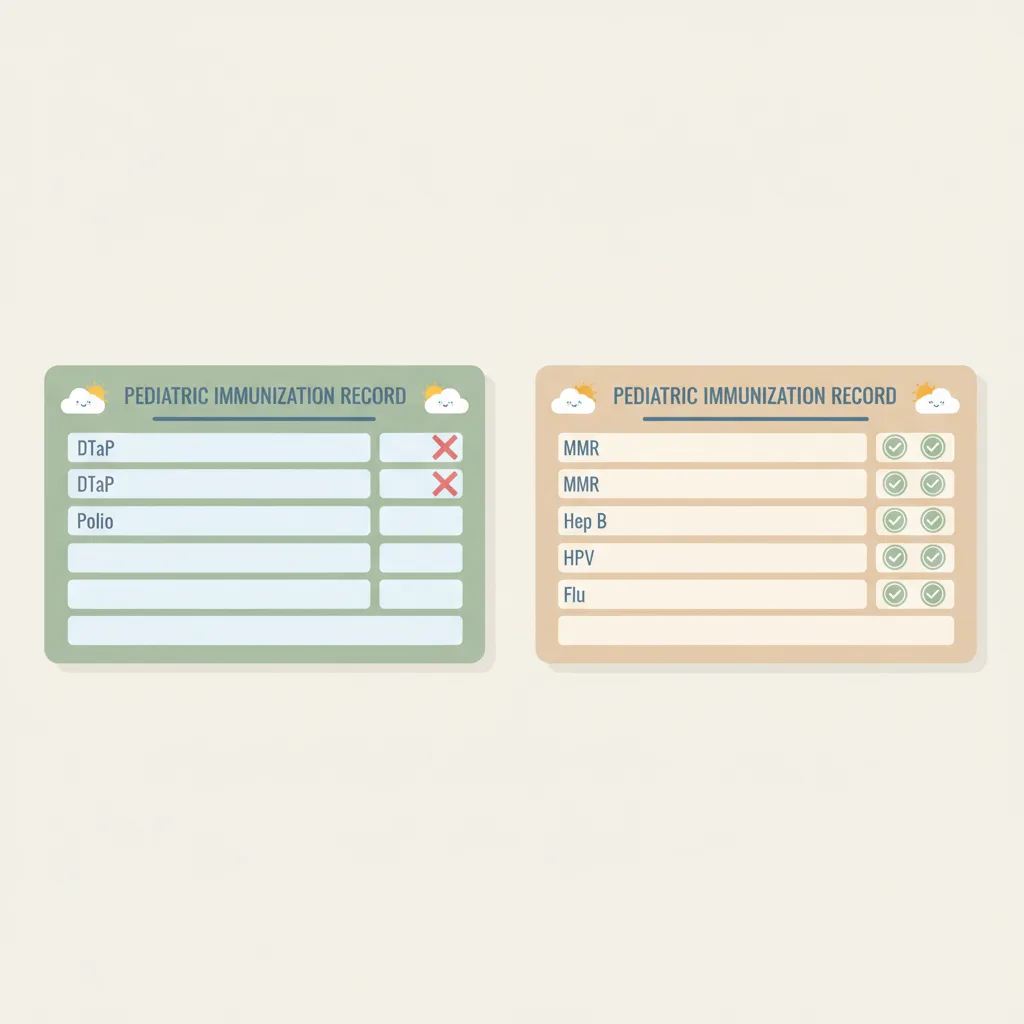
Пропустить, отсрочить или избирательно отказаться от детских прививок (без MMR, без DTaP, альтернативный график или полный отказ)Следовать рекомендованному календарю иммунизации CDC/AAP для детей (MMR, DTaP, полиомиелит, Hib, гепатит B, ветрянка и др. по графику)
In a prospective study of 576 families whose children had their tonsils removed for recurrent throat infections, 91% of parents were satisfied with the benefit one year later, and febrile sore-throat episodes fell from a mean of 6.7 in the year before surgery to 1.5 in the year after (Wolfensberger et al., 2000). Direct measurement with the validated Decision Regret Scale tells the same story from the other direction: among 102 families, median decisional regret after tonsillectomy was 0 (Carr et al., 2016), with the regret that did exist concentrated among parents who had entered the decision conflicted. For the typical family that proceeds, action regret is low — roughly the 9% who were not satisfied with the result.
The waiting side carries more documented hindsight regret. In the same 576-family cohort, 28% of parents regretted not having arranged the surgery earlier — a wish, in retrospect, that they had stopped waiting sooner. This is the inaction-regret proxy, and it must be read with care: it is measured among parents who ultimately operated, not among families who declined surgery and kept the tonsils, because no survey directly asks the watchful-waiting group whether they regret that choice. The AHRQ-supported systematic review (Morad et al., 2017) explains the structural reason the asymmetry runs this way: surgery produces a real but modest reduction in throat infections in the first year that does not persist, while most children improve with age regardless. The regretted cost of waiting is therefore the year or two of continued illness, not a permanent loss.
The pattern fits Gilovich and Medvec’s temporal asymmetry: the parents who acted overwhelmingly judge the outcome positively, while a larger share of those who delayed wish they had moved sooner. The honest limits are real. Both proxy rates come from a single surgical cohort, the action figure is dissatisfaction rather than regret, and tonsillectomy carries genuine surgical risk — post-operative bleeding and anaesthetic complications — that satisfaction surveys understate. Current guidelines (AAO-HNS, 2019) deliberately frame the benefit as “modest” against the natural history of resolution. What the data establish is a direction, not a precise gap: among families facing recurrent throat infection, the decision to wait generates more retrospective regret than the decision to operate, even though for most children the difference fades within a couple of years.
Источники: действие
Реестр утверждений
Каждое число ниже — это то, что сообщил источник, с дословной цитатой, на которую мы опирались, и тем, как мы пришли к нашей цифре. Нажмите на ссылку, чтобы проверить самостоятельно.
1/2 источников независимо дословно сверены с указанным источником
[1]International Journal of Pediatric Otorhinolaryngology (Wolfensberger, Haury & Linder 2000) — Parent satisfaction 1 year after adenotonsillectomy of their children
Проверено
Рецензируемая публикация
524 of 576 parents (91%) satisfied with the benefit one year after surgery; febrile sore throat episodes fell from a mean of 6.7 to 1.5 per year
Выдержка
“"[Paraphrase from abstract — full text paywalled] Of 664 children enrolled, 576 parents returned the follow-up questionnaire (87%). 524 parents (91%) were satisfied with the benefit. The number of episodes of febrile sore throat dropped from a mean of 6.7 in the year prior to surgery to a mean of 1.5 in the year after surgery (P<0.001). 88% of the (adeno-)tonsillectomies were performed because of documented recurrent febrile tonsillitis or obstructive symptoms."
”
Данные источника:
2000-12-01
Дата обращения
2026-06-21
Проверка
Выдержка независимо повторно загружена и подтверждена слово в слово по указанному источнику в ходе нашей проверки достоверности.
Расчёт
Prospective multicenter study; 576 of 664 enrolled families returned the 1-year questionnaire. 91% satisfied implies ~9% not satisfied with the benefit, which we use as the action-side regret proxy. This is a dissatisfaction measure, not the word "regret"; it is the closest directly-quantified action-side signal in a recurrent-infection population. European (Zurich) cohort.
[2]Otolaryngology–Head and Neck Surgery (Carr, Derr & Karikari 2016) — Decisional Conflict and Regret in Parents Whose Children Undergo Tonsillectomy
Рецензируемая публикация
Among 102 families, median decisional regret was 0 (mean 8.78 on the 0–100 Decision Regret Scale); regret was higher in parents who had decisional conflict (20.00 vs 7.59; P<.05)
Выдержка
“"[Paraphrase from abstract — full text paywalled] A total of 102 families were studied (mean child age 6.29 years). Median decisional regret was 0 (mean 8.78); median decisional conflict was 0 (mean 7.74). Decisional regret was significantly higher in parents who reported decisional conflict (20.00 vs 7.59; P<.05). Decisional conflict was higher in parents who cancelled surgery or failed to keep follow-up appointments (27.19) than in parents who brought their children for surgery (6.78; P<.05)."
”
Данные источника:
2016-11-01
Дата обращения
2026-06-21
Расчёт
Direct Decision Regret Scale measurement (validated Brehaut DRS, 0–100). Median 0 confirms decisional regret after tonsillectomy is low for most parents and concentrated among those who entered the decision conflicted. Corroborates the ~9% dissatisfaction figure: the action side carries low regret for the typical parent.
Источники: бездействие
Реестр утверждений
Каждое число ниже — это то, что сообщил источник, с дословной цитатой, на которую мы опирались, и тем, как мы пришли к нашей цифре. Нажмите на ссылку, чтобы проверить самостоятельно.
1/2 источников независимо дословно сверены с указанным источником
[1]International Journal of Pediatric Otorhinolaryngology (Wolfensberger, Haury & Linder 2000) — Parent satisfaction 1 year after adenotonsillectomy of their children
Рецензируемая публикация
159 of 576 parents (28%) regretted not having arranged to have surgery performed earlier
Выдержка
“"[Paraphrase from abstract — full text paywalled] 159 parents (28%) regretted not having arranged to have surgery performed earlier. Obstructive symptoms disappeared in 80% of cases."
”
Данные источника:
2000-12-01
Дата обращения
2026-06-21
Расчёт
This 28% is the inaction-regret proxy: parents wishing, in hindsight, that they had acted sooner rather than waited. Construct caveat — it is measured among parents who ultimately had surgery (regret of the waiting period), not among a watchful-waiting cohort that never operated. No survey directly asks parents who declined surgery whether they regret keeping the tonsils. Both action and inaction figures come from the same surgical population; the asymmetry (9% vs 28%) is the defensible signal, not the precise magnitude.
[2]Pediatrics (Morad et al. 2017, AHRQ-supported review) — Tonsillectomy Versus Watchful Waiting for Recurrent Throat Infection: A Systematic Review
Проверено
Рецензируемая публикация
Greater short-term (<12 months) reduction in sore throats and streptococcal infections with surgery vs watchful waiting (moderate strength of evidence); benefits did not persist over time
Выдержка
“"In all studies reporting baseline data, number of infections decreased from baseline in both groups, with significantly greater decreases in sore throat days and diagnosed GAS infections in children who received tonsillectomy versus no surgery/watchful waiting. ... These benefits did not persist over time. ... We have greater confidence that compared with no surgery, tonsillectomy reduced sore throats/throat infections or streptococcal infections in the short term (<12 months; moderate SOE)."
”
Данные источника:
2017-02-01
Дата обращения
2026-06-21
Проверка
Выдержка независимо повторно загружена и подтверждена слово в слово по указанному источнику в ходе нашей проверки достоверности.
Расчёт
AHRQ-supported systematic review (published in Pediatrics). Establishes that watchful waiting carries a real but modest short-term cost (more sore-throat days in the first year) that resolves over time as most children improve regardless of surgery. This is the outcome anchor underpinning the inaction-regret proxy: the cost of waiting is concentrated in the year or two of continued infections, after which the natural-history advantage of surgery fades. Used for direction, not for a regret percentage.
Оговорки
Оба показателя являются прокси-показателями, полученными из одной и той же проспективной когорты родителей, чьим детям в итоге сделали операцию (Wolfensberger 2000, n=576, Цюрих). 9% на стороне действия — это уровень неудовлетворённости результатом, а не прямое измерение сожаления; исследование Шкалы сожаления о решении Carr 2016 (n=102, США) подтверждает, что прямое сожаление о решении после тонзиллэктомии низкое (медиана 0) и сосредоточено среди родителей, которые подошли к решению с внутренним конфликтом. 28% на стороне бездействия измеряют родителей, которые после операции пожалели, что не организовали её раньше, — это ретроспективный сигнал «жаль, что не действовали раньше», а не уровень сожаления среди родителей, отказавшихся от операции и сохранивших миндалины. Ни один опубликованный опрос не спрашивает напрямую семьи, выбравшие выжидательное наблюдение, жалеют ли они о сохранении миндалин, поэтому истинный уровень сожаления о бездействии неизвестен. Систематический обзор AHRQ (Morad 2017) подтверждает структурную причину, по которой асимметрия указывает именно в эту сторону: операция даёт реальное, но скромное краткосрочное снижение инфекций горла, которое не сохраняется, тогда как большинство детей и так перерастают это с возрастом — поэтому достойная сожаления цена ожидания — это год или два продолжающейся болезни, а не постоянная потеря. Современные рекомендации (AAO-HNS 2019) советуют консультировать семьи лишь об ожидаемой скромной пользе, взвешенной против хирургического риска. Дельту -0.19 следует читать как индикативное направление (бездействие порождает больше документированного ретроспективного сожаления, чем действие), что согласуется с рамкой временной асимметрии Gilovich and Medvec, а не как точную популяционную оценку. Тонзиллэктомия несёт реальный хирургический риск (послеоперационное кровотечение, риск анестезии), который показатели удовлетворённости полностью не отражают.